As the most visited tourist destination in the world, France is brimming with historical and cultural gems that dazzle travelers from all corners of the globe. From the majestic Eiffel Tower in Paris to Mont-Saint-Michel’s spectacular abbey on its rocky island off Normandy’s coast, France has something for everyone when it comes to awe-inspiring architecture. In this article, we will explore some of the most famous French landmarks – each as unique as it is beautiful!
Most Famous French Landmarks
France is known for its striking architecture and natural wonders. From the Eiffel Tower to Mont Saint Michel and Versailles, here are the most famous French landmarks that you shouldn’t miss.
Put these iconic French buildings and scenic spots on your bucket list.
17.Centre Pompidou
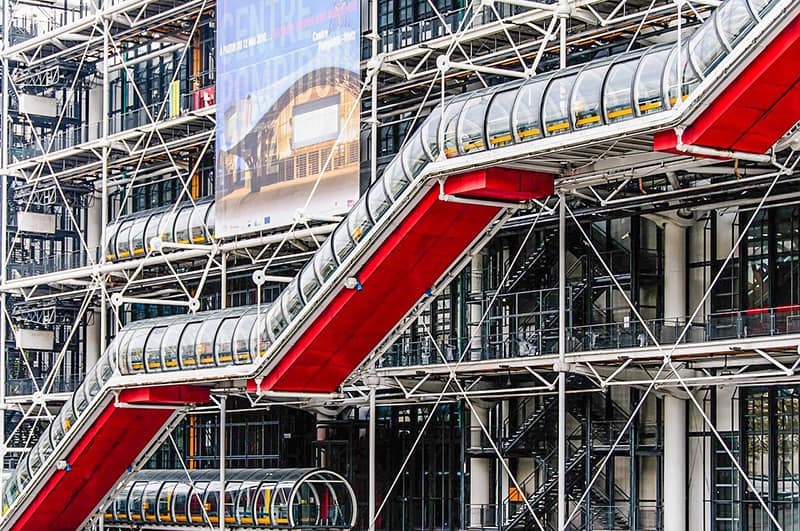
The Pompidou Centre is one of the most striking sights in the French capital. Situated in the Beaubourg area of Paris, near Les Halles, it’s an interesting example of Brutalist architecture.
Construction started in 1971 and the interior includes the Bibliothèque publique d’information (Public Information Library) and the Musée National d’Art Moderne. This is the largest museum of modern art in Europe.
Designed by famous architects Richard Rogers and Renzo Piano, this innovative building has the escalators, water pipes and air-conditioning ducts on the outside. The centre will close for renovations from September 2025 until 2030.
Outside there are several artworks including the Stravinsky Fountain with 16 sculptures by Jean Tinguely and Niki de Saint-Phalle.
16.Château de Chenonceau
Chenonceau is one of the most famous castles in France. Located in the Loire Valley on the river Cher, this is often known as the Ladies’ Chateau.
That’s because several women were instrumental in shaping the history of this iconic monument. One of these was Diane de Poitiers, the mistress of King Henry II.
She created the Garden of Diane Poitiers, with a “floating” parterre built high enough to avoid river flooding. The lawn is divided into several triangles and has many flower beds.
15.Arc de Triomphe
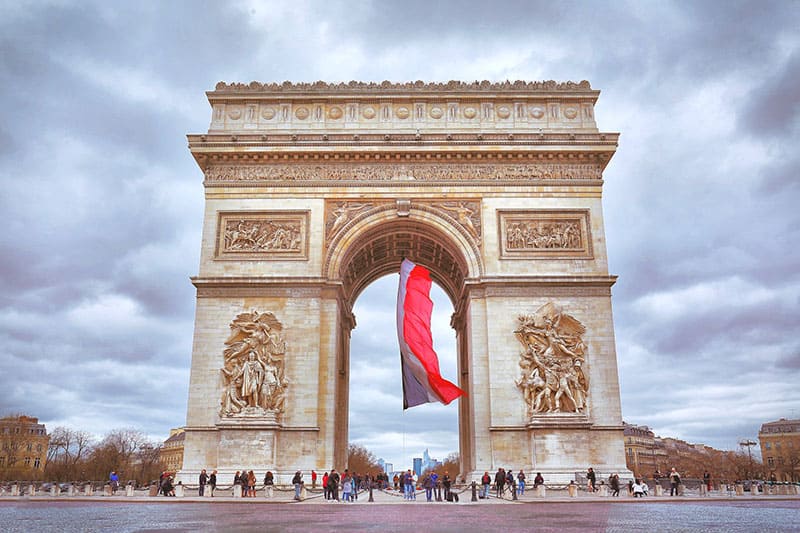
Commissioned by Emperor Napoleon in 1806, the Arc de Triomphe de l’Etoile was designed by Jean Chalgrin. It stands at the centre of 12 avenues forming a star shape or étoile in French.
This iconic Paris monument is a popular place for those who have just passed their driving test to navigate around! The arch commemorated Napoleon’s victory at Austerlitz and the Grande Armee as the French Army was called at the time.
It was inspired by the Arch of Titus in Rome and was the tallest arch in the world up to 1938. The Tomb of the Unknown Soldier lies beneath the Arch and honors those who fought during the wars.
In 1919, the aviator Charles Godefroy managed to fly through the arch, a feat that was repeated by other pilots in 1981 and 1991.
Since 1923 when the eternal flame of remembrance was first lit by Andre Maginot, it has never been extinguished. The flame is rekindled at 6.30 pm each day by war veterans. A giant French flag usually hangs from the arch.
14.Arles Ampitheatre
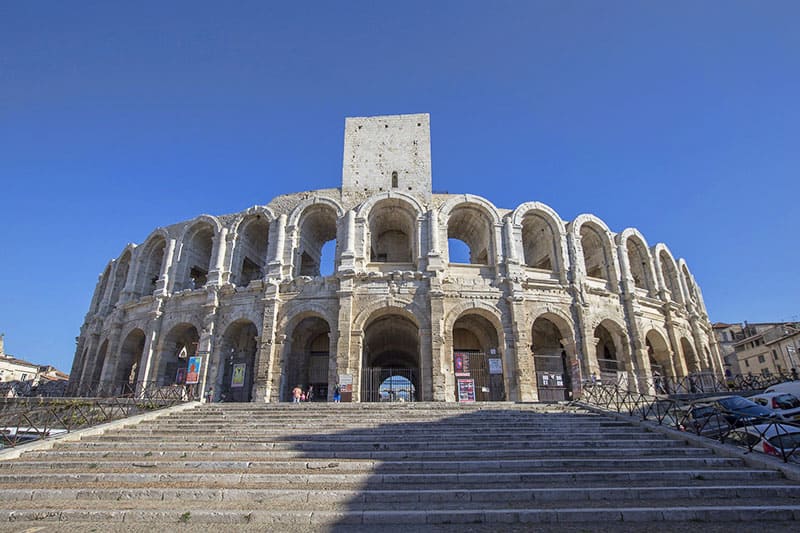
Built in 90 AD, the Roman ampitheatre in Arles is a UNESCO World Heritage Site. This famous French landmark in the Languedoc region seated around 20,000 spectators who came to watch its gladiatorial fights.
There were originally three tiers, of which two remain. The ampitheatre has over 120 arches and measures 136 meters by 109 meters.
In the 5th century, houses and chapels were built inside the ampitheater. They were removed between 1826 and 1830 and since then, public events such as concerts have taken place there.
13.Basilique du Sacre Coeur
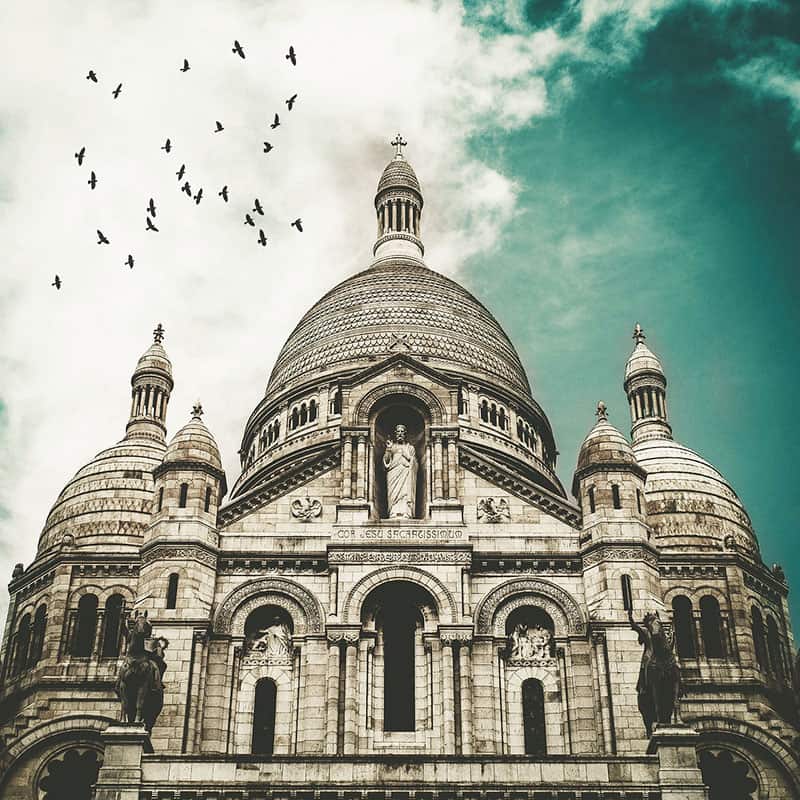
One of the most famous monuments in Paris, Basilique du Sacre Coeur stands proud on the Butte Montmartre hill. The area has been a sacred site since pagan times – druids are thought to have worshipped here, and the Romans built several temples on this spot.
The name Sacre Coeur means Sacred Heart in English. The Basilica was consecrated in 1919 and designed in the Romanesque-Byzantine style.
Sacre Coeur Basilica attracts more than 10 million visitors each year. The distinctive white colour of the basilica is due to the travertine stone used in its construction.
Sacre Coeur is the second highest point in Paris, after the Eiffel Tower. There’s an even better panoramic view of Paris if you head up the 300 steps to the dome. Inside the basilica, you’ll find the largest mosaic in France, which measures 480 m².
The bell tower houses the largest bell in France, known as La Savoyarde since it was a gift from the Savoie dioceses. It weighs 18.835 kilograms and is 3 meters wide.
12.Carcassonne Walled City
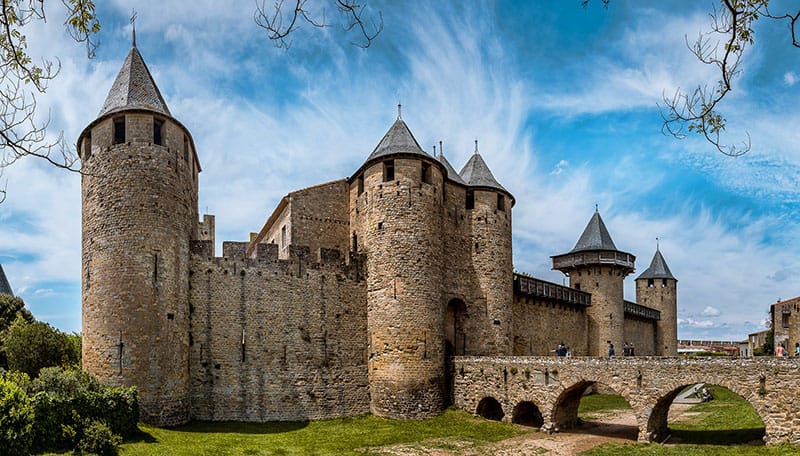
This famous France landmark is not just one building, but a whole town. In fact, the Carcassonne complex is one of the biggest castles in the world. The fortified city of Carcassonne dates from medieval times and was carefully restored in the 19th century by Eugene Viollet-le-Duc. Today, the Cité de Carcassonne is listed as a UNESCO World Heritage Site.
Visitors flock to see the city’s 52 medieval towers, Gothic Basilica and cobbled streets. The walls are 3 kilometers long, with an inner section dating in parts from the 3rd and 4th century and an outer section dating from the 13th century.
Don’t miss Chateau Comtal, a medieval castle within Carcassonne old town, built by Raymond V, Count of Toulouse. The views over Mont-Ventoux and the surrounding area are fantastic.
11.Louvre Museum
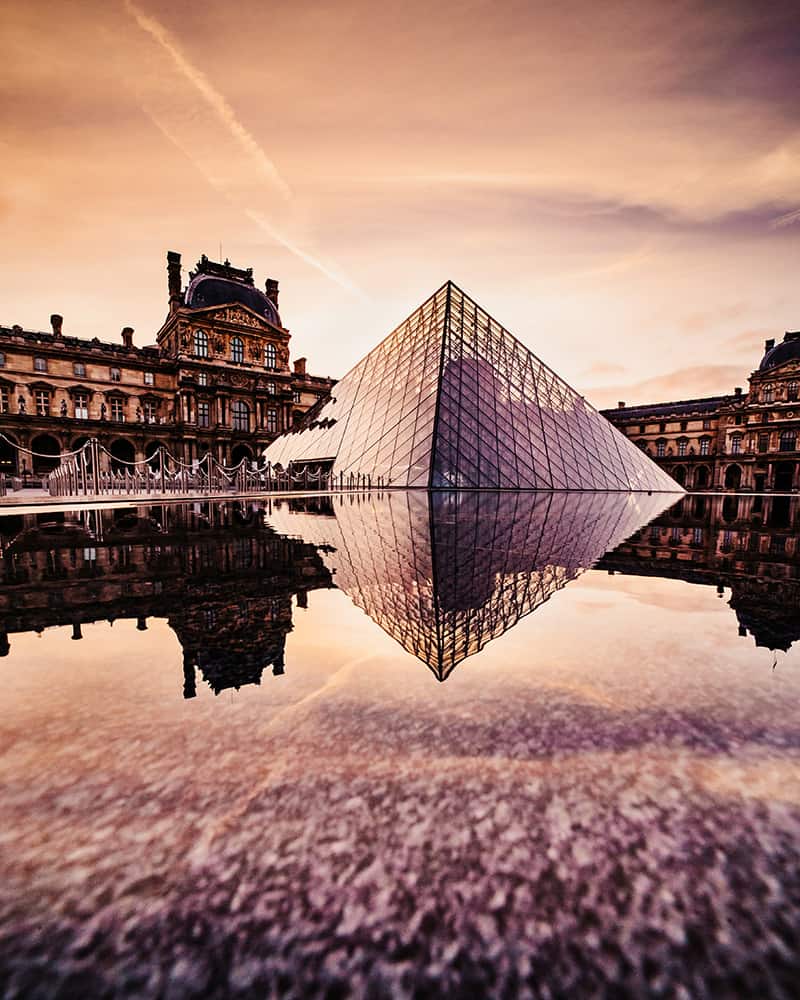
The largest art museum in the world, The Louvre is a former residence of French kings. Located on the Right Bank of the Seine, this famous Paris landmark is the home of the Mona Lisa painting by Leonardo da Vinci.
There are many other Louvre highlights including The Lacemaker by Johannes Vermeer and The Coronation of the Virgin by Fra Angelico.
The Louvre Pyramid is a work of art in itself. Created by renowned architect I. M. Pei, this glass and metal pyramid is the main entrance to The Louvre.
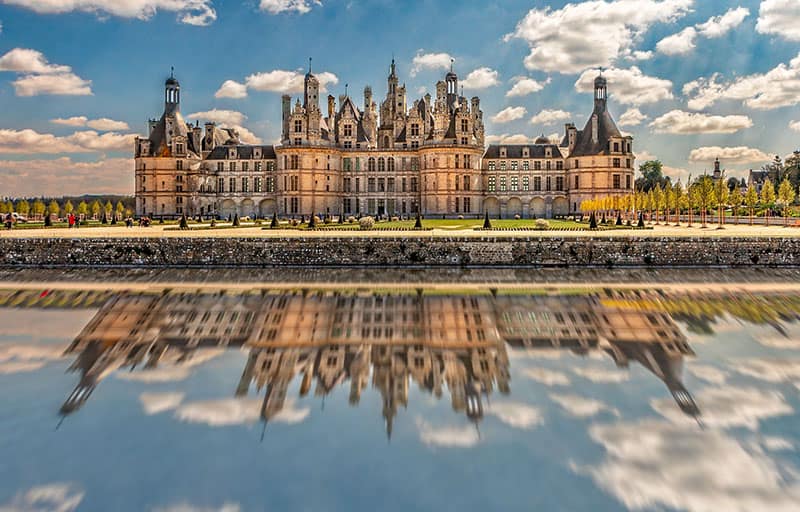
10.Chateau de Chambord
This beautiful French castle is one of the best examples of Renaissance style and the largest chateau in the Loire Valley. Originally the hunting lodge of Francis I, Chambord castle was built from 1519-1547.
Some believe that Leonardo da Vinci may have been involved with the design, although it is attributed to Domenico da Cortona. Now listed as a UNESCO World Heritage Site, the castle of Chambord is famous for its double helix staircase.
There are 426 rooms in the Château de Chambord, of which 60 are open to the public. Look out for the salamander carvings on the ceilings and walls.
The salamander was the emblem of Francis I and there are over 300 representations of these amphibians in the castle. Leave plenty of time to explore the grounds – Chateau de Chambord park is the largest enclosed park in Europe at 5,440 hectares.
9.The Eiffel Tower, Paris
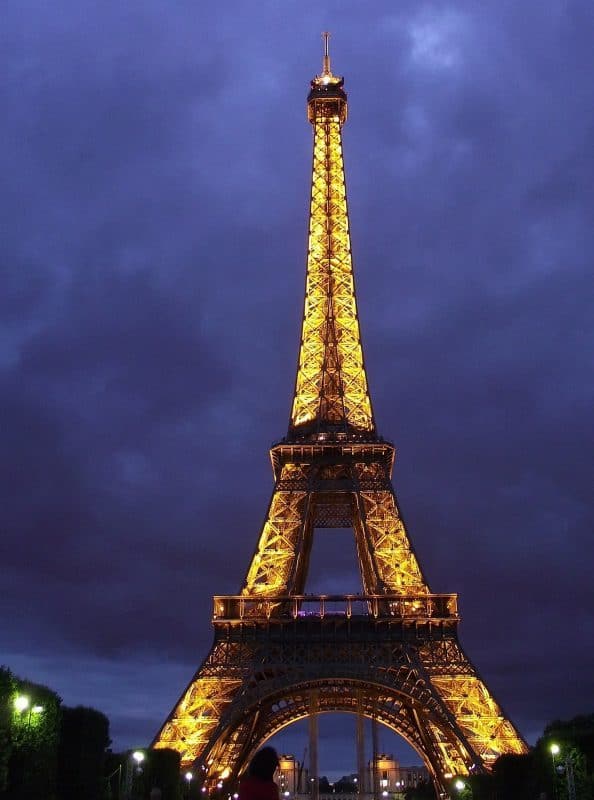
Arguably the most famous landmark in Paris, The Eiffel Tower was meant to be a temporary structure. Located on the banks of the River Seine, it was built for the 1889 Paris Exposition, the World’s Fair.
The Tour Eiffel was due to be dismantled in 1909 but proved to be so popular that it became a permanent fixture. Many think that it was designed by Gustave Eiffel, but it was actually created by Maurice Koechlin and Emile Nouguier, who worked in Eiffel’s design studio. It is the most visited paid monument in the world.
This Parisian tower has the nickname, the Iron Lady as it’s made from latticed wrought iron. It’s repainted approximately every 7 years, and grows up to 6 inches taller on warm days. It’s the tallest building in Paris, at 324 meters.
If you’re visiting the Eiffel Tower, you can choose to walk up the stairs to the second floor or take the lift from the bottom. The top floor can only be reached by lift.
There are several restaurants, including 58 Tour Eiffel, a contemporary restaurant on the first floor. You’ll find Le Jules Verne, a fine dining establishment on the second floor, as well as a Macaroon Bar. On the top floor, enjoy the views at the Champagne Bar.
8.Gorges du Verdon
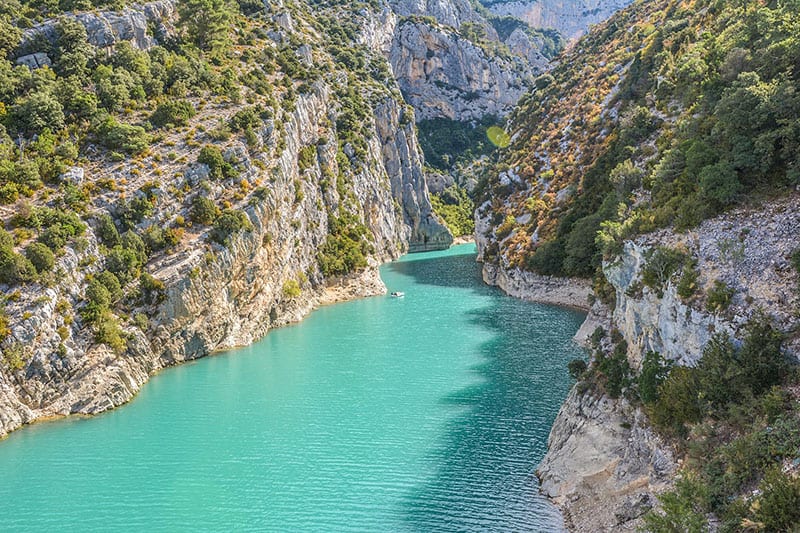
During your holiday in France, make time to visit the Gorges du Verdon in Provence. Nicknamed the French Grand Canyon, it’s one of the largest in Europe at 25 kilometers long.
The canyon is up to 700 meters deep in parts, and it’s a popular area for white water rafting, kayaking and canyoning. The water has an incredible turquoise shade, whilst the surrounding rock cliffs play host to a wide variety of fauna and flora.
Part of the Regional Park of Verdon, it is also a good place for aerial sports such as paragliding. There’s an interesting Museum of Prehistory located in the village of Quinson, which is actually one of the largest museums of prehistory in Europe.
7.Millau Viaduct
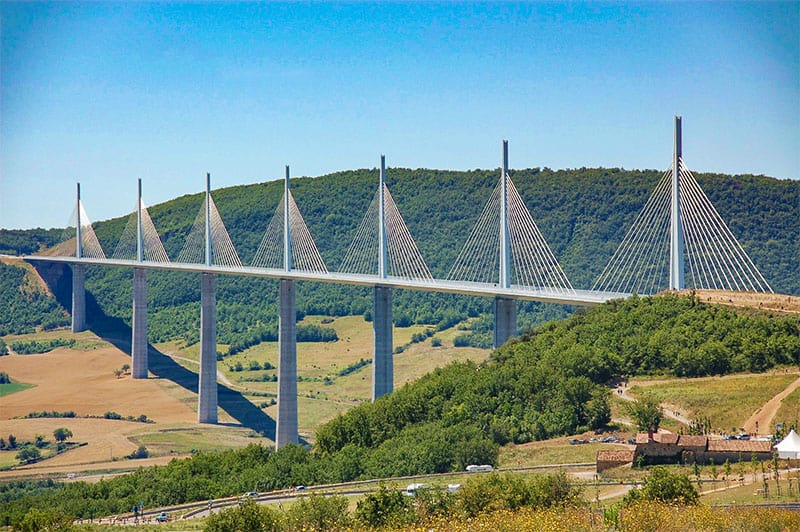
Visitors to the South of France shouldn’t miss a drive over Millau Bridge. One of the most famous landmarks in France, the viaduct is the tallest bridge in Europe and measures 343 meters.
With four lanes, it opened in 2004 and connects Clermont-Ferrand to Béziers through the Massif Central. Designed by Michel Virlogeux and Foster + Partners, it has 8 majestic spans.
There’s a good viewing area at the Aire du Viaduc, or why not see the bridge from below on a canoe. You’ll find an information centre and Explorer’s Garden at the base of the viaduct. Nearby, Peyre is considered to be one of the most beautiful villages in France.
6.Mont Blanc
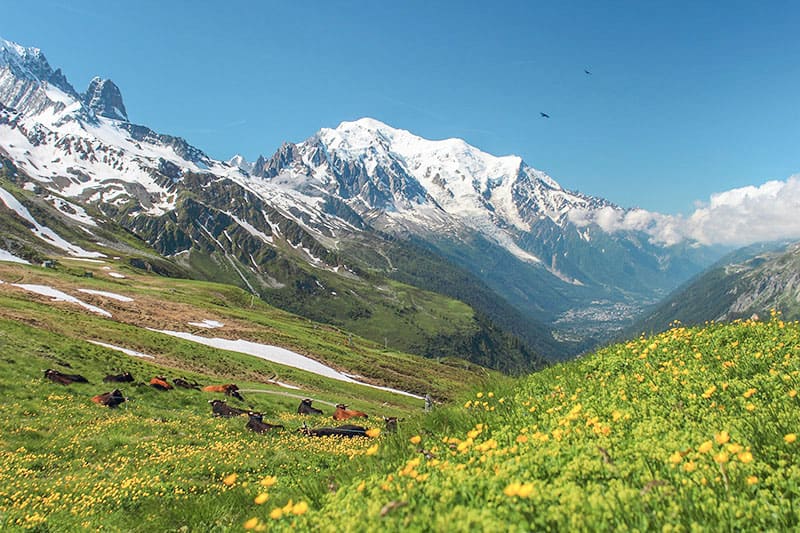
The highest mountain in the Alps, Mont Blanc is a famous landmark in France. The name translates as White Mountain, and it is often covered with snow.
Mont Blanc’s peak is 4,810 meters high, and you can see the mountain from as far away as Geneva and Grenoble.
Mont Blanc is considered to be the birthplace of modern mountaineering. In light of its special significance, efforts are being made to get it listed as a UNESCO World Heritage Site. In 2007, a temporary hot tub was set up at the summit!
The area is popular with outdoor enthusiasts, in particular for hiking, cycling, horse riding and white water rafting. There are some lovely hotels near Mont Blanc, such as Club Med’s Grand Massif Samoëns Morillon Resort. At 1,600 meters high, it’s known for its ski-in ski-out facilities and Carita spa.
5.Mont Saint-Michel
This monument in Normandy, France is one of the most visited sites in France with around 2.5 million visitors each year. Another UNESCO World Heritage Site, it becomes an island when the tides are high.
It’s wise to check the tidal calendar before visiting. There’s a small entrance fee to visit Mont Saint Michel Abbey, however access to Mont Saint Michel itself is free. You can reach the island via a tidal causeway.
If you’ve worked up an appetite, try the omelettes at La Mere Poulard restaurant, but book in advance to avoid queuing. Butter cookies from La Mere Poulard are a good souvenir to take home.
4.Notre Dame de Paris
This medieval Catholic cathedral is without doubt one of the best examples of Gothic architecture in the world. Immortalized in the classic of French literature, Victor Hugo’s The Hunchback of Notre Dame, it is over 800 years old.
Unfortunately Notre-Dame Cathedral was damaged by fire and is currently being renovated. For that reason it is not currently possible to visit the interior of this tourist attraction.
Located on the Ile de la Cite in the centre of Paris, it was one of the first buildings to use flying buttresses. These arched structures help to support the outer walls.
Inside the Cathedral de Notre Dame, there’s a beautiful array of stained glass windows, as well as the Holy Crown of Thorns and the Emmanuel bell which weighs over 13 tons.
While you’re in the capital, check out these secret places in Paris too.
3.Palace of Versailles
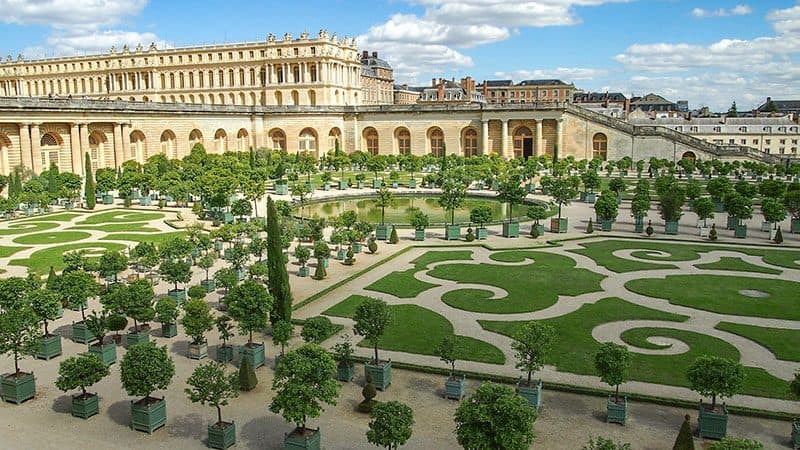
This royal chateau in Versailles on the outskirts of Paris is one of the most famous landmarks in Europe. Constructed for the Sun King Louis XIV in the 17th century, it was the seat of French political power until the beginning of the French Revolution.
The most famous Chateau de Versailles room is the Hall of Mirrors, measuring 73 meters long and containing 21 mirrors. The site extends to 2,014 acres, the world’s largest royal domain.
Within the grounds, there are 50 fountains with 620 jets. Visitors will also find the Hameau de la Reine, a hamlet built for Marie Antoinette, as well as the Grand Trianon and Petit Trianon, two smaller palaces.
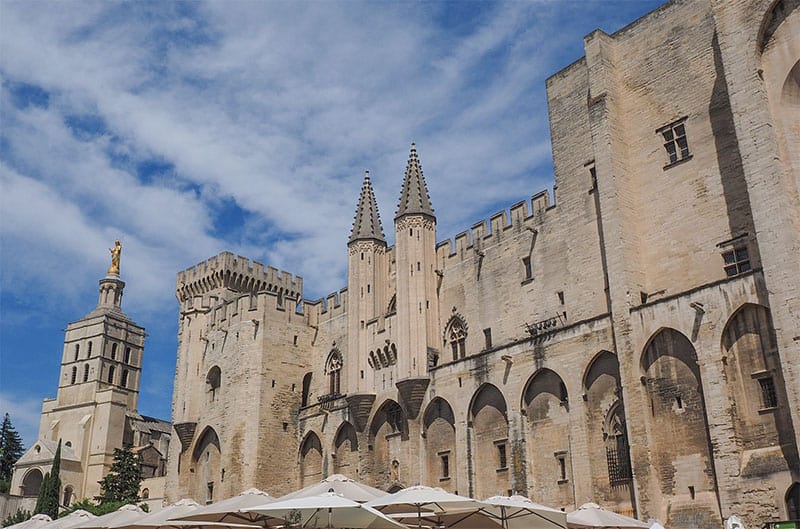
2.Palais des Papes, Avignon
The largest Gothic palace in the world, the Palais des Papes is located within the charming medieval town of Avignon in Southern France. It’s spread over 15,000 square meters and was built by Pope Benedict XII and his successor Pope Clement VI.
After ceasing to be a papal residence, the Palace was used by the French Napoleonic state as a prison and barracks. The palace became a national museum in 1906.
Today, you can visit over 20 rooms, including the Great Chapel and the wine cellar. Why not take a Secret Palace tour, to explore private apartments and hidden stairways. There are also regular art exhibitions.
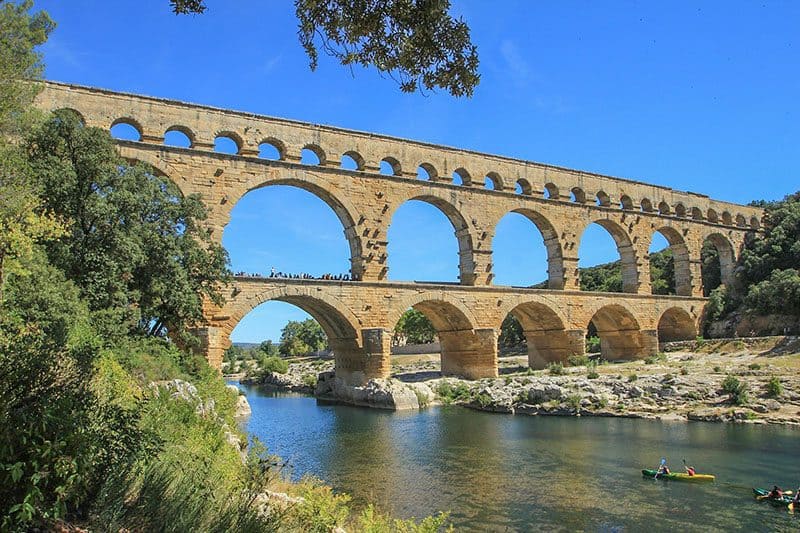
1.Pont du Gard
This Roman viaduct is the most visited monument in France that dates from antiquity. Situated near the town of Vers Pont du Gard, it was built to carry water from a spring to the Roman settlement of Nemausus (now Nimes).
Around 1,000 workers constructed the viaduct, which delivered 35,000 cubic meters of water to Nimes every day. It’s astonishing to think that this 50 kilometer viaduct was built in the first century AD.
The viaduct has three tiers of arches, standing 160 feet high. The Pont du Gard Visitors’ Centre gives some interesting background information on the monument and the surrounding area.
These are the most famous French landmarks that you really shouldn’t miss on a trip to France. Are there any that you feel we should add to the list?
Leave a Reply