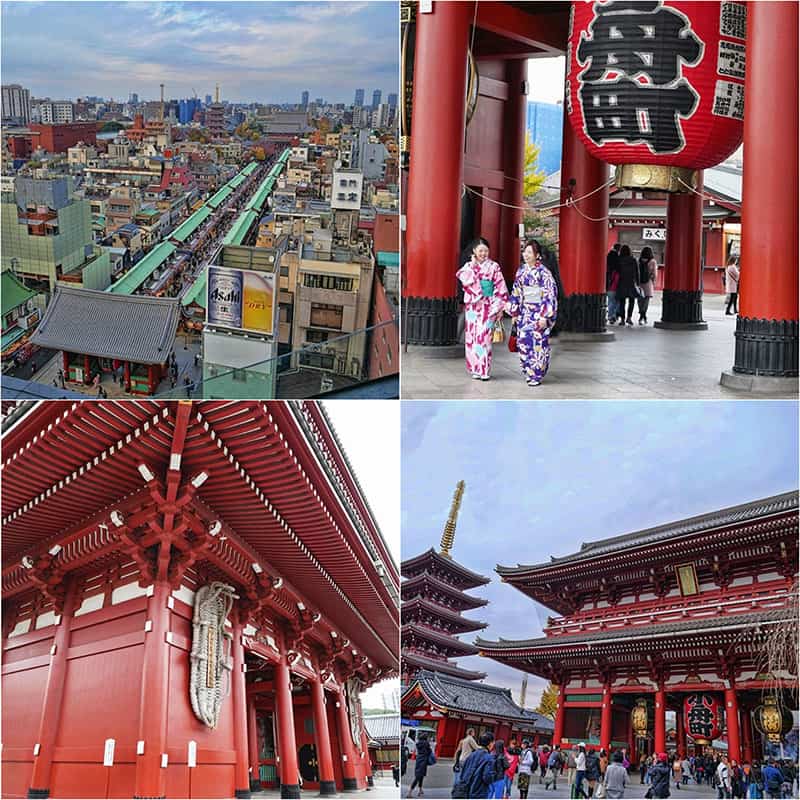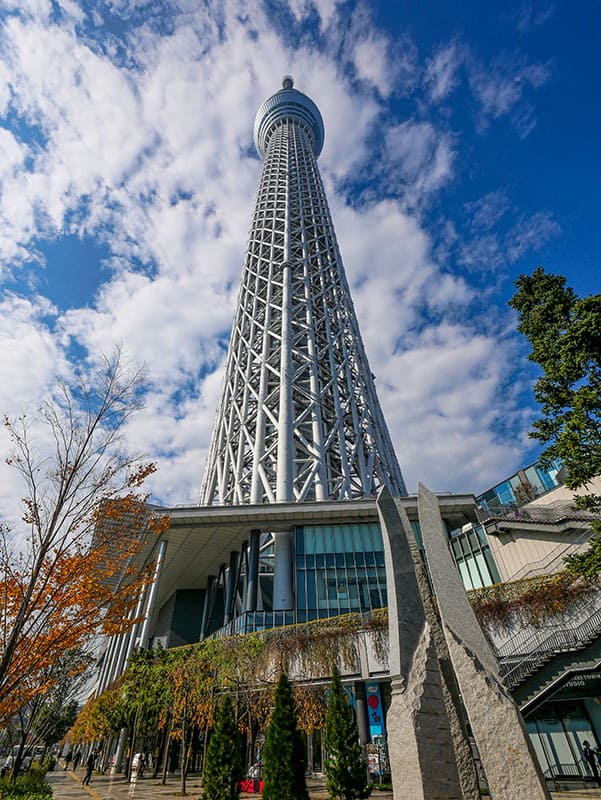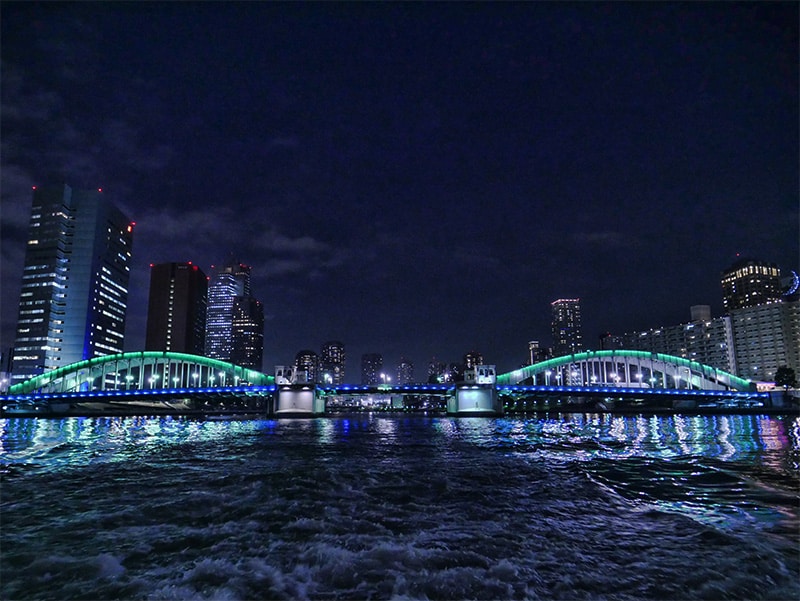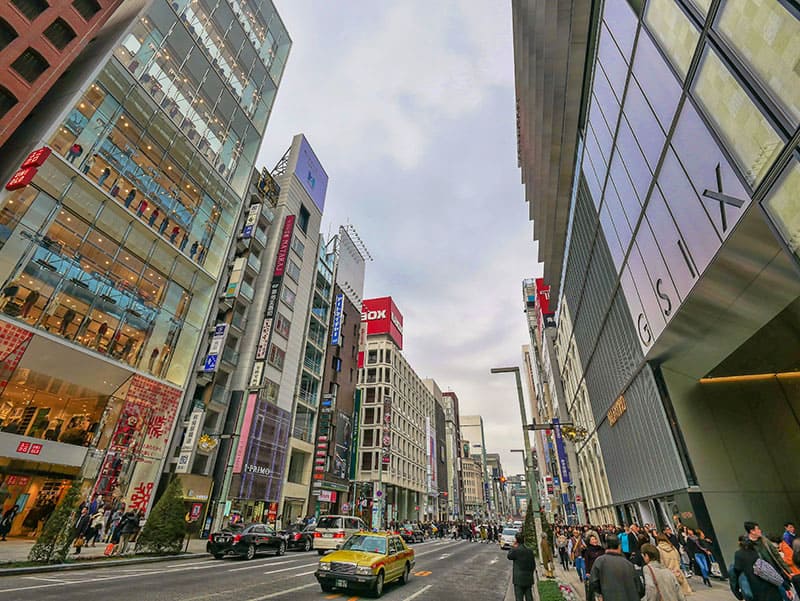
Category: Asia

  • Kayumanis Jimbaran – A Luxurious Private Villa in Bali

    Kayumanis Jimbaran – A Luxurious Private Villa in Bali

    If you need to recharge your batteries, a stay at Kayumanis Jimbaran Private Estate & Spa is the perfect solution. These luxurious private villas each come with their own swimming pool and the friendly staff will make you feel right at home.

    Kayumanis Jimbaran Private Estate & Spa Review

    Before your stay, the Kayumanis Jimbaran team send you a guest profile form so that they can tailor your stay according to your preference. You can choose everything from a free newspaper and fruit in your villa, to the type of music you would like played. We opted for traditional Balinese.

    They also ask the purpose of your visit, whether for leisure, a honeymoon, birthday or wedding anniversary and the reason would later become apparent. Not only that, they also offer a free pickup service from the airport.

    It is great to be welcomed with an air conditioned car, complete with pillows, refreshing hand towels and bottled water. We were visiting Bali for the first time and Jimbaran was the ideal place to start our exploration of the island.

    Checking in at Kayumanis Jimbaran

    Arriving at the estate, you are warmly welcomed by the staff. It’s always nice to be offered a welcoming drink upon check in but Kayumanis take this to the next level by giving you a menu to choose between two mocktails and three cocktails.

    Check in itself is a very relaxed and speedy affair. Once during our stay, we were at reception whilst a Chinese lady with a very young baby arrived. We noticed that her check in was arranged by a Chinese speaking member of staff – Kayumanis tailor everything they do to each individual guest.
    Accommodation at Kayumanis Jimbaran

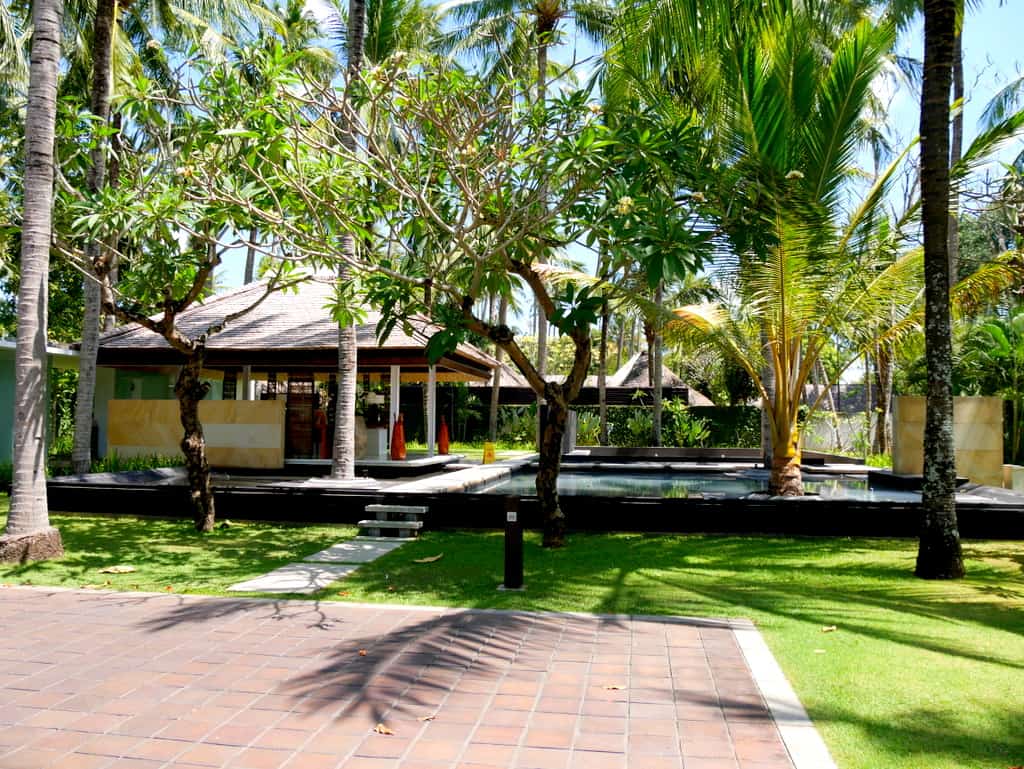
    The villas at Kayumanis Jimbaran are amongst the most luxurious that we have come across. You enter via your own front door, into a huge space with walls on all sides for complete privacy – around 500 square metres.
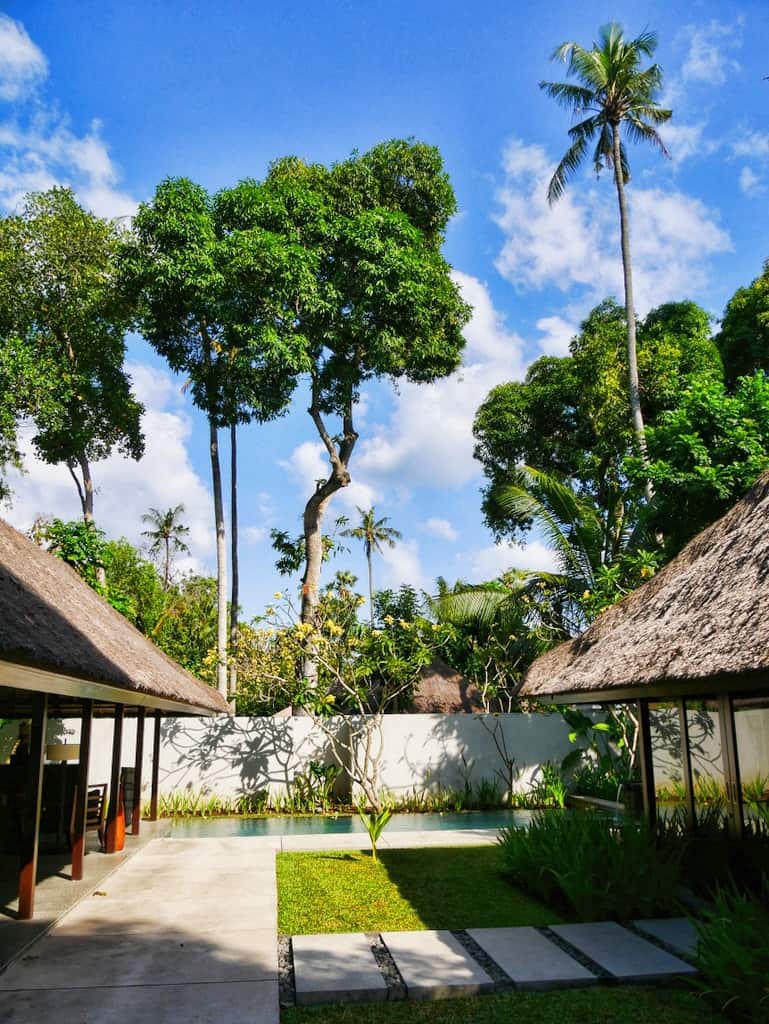
    Each one is individually named and ours was christened Klungah, the inside skin of a young coconut. The name Kayumanis means cinnamon and they’d provided cinnamon sticks inside the villa for dipping into your tea or coffee.

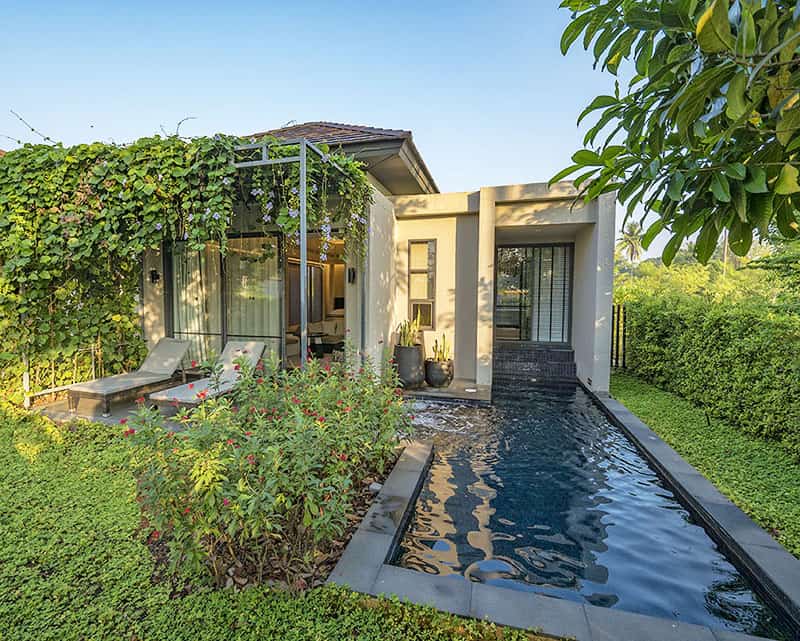
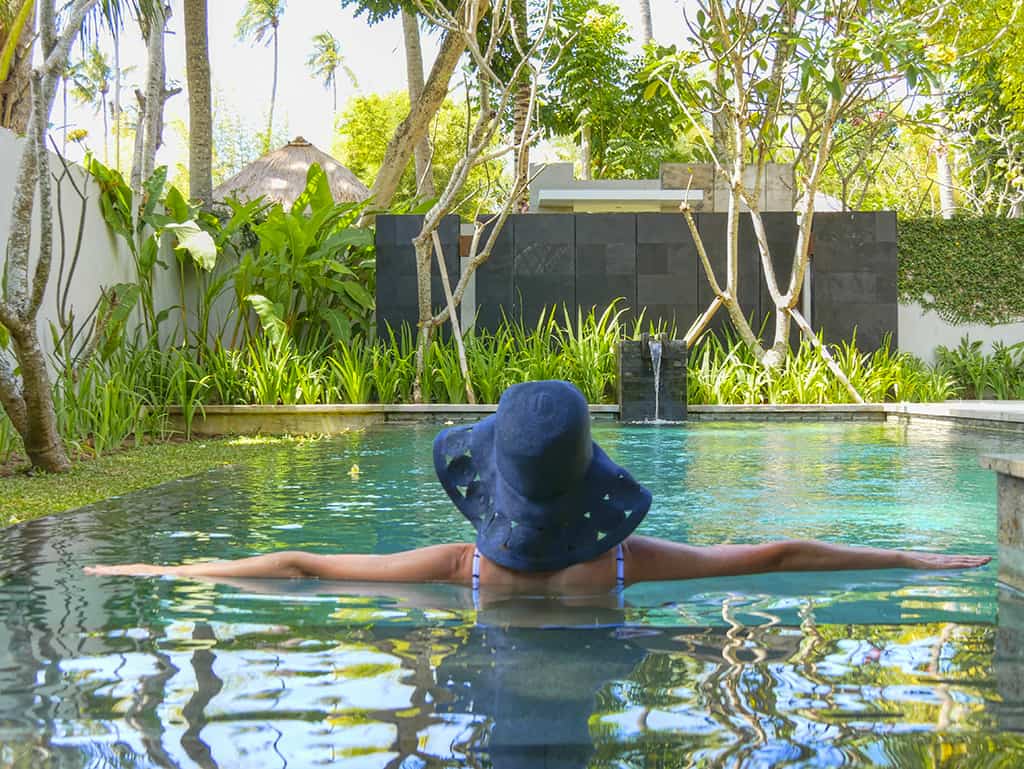
    The private swimming pool is full-sized, has a water feature and is surrounded by lush vegetation and flowers. I couldn’t wait to take a dip! There are also comfy sunbeds by the side so you can top up your tan.
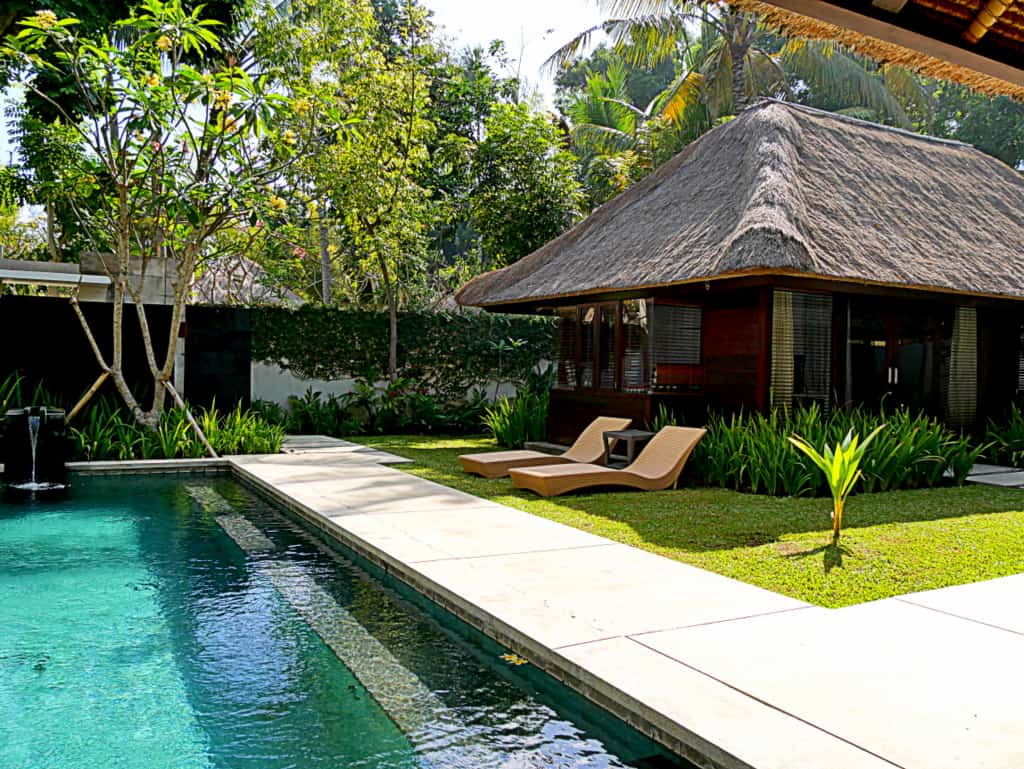
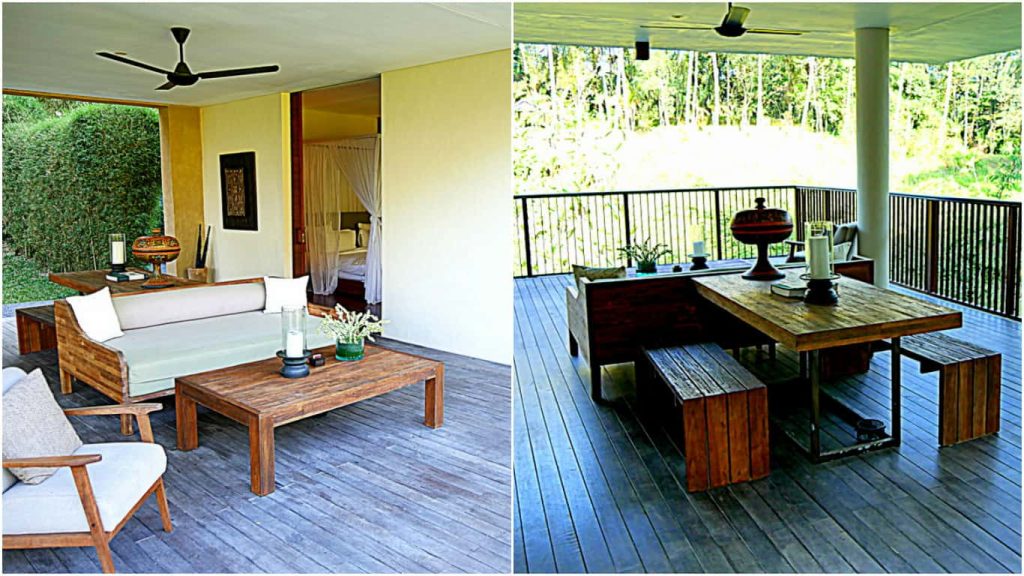
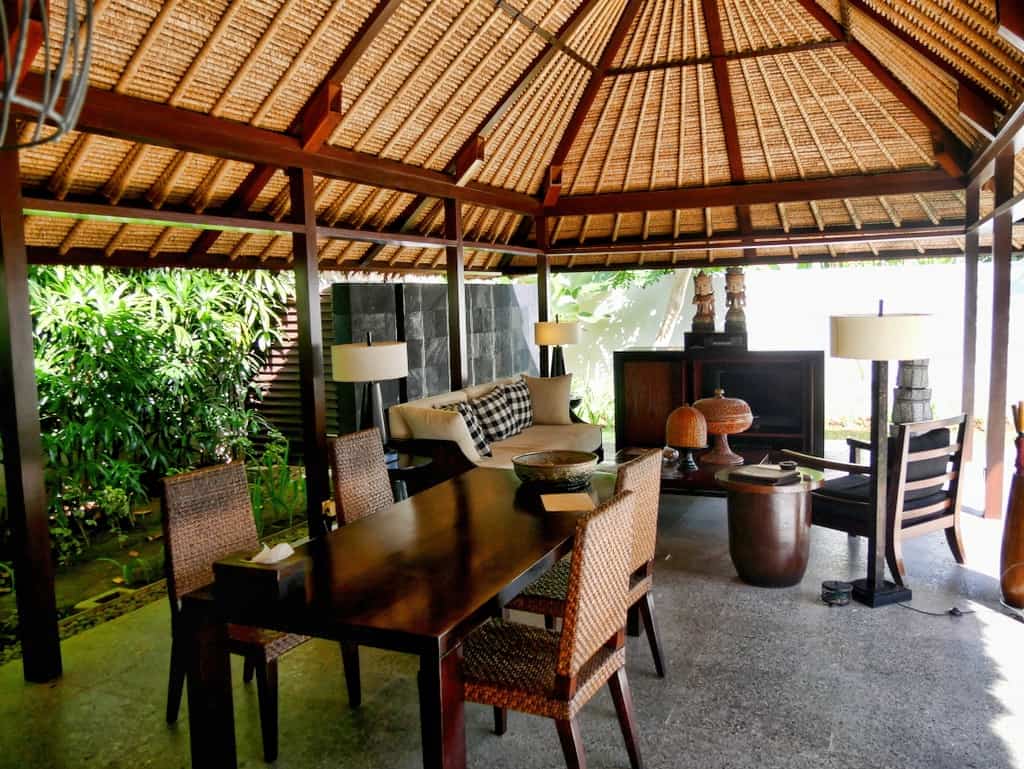
    The outdoor living space is very well designed with a high roof to give shade and a fully equipped kitchen should you wish to prepare something to eat yourself. Having said that, each villa has its own private butler and you can request 24 hour room service, so it may not get much use 😉
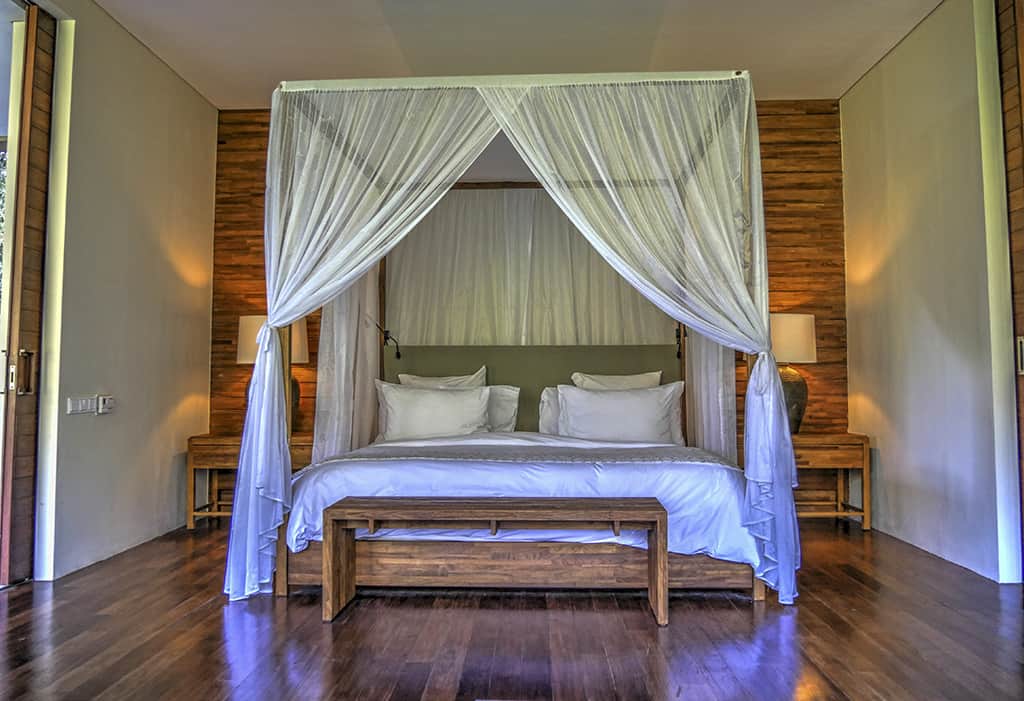
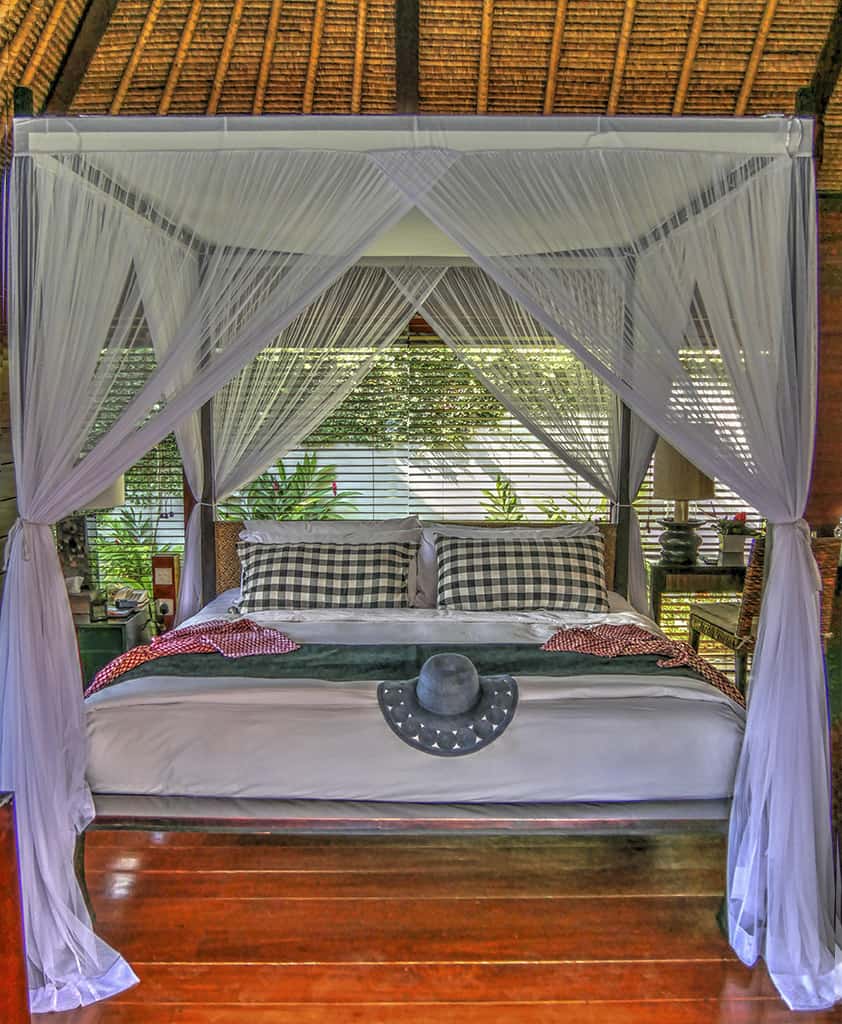
    At Kayumanis Jimbaran you can book a one or two bedroom villa, and ours was a two bedroom with a spacious master bedroom. Featuring a king-size canopied bed, there are also cotton kimonos to relax in and a plasma TV.

    You can close the curtains completely if you want extra protection from mosquitoes, although staff also light mosquito coils to ensure that you get no bites in the night.
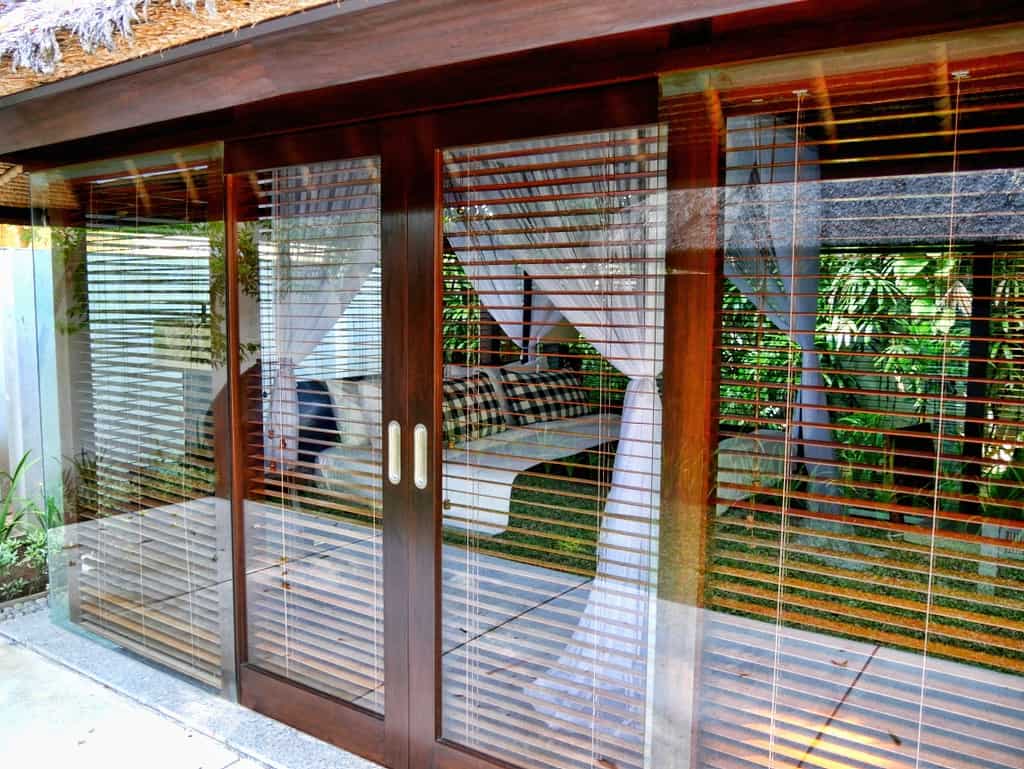
    The second bedroom is conveniently located in a separate building within the villa. It can be set up with twin beds or as an office or space to practice yoga.

    The black and white checked fabric is highly symbolic in Balinese Hinduism. You’ll see it in all the temples and it signifies the spiritual balance of the physical and unseen worlds.
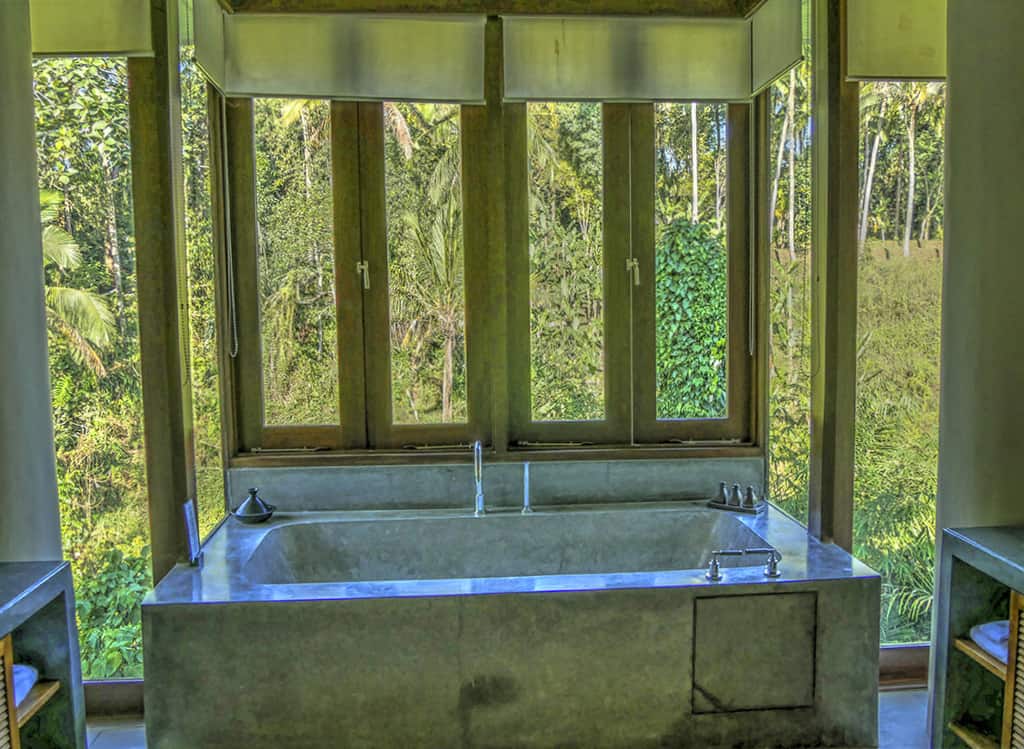
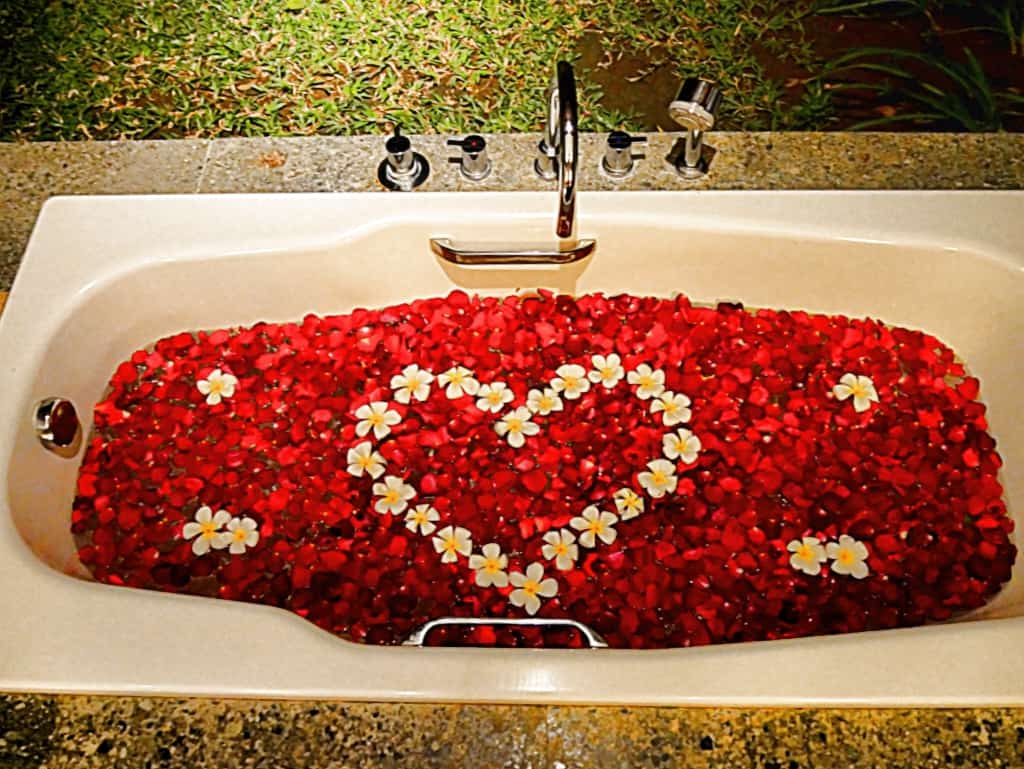
    Both of the bedrooms have open-air bathrooms, and the master bathroom has somewhat of a spa atmosphere…especially with the little surprise that the staff had in store for us! I felt like I was in the rose petal scene from American Beauty.
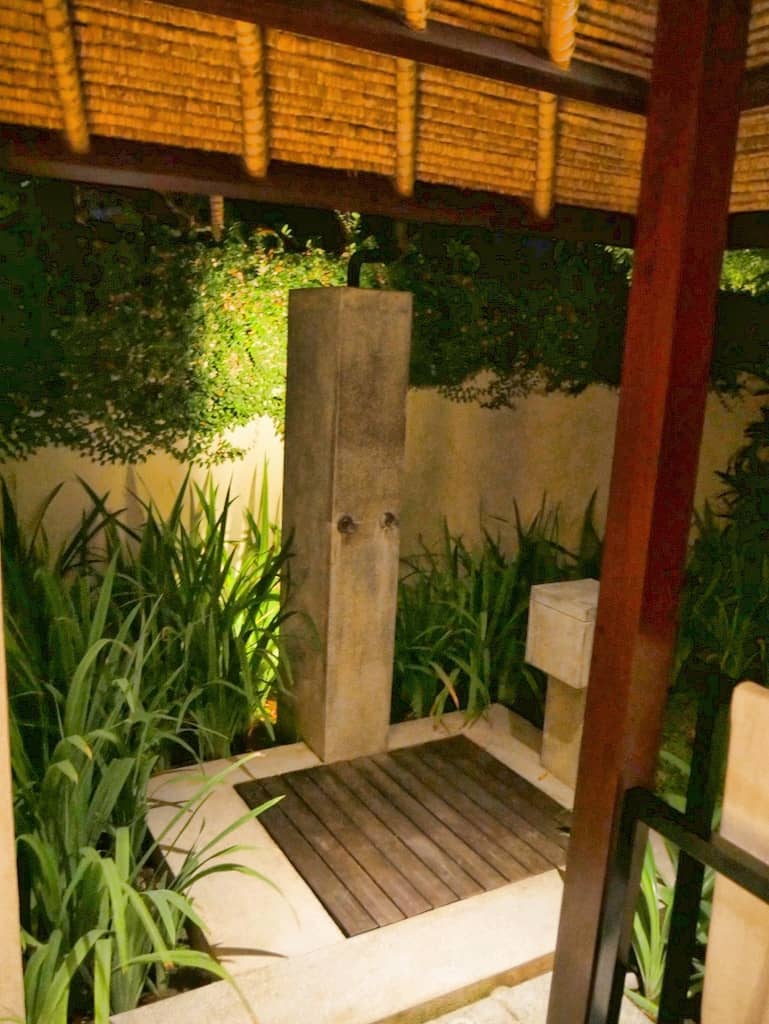
    The outdoor shower is also great fun and stocked with fluffy towels and toiletries in little ceramic pots.
    Little Extras at Kayumanis Jimbaran

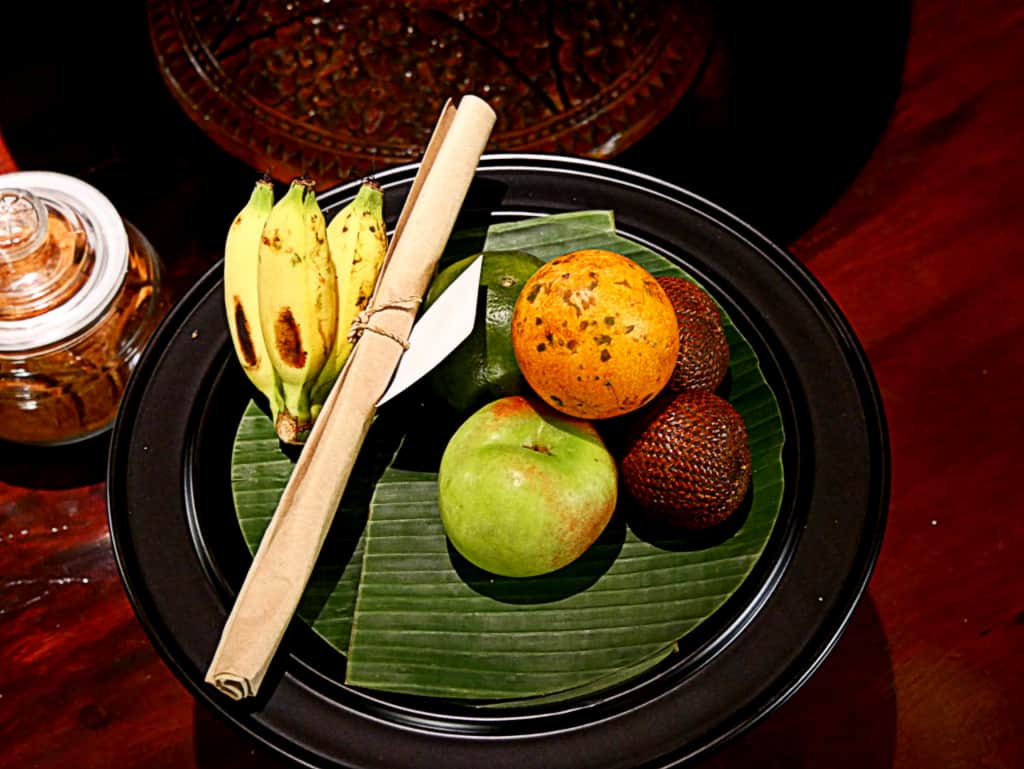
    There are so many thoughtful touches, from the rose petal bath to the complimentary fruit upon arrival. There’s also a complimentary fully stocked mini bar, fresh flowers and free wifi.
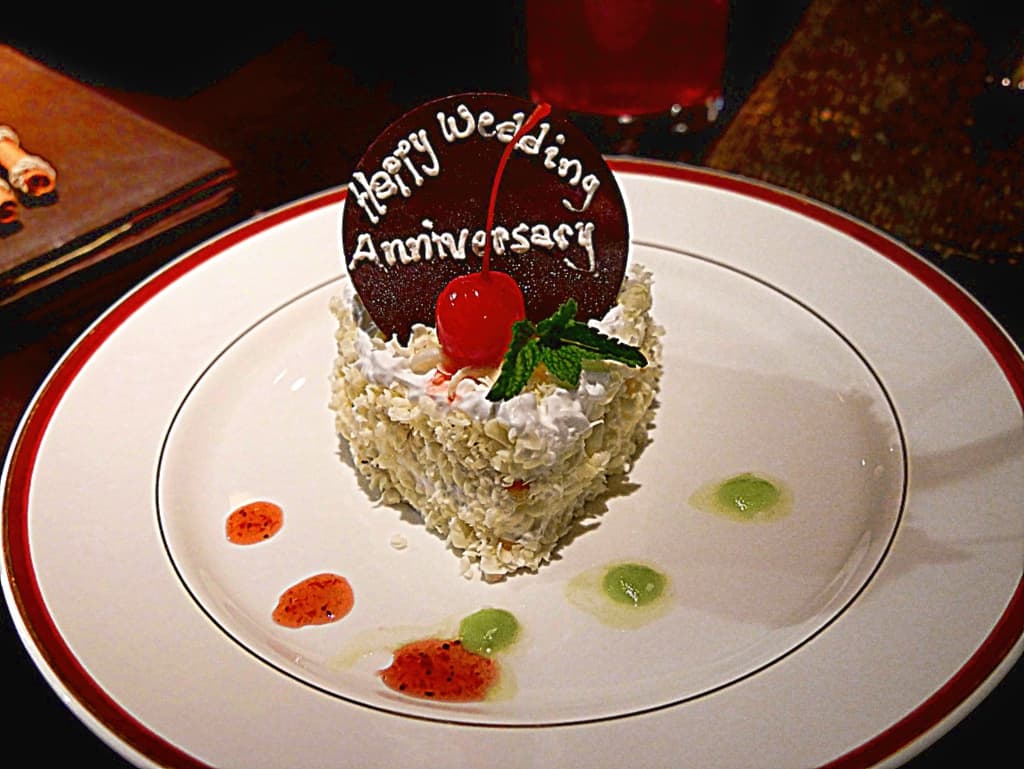
    However my favourite has to be this cake awaiting us upon arrival – now I know why they had asked us whether we were celebrating anything! Younger guests are not forgotten either, with children’s size bathrobes and slippers, a children’s spa menu and children’s dining menu to name but a few.
    Kayumanis Jimbaran Spa

    Kayumanis Jimbaran is well known for its award-winning spa, located within the estate grounds in its own private villa. We were booked in for a ninety minute couples’ massage, a welcome treatment after two flights to Bali from London via Doha.

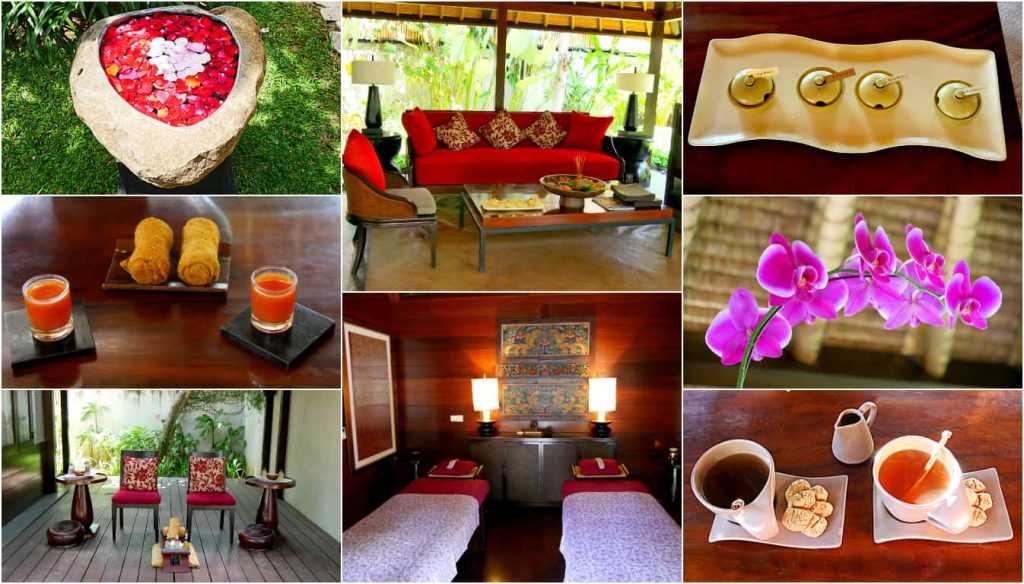
    The spa has a very serene atmosphere and the therapists will talk you through all the treatment options. Whilst sipping a refreshing drink, you are asked to select one of three essential oils and to specify whether you want a soft, medium or firm massage.

    Next you’ll go through to the treatment room where you’ll enjoy an aromatherapy foot bath. However, if you prefer a massage in your villa that is also easily arranged.

    Finally our therapists began our body treatment, combining Balinese, “lomi lomi” or Hawaiian and therapeutic massage techniques. Never one to do things by halves, I had selected the firm version and it was very effective in relieving tension in my shoulders and back. Mr Luxe perhaps more sensibly opted for the medium pressure version and pronounced it extremely relaxing.
    Things To Do Near Kayumanis Jimbaran

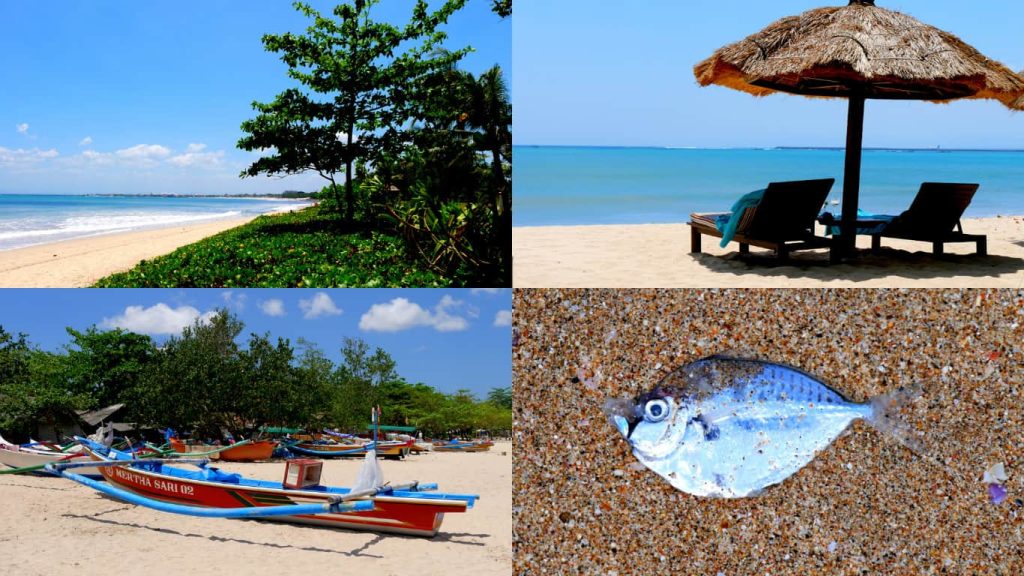
    This particular side of the island is very laid back and the beach, located right behind the property, is virtually deserted in the daytime. When it cools down in the early evening, you’ll come across fishermen and local families.
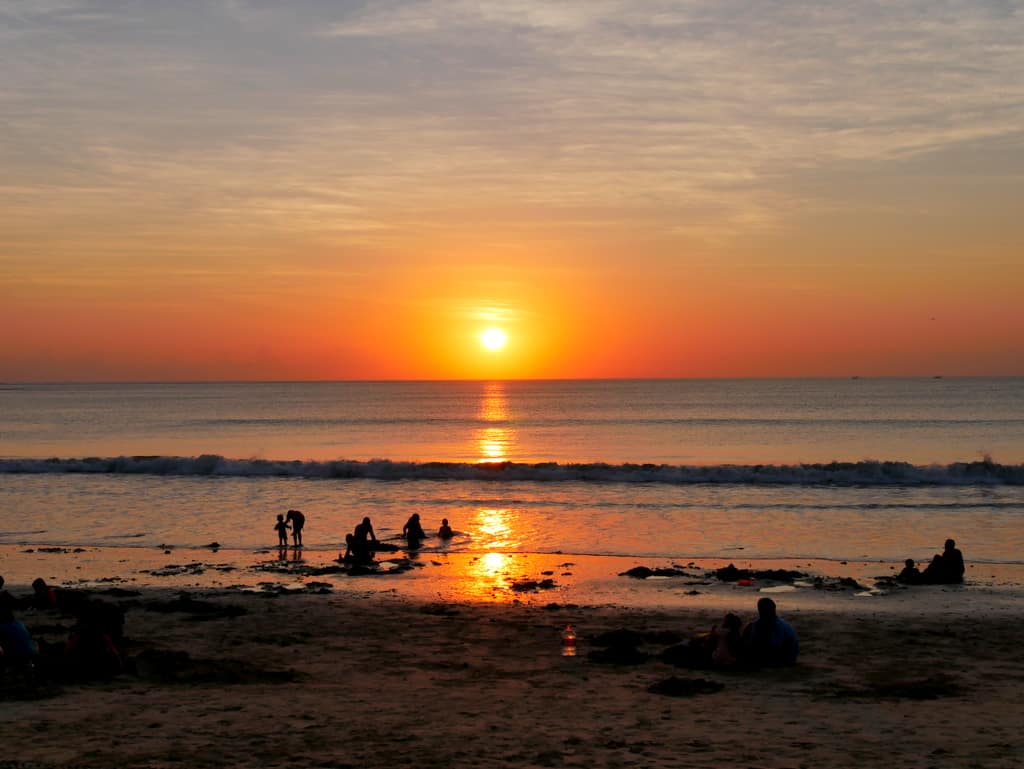
    The sunsets in Jimbaran are definitely not to be missed, and this is the perfect vantage point.
    As a guest of Kayumanis, you will also have access to the beach club at the neighbouring hotel. There’s also a free shuttle service from the estate to Nusa Dua where Kayumanis have another stunning property.

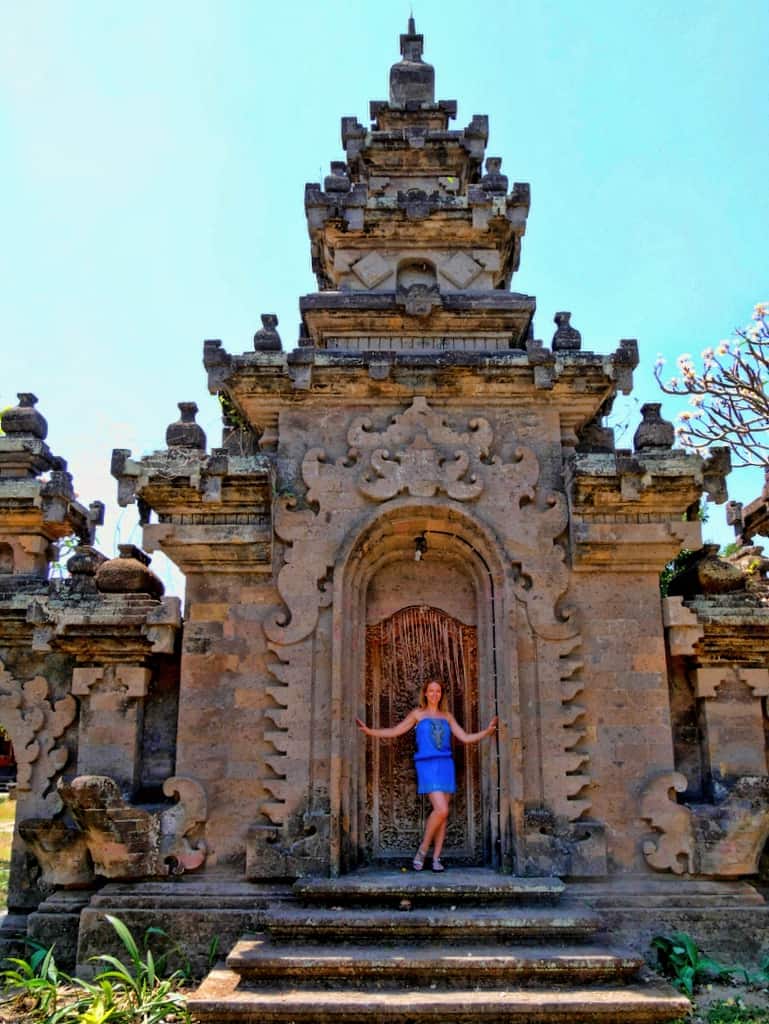
    Less than 30 minutes away you’ll find the famous Uluwatu temple. Right opposite the estate there’s actually a disused hotel in a former temple. When visiting a working temple it’s advisable to wear a sarong to cover your legs.
    Dining at Kayumanis Jimbaran

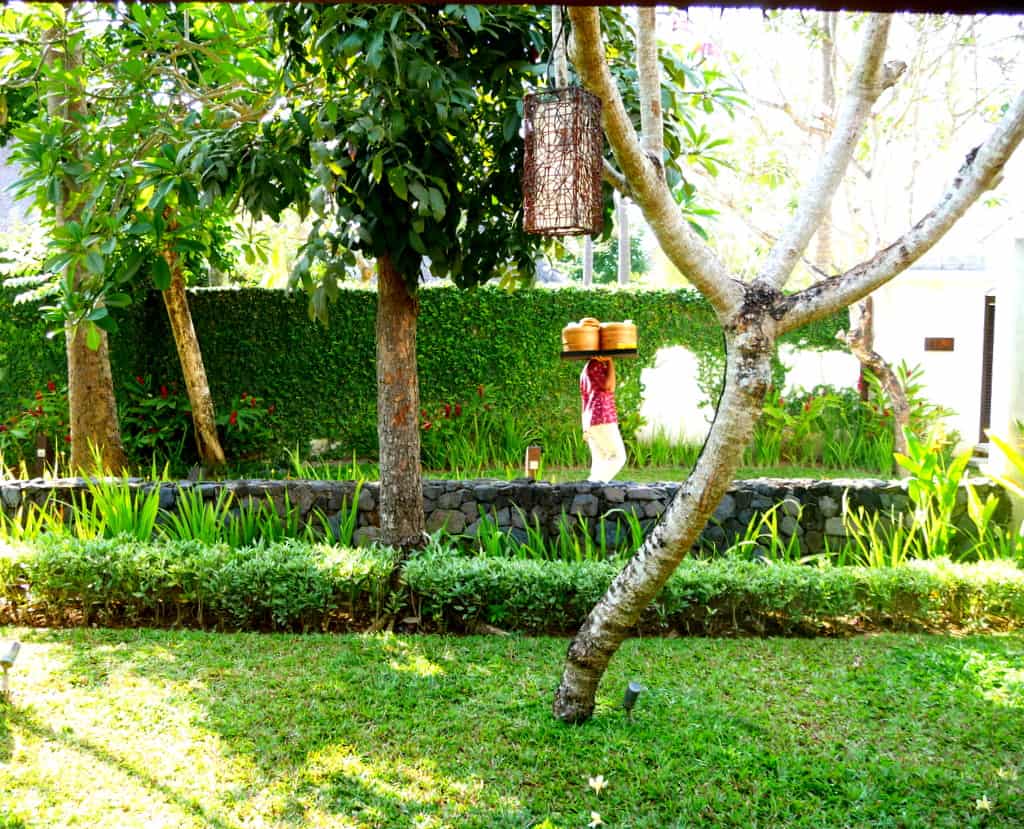
    Tapis is a wonderful place to experience local Indonesian cuisine and has the advantage of being located right inside the property. With a traditional thatched dining pavilion, you can eat in the shade or inside the air-conditioned restaurant.

    We chose to dine in our villa since we were tired from the flights, opting for the Indonesian set menu. Using only the freshest market produce, teamed with exotic spices, it’s a real treat for your tastebuds.
    We feasted on crispy appetizers before tucking into our starter, sop sari laut, a warming turmeric soup with sweetcorn and seafood. The spice gave it a welcome kick and the seafood was delicious.

    The main course was opor ayam bakar. This is a substantial grilled chicken leg in a tasty coriander and coconut sauce, served with Indonesian vegetables and steamed rice.
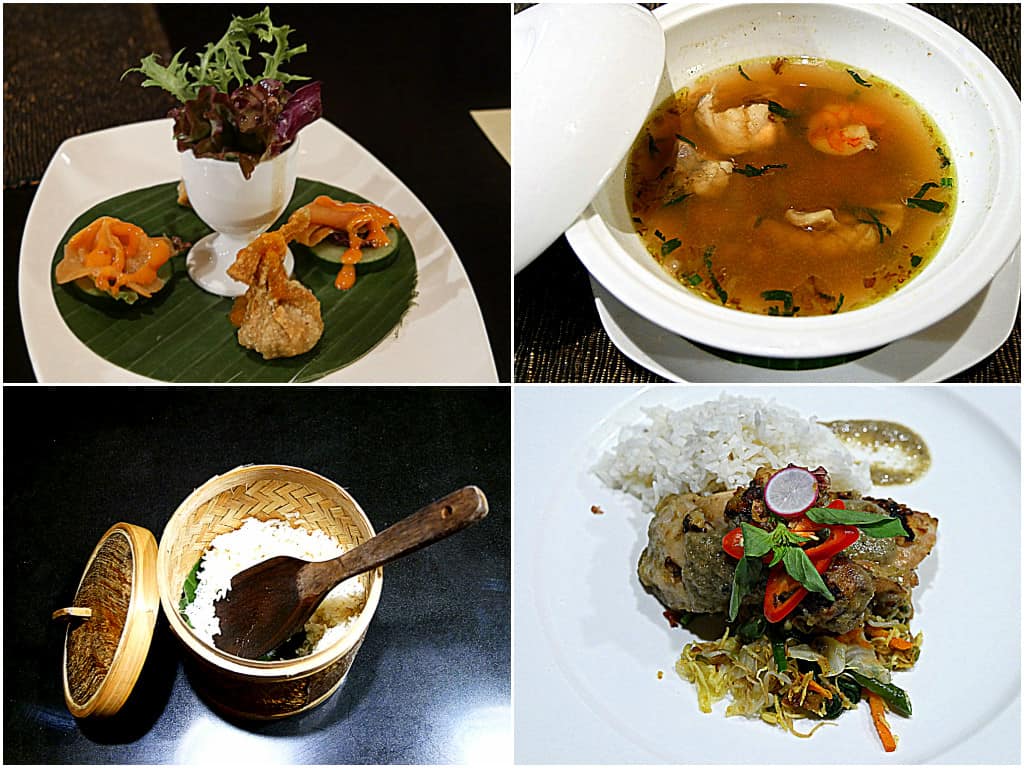
    To finish, we tasted lapis asam manis, a cinnamon layer cake filled with coconut ice cream and candied tamarind with salak compote. I hadn’t tried salak or snake fruit before, it has a juicy citrusy taste that I really liked.

    Breakfast at Kayumanis Jimbaran

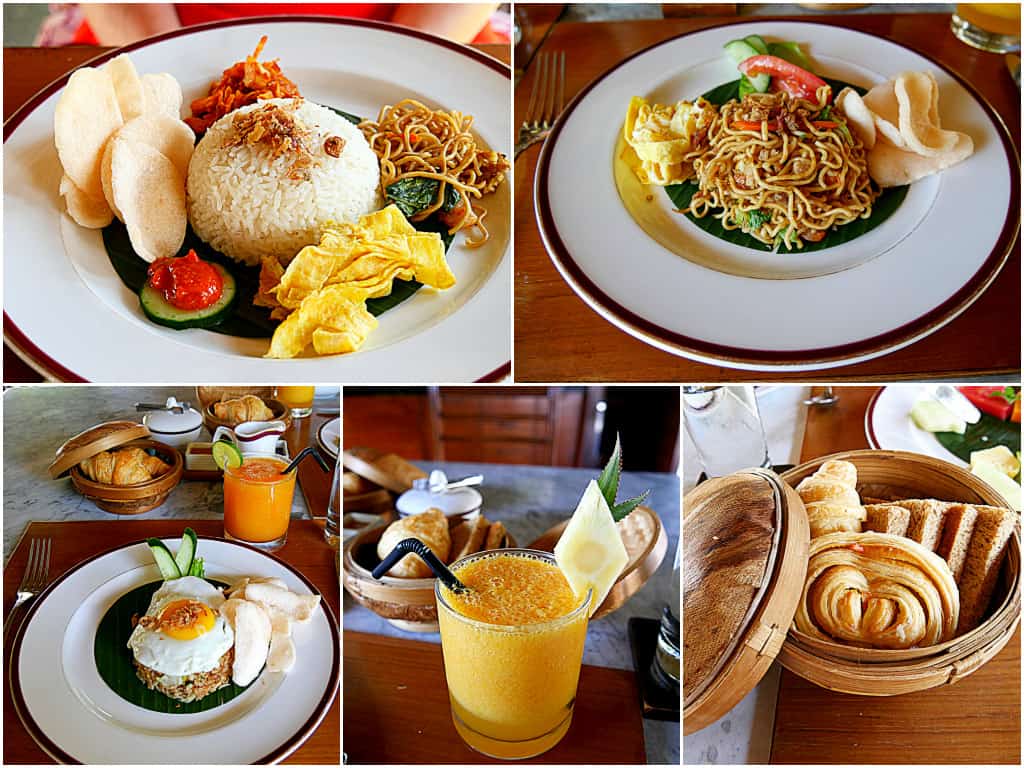
    For breakfast, you can also choose to take it in your room although we preferred to visit Tapis restaurant. The best thing is that there is no time limit so you can have it whenever you wish.
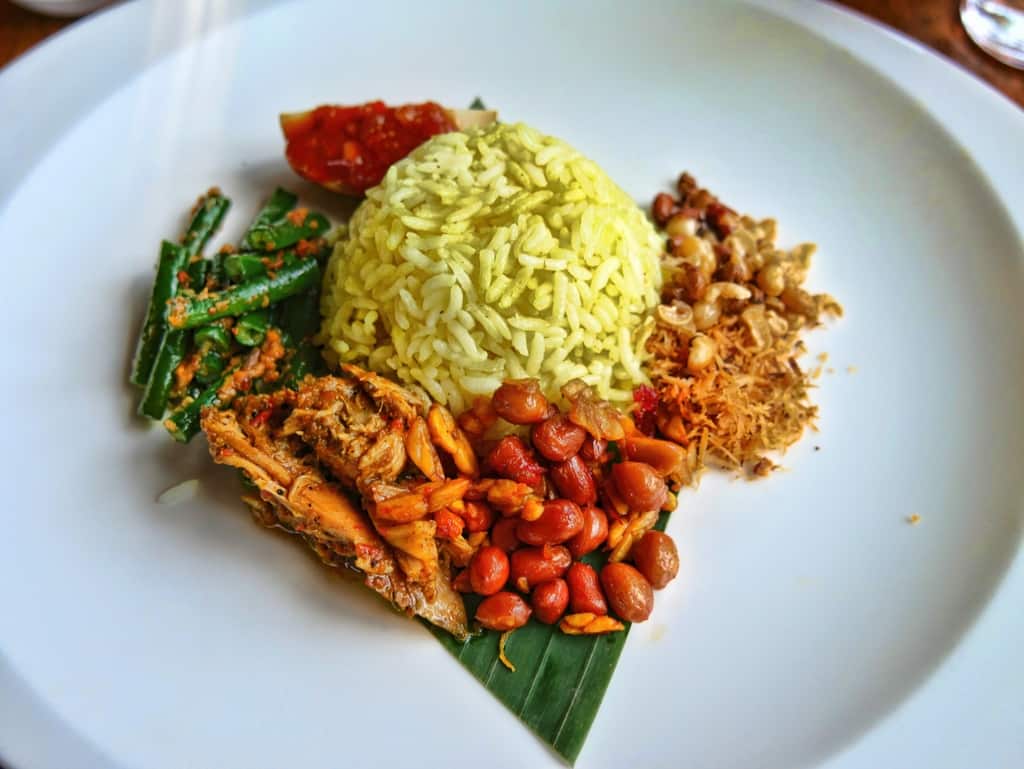
    There are lots of options on the menu including European croissants however we wanted to experience the Balinese breakfast, you soon get used to eating curry three times a day! We loved the nasi goreng and other specialties.
    Afternoon Tea at Kayumanis Jimbaran

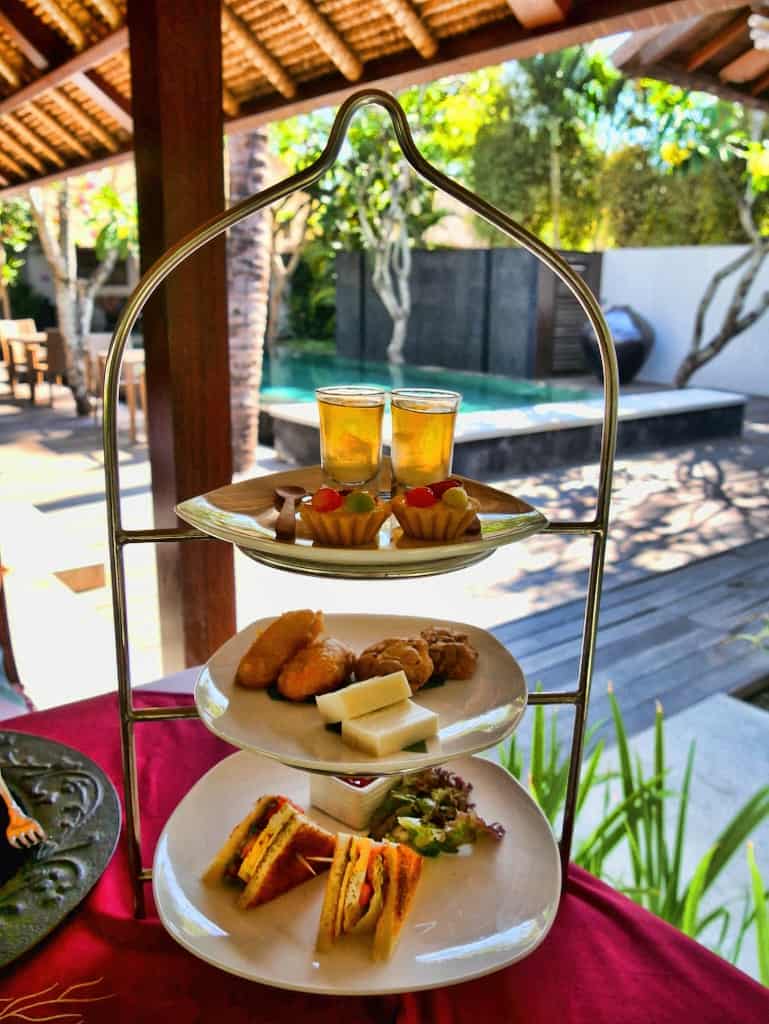
    Another nice touch at Kayumanis Jimbaran is their complimentary afternoon tea, that you can take in Tapis or your villa. It’s a lovely mix of club sandwiches, fruit tartlets and jellies.
    Final Thoughts About Kayumanis Jimbaran

    Kayumanis pride themselves on three things – the genuine warmth of their staff, the privacy of their villas and the sense of space that you feel in their properties. We certainly felt that they excelled in all three areas and I’d love to return to visit another of their properties in Nusa Dua, Sanur or Ubud!
  • The 6 Ultimate Thailand Luxury Escapes for Wellness

    The 6 Ultimate Thailand Luxury Escapes for Wellness

    Thailand is one country that has definitely mastered the art of wellness. With many outstanding spas and skilled practitioners, it’s the ideal destination if you wish to pamper yourself. Here are some of the best Thailand luxury escapes, perfect for regenerating your mind and body.

    Ultimate Thailand Luxury Escapes for Wellness

    With so many great Thai spa luxury resorts, you may find it hard to limit yourself to just one. We’d definitely recommend that you go island hopping in Thailand. Start in Krabi, then head to Phi Phi Island, exploring Thailand hidden gems Koh Yao Yai and Koh Ya Noi before finishing at Big Buddha Phuket.

    1.The ShellSea Krabi

    Thanks to the impeccable service at this Krabi boutique hotel, you can leave your worries at the doorstep. They magically clean your villa while you’re enjoying breakfast and are always warm and smiling.

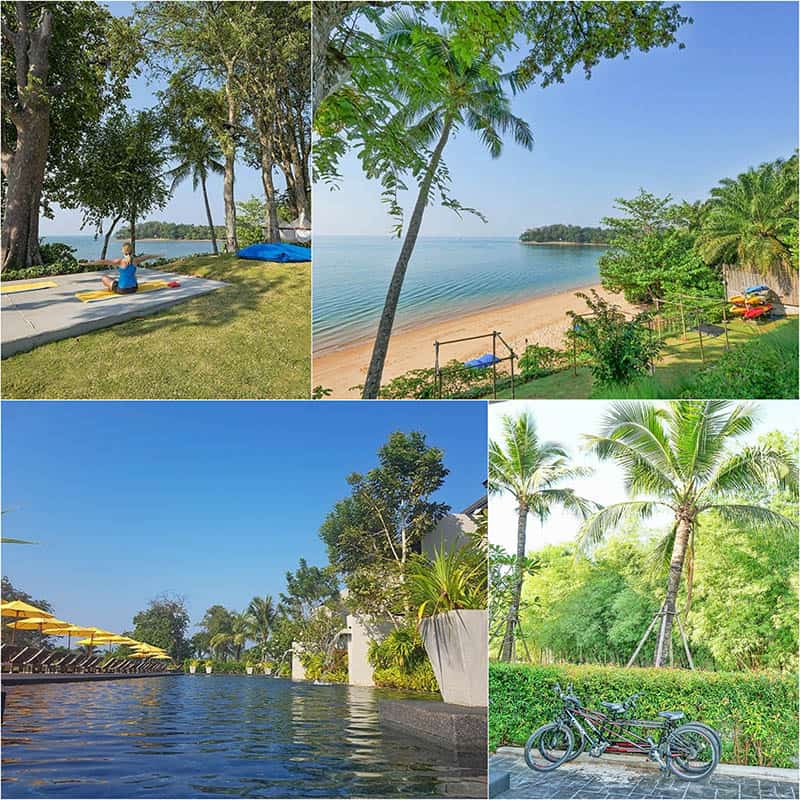
    There’s a great selection of complimentary fitness and wellness classes at The ShellSea Krabi. In addition to more energetic pursuits like beach volleyball and paddle boarding, they have many relaxing activities like Pilates and yoga.

    The yoga class takes place on the lawn overlooking the beach in the morning while it’s not too hot. Their highly skilled instructor will take you through a series of poses designed to increase flexibility and balance.

    The tandem bikes are fun to try out and they also have regular bicycles for guests to borrow. You can either cycle with a group to Fossil Shell Beach or like we did, bike towards a nearby reservoir.

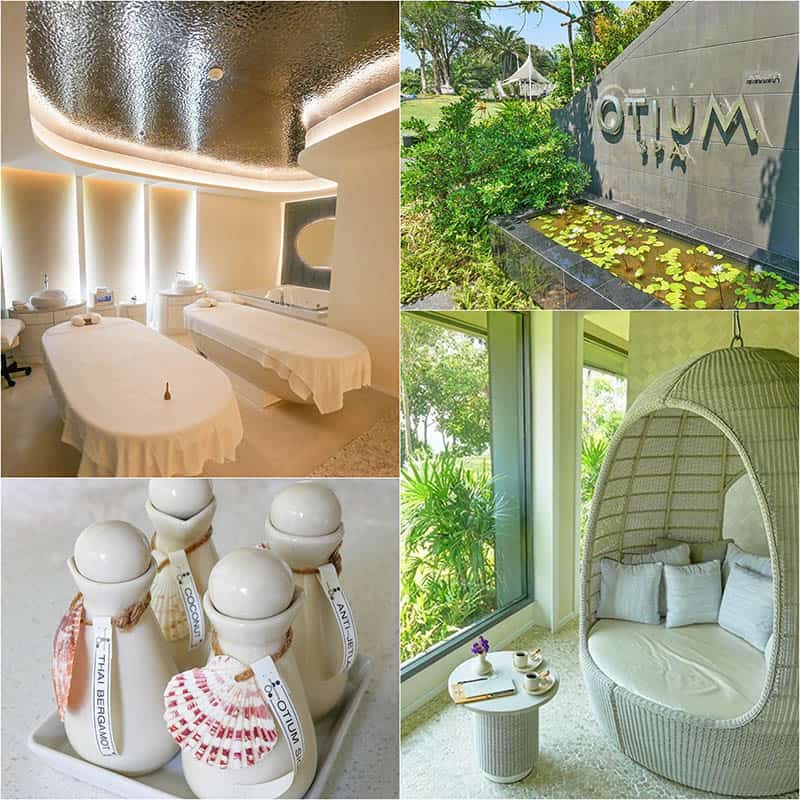
    The hotel’s Otium Spa has the very latest technology, since the hotel opened recently. As is the case in most Thai spas, you’ll be asked to leave your shoes at the door and they’ll equip you with slippers before bringing you a welcome drink.

    We tried the couple’s Thai massage where you have a treatment side by side with your partner. We particularly appreciated the large modern spa beds with their padded face cushions.

    If you’re wondering about how strong a Thai massage is then fear not as you’re asked beforehand whether you want a light, firm or strong massage. The therapists also check if there are any areas of the body that you’d like them to focus on.

    A firm massage like the one we had here is perfect for relaxation, while a stronger pressure is more like a sports massage. The therapists do a great job of eliminating tension in your body and you’ll feel completely relaxed afterwards.

    2.Amari Vogue Krabi

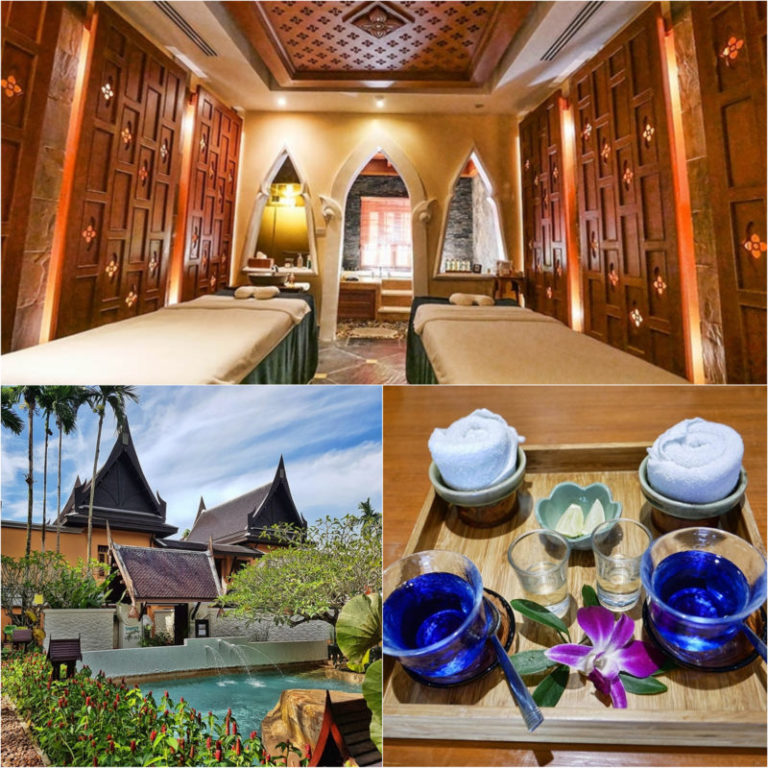
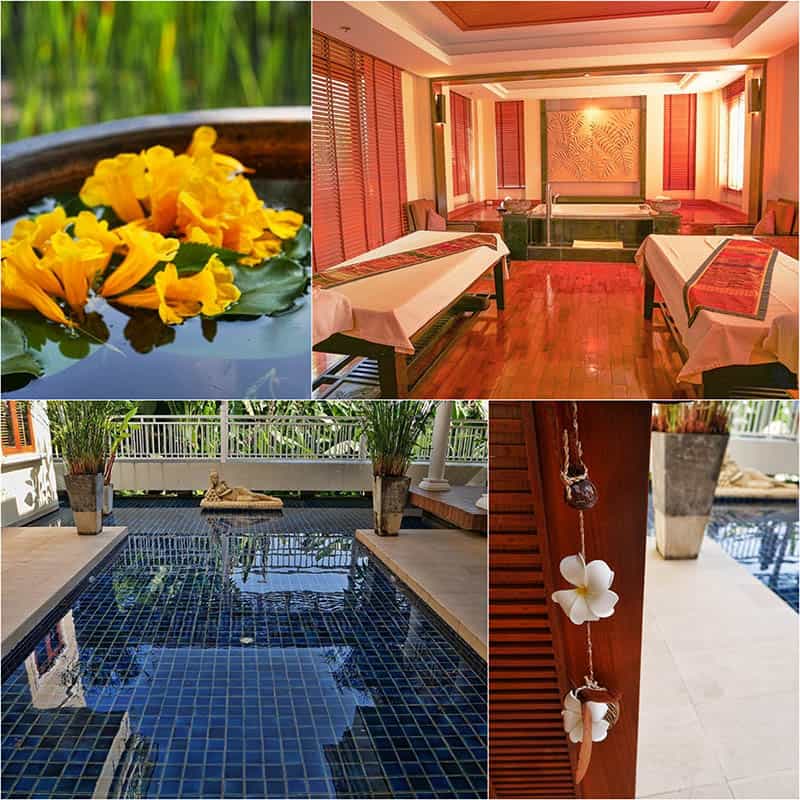
    Breeze Spa at Amari Vogue Krabi is one of our favourite spas in Thailand. Located in an ornately decorated building within the hotel grounds, it’s set over three floors.

    There are two Spa Suites for couples, and all the treatment rooms have a bathtub and private steam room. Their Signature Mood Massages are designed to take the guesswork out of picking the right treatment.

    Whilst you savour a glass of blue butterfly pea tea, the spa therapists ask how you are feeling and how you would like to feel – dreamy, energized, invigorated, rejuvenated or serene.

    Their spa treatments use drainage and aromatic massage techniques combined with carefully chosen massage oils to speed up the removal of toxins. The oils have the added benefit of leaving your skin glowing and super soft.

    This luxurious retreat is highly conducive to relaxation, with several swimming pools on different levels. If you’re keen to get active then it’s a handy base for kayaking or a visit to Khao Ngon Nak National Park next door.

    3.Phi Phi Island Village Beach Resort

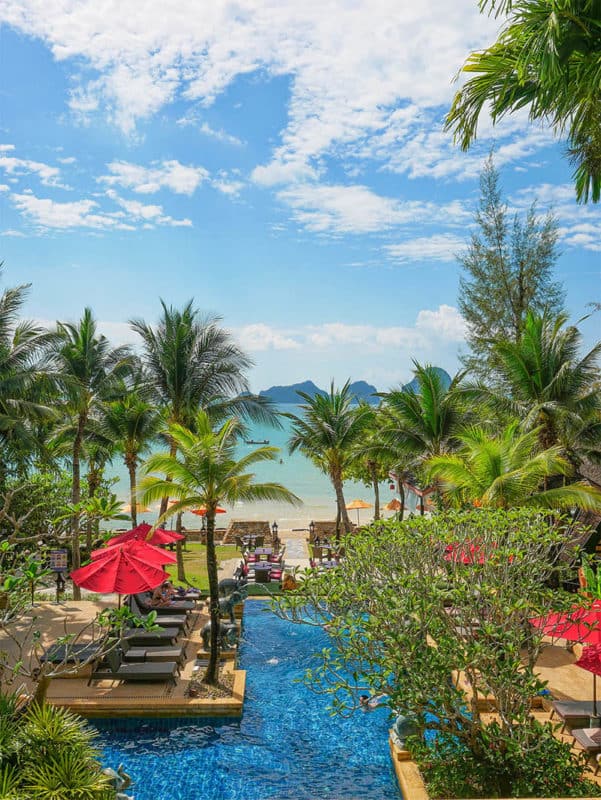
    Blessed with an 800 metre white sand beach, Phi Phi Island Village is one of the most beautiful Thailand retreats. Set over 80 acres, the accommodation has a traditional style that blends in perfectly with the surroundings.

    The sea here is a lovely shade of blue-green unlike anything you’re likely to have seen before. The snorkelling is second to none and the hotel’s Dive Centre arranges great trips to nearby Maya Bay.

    This Thai bay is famous as the setting for the film, The Beach, starring Leonardo di Caprio. Wana Spa is located near the hillside villas and the largest swimming pool in the resort.

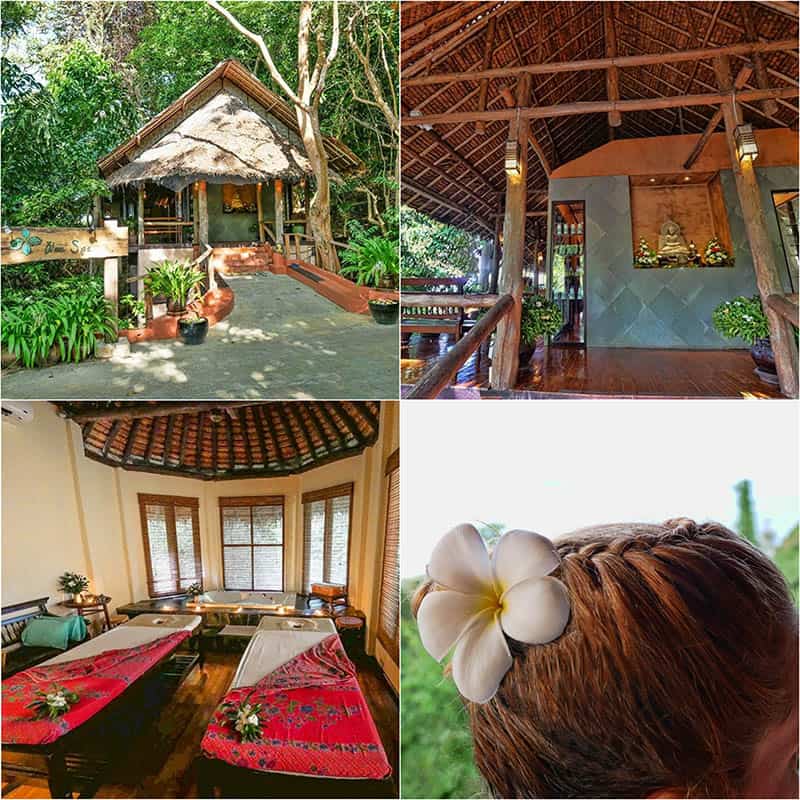
    The friendly therapists carry out the treatments in individual spa huts, starting with a relaxing foot wash. We recommend the Wana Signature Massage which blends therapeutic healing techniques from the East and West.

    This relaxing massage helps to release tension, improve circulation and boosts overall wellness. At the end there’s a nice surprise for ladies, as your therapist expertly arranges your hair into a plait with a fresh flower as a decorative touch.

    There are some other interesting massages such as the Coconut Amarita Treatment, where you’re wrapped in banana leaves and your body is covered in pure honey and yoghurt.

    4.Paradise Koh Yao Noi

    The charm of this luxury Andaman hotel lies in its setting on an unspoiled stretch of coastline. This boutique resort and spa is nestled within a private bay and surrounded by limestone cliffs.

    The pace of life is relaxed on the island of Koh Yao Noi and if you travel around you’ll see buffalo grazing amidst rubber plantations. It’s one of the most charming hidden gems in Thailand.

    Paradise Koh Yao Noi is popular with those looking for Thailand yoga retreats. Twice daily classes take place in a beachfront sala – a traditional open fronted pavilion.

    The resident teacher combines traditional and contemporary methods of meditation and yoga to great effect. Another must do is the resort’s Serenity Spa.

    A complimentary 30 minute beachfront massage is available to all guests. However you definitely want to experience the full spa experience.

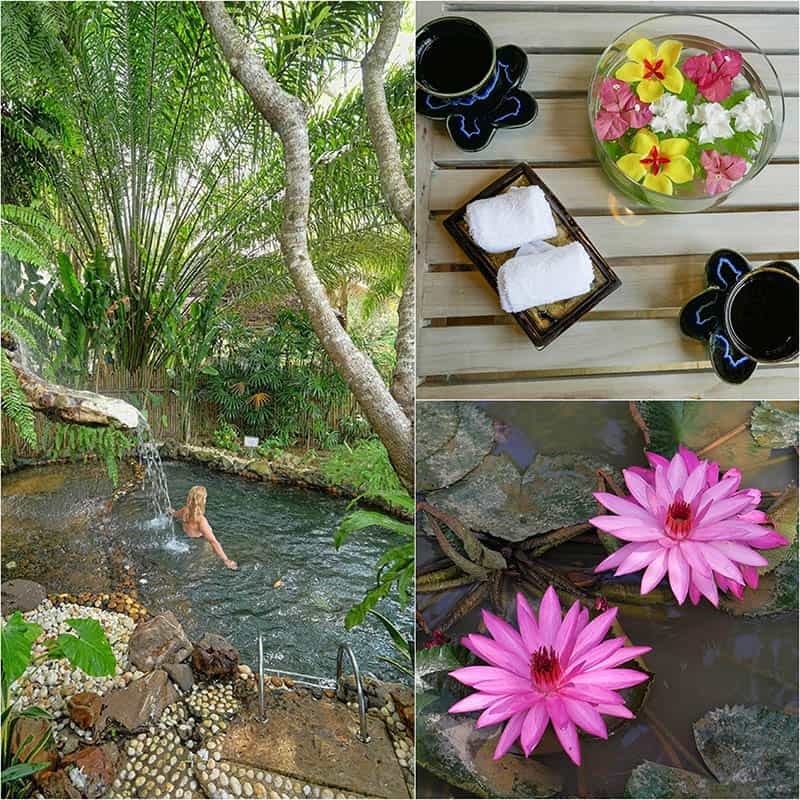
    The luxurious treatment starts with your therapist helping you to put on a traditional Thai garment known as a paasin, a tube of fabric that’s folded and tucked to your body. After that you’ll spend time alternating between the aromatic steam cave and the outdoor waterfall plunge pool.

    Your therapist will then lead you through the spa’s private garden across a footbridge to your private sala. There’s a wide range of different treatments including body scrubs, hot stone massages and foot reflexology, using the best organic products.

    The hotel also has a lovely swimming pool close to the beach, for complete relaxation. If you’re looking for a truly unique place to stay on Koh Yao Noi then their sister property next door fits the bill.

    TreeHouse Villas Koh Yao Noi Luxury Beach Resort is an adults only resort with air conditioned villas in an idyllic location.

    5.Santhiya Koh Yao Yai

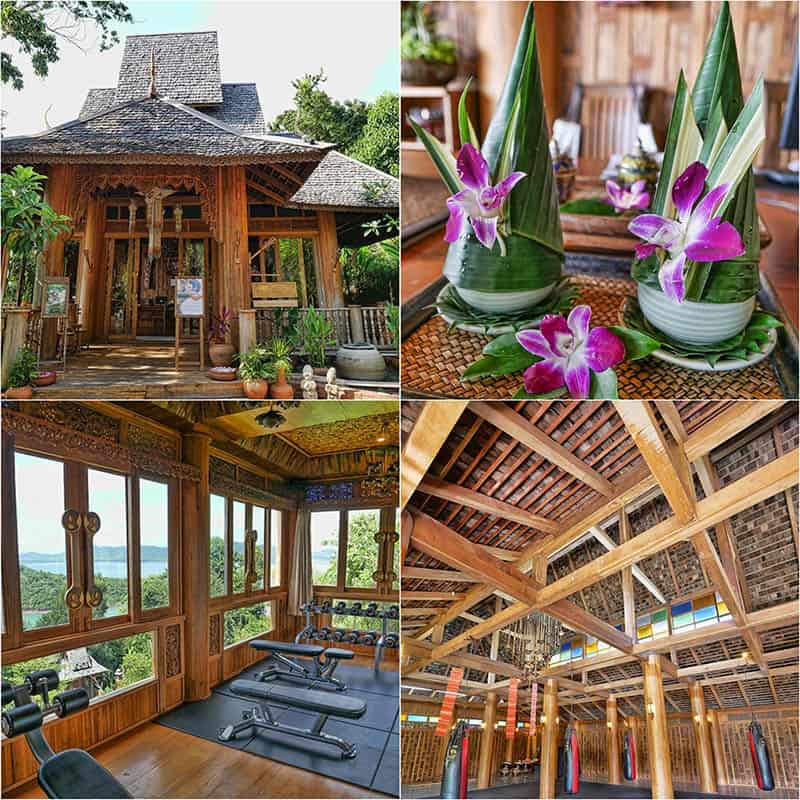
    An eco-luxury resort, Santhiya Koh Yao Yai will wow you with its intricately carved wooden buildings and private beach. Ayurvana Spa has a good selection of pampering treatments including the secret of Siam herbal compress and an aloe vera after sun massage.

    Before your treatment, you’ll be handed a non-alcoholic drink decorated with palm leaves and fresh orchids. We tried Santhiya’s Signature Massage, which blends reflexology, shiatsu, ancient Thai massage and Ayurveda therapy using hot oil.

    This pampering session helps to restore the energy flow within your body and the elimination of toxins in the lymph, as well as improving the circulation of blood vessels. After a treatment you feel like you’re on cloud 9.

    One of the great things about Santhiya is the range of complimentary daily activities for total cultural immersion. Guests can try their hand at Thai boxing and classical dance as well as fitness and yoga classes.

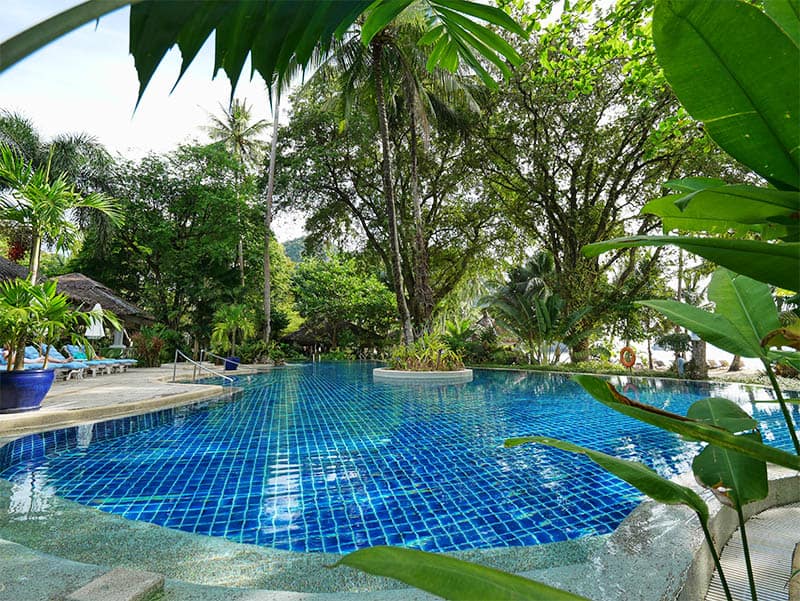
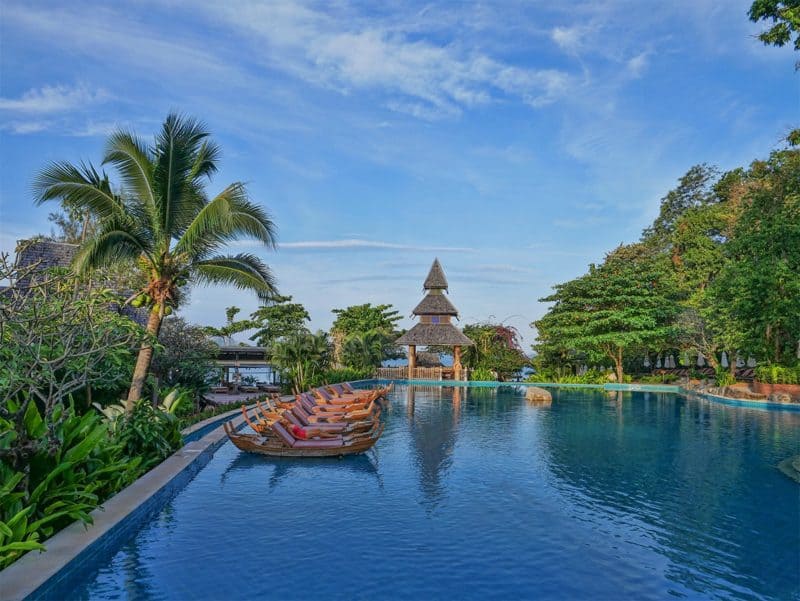
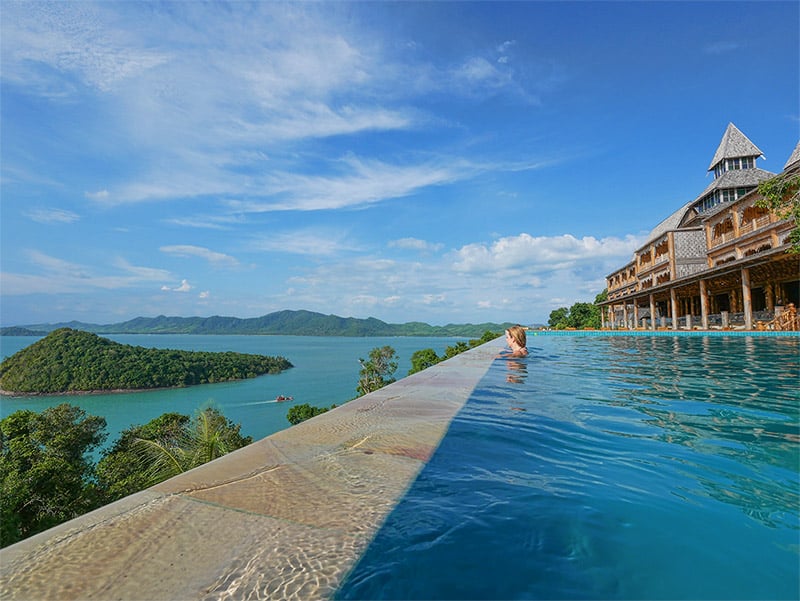
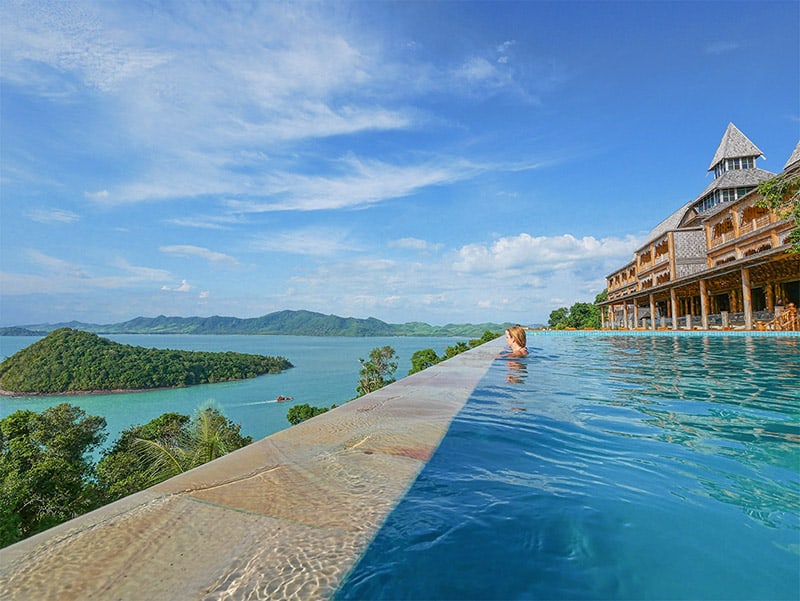
    If you prefer pure relaxation there’s an infinity pool on the hillside and another beautiful pool with a waterfall and boat shaped loungers in the heart of the resort.

    6.Cape Panwa Phuket

    Our final destination is Phuket and the stunning Cape Panwa Hotel. This luxury hotel has been a favourite with celebrities for many years.

    Leonardo di Caprio stayed here while filming The Beach nearby and Elizabeth Taylor, Catherine Zeta Jones and Jean-Claude Van Damme have all visited. The resort has a lovely setting overlooking the Andaman sea, within the remnants of a coconut plantation and all the rooms have a sea facing balcony.

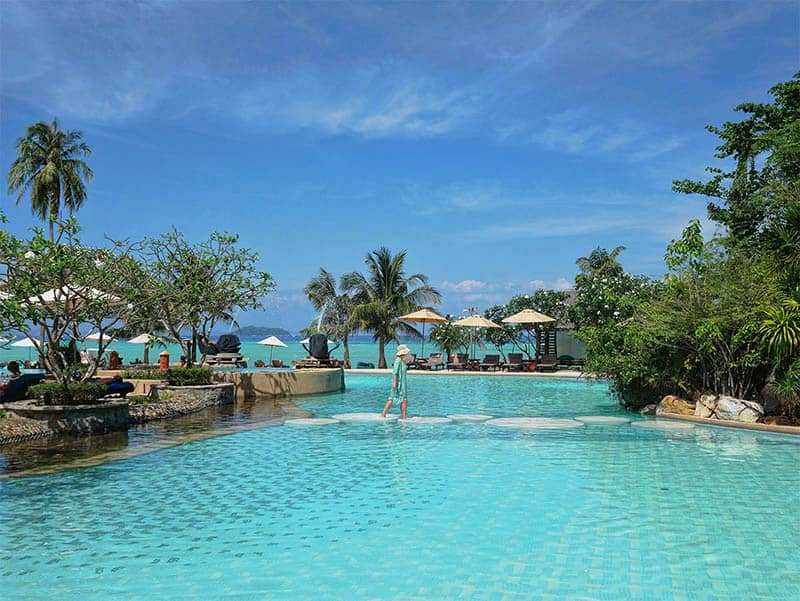
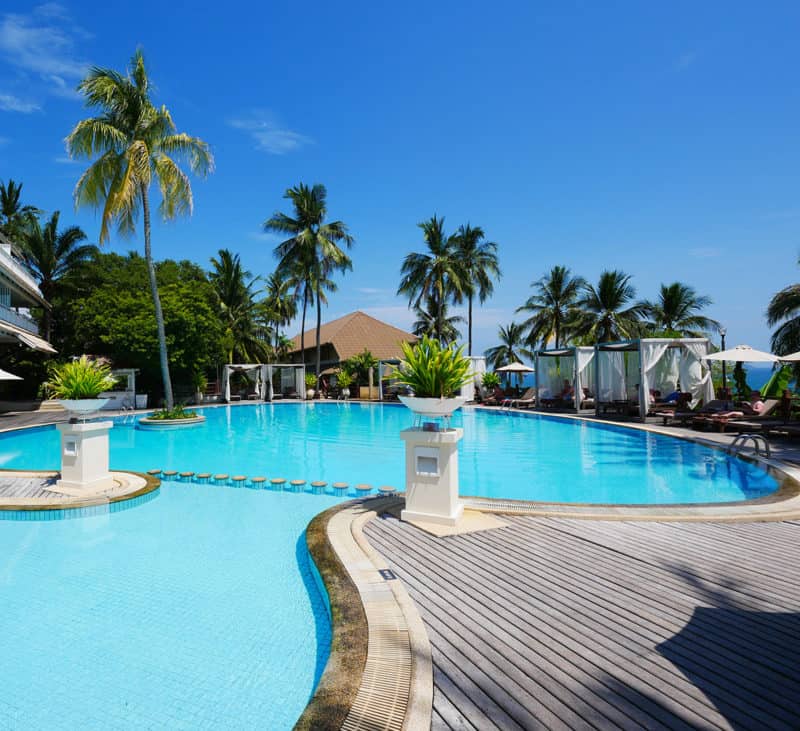
    There are two lovely pools, the main one near reception with its shady cabanas and another by the beach. Cape Panwa Hotel is also a great base from which to explore Big Buddha Phuket.

    Situated within the grounds of Cape Panwa Hotel, Cape Spa is the newest in the area. There are spacious treatment rooms, saunas and steam rooms and a relaxation area.

    Visitors can enjoy a variety of wellness programs such as a full moon anti-stress herbal compress and massage. We enjoyed a herbal foot bath and Siamese massage which incorporates yoga stretches.

    This Thai treatment stimulates the acupressure points and energy lines in order to loosen tightened muscles. The skilled pressure point massage techniques used by our therapists certainly relieved all tension.

    With this traditional massage, you wear a robe provided by the spa and the treatment is performed over your clothing. The advantage of oil not being used is that you can change into your clothes straight afterwards, so it’s handy if you want to use the pool right away.

    As you can see, there are some amazing Thailand luxury escapes for spa and wellness. It’s worth spending 2 weeks in Thailand if you have time, as there are so many hidden gems and wonderful wellness retreats to enjoy!

  • Spring in Tokyo | 8 Best Tokyo Spring Activities

    Spring in Tokyo | 8 Best Tokyo Spring Activities

    Spring in Tokyo is a truly magical place. Visitors to the capital of Japan will enjoy stunning blossom displays and fascinating cultural activities.

    When is Spring in Tokyo?

    In Japan, Spring typically starts in March and lasts until May. The exact date of its arrival in Tokyo is dependent on a variety of factors, including temperature changes and humidity levels. Despite its unpredictable timing, one thing is for certain: when Spring finally arrives in Tokyo, it brings with it an aura of freshness and rejuvenation that is simply unmatched.

    Spring in Tokyo Attractions

    There are many great things to do in Tokyo in Spring. Flower viewing in Japan is so popular that it has its own word, hanami.

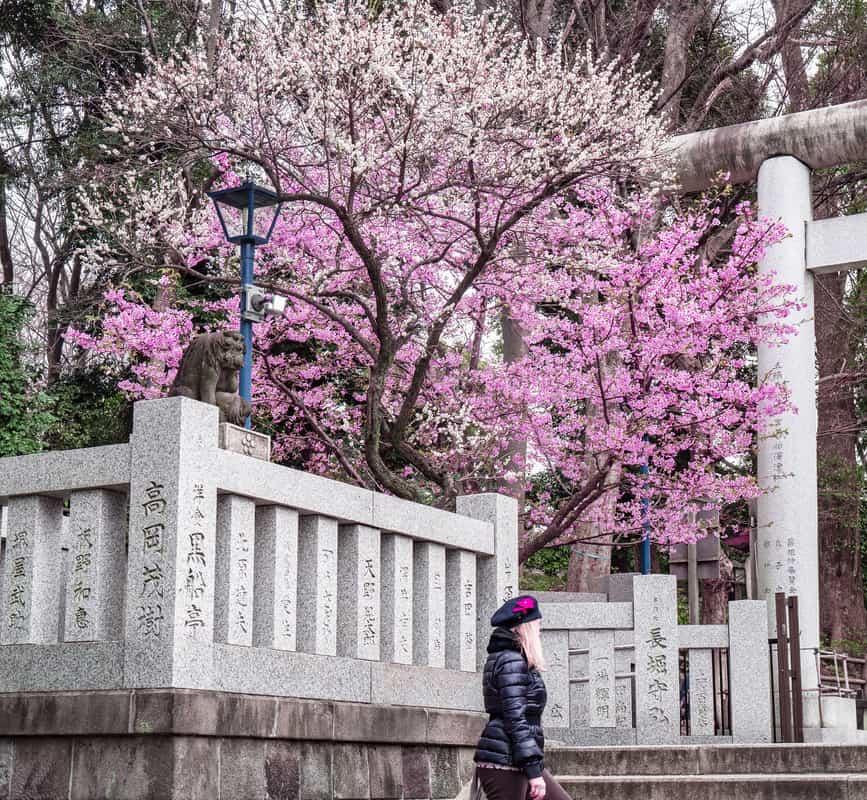
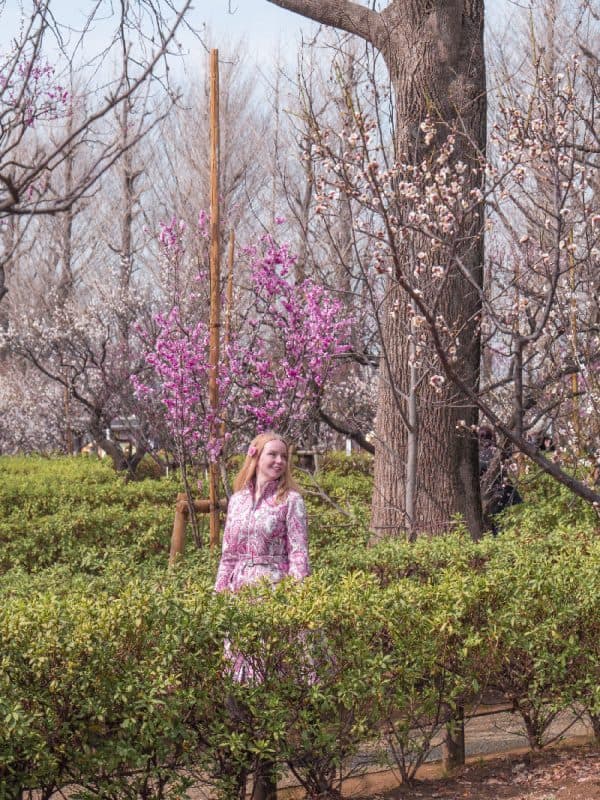
    Officially, Spring starts in March, however you can admire plum blossoms from as early as February most years. In fact, plum blossom viewing was more popular in ancient Japan than cherry blossom viewing is nowadays.

    Cherry Blossom vs Plum Blossom

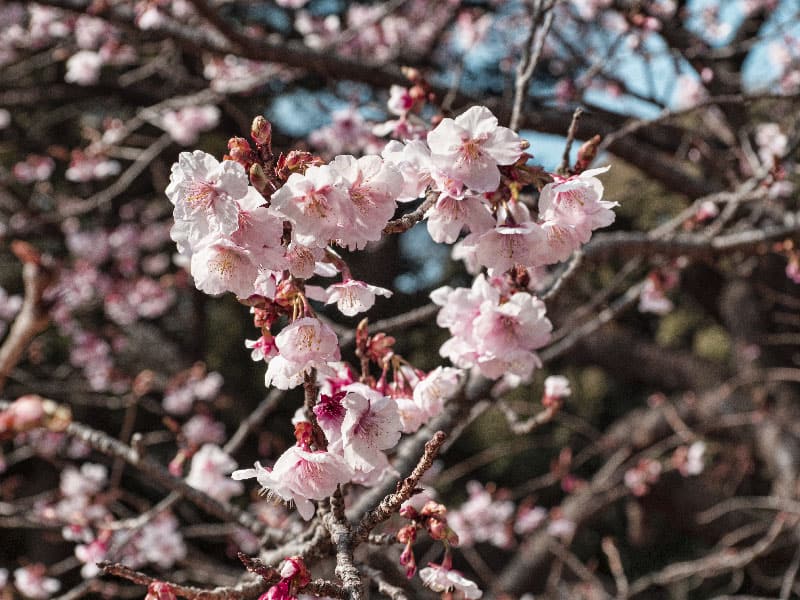
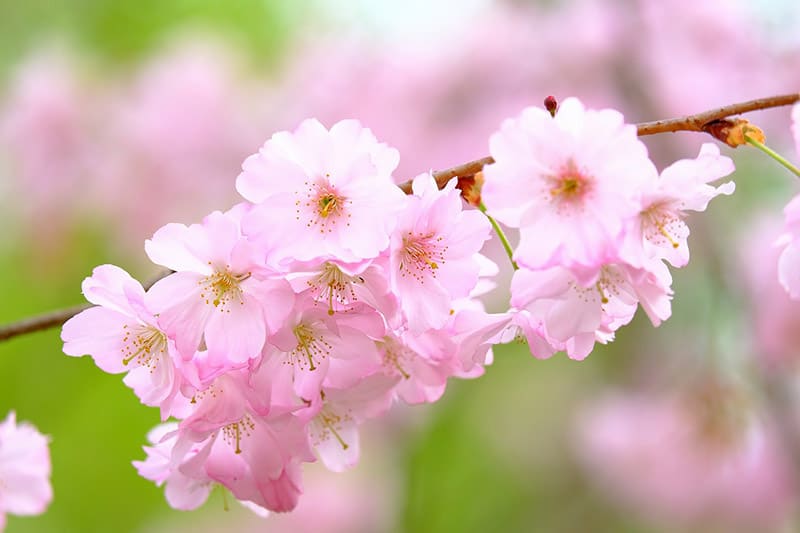
    So what is the difference between plum blossoms and cherry blossoms? Plum trees have a very aromatic fragrance compared to the light scent of cherry trees.

    They have dark coloured bark while cherry trees have a light bark with horizontal lines. Cherry blossom petals have a split at the end, unlike plum petals.

    Here are some suggestions for where to see the most beautiful Spring blossom in Tokyo.

    8.Setagaya Plum Blossom Festival

    If you’re lucky to be visiting Tokyo between 9 February and 3 March one year, don’t miss the Plum Blossom Festival in Setagaya, or Setagaya Ume Matsuri in Japanese. Held in Hanegi Park, it’s free to enter.

    There are over 650 plum trees in full bloom – 270 pink trees and 380 white blossom trees.

    Visitors can enjoy stalls selling plum themed food, tea ceremonies and haiku classes. Some plum delicacies are available throughout the year, such as umeshu plum wine and umeboshi pickled plums while others such as jams are more seasonal.

    The festival is a good introduction to traditional culture in Tokyo.

    Address: Hanegi Park, 38-52 Daita, Setagaya, Tokyo

    7.Shinjuku Gyoen National Garden

    One of the most beautiful public parks in Tokyo, Shinjuku Gyoen National Garden dates from the Edo period. Spread over 144 acres, it contains a Japanese garden and ponds, an English landscape garden and formal French garden.

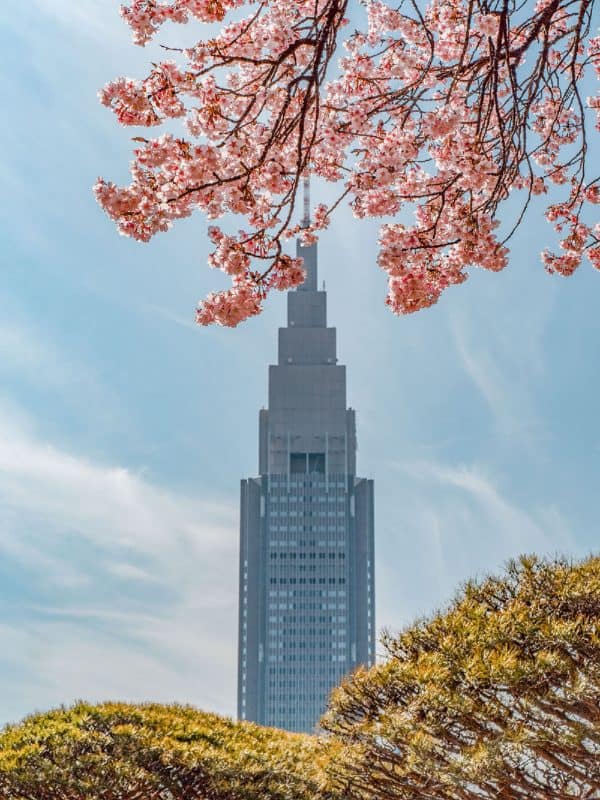
    There’s also a Taiwan pavilion, a wooded area known as Mother and Child Forest or Haha to Ko no Mori. The garden has some spectacular plum trees, which you can photograph with the NTT Docomo Yoyogi Building, the fourth tallest tower in Tokyo in the background.

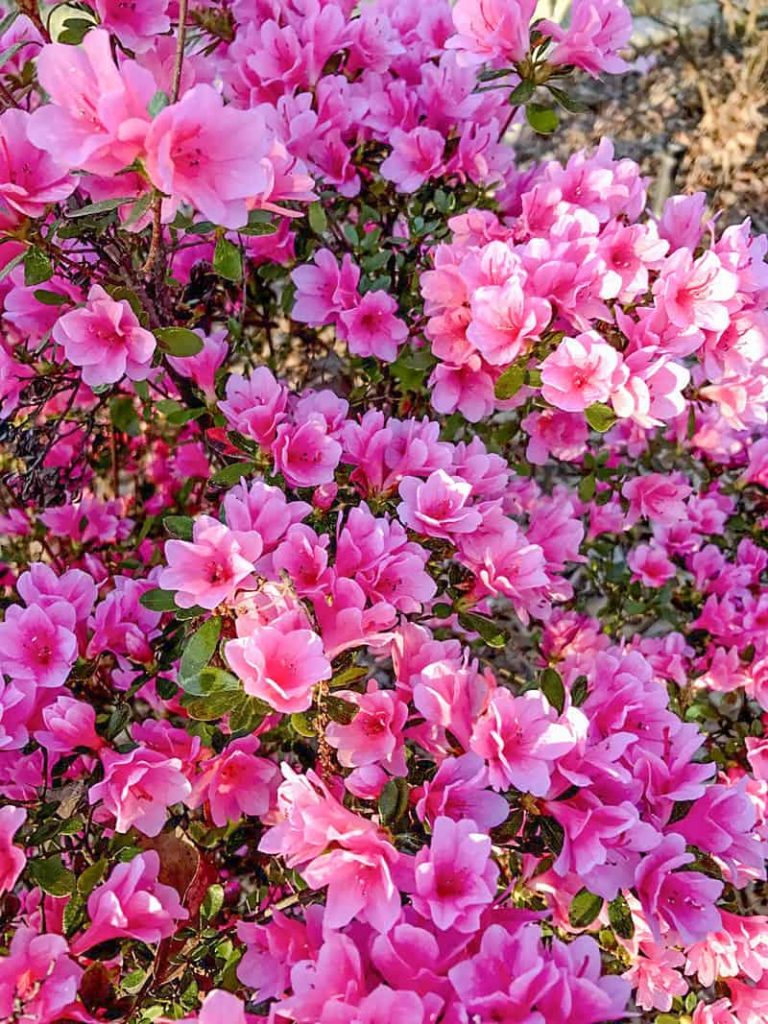
    From end of March onwards, there are over 1500 cherry trees in bloom. May and June are also good months to visit, in order to see the azalea flowers.

    It costs 200 yen to enter the park, which is open from 9 am to 4.30 pm (last entrance at 4 pm) and closed on Mondays. There are also two Japanese tea houses where you can enjoy a warming matcha tea.

    Address: Shinjuku Gyoen National Garden, 11 Naitomachi, Shinjuku-ku, Tokyo

    6.Hanazono Inari Shrine

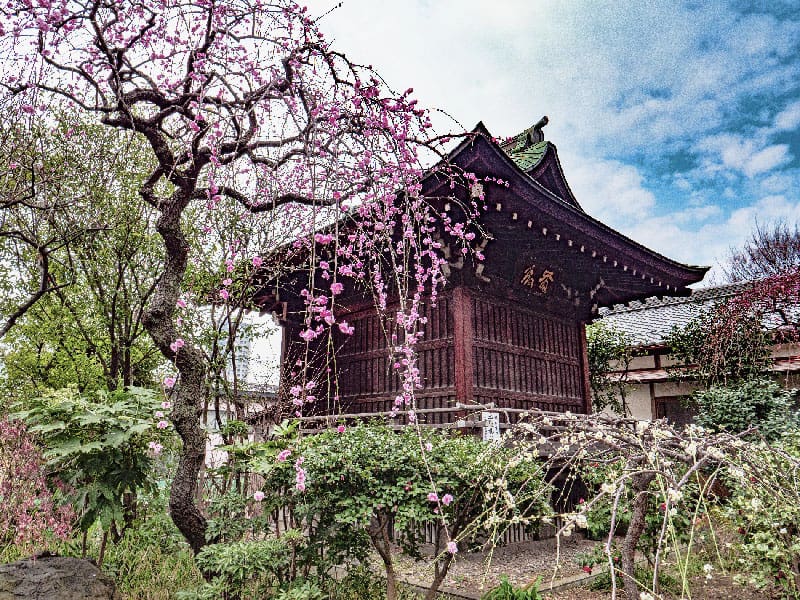
    This Shinto shrine in Ueno Park is known for its beautiful plum and cherry blossom. It is dedicated to Inari the Japanese god of fertility and a place where people go to wish for happy relationships.

    There are red torii gates next to the shrine that are among the most photographed spots in Tokyo.

    If you have some spare time, check out the many museums within Ueno Park, including Tokyo National Museum. You could also enjoy a picnic while admiring the plum or sakura blossom.

    Known as a hanami party, it’s a popular Japanese hobby in Spring. Be careful to check whether it is allowed in the park that you are planning to visit.

    Picnics are permitted in Ueno Park and you can buy special hanami bento boxes in the shape of blossoms at nearby department stores. At night, lanterns are lit so that people can carry on enjoying the flowers.

    Address: Hanazono Inari Shrine, 4-59 Uenokoen, Taitō, Tokyo

    5.Hinamatsuri – Girls’ Doll Festival

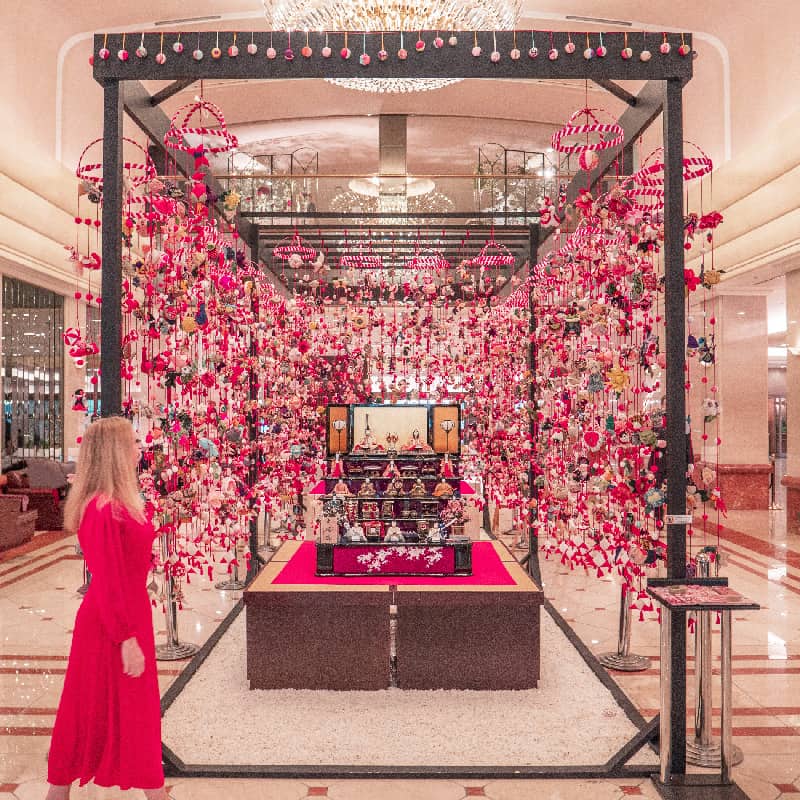
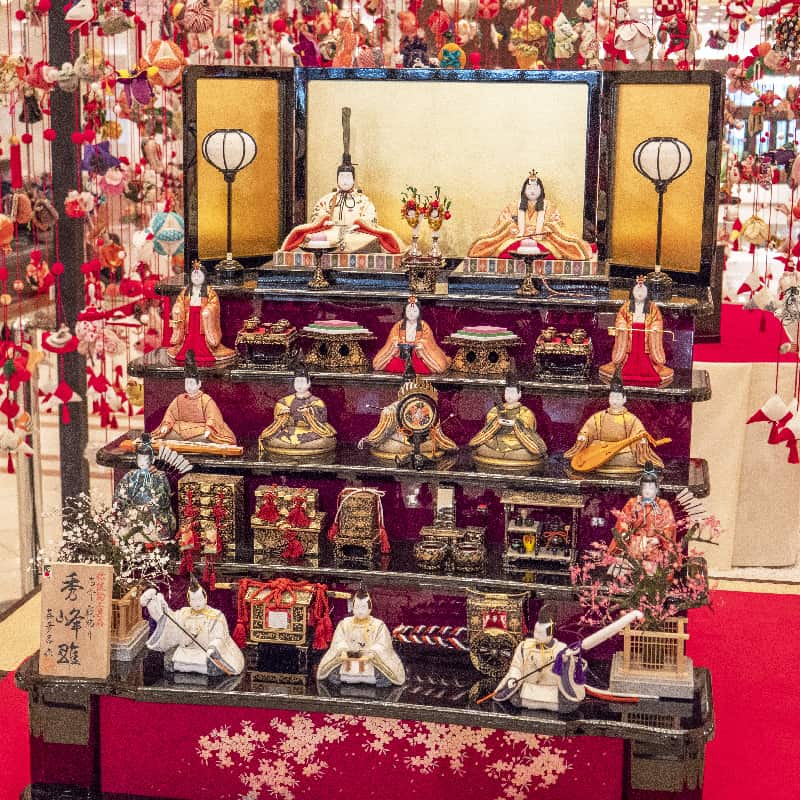
    Celebrating the good health and happiness of girls, Hinamatsuri takes place throughout Japan on 3 March each year. From mid February onwards, families display a hina-dan, an altar with rows of ohinasama dolls dressed in miniature kimonos.

    These traditionally warded off bad luck. Two figurines at the top of the display represent the Emperor and Empress of the Imperial Court in the Heian era.

    During Spring in Tokyo, families serve diamond shaped rice cakes called hishi-mochi, as well as pastel colored hina arare rice crackers. If you’re in Tokyo between 1 February to 31 March, you can see a magnificent Girls Doll Festival display at Keio Plaza Hotel in Shinjuku.

    They are hosting an exhibition “Hina-matsuri through Tea Ceremony Culture and Hanging Art”. There are Mataro dolls from Kamigamo Shrine, together with 6,800 decorative figurines crafted from antique kimonos.

    Quilt artist Mitsuyo Matsuo and the members of her Himawari Group made each item by hand and they all have specific meanings. For example, there are cranes and turtles to symbolize longevity.

    The main exhibit in the hotel lobby is 3.3 meters high. There are also lots of historical items from Japanese tea ceremonies on display.

    During the months of Februray and March, those dining at nine of the restaurants in Keio Plaza Hotel can enjoy special menu items to celebrate hina-matsuri.

    Address: Keio Plaza Hotel, 2 Chome-2-1 Nishishinjuku, Shinjuku, Tokyo

    4.Chiyoda Sakura Festival

    Another beautiful place to admire the cherry blossom in Tokyo is at Chidorigafuchi Park. Dating from the Edo era, Chidorigafuchi moat was once part of the Imperial Palace.

    There is a 700 meter long cherry tree tunnel and a boating lake which stays open late, however picnics are not allowed. Sakura season begins in late March or early April depending on the temperature.

    From 26 March to 8 April, Chiyoda Sakura Festival is taking place. Visitors can view around 260 sakura or Japanese cherry trees.

    The trees are illuminated in the evenings as it’s a popular pastime to see cherry trees then. In fact the Japanese word yozakura means cherry tree viewing at night.

    Address: 2 Chome-2-11 Kudanminami, Tokyo

    3.Nezu Shrine Azalea Festival

    This historic shrine is a great place to see cherry blossom. It also plays host to the Bunkyo Azalea Festival from early April to early May each year.

    There is a small entrance fee to the festival, where you can see a multitude of white, pink and purple azalea bushes.

    Address: Nezu Shrine, 1 Chome-28-9 Nezu, Bunkyō, Tokyo

    2.Kameido Tenjin Wisteria Festival

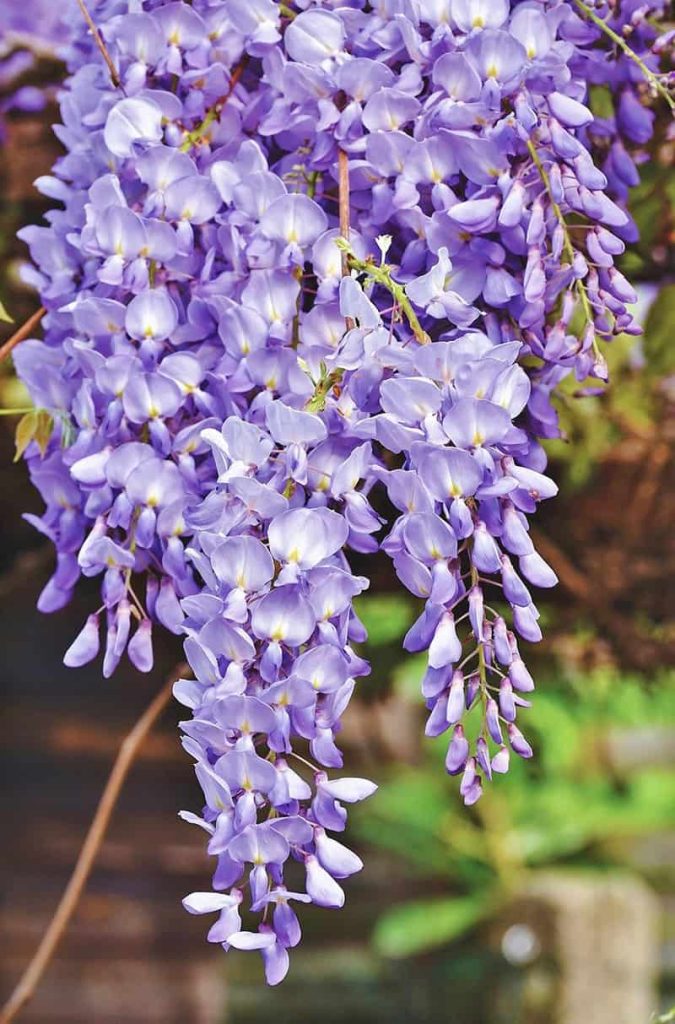
    Taking place between 14 April and 6 May, this wisteria festival is held at Kameido Tenjin Shrine. This Shinto shrine has been a popular place to admire wisteria since the Edo period.

    Entrance to the festival is free and there are food stalls as well as ikebana flower arranging, tea ceremonies and taiko drumming.

    Address: Kameido Tenjin Shrine, 3 Chome-6-1 Kameido, Koto, Tokyo

    1.Aoyama Flower Market Teahouse

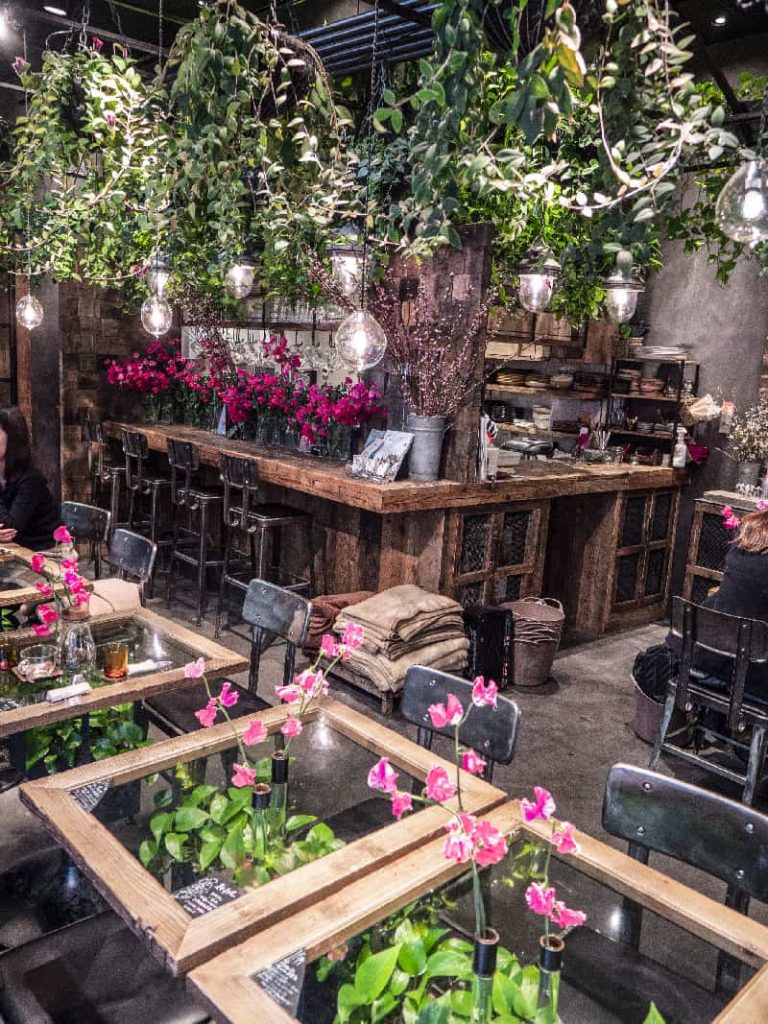
    One of the most Instagrammable places in Tokyo, Aoyama Flower Market Teahouse is a must see at any time of year.

    This florist shop and tea house is particularly appropriate to visit during Springtime as it is adorned with fresh Spring blooms. There are actually 3 branches of Aoyama Flower Market Teahouse, including Kichijoji and Akasaka, pictured here.

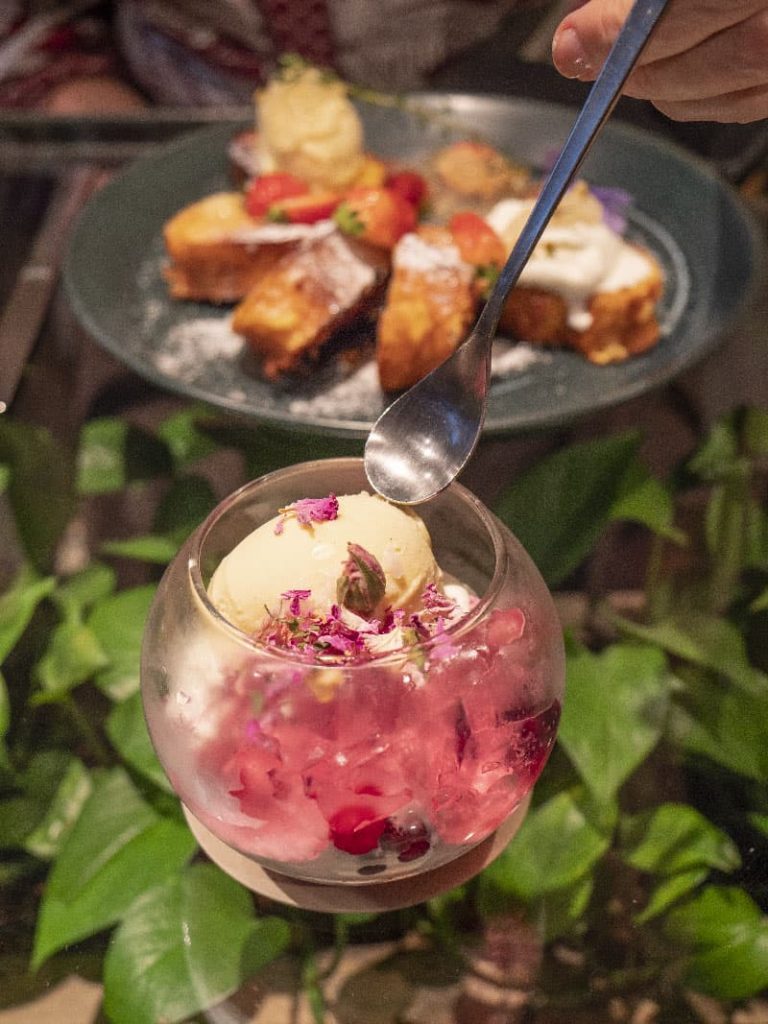
    They serve up a variety of sweet treats such as flower French toast, fresh herbal teas and rose jelly. We love the food at their Head Office branch at Minami-Aoyama and the decor is stunning.

    The glass tables have plants growing underneath them! You may have to queue at the weekend so it’s best to visit during the week if possible.

    Address: Aoyama Flower Market Tea House, 5-1-2 Minami Aoyama Minato-ku, Tokyo

    Spring Food in Tokyo

    There are many tasty foods to try in Tokyo in Spring. Here are some that you shouldn’t miss:

    • Mikan are sweet, seedless citrus fruits. They are often eaten while sitting at a traditional low table with heating underneath, known as a kotatsu.
    • Plum flavored treats including umeboshi pickled plums, plum syrups and umeshu plum wine.
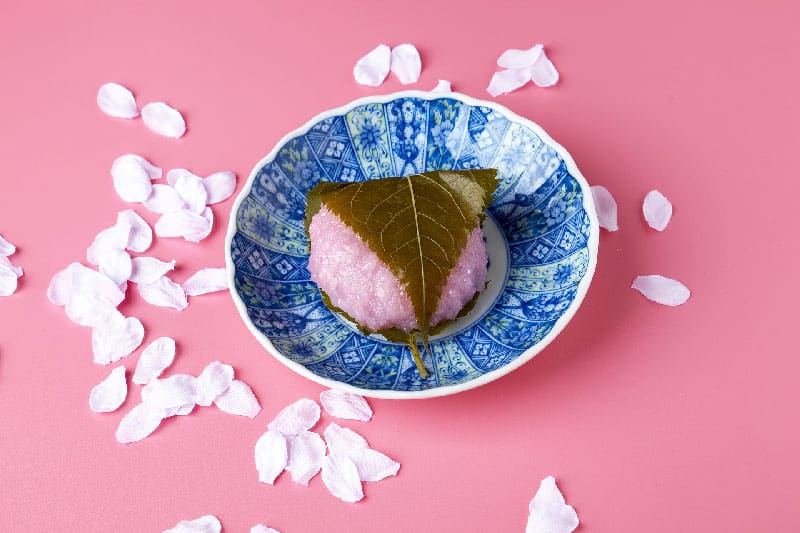
    • Sakura flavored food and drinks are popular. Try a cherry chuhai cocktail, a sakura latte or tea or sakura mochi sweets during your hanami party. Cherries themselves are available from June onwards. The most popular Japanese cherry is sato-nishiki.
    • Sansai are foraged mountain vegetables and roots.
    • Shirasu are young sardines that are caught from mid March onwards.
    • Spring cabbage or haru-kyabetsu is a soft cabbage with sweet leaves that are often wrapped around meat or vegetables.
    • Strawberries or ichigo in Japanese taste wonderful in Spring. You can take a day trip from Tokyo to go and pick them.
    • Takenoko are bamboo shots that are generally steamed with rice.
    • White asparagus is highly prized, thanks to the Japanese focus on food seasonality.

    Where to Stay in Tokyo in Spring

    With so much to see in Tokyo in Springtime, deciding where to stay can be a challenge. For those looking for a traditional Japanese experience, a ryokan might be just the thing. These guesthouses offer rooms with tatami mats, futons, and access to onsen hot springs.

    There are also many contemporary luxury hotels. From the Park Hyatt to the Peninsula, you’re sure to find a perfectly designed room to fit your budget and style. Regardless of where you decide to rest your head at night, Tokyo in the spring is not to be missed. We stayed at the Keio Plaza Hotel, which has a convenient location in the Shinjuku district of Tokyo.

    Weather in Tokyo in Spring

    The weather in Tokyo varies from highs of 13 degrees in March to 18.5 degrees in April. It can get chilly in the evening but there is usually only light rain, making it an ideal time of year to visit Tokyo.

    What to Wear in Tokyo in Spring

    We suggest bringing a Winter coat if you visit Tokyo in March, together with a hat and scarf. In April and May, you can get away with a light scarf and jacket.

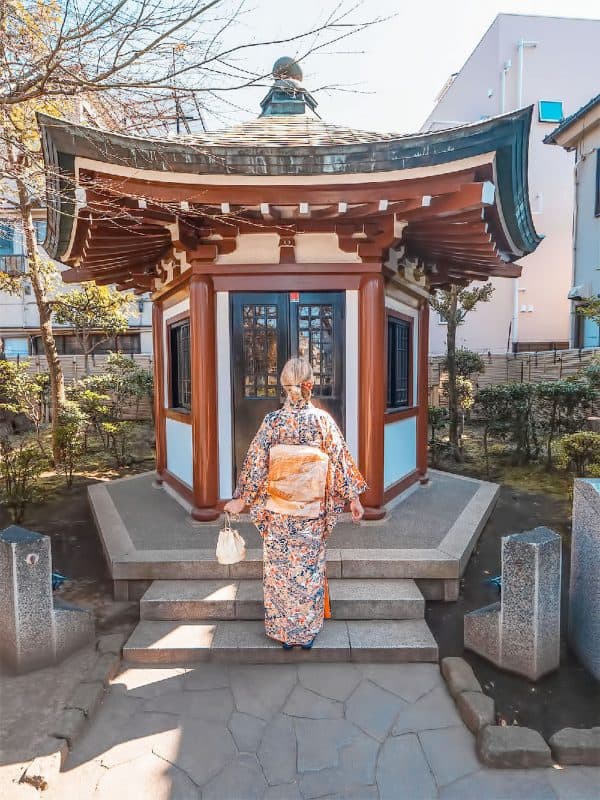
    Why not experience traditional Tokyo customs like kimono wearing during your stay. You can rent one in Asakusa near Senso-ji temple or in Yanaka, a quiet neighbourhood with many beautiful temples.

    Final Thoughts on Spring in Tokyo

    Visiting Tokyo in Spring is a truly remarkable experience. From the breathtaking views of the cherry blossoms to enjoying the hustle and bustle of the city, it’s an unforgettable adventure.

    Whether you’re there to take a romantic stroll through Ueno Park or explore some of Japan’s historical sites, you won’t be disappointed.

    With so much diversity in their culture, Japanese cities are perfect destinations for anyone looking for something a little bit different that will leave an impact. So what are you waiting for? Start planning your springtime Tokyo getaway today.

    Have you ever visited Japan or Tokyo in the Spring?

  • 5 Reasons Why You Should Take a Bangkok River Cruise

    5 Reasons Why You Should Take a Bangkok River Cruise

    Bangkok is one of the most vibrant cities in the world and a must-visit if you’re in Thailand. It can also be rather hectic and humidity at times, however one way to see it in style is from the water. Here are 5 good reasons why you should try a Bangkok river cruise.

    Why Take a River Cruise in Bangkok

    There are some fascinating Bangkok attractions that are easy to visit by boat. Here’s our pick of the best sights.

    1.Chao Phraya River

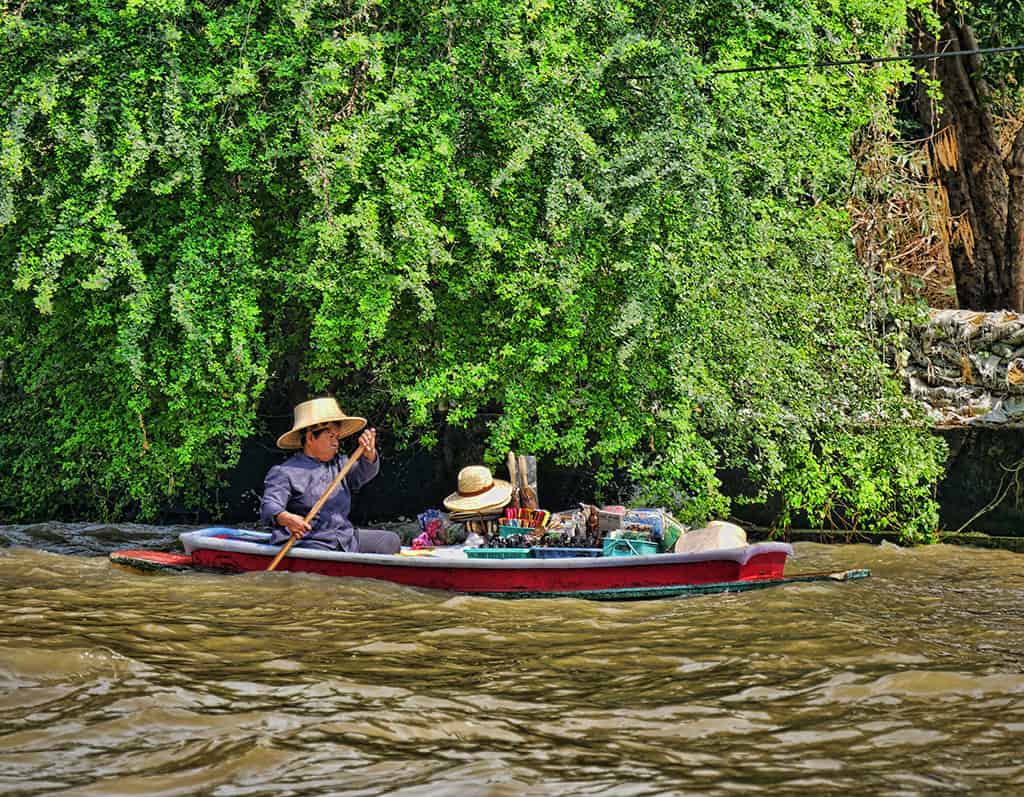
    Chao Phraya River, also known as the River of Kings, is the lifeblood of Bangkok. Many Thai people ply their wares at the floating markets such as Wat Sai.

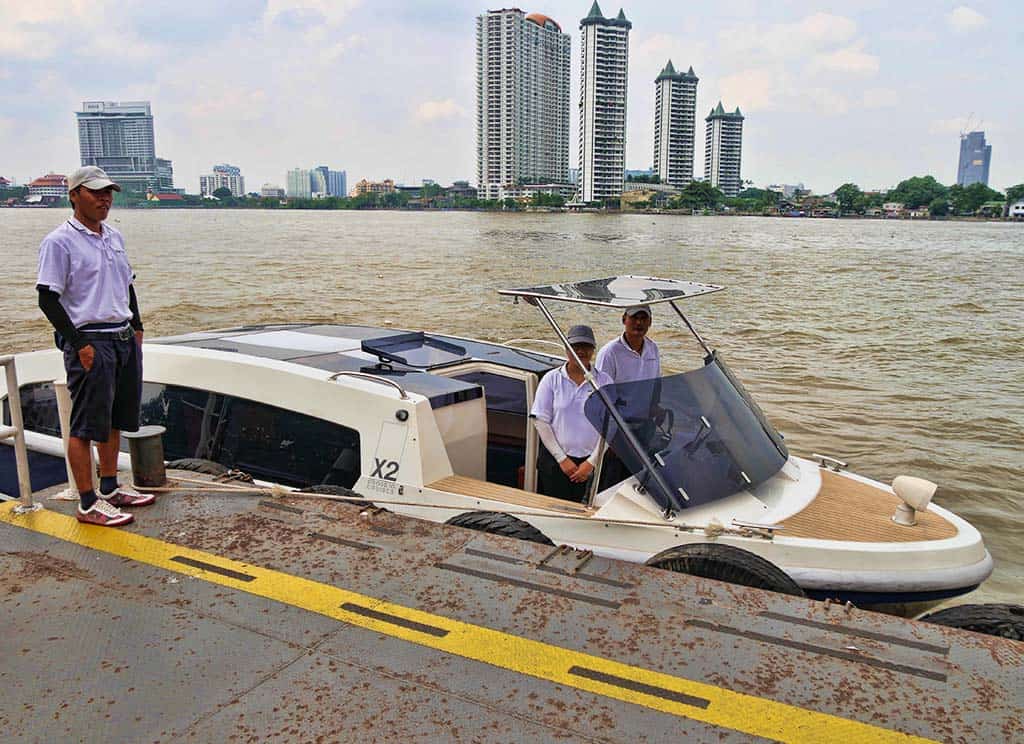
      You’ll occasionally come across individual boats in other parts of the river, selling fruit, vegetables, sunhats and more. Our private X2 2 hour luxury river and canal tour started at Sathorn Pier, which is easily reached from the centre.

      Alternatively, you can ask to be picked up from Taksin Pier. The boat holds up to 14 people and is open at the back but with a cover providing welcome shade. We chose the daytime Bangkok river cruise for maximum photo opportunities although the sunset visit sounded very tempting.

      2.Temple of Dawn

      At the moment, there is quite a lot of construction in the centre of Bangkok whilst the Green Line transit extension is being constructed. Due to this, travelling by road can be quite time-consuming.

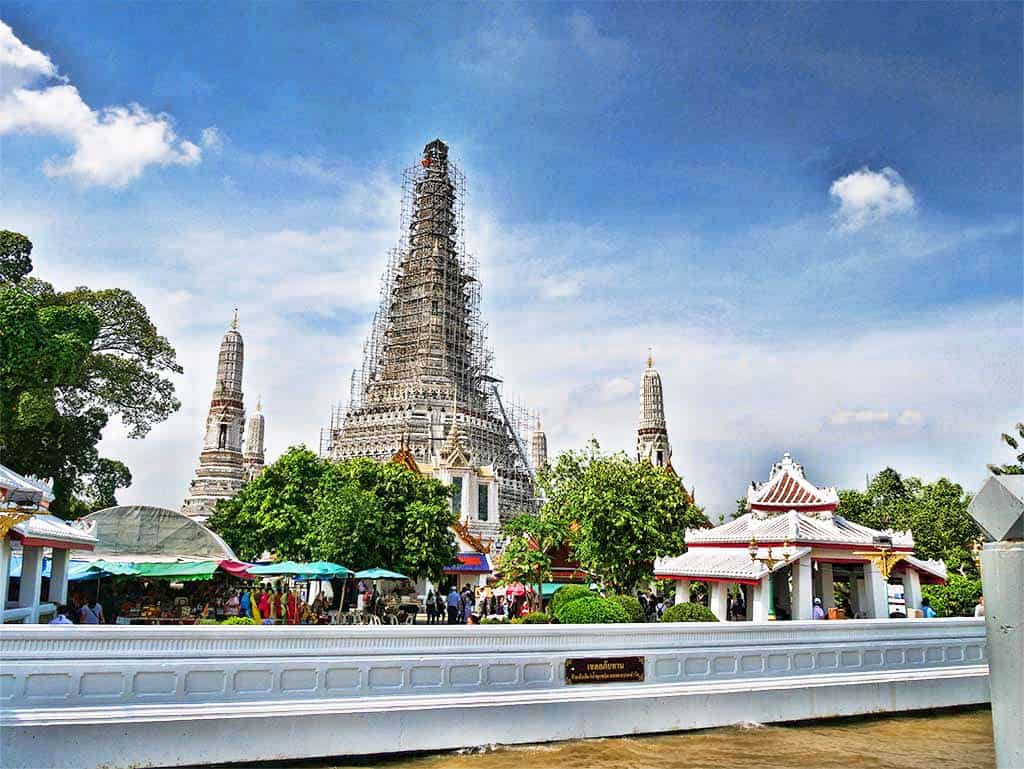
      Seeing the sights by boat is a great alternative and you won’t get stuck in a traffic jam. Wat Arun, or the Temple of Dawn, is located directly on the waterfront and well worth a visit.

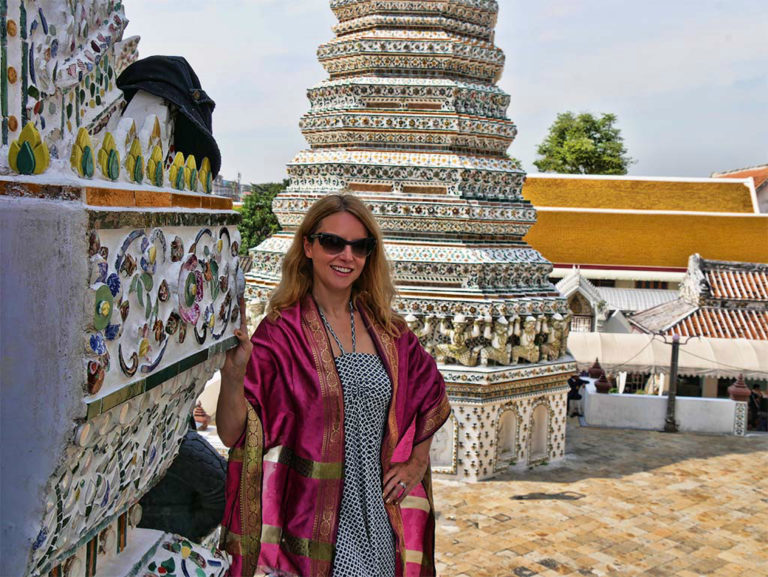
      This iconic Bangkok temple dates from the seventeenth century, although its iconic prana or spires were constructed during the reign of King Rama II in the nineteenth century. Our private boat docked a minute’s walk from the temple and we were whisked straight inside by our charming guides. They’d even thought of a parasol to protect us from the sun.

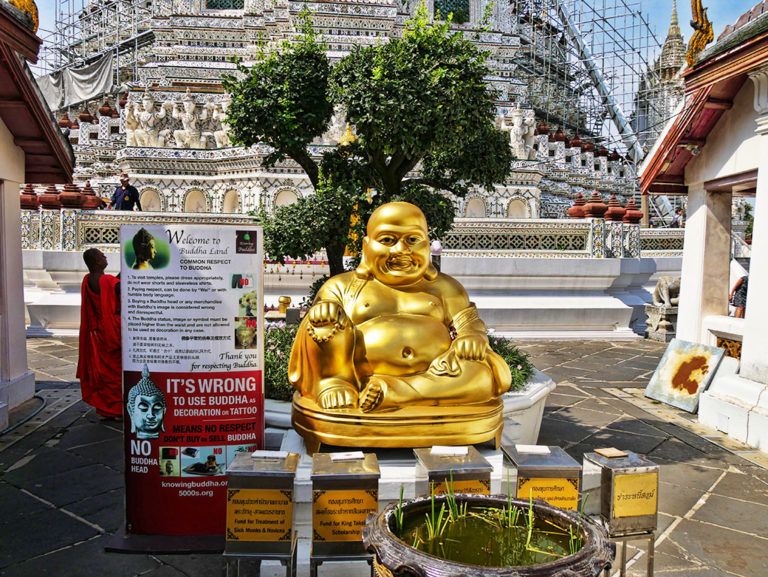
      When we visited, there were ongoing repairs although that didn’t spoil our enjoyment of this majestic monument. As you enter the temple, you will notice signs asking visitors to respect Buddha and not to buy decorative items of the deity.

      It’s important to cover your shoulders and knees, although you can borrow a shawl inside the temple grounds.

      Wat Arun has some striking mosaics made from broken pieces of porcelain that really catch the light.

      You can climb up the temple stairs to get a closer look. we’d definitely recommend wearing flat shoes as the steps are quite high. It’s best to visit early morning or late afternoon as the heat and humidity can be quite strong.

      As we left the temple, our guide handed us a fresh coconut purchased from a stall holder within the temple – it was wonderfully refreshing. Back on board, they gave us a cool flannel which was very welcome after the heat of the sun.

      3.Off the Beaten Track Bangkok Sights

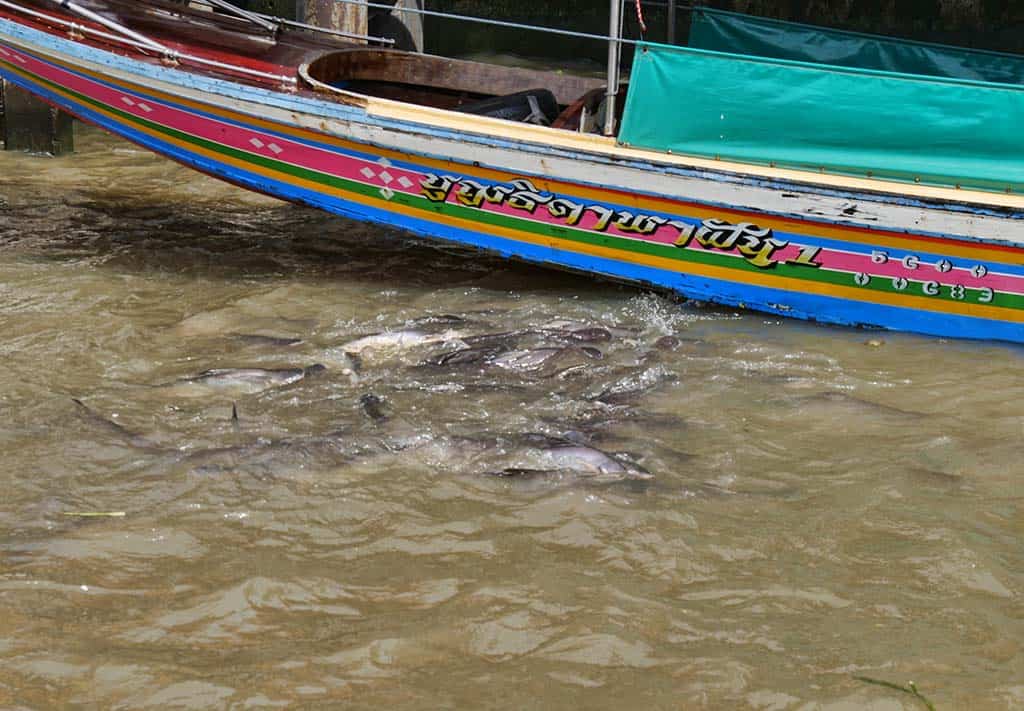
      As well as the river, there’s a whole network of canals in Bangkok that are off the tourist trail. One of the most fun activities on a Bangkok river cruise is feeding the fish in the Bangkok-Noi canal.

      It’s located in the Thonburi neighbourhood, nicknamed the Venice of the East. For many years, locals and visitors have been giving the fish food and as a result, there are some huge fish waiting to be fed. You won’t spot them until you throw bread into the water, at which point they’ll appear in their droves.

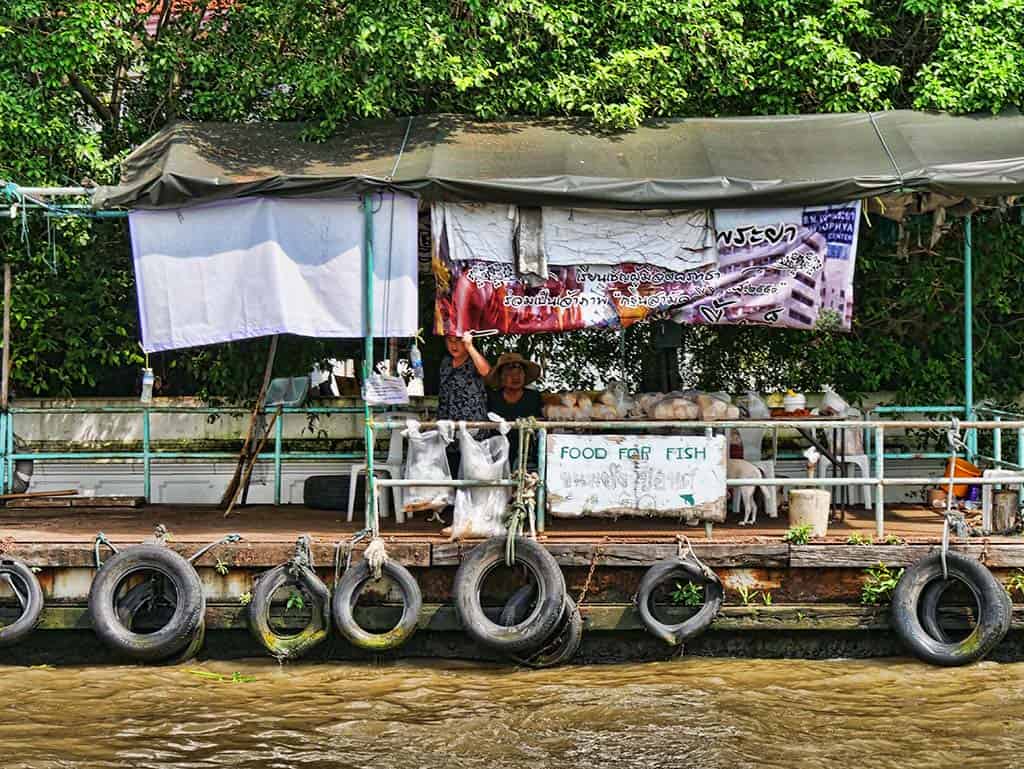
      There’s a boat in front of the temple selling bread but our guides had thoughtfully brought several loaves along for us. It’s a really fun experience seeing the fish leaping up and catching the bread.

      4.Bangkok Tips from the Locals

      We asked our Bangkok river cruise guide for a good place to eat authentic Thai food and she recommended Celadon within The Sukhothai hotel. It was a great tip – the food was beautifully presented and tasted delicious.

      She also told us about her favourite museum near our hotel, Kamthieng House, that we sadly did not get time to visit.

      5.Asiatique Bangkok

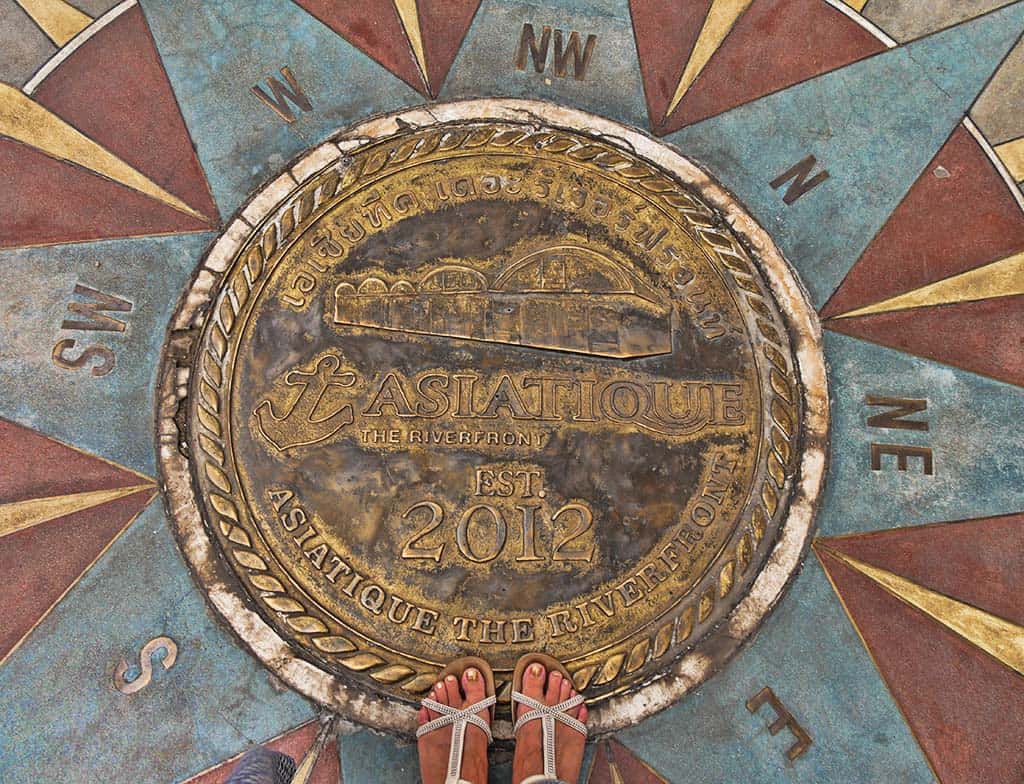
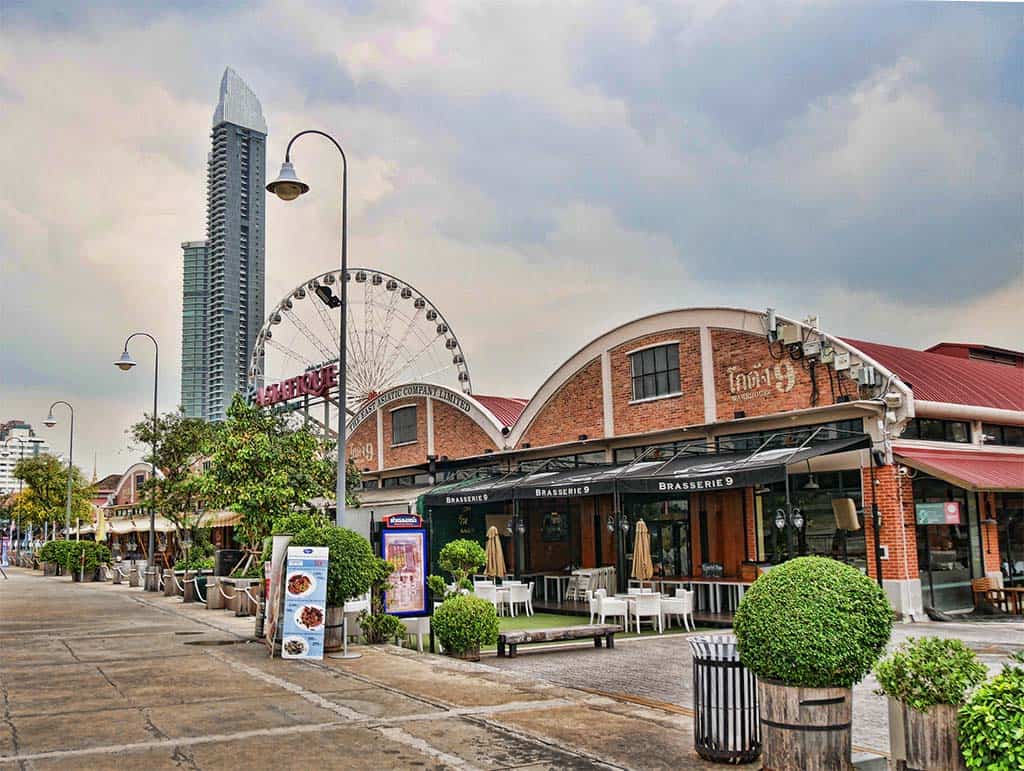
      Our tour ended at Asiatique The Riverfront, although you can ask to be dropped off at Saphan Taksin Pier if you prefer. Asiatique opened in 2012 on the site of the former docks of the East Asiatic Company.

      Asiatique is home to many restaurants such as Baan Khanitha by the River. There’s also Asiatique Sky, a 60 metre high ferris wheel as well as a puppet theatre and a night market.

      It’s the perfect place to end your Bangkok river cruise. You’ll take in many key sights in a truly relaxing way.

      Have you ever visited Bangkok and did you travel on the river?

    1. Island Hopping in Thailand – The Perfect 2 Week Itinerary

      Island Hopping in Thailand – The Perfect 2 Week Itinerary

      Thailand is one of the world’s most popular destinations thanks to its incredible beaches, fantastic food and friendly people. With hundreds of islands to explore, it’s best to focus on one or two regions such as the Gulf of Thailand or the Andaman Sea. This handy island hopping in Thailand 2 week itinerary will help you make the most of your time.

      Island Hopping in Thailand

      The Andaman Coast is one of the best choices for Thailand island hopping. With crystal clear water, abundant coral reefs and lush scenery, it’s rightly popular.

      Here is our detailed Southern Thailand island hopping itinerary, taking in Krabi Province, the Southern Islands of Phang Nga Bay, Phi Phi Islands and Phuket.

      Andaman Coast Thailand 2 Week Itinerary

      When planning your itinerary for Thailand, be sure to allow some time to kick back and relax. We’d recommend 2 nights or more at most of the destinations so that you can explore the islands, go snorkelling or simply enjoy the beach.

      If you’re wondering when is the best time to visit Thailand, it’s particularly popular between November to April. There’s minimal rainfall and it’s nice and sunny, although it never gets very cold in Thailand.

      Krabi

      Krabi makes an excellent starting point from which to go island hopping in Thailand. The town of Krabi is on the mainland, however Krabi Province is home to some of the most beautiful islands in Thailand such as Koh Phi Phi.

      There are direct flights with Qatar Airways from Doha to Krabi as well as internal flights from Bangkok, Chiang Mai and Koh Samui to Krabi. The ShellSea Krabi is a recently built luxury hotel in a tranquil part of Krabi yet it’s only 30 minutes drive from the airport.

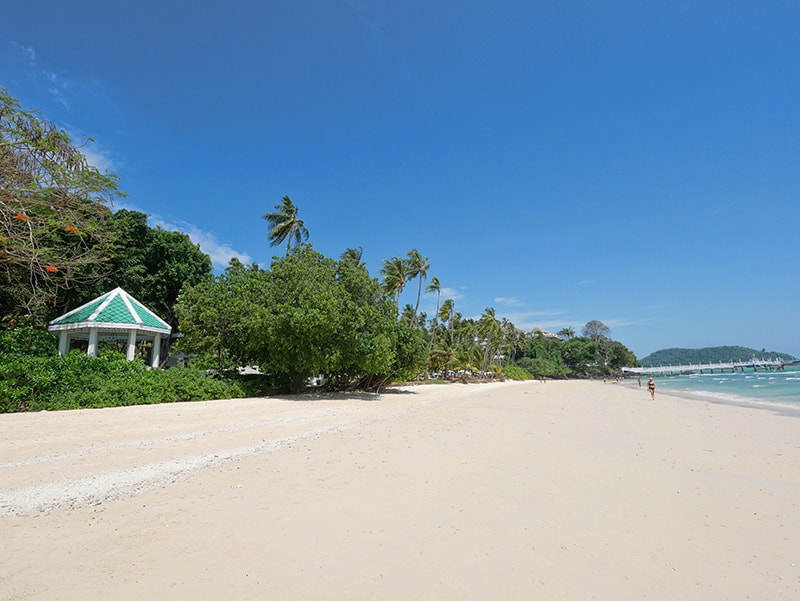
      In Thailand, the beaches are public but on these golden sands you get the feel of a private beach as it’s not at all crowded.

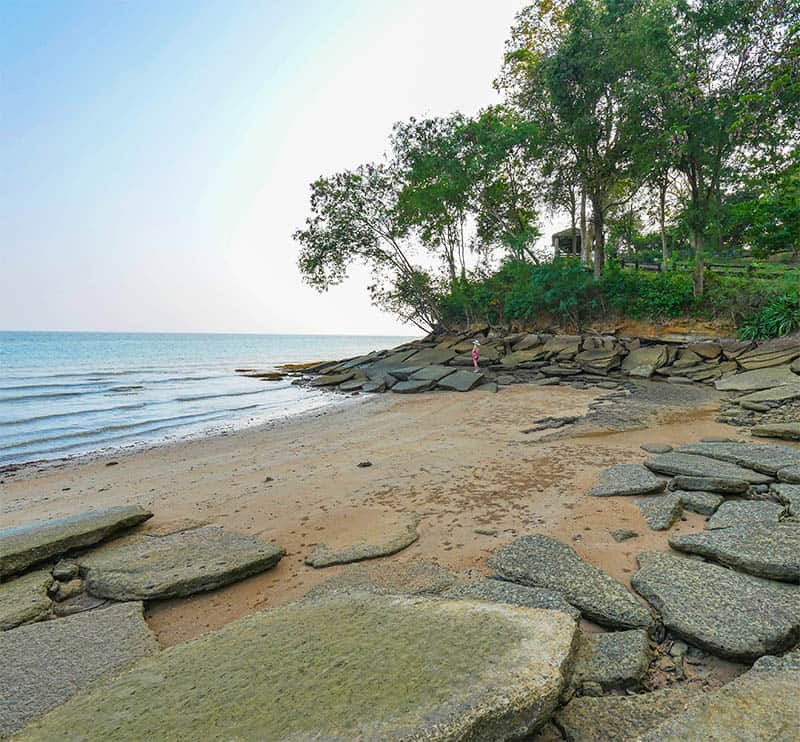
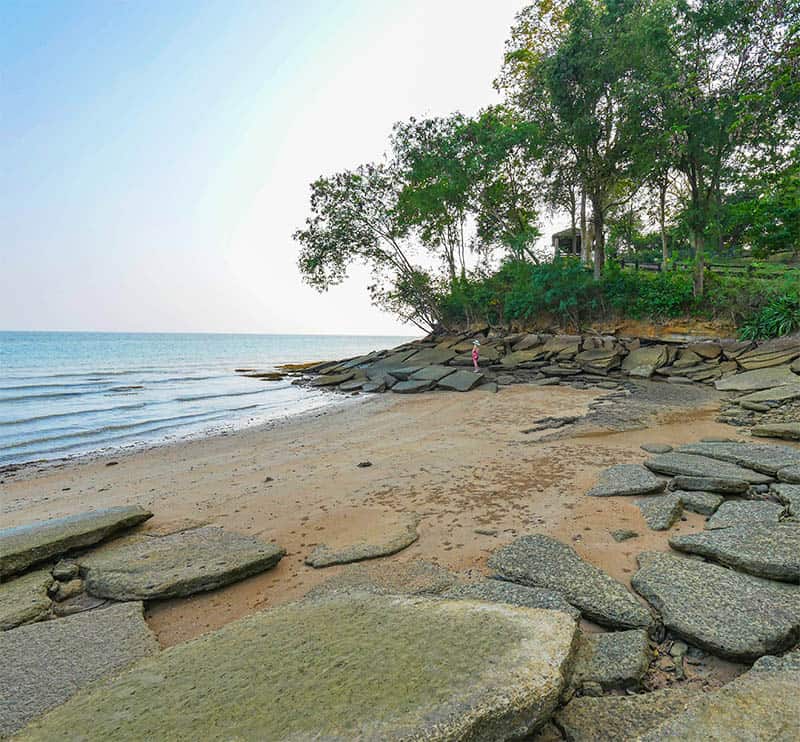
      Walking to the far end, you come across a natural wonder, Fossil Shell Beach. One of only 3 such sights in the world, it might look like man-made slabs but it’s actually composed entirely of shell fossils.

      There’s a visitor centre at the top of the hill and stalls selling pearl jewellery at reasonable prices.

      If you can tear yourself away from the private pool in your villa, there are some other interesting things to do in Krabi, such as visiting Wat Tham Sua, the Tiger Cave Temple. The Emerald Pool and Krabi Town are also popular with visitors to the area.

      Just 35 minutes by car from The ShellSea, you’ll find Amari Vogue Krabi. It has a great location opposite Hong Islands, which are easy to reach by direct longboat from its beach. There are 3 swimming pools, a stylish spa and an award-winning beachfront restaurant, Bellini.

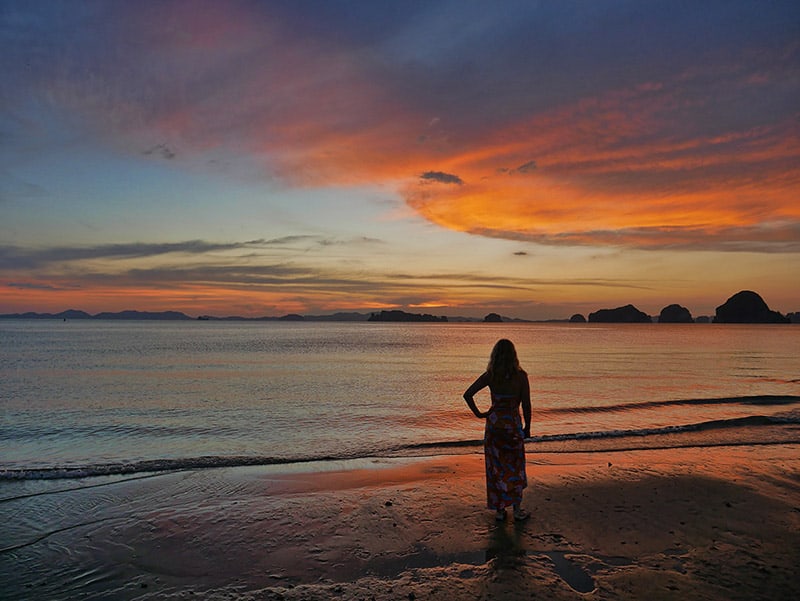
      The sunsets on Tubkaak Beach are particularly impressive and are best enjoyed with a signature cocktail in hand. Right next to the hotel, there’s the National Park of Khao Ngon Nak. Also known as Dragon Crest Mountain, it’s a scenic 2 to 3 hours walk to the top.

      Koh Phi Phi

      Phi Phi Island, as it’s often called is actually 2 islands, Koh Phi Phi Don and Koh Phi Phi Leh. They’re considered to be among the world’s most beautiful islands and if you visit you will soon understand why.

      Part of the fun is getting here, by taking a private speedboat or a ferry from Nopparat Thara Pier in Ao Nang. There are food stalls and restaurants here, but you can also purchase food and water on the ferry.

      During the 2 hour ferry ride, you’ll see some stunning scenery, with rocky outcrops and azure blue water.

      Once you arrive at Tonsai Pier, you need to pay a 20 baht entry fee to the island. Hop on a longboat to Phi Phi Island Village, or take the resort’s own speedboat depending on your arrival time.

      Arriving at Phi Phi Island Village on Koh Phi Phi Don was one of the highlights of our Thailand itinerary. The island lies within the Nopparattra National Park, and the palm fringed beach is charming.

      Koh Phi Phi Don

      There were just 2,500 people living on Koh Phi Phi Don at the last census in 2013, and Phi Phi Island Village is ideally located on the quietest part of the island. The traditional bungalows and hillside pool villas are built in traditional style with thatched roofs.

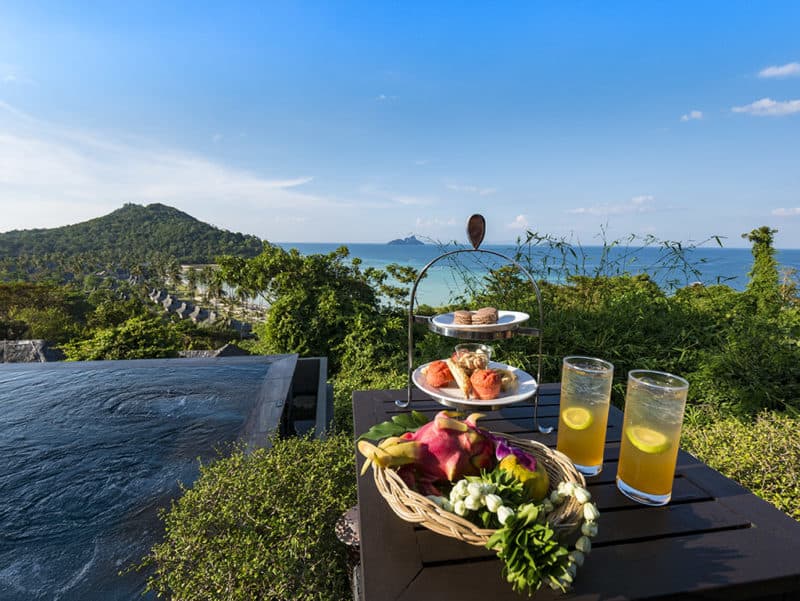
      Our private infinity pool was the perfect setting in which to enjoy afternoon tea each day. We could easily have stayed there all day, but Koh Phi Phi Don is the ideal base from which to take a Phi Phi islands tour.

      The resort is known for its Phi Phi Island Dive Village, a PADI certified 5-Star Gold Palm diving centre. Whether you’re an experienced diver or a novice like us, they have tours suitable for all abilities.

      We chose the early bird half day trip in one of the resort’s own speedboats. It takes you directly to Maya Bay so you avoid most of the crowds, before heading to Pileh Lagoon for snorkelling, then Viking Cave and Monkey Island to see monkeys in their natural habitat.

      Koh Phi Phi Leh

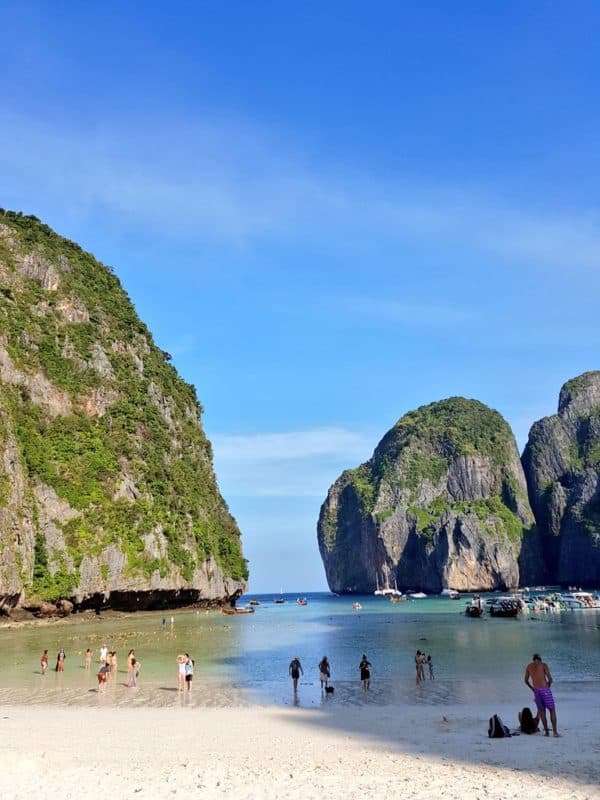
      Maya Bay is a picturesque place that’s famous worldwide as the setting for The Beach, the film starring Leonardo di Caprio. The beach is framed on 3 sides by cliffs that are 100 metres high.

      It’s currently closed to visitors due to the crowds and environmental impact.

      Whilst there are no hotels on the island of Koh Phi Phi Le itself, you could previously get from Phi Phi Don to Phi Phi Leh in 30 minutes by speedboat. We’d advise anyone visiting in future to wear water shoes as you’ll need to wade on to the beach and there are quite a few rocks under water.

      To get from Koh Phi Phi Leh to your next destination, Koh Yao Noi, you’ll take Phi Phi Island Village Resort’s speedboat to stylish Ao Por Grand Marina in Phuket. From there, it’s a short car journey to HKT Yacht Haven Marina.

      As you can see, it really is a haven! There’s a chic cafe with restrooms, air-con and Wi-Fi and from here it’s a 50 minute speedboat transfer to Paradise Koh Yao Noi.

      Koh Yao Noi

      One of our favourite Thailand hidden gems, Koh Yao Noi is a laid-back island getaway. We found paradise here, well, Paradise Koh Yao to be exact ;-).

      This boutique beachfront hotel is located on the smaller of the two Koh Yao islands. It’s one of the closest located hotels to James Bond Island, where The Man with the Golden Gun was filmed.

      The boho-chic decor of the hotel is charming, and the new TreeHouse Villas at the neighbouring sister property are equally stylish.

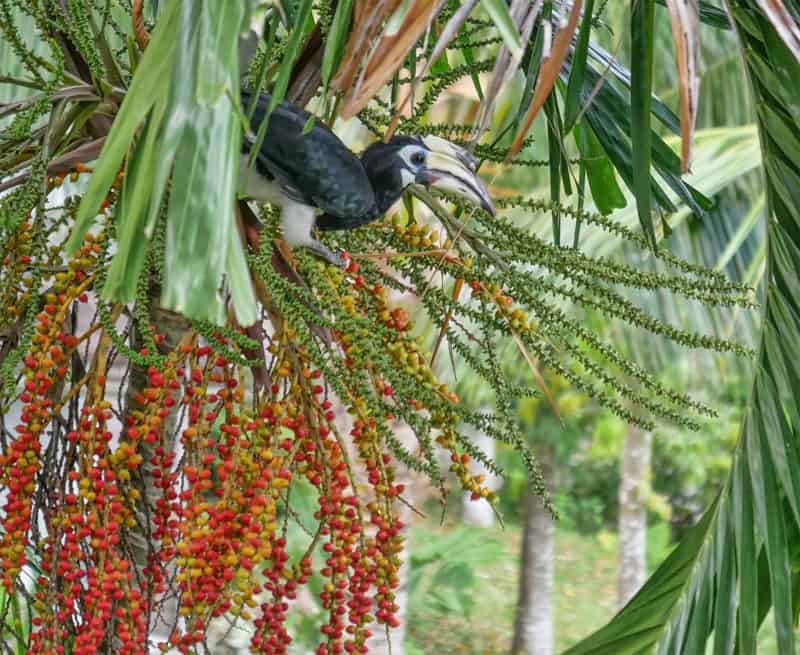
      However, it’s the feeling of being at one with nature that’s the real draw here. Oriental hornbills fly around the property, eating the berries and no doubt admiring the view as we did! These canopy-dwelling birds are recognizable by their large yellow-tinged beak.
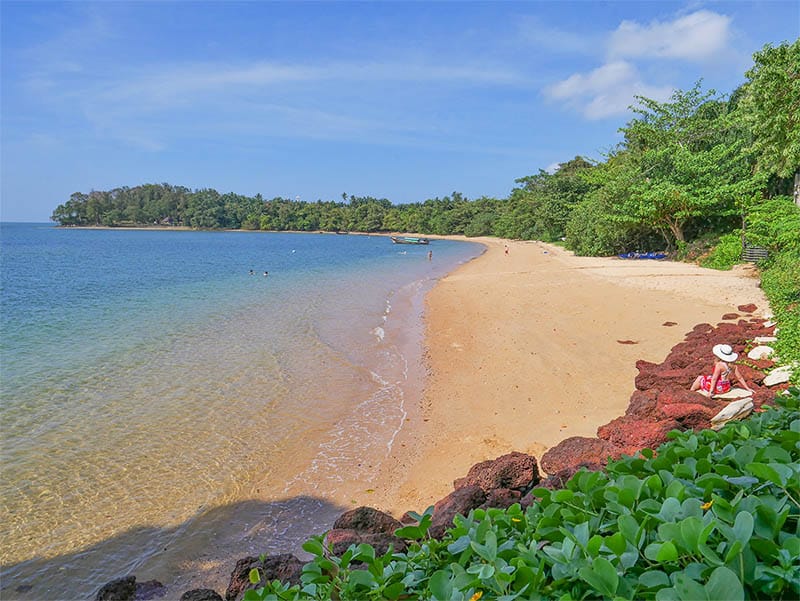
      The island is situated in the middle of Phang Nga Bay, between Phuket & the mainland of Krabi. Phang Nga Bay is known for its’ unique limestone formations & pristine beaches.

      This beautiful Thai bay was most famously captured in the James Bond movie – “The Man with the Golden Gun” and also in “The Beach” with Leonardo Di Caprio.

      To get to your next destination, the nearby island of Koh Yao Yai, you’ll take the hotel’s bus to the village and Manoh pier. Along the way, we spotted rubber trees with tapping buckets on their trunks and several water buffalo grazing. From the pier, it’s a 10 minute long-boat ride to Chong Lad pier on Koh Yao Yai.

      Koh Yao Yai

      Although it’s the larger of the two Koh Yao islands, Koh Yao Yai has less inhabitants. This hidden gem is definitely a contender for best island in Thailand as it’s so unspoiled.

      In keeping with the local Thai architecture of the local habitations, Santhiya Koh Yao Yai was built in an ornate traditional style. You can see craftsmen in the lobby, carving intricate patterns onto the wooden pillars and these beautiful decorations are found throughout the resort.

      There’s a fabulous 1,500 square metre pool with a manmade waterfall and a hilltop infinity pool from which you can admire the surrounding islands.

      Phuket

      Our final destination is the largest of the islands in Thailand, Phuket. Easily accessible from many locations in Thailand, it’s a pleasant speedboat ride from Koh Yao Yai. Island hopping from Phuket

      Cape Panwa in Phuket is a great base from which to explore the surrounding area. This stylish hotel has been popular with celebrities since it opened 30 years ago, in fact Leonardo di Caprio and the crew filming The Beach stayed here.

      Panwa House restaurant specializes in authentic Thai cooking and is just one of the many great dining options within the hotel grounds.

      The hotel is a few minutes walk away from Phuket Aquarium and about 40 minutes by car from the Big Buddha, which is well worth a visit. We recommend going for sunrise to make the most of the light.

      Standing 45 metres high on a hilltop, it’s an impressive white marble statue and has panoramic views over the surrounding countryside.

      The site is free to enter, however you can donate towards the construction costs of the statue’s base by purchasing a tile or a heart plaque. As is the case in other religious sites in Thailand, visitors must cover their legs and bare shoulders and there’s a booth where you can borrow a sarong if need be.

      There are several night markets in Phuket, and if you’re there on a Sunday then don’t miss the Sunday Walking Street Market, or Phuket Weekend Market as it’s also known. Held every Sunday from 4 pm to 10 pm in the picturesque Old Town with its Sino-Portugese buildings, it’s a fun place to find crafts or clothing.

      As you can see, it’s easy to spend 2 weeks in Thailand and to never be bored. With some fantastic spas, luxury escapes and hidden gems, the island’s charms are sure to have you returning time and time again.

      We recommend the following itinerary, but you could easily reverse the order and start with island hopping from Phuket, finishing in Krabi.

      Tips for Thailand Island Hopping

      Bring plenty of Thai baht, the official currency in case you spot a bargain at one of the many markets. Bank cards are accepted at all the hotels.

      For your Thailand packing list, we’d suggest water shoes and loose, lightweight clothing. A sarong will come in very handy for ladies at the temples and can double up as a skirt.

      For the Phi Phi island tour, it’s best to dress in your swimming costume with shorts and a top over it, as you’ll be getting in and out of the water a lot. There’s no need to bring snorkelling equipment as you can rent it in most places.

      Internet access is excellent at these particular hotels, even on the smaller islands. As for tips, they’re not expected but will be very much appreciated.

    2. A Breathtaking Private Pool at Kata Rocks, Phuket

      A Breathtaking Private Pool at Kata Rocks, Phuket

      If you want to experience a luxury Thailand resort that combines a unique setting with world class service and cuisine. Kata Rocks Phuket is the natural choice. Every guest benefits from their own private pool.

      Kata Rocks Phuket Resort Review

      Phuket has a rather ill-deserved reputation as a party place. Thailand’s largest island actually has some very upmarket and tranquil areas if you know where to look.

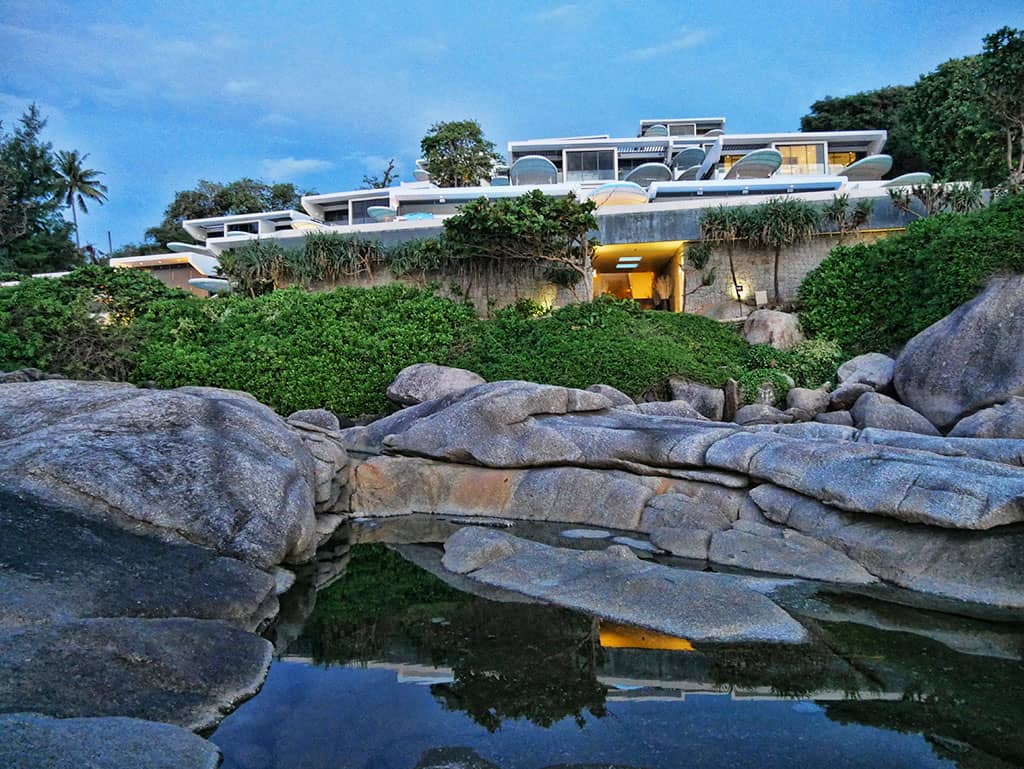
      Kata is a picturesque little town with a beautiful white sandy beach. Kata Rocks Phuket stands proud on a promontory with magnificent sea views.

      The rocks on which the resort are built are known as the Buddha Footprint and are considered to be sacred.

      Getting to Kata Rocks

      We started our journey in Bangkok, and then took a short plane ride to Phuket airport although there are also many direct international flights. From there, it’s a pleasant one hour drive from Phuket airport.

      Even before we arrived at the resort, our anticipation was building. We were met at the airport by one of the ‘rockstars’ aka a Kata Rocks concierge.

      He took us to a luxurious SUV car where we were handed wet towels and invited to help ourselves to water and a range of snacks. During our journey, we watched a very slick video giving us an overview of the resort, etiquette in Thailand and useful Thai phrases.

      Once we arrived, we were whisked off to our Sky Villa in a golf cart. The resort is built on sloping land so they’re a novel solution for getting around. We often chose to walk but a simple call to reception would summon a golf cart in the blink of an eye.

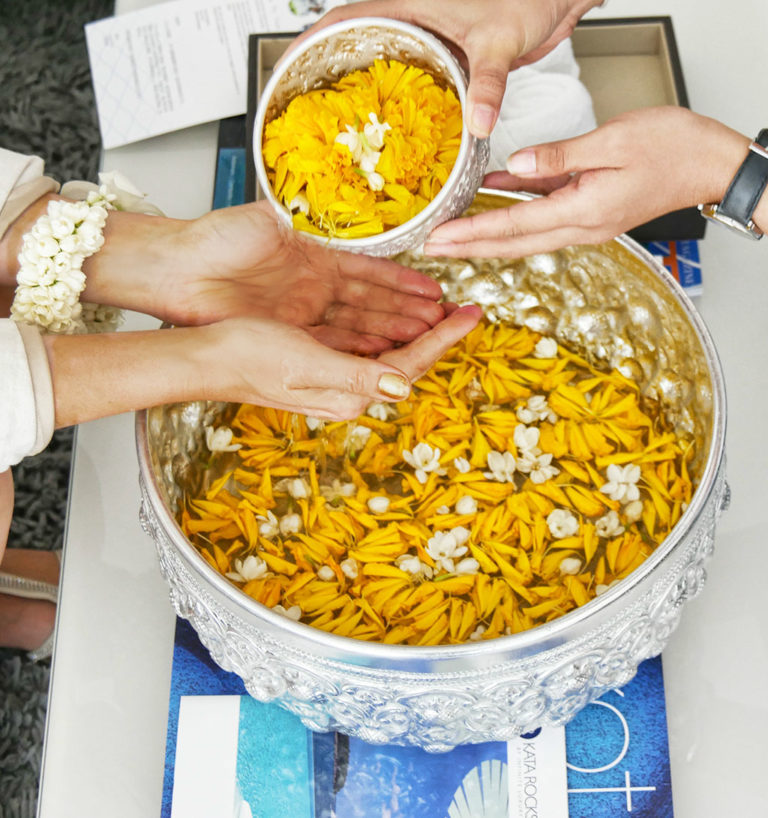
      Inside our Sky Villa, we were treated to a traditional Thai hand washing before a speedy check-in and explanation of all the features in our high-tech home from home.

      Accommodation in Kata Rocks

      The villas are all privately owned and run by the management company. Villa owners can choose to live there permanently or to rent them out for part of the year.

      Due to this, the villas feel very homely and have many facilities that you would not expect to find in a hotel room. For example, there’s a washing machine and even a drier to hang out your washing.

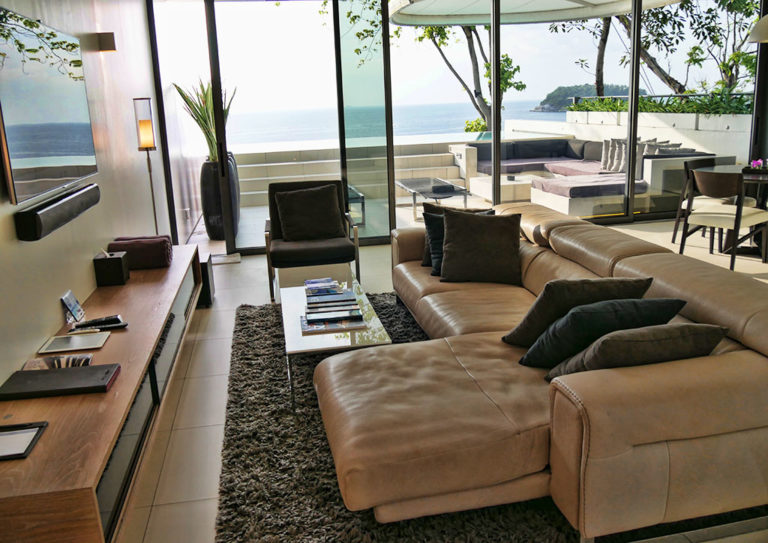
      Each villa is equipped with the very latest technology. Our 2 bedroom Sky Villa was decorated in a contemporary style with an open plan layout that maximized space to the utmost.

      Inspiration came from super yacht design, where every detail is thought through. The spacious master bedroom was extremely peaceful and the feather pillows ensured an excellent night’s sleep.

      There were fluffy bathrobes and slippers in the en-suite bathroom. For the turn-down service, these cute towelling elephants were placed on our bed!
      As for the main living space, it had a very comfy seating area with a dining table and fully equipped kitchen. An iPad is at your disposal to control the lighting and heating and a master switch activates all the lights in a seamless fashion. There is complimentary high speed WiFi throughout the villa and the resort.

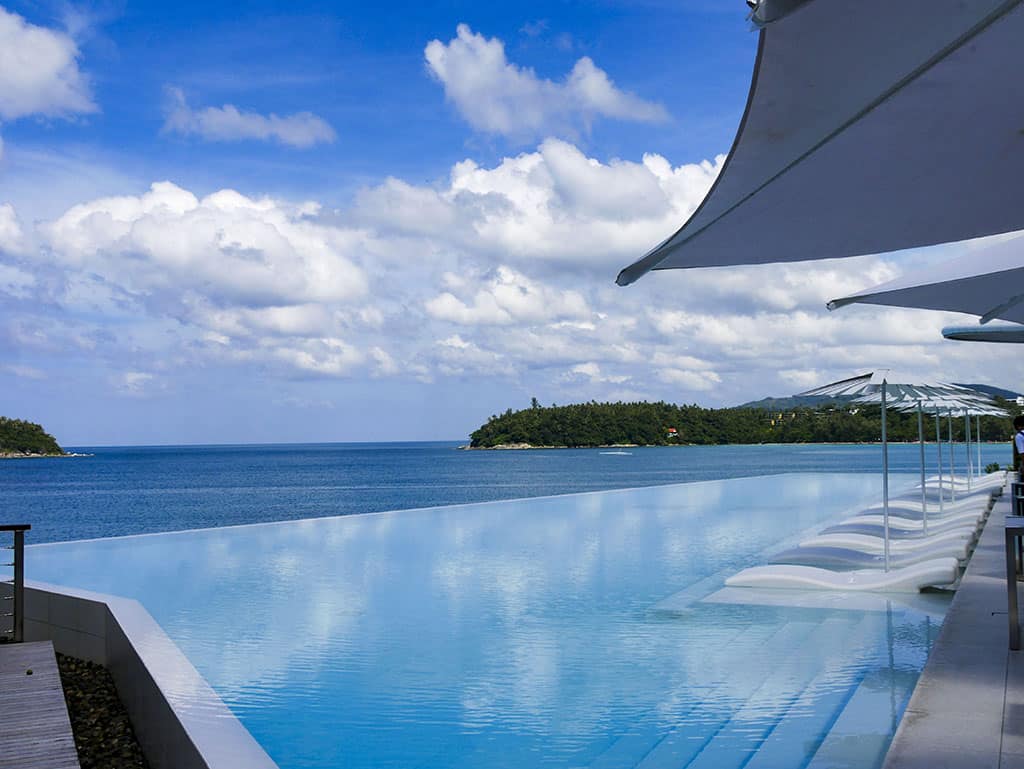
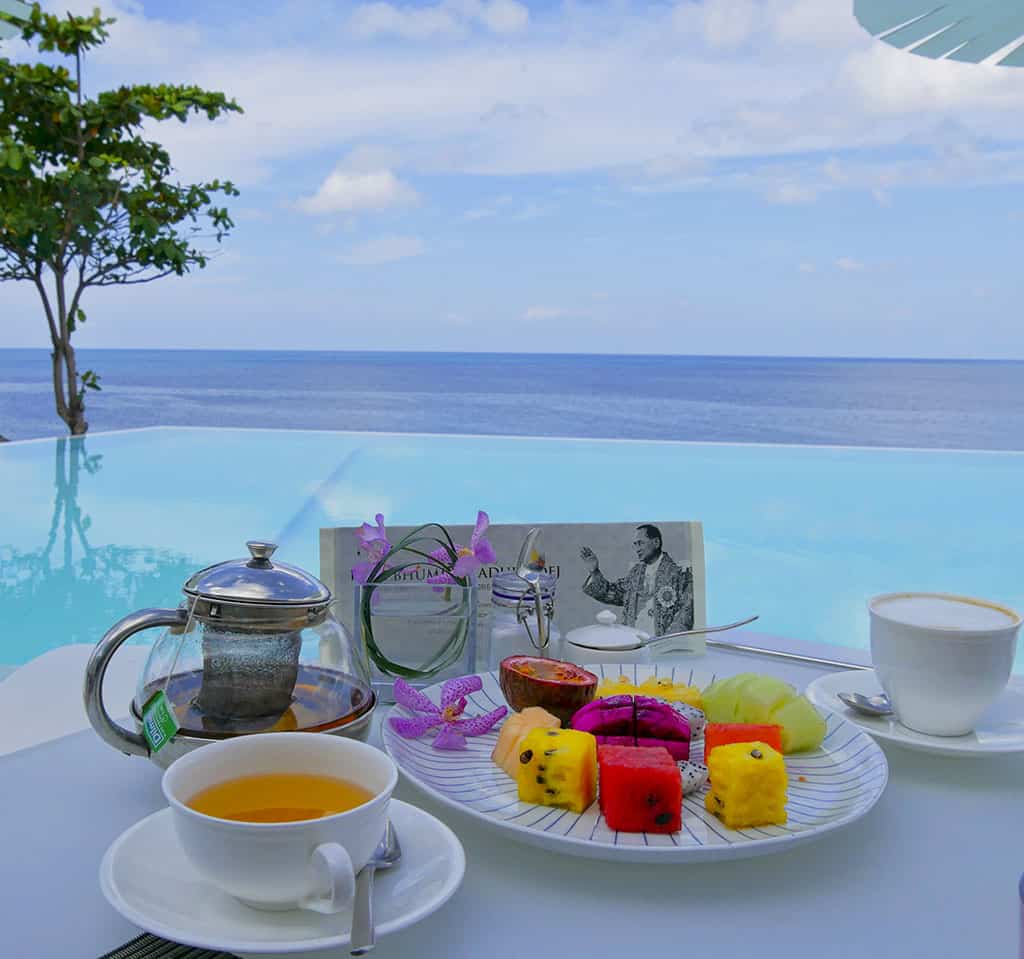
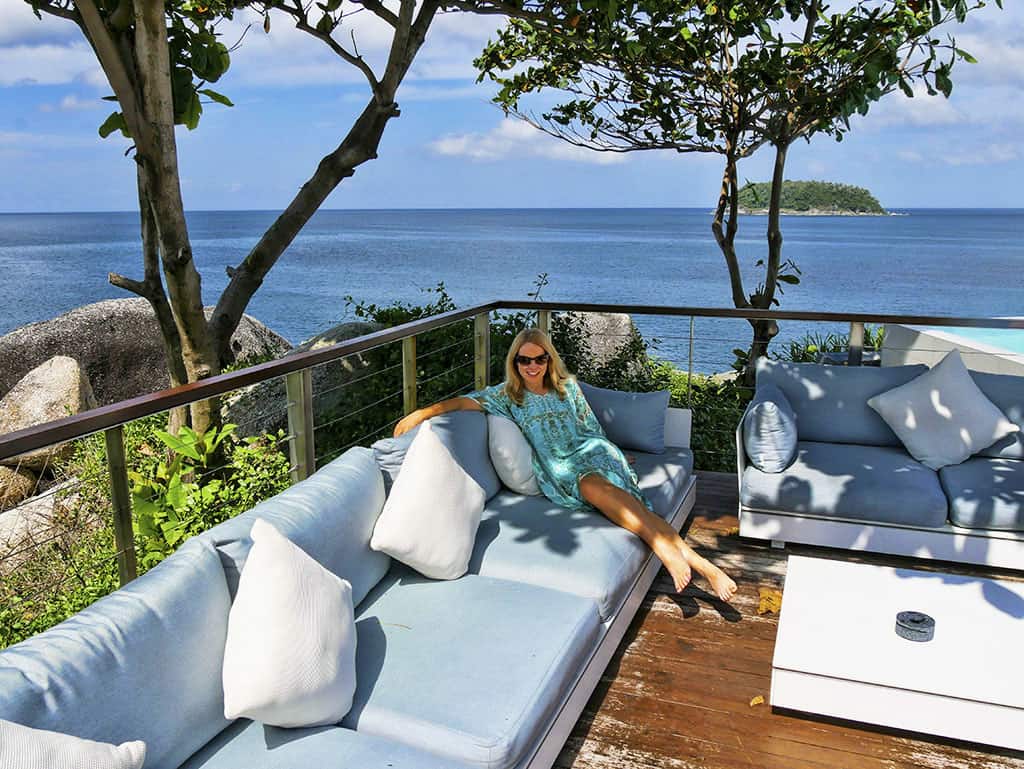
      However the real wow factor comes from the outdoor area with its private infinity pool benefiting from uninterrupted views of the Andaman Sea. The lounging sofas are shielded from the sun by an overhead awning. You can’t see the neighbouring properties at all and privacy is complete.

      Amenities at Kata Rocks

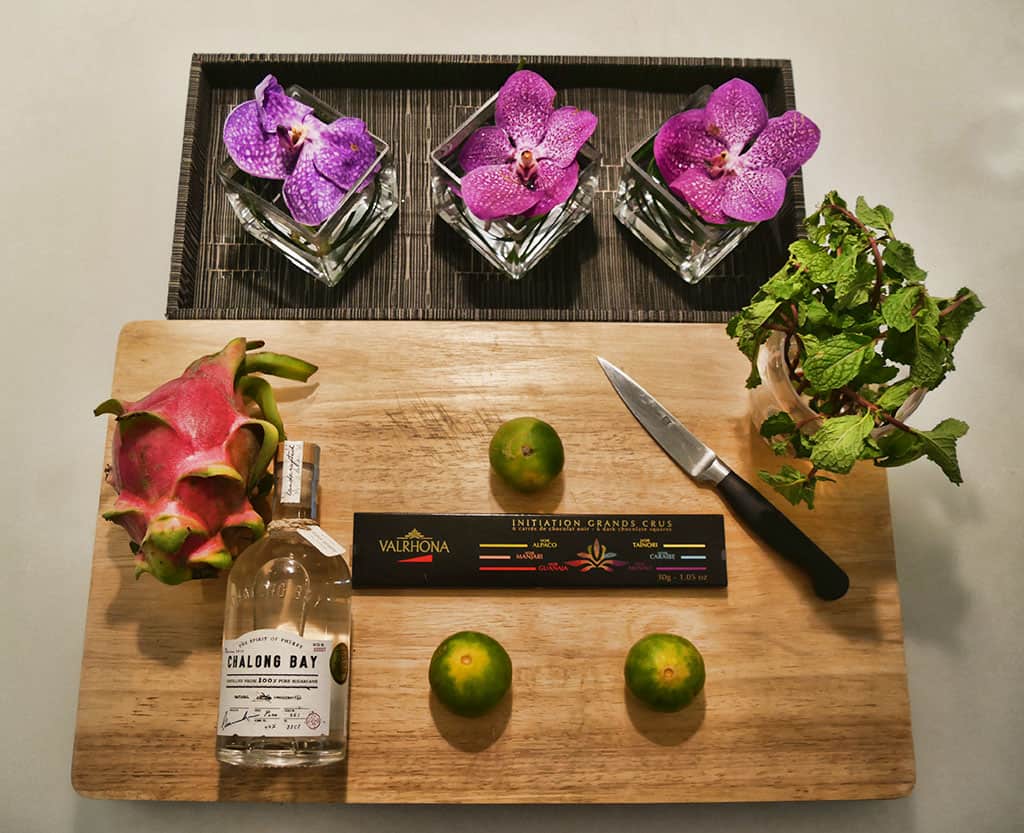
      We were thoughtfully left us all the ingredients to rustle up a cocktail including lime and Phuket’s award-winning rum, Chalong Bay. There was also an eye-catching non alcoholic Butterfly Pea Flower beverage that matched the marine theme perfectly.

      Facilities at Kata Rocks

      There’s an award-winning Infinite Luxury Spa with 8 spacious treatment rooms. We experienced a full body couples’ massage.

      Our friendly masseuses asked whether we preferred light, medium or firm pressure. With many massages you only get the choice of light or firm and I found medium to be just right.

      It was so relaxing that we both fell asleep. Afterwards we felt completely rejuvenated, with all aches and pains completely banished.

      The gym is among the best that we’ve come across on our travels. With a full set of Technogym machines and an unbeatable view of the sea, working out was a pleasure. You could try the rebounder machine, a novel abs and upper body workout, or the PowerPlate.

      The main infinity pool is very uncrowded, as all the villas have their own private pool. It’s a great place to relax and the sun loungers are actually submerged in the water, helping you to keep your cool. There’s also a games room, library and shop next to the restaurant and bar.

      Experiences at Kata Rocks

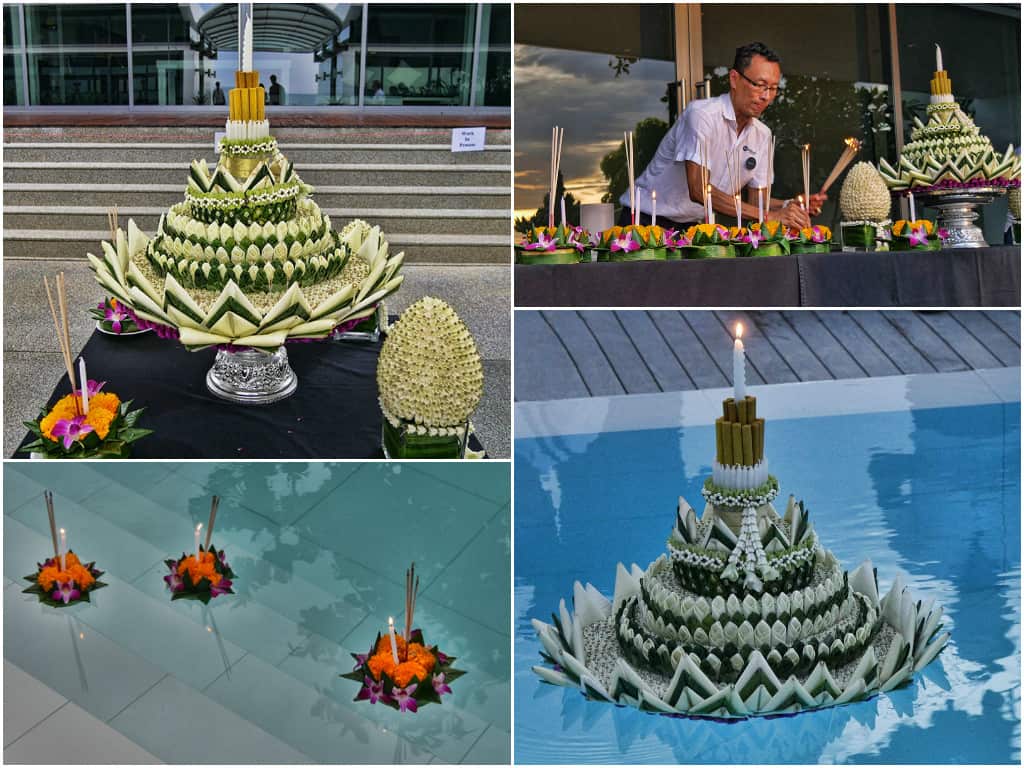
      We were fortunate that the day of our arrival coincided with the annual Loy Krathong ceremony. Guests gathered around the infinity pool to release floating baskets lit with candles. Couples are encouraged to launch the basket into the water together, to bring good luck for the year ahead.

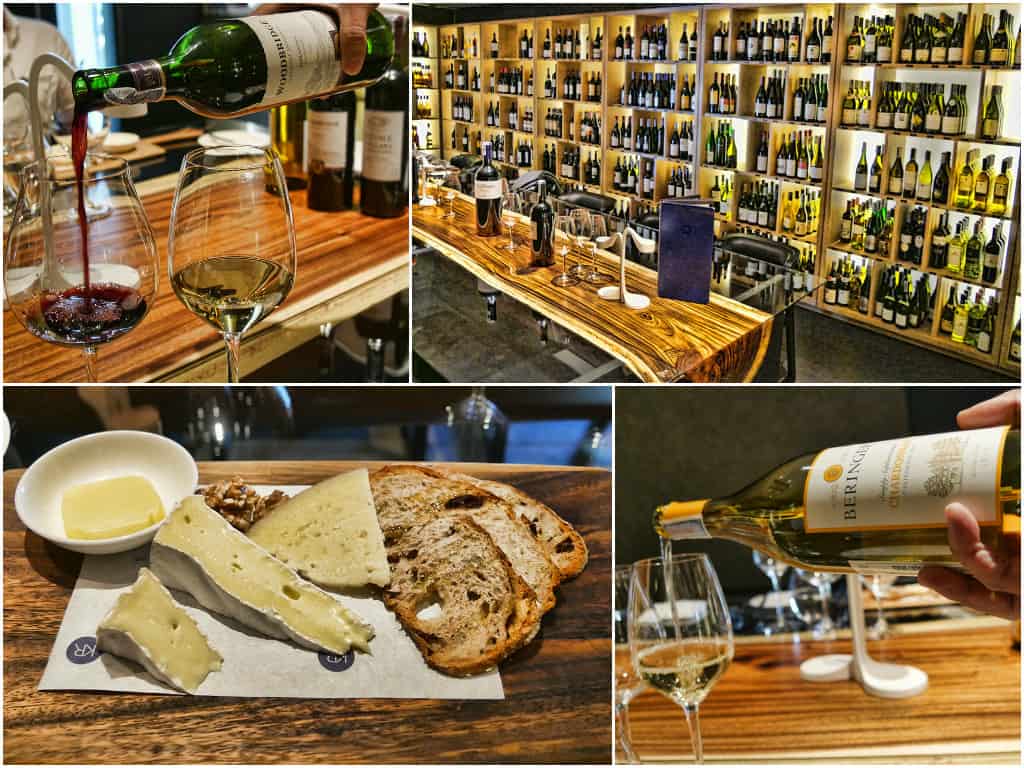
      Whilst we enjoy pairing our food with wine, the idea of matching your cheese to wine was a new one to us. Kata Rocks arranged an instructive cheese and wine pairing for us.

      It takes place in their stylish Wine Cellar, equipped with blankets for those that feel the cold as we do. There are some impressive bottles adorning the cellar walls and we got to taste a few of them including Beringer Stone Cellars Cabernet Sauvignon and Chardonnay. You wouldn’t imagine that cheese would go well with white wine but Roquefort in particular works very well.

      Where to Eat in Kata Rocks

      At Kata Rocks you can dine inside or outside and both areas directly overlook the infinity pool. The resort can also arrange for a chef to cook for you in your villa.

      However our favorite dining spot has to be directly on the rocks! For a special occasion, they can organise a dinner for 2 with only the ocean for company – perfect for a proposal or anniversary.
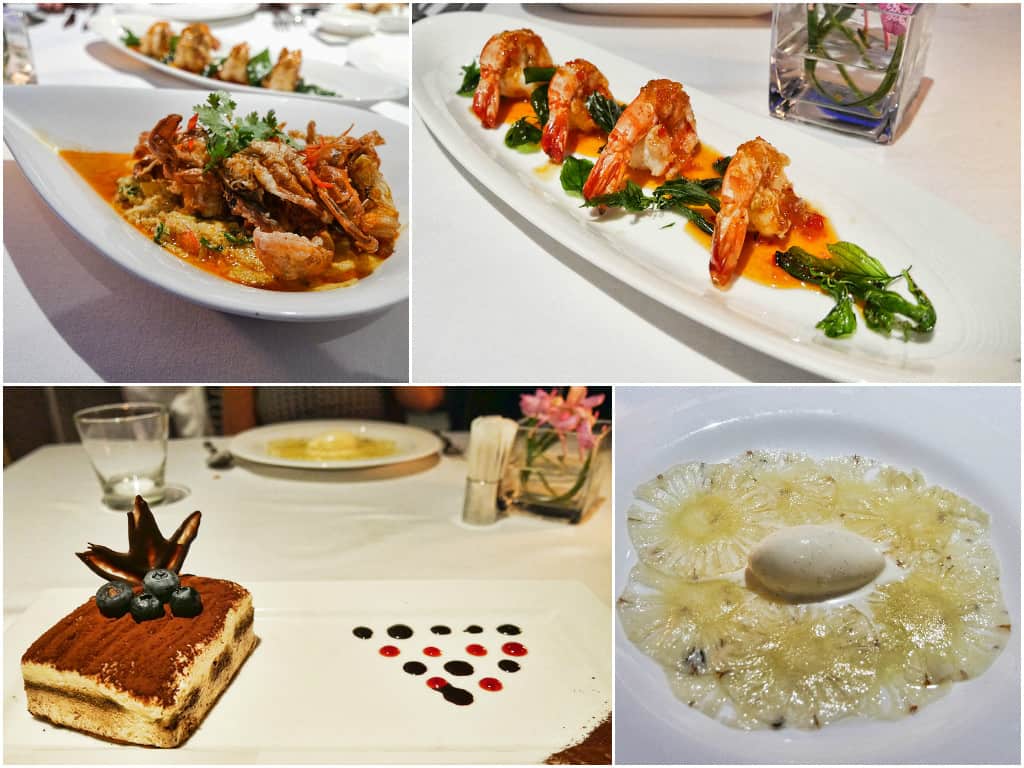
      The food at Kata Rocks is renowned as being among the finest in Phuket. There’s a choice of Asian or Western cuisines and the waiters will advise you of the level of spiciness of each dish. If only all restaurants in Thailand did the same!

      Breakfast here is a leisurely affair, overlooking the pool – a great way to start the day.

      Things To Do Near Kata Rocks

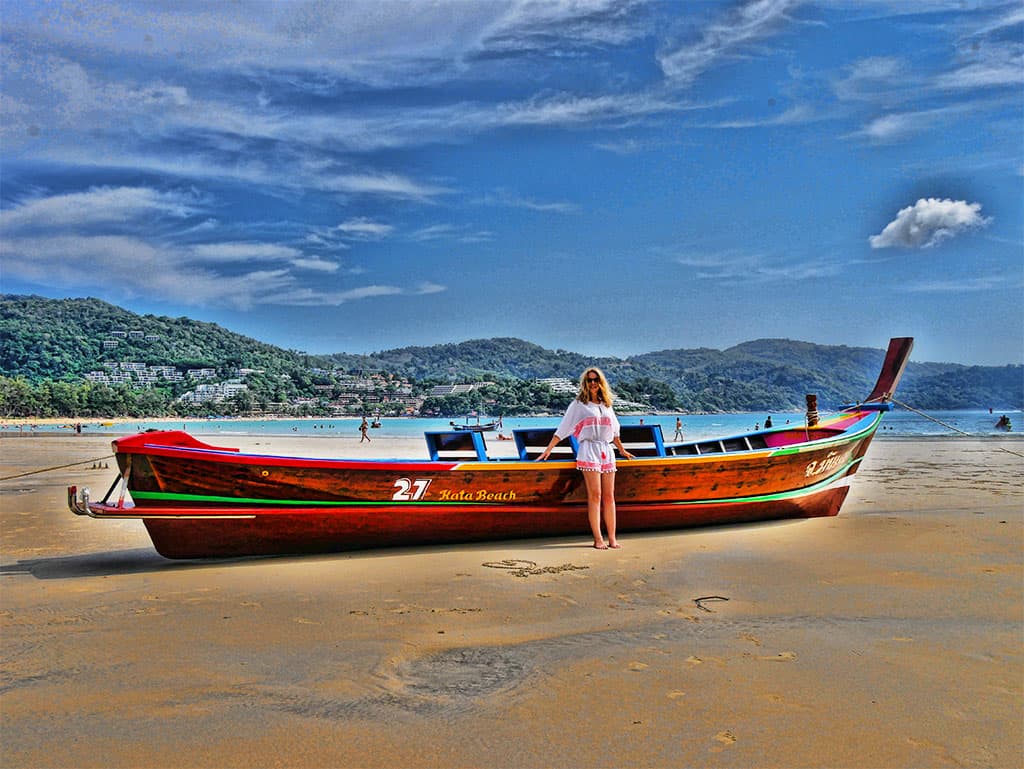
      The beach of Kata is a few minutes walk and a pleasant place to see the local fishermen’s boats up close. If you have time, venture to the Big Buddha in Phuket.

      It’s an easy 20 minute drive away and an impressive sight. In December, the resort hosts the Kata Rocks Superyacht Rendezvous. Its a great opportunity for superyacht and villa owners to meet and build new relationships.

      What to Wear in Kata Rocks

      The vibe at Kata Rocks is very much casual chic resort wear and luxurious beachwear. You could go barefoot as it is so pristine and golf carts can transport you to and from your villa.

      We’d definitely pack a kaftan for lounging by the pool and a sun hat as it can get very hot in the midday sun. Thailand can be quite humid so plan waterproof makeup and a hair band or turban for frizzy hair days.

      A shawl would come in handy for indoor dining as there’s air conditioning. Finally, make the most of the gym by packing your workout gear!

      Final Thoughts About Kata Rocks

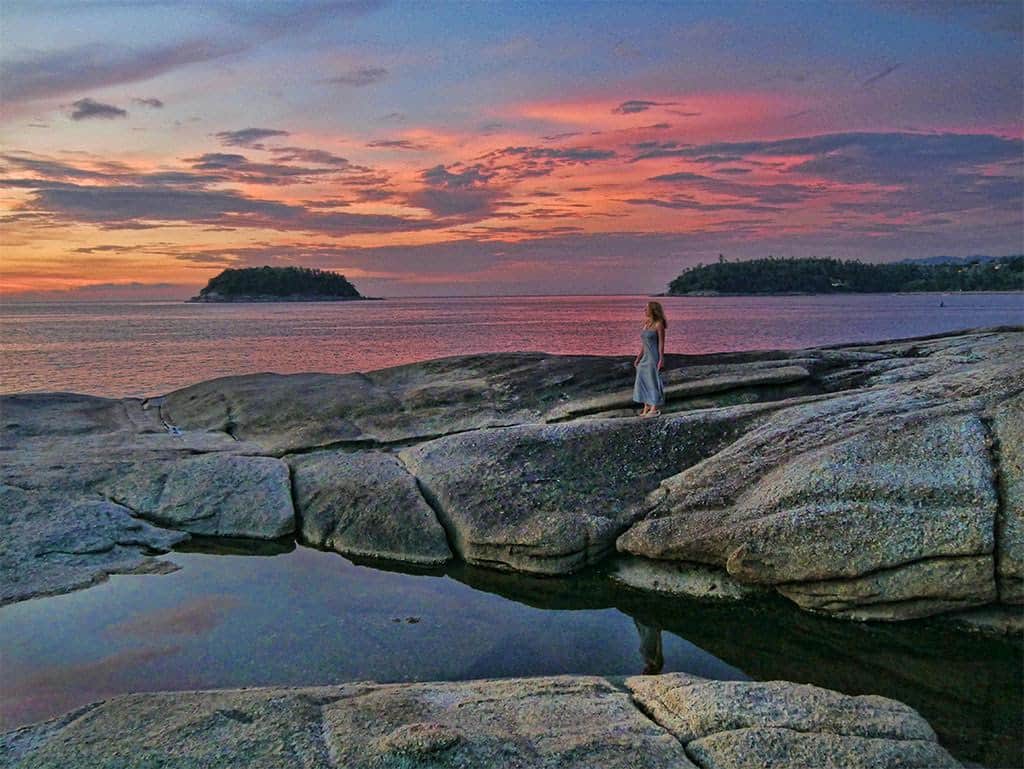
      If you’re looking for paradise on earth, then Kata Rocks Phuket comes pretty close. We particularly liked the private infinity pool, gourmet meals and relaxed but immaculate service. As for the sunsets, they’re simply spectacular!

    3. Alila Ubud – From Here to Infinity

      Alila Ubud – From Here to Infinity

      Ubud is an unmissable destination if you are visiting Bali, with its lush green hills and thriving arts and crafts scene. Alila Ubud is the perfect base for exploring not only Ubud but the UNESCO World Heritage rice fields of Tegalalang. Located 15 minutes from the centre in the hillside village of Payangan, it’s an intriguing blend of modern design and traditional Balinese architecture with an incredible infinity pool.

      Alila Ubud Bali Review

      Arriving at Alila Ubud, we were struck by the size of the grounds – you could easily while away an afternoon exploring the rice fields. Passing through the secure gate, we admired the contemporary look of the hotel. Nestled high above a river on stilts, the resort’s rooms and villas resemble tree houses.

      Checking in to Alila Ubud

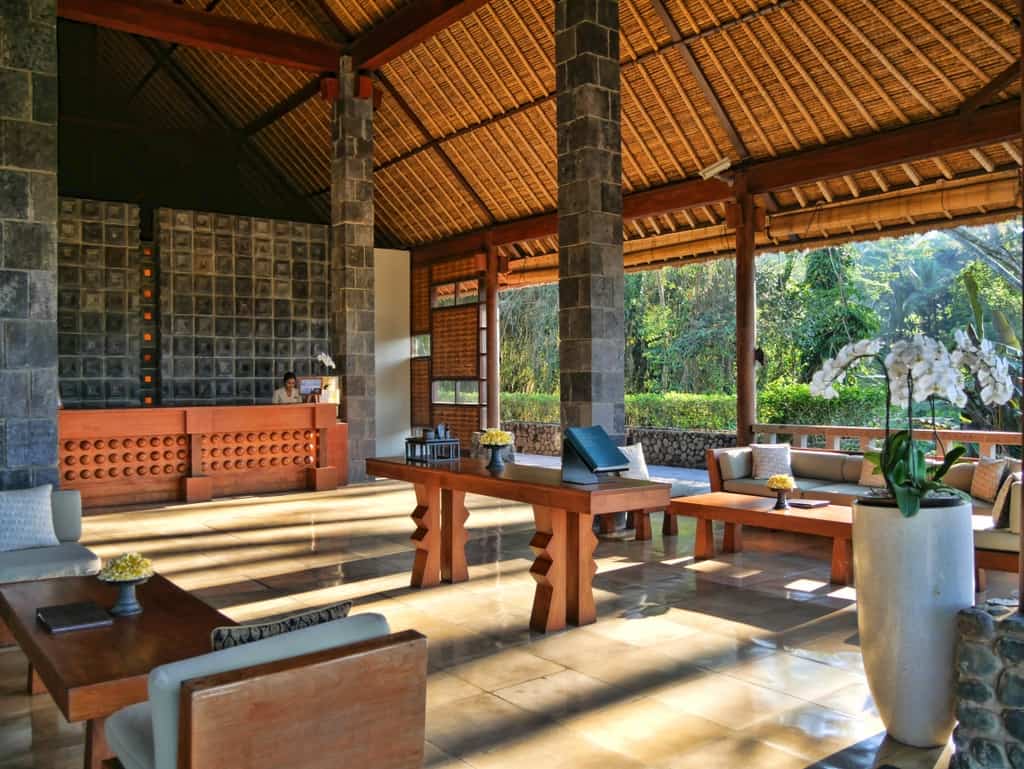
      As soon as you’ve booked with Alila, you receive a link to an online system where you can personalize your stay by listing your preferences for the type of pillow, reading matter and more. Reception itself is a spacious open plan area featuring a high thatched roof to give shade.

      You’ll be handed a refreshing face towel and welcome drink whilst a friendly member of staff check you in. They will then whisk your bags to your room. We stayed in an incredible Terrace Tree Villa, a few minutes walk from the bar, restaurant and spa.

      Alila Ubud Accommodation

      The first thing we noticed was the sheer scale of the villa – it’s 120 square meters but feels even larger due to the open plan design. You get the impression that you have stumbled on the photo shoot for an interiors magazine, such is the stylishness of the decor ;-).

      The bedroom features a romantic four poster bed, with curtains that you can close in the evenings.

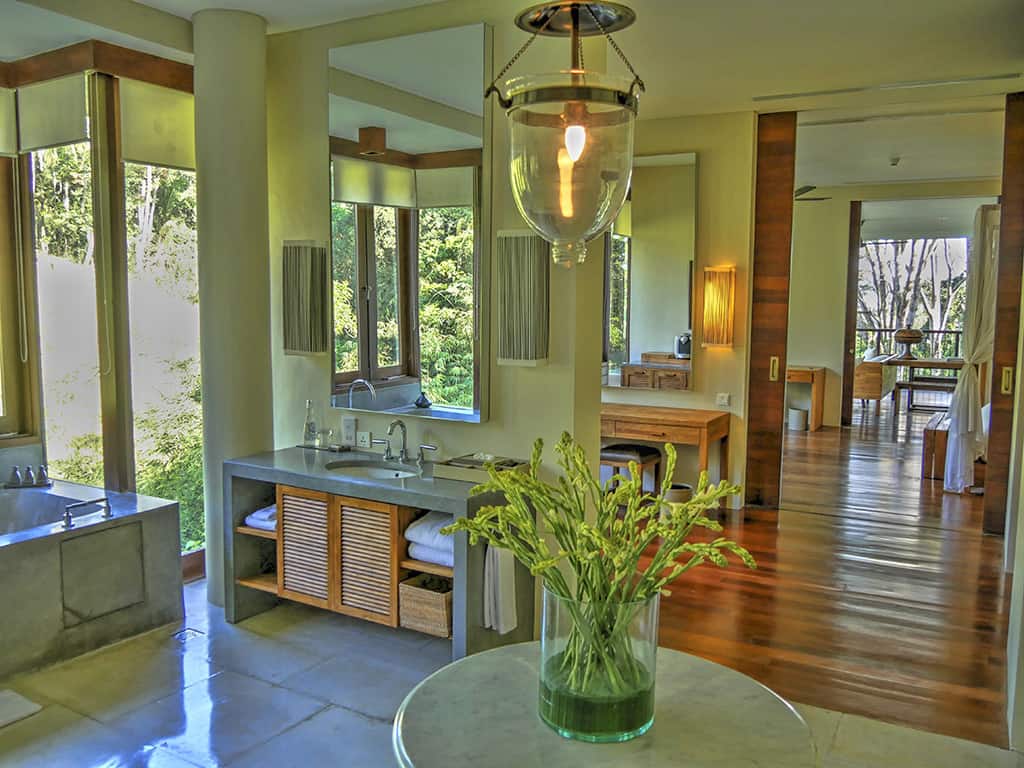
      The bathroom has a magnificent marble bath, separate rain shower and windows that open up completely.

      The outdoor deck is a lovely shady place to watch the sun go down or read a book. The villa is completely private, with no one overlooking you except the wildlife.

      Alila Ubud Amenities

      The amenities in the villas are particularly impressive – there is actually a separate his and hers toiletry kit including a full-sized toothbrush, sunblock, mosquito repellent and after-sun cooling lotion. Wifi is complimentary, and there’s a mini bar, safe, flat screen TV with satellite channels, and Illy coffee and TWG tea selection.

      There are also straw hats that you can borrow during your stay – a floppy brimmed one for ladies and a panama fedora hat for gentlemen, plus a convenient tote bag for trips to the pool, spa or local village.

      Alila Ubud Facilities

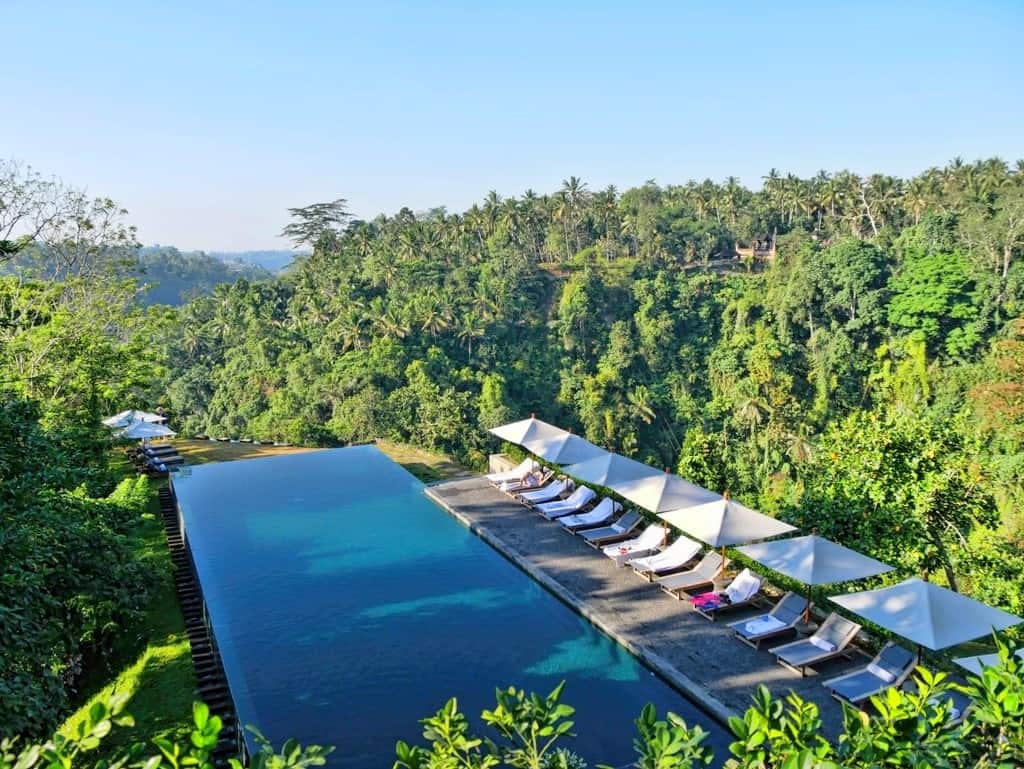
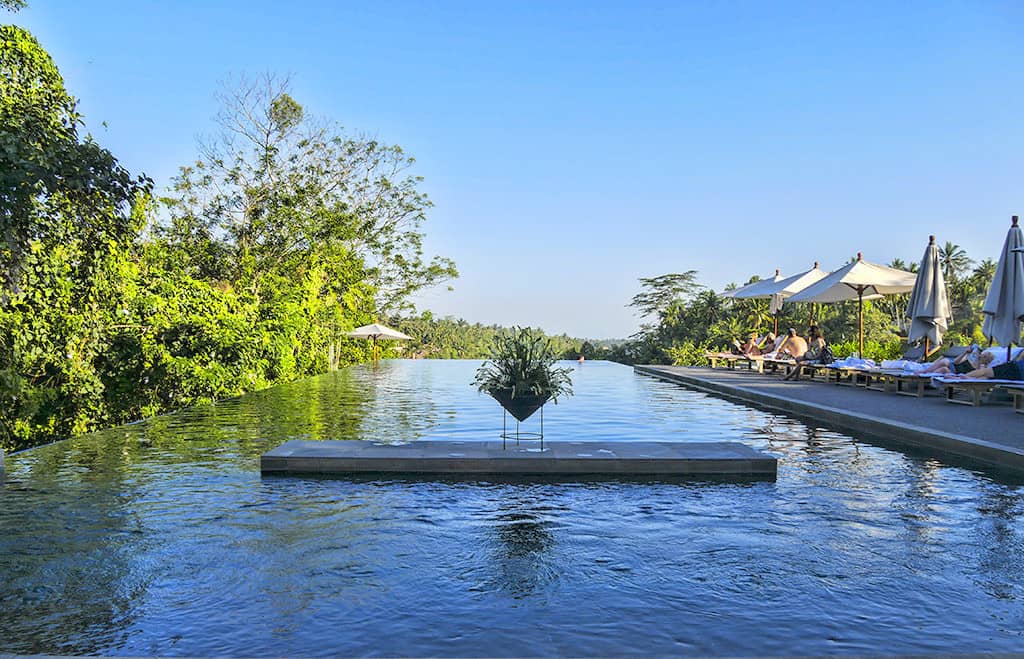
      The star attraction at Alila Ubud has to be its infinity pool. Due to its location above a steep ravine, you really do get the impression that there is nothing beyond the edge…

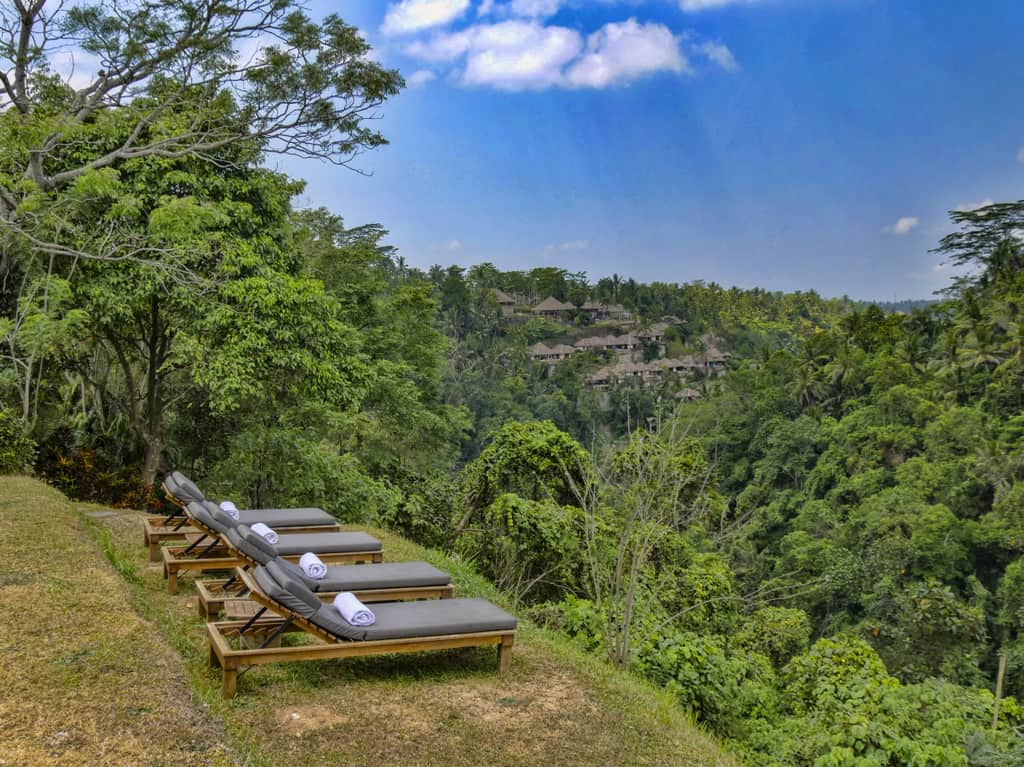
      …until you venture beyond and see these comfy sun loungers, overlooking the hillside. You really can’t beat the view from these. The pool itself is the perfect spot to unwind and have your very own “Eat, Pray, Love” moment.

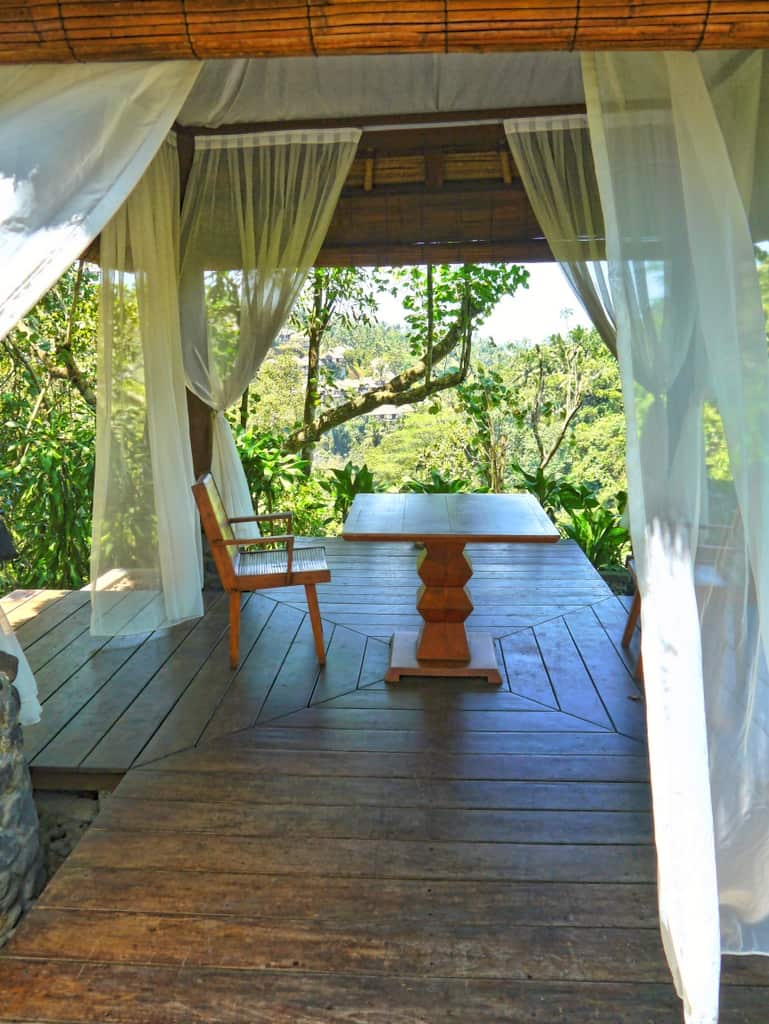
      There’s even a little curtained area which would make the perfect spot for a wedding proposal.

      Alila Ubud Grounds

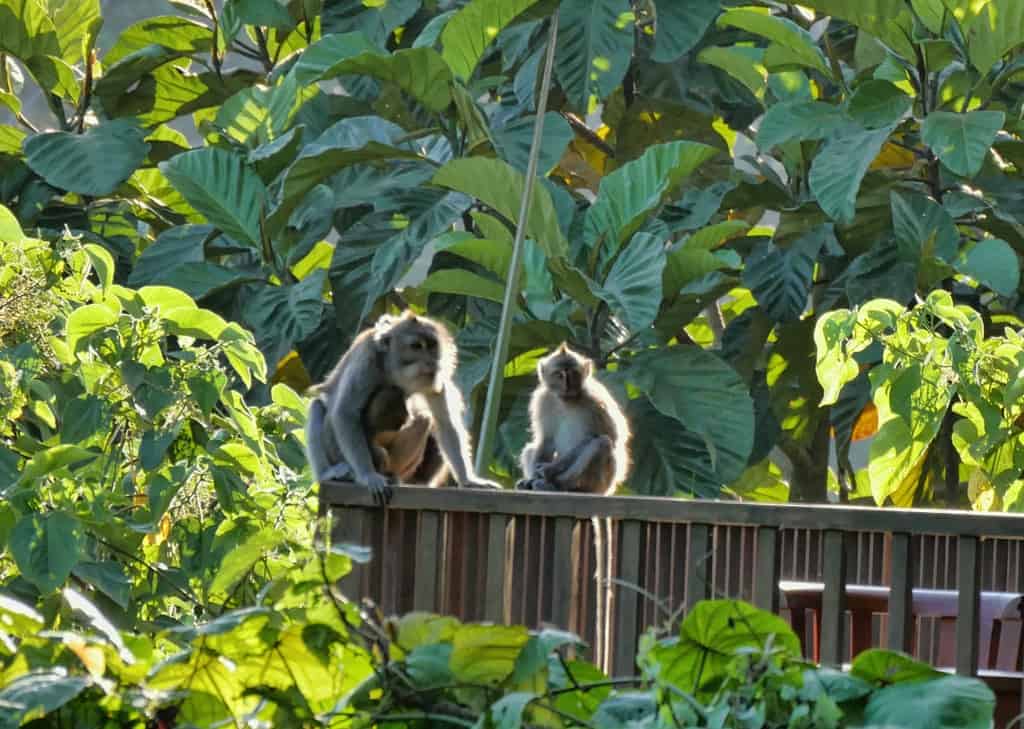
      The other thing that makes Alila Ubud so special is the monkeys roaming the grounds. They tend to appear in the early morning or evenings when the weather is cooler.

      Unlike the rather cheeky monkeys at nearby Monkey Forest, they won’t come up to you or try to make off with your belongings.

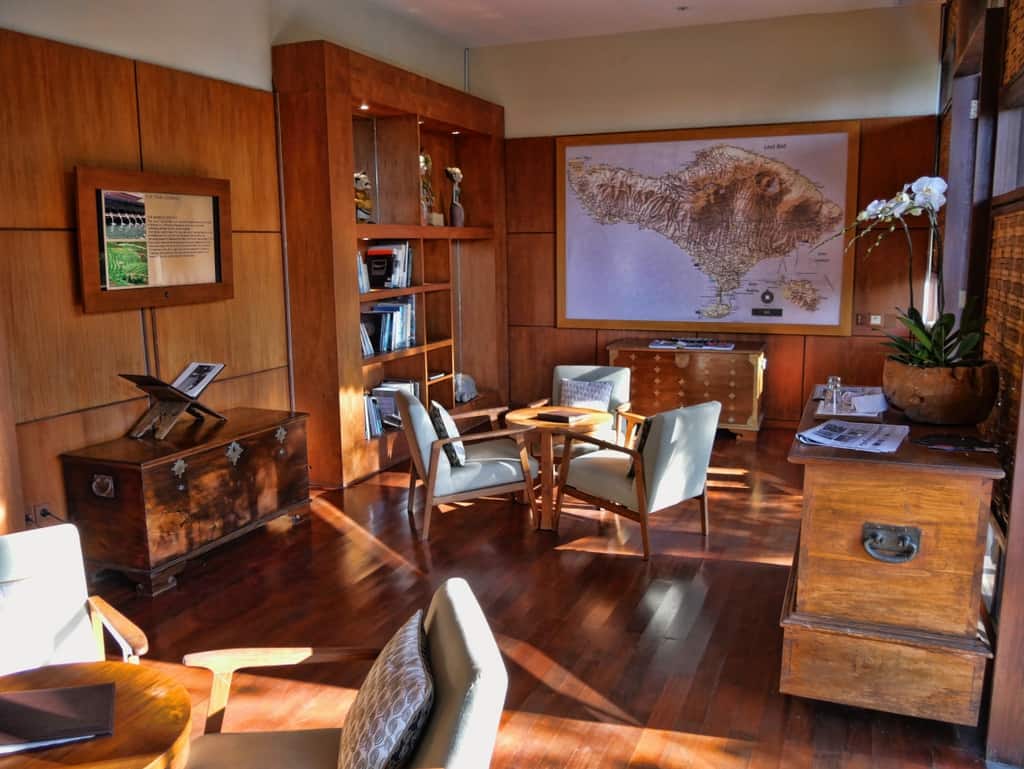
      If you fancy some indoor relaxation, there’s a cosy library next to reception, where you can read books in a variety of languages and print boarding passes.

      Alila Ubud Dining

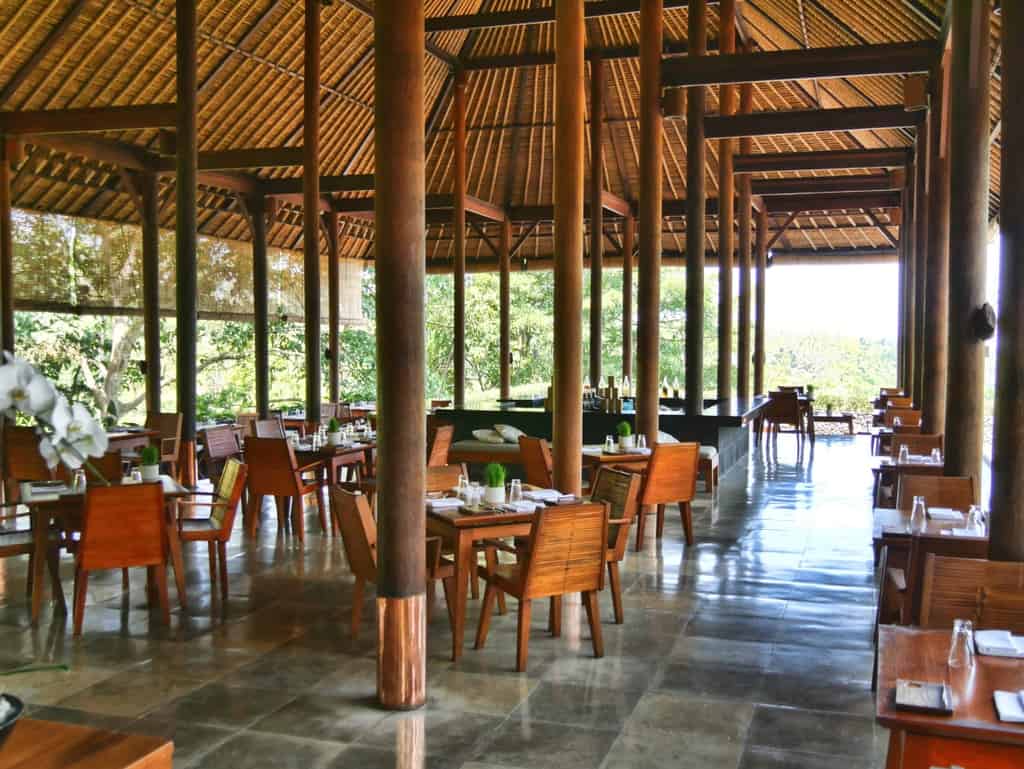
      Alila’s Plantation Restaurant is well known in the area as one of the best places for fine dining, combining Balinese and French cuisine. The open plan room has a traditional alang-alang roof supported by coconut pillars, lending an exotic vibe.

      The menu uses locally sourced ingredients to create dishes that are strong on flavour, with just the right amount of spice. We opted for the authentic Ubud tasting menu, and particularly enjoyed the Tongseng Kambing Tongseng Kambing.

      This is braised lamb leg in Javanese spiced paste, served with homemade peanut sauce and pickled vegetables.

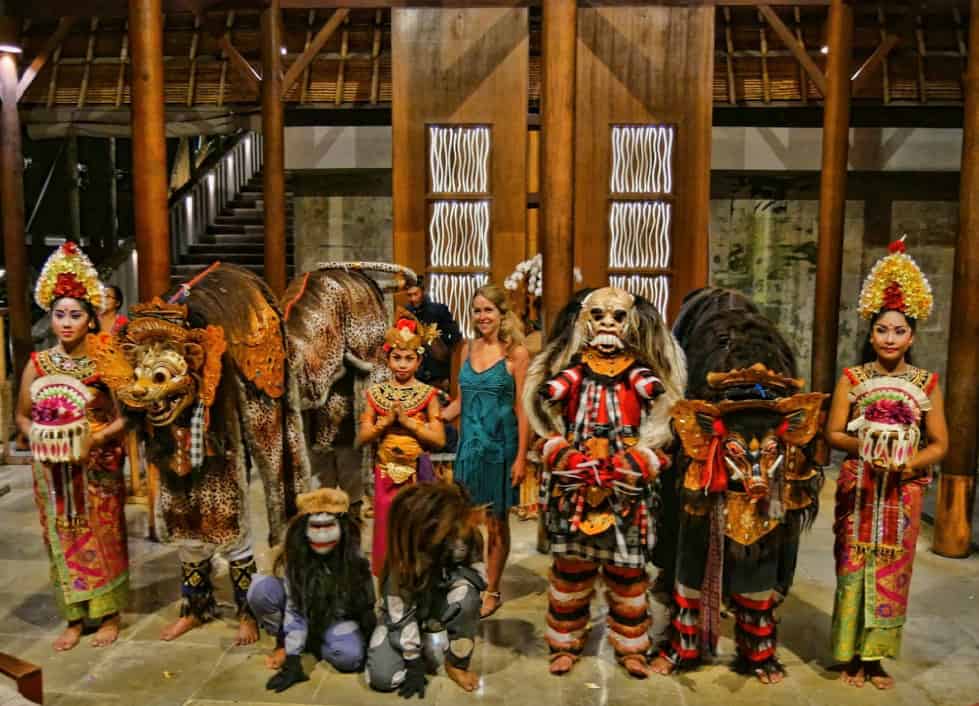
      If you’re lucky, you might be there on a night when they have traditional Balinese dancers. These are the children of some of Alila’s staff and they put on a very entertaining display.

      In addition to the restaurant, there’s also the Cabana Lounge, next to the pool and perfect for evening cocktails or light poolside meals designed by Chef Erwan for sharing. Complimentary afternoon tea is served here to hotel guests every day.

      Breakfast at Alila Ubud

      You won’t go hungry here, the charming staff will encourage you to try as many dishes as you wish. There are lots of healthy options too, with green wheatgrass smoothies if you wish.

      The Balinese breakfast is especially tasty though there are also plenty of Western dishes such as fresh croissants.

      Experiences at Alila Ubud

      I was booked in for a traditional Balinese massage at Spa Alila. Housed in an attractive thatched building, it nevertheless boasts all mod cons.

      Each treatment room has its own private changing area with shower and sink where you can leave your belongings and change after the treatment. My therapist gave me a choice of massage oil, which was a blend of virgin coconut, kukui nut, sweet almond and wheat germ oils.

      Virgin coconut oil is sourced from local villages and has fantastic natural antioxidant properties. After a relaxing footbath, she set to work using ancient Asian healing techniques.

      The combination of gentle stretching, long therapeutic strokes and skin rolling eased away all the tension in my shoulders and back. My skin was incredibly soft and lustrous afterwards.

      Alila Ubud Guided Trek

      The next day, our hosts had arranged a guided trek for us around the local area of Bayad. Lasting 1 and a half hours, it’s an unforgettable experience that I highly recommend.

      We were accompanied by Pande, a knowledgeable guide who explained about village customs, pointing out local flora and fauna along the way. You can opt for longer treks, a cycling tour, climbing experience at Mount Batur, rafting on the river Ayung, quad buggies, elephant rides or a cookery class.

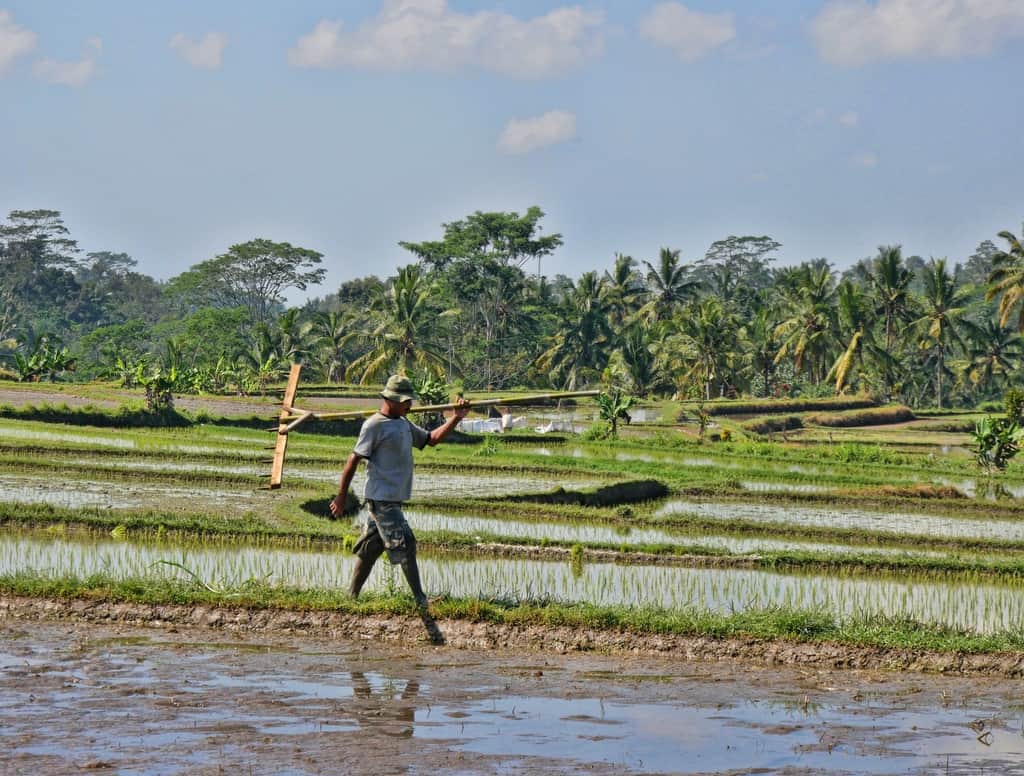
      We visited a Balinese family compound, before walking in the middle of the rice paddies, so sports shoes and comfy clothes are a must. The unique Subak irrigation system places water management under the authority of the priests in water temples, who practice Tri Hita Karana, drawing together the human, natural and spirit worlds.

      Things to Do in Ubud

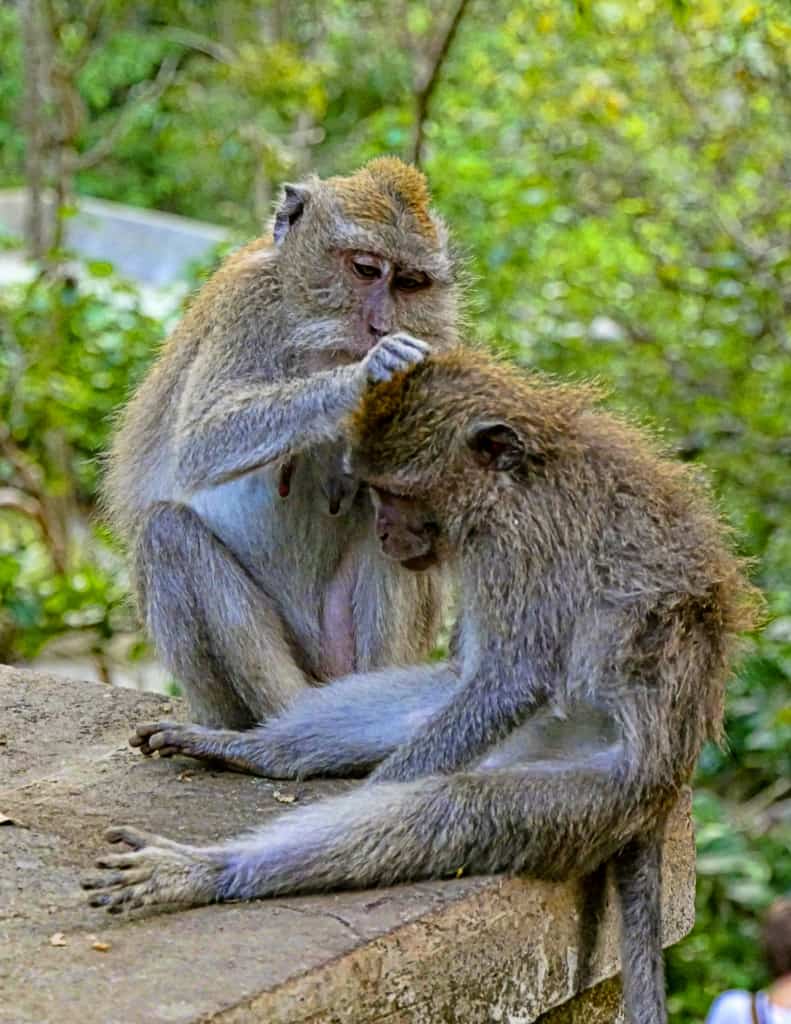
      No visit to Ubud would be complete without a trip to the infamous Sacred Monkey Sanctuary. The monkeys here can be mischievous so it’s advisable not to bring any food unless you want them to climb on you to reach it.

      Alila have a regular free shuttle to Ubud and it’s a 10 to 15 minute walk from the centre.

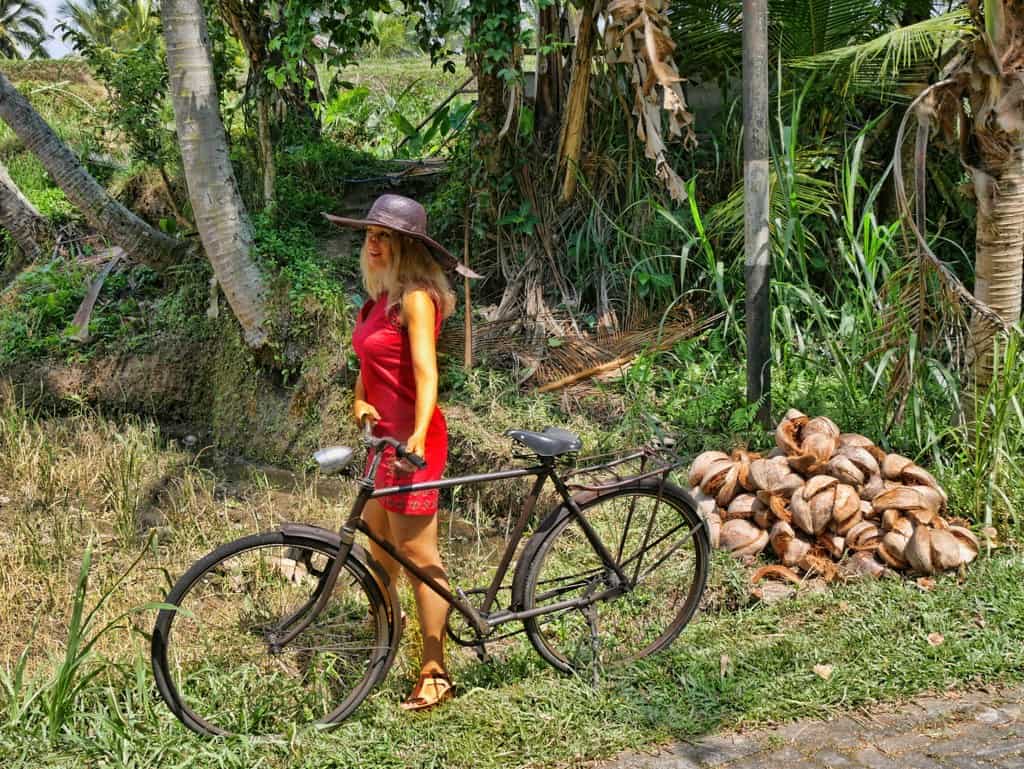
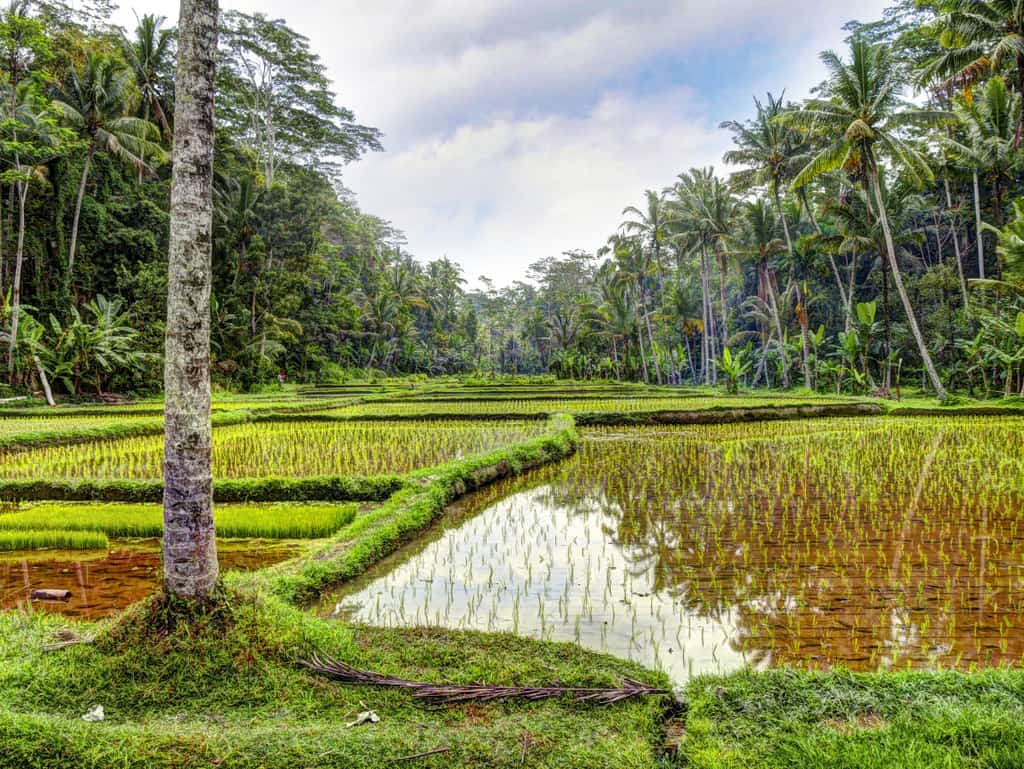
      Whilst there are many flat rice fields close to Ubud, you should venture further North to Tegalalang and beyond to see vertical rice paddies such as these. There is so much to do that we’d advise staying for a week if you can.

    4. 7 Sparkling Thailand Hidden Gems on the Andaman Coast

      7 Sparkling Thailand Hidden Gems on the Andaman Coast

      In a country as vast as Thailand, there are many opportunities to get off the beaten path. From unspoiled tropical islands to secret beaches, these Thailand hidden gems are not to be missed.

      Southern Thailand Hidden Gems

      Are you looking for the perfect hideaway for your next beach vacation? The Andaman Coast of Thailand is a hidden slice of paradise that’s sure to offer all the seclusion and relaxation you seek.

      Stretching from the Myanmar border on its east-side, towards Malaysia in its west, this region of Southern Thailand encompasses lush rainforests, stunning beaches and dreamy islands that are yet to be touched by mass tourism – making it ideal if you’re looking to experience true local culture.

      In this article, we’ll share our top tips and recommendations on where to stay, eat & explore during your time along Thailand’s beautiful Andaman coast.

      1.Cape Panwa, Phuket

      Phuket is known for its vibrant atmosphere and bustling night market, yet there is a quieter side to Thailand’s largest island. 8 kilometres from Phuket town, you’ll find Cape Panwa, also known as Khao Khat.

      This Thai viewpoint has a tranquil, south-westerly facing beach that’s generally uncrowded. It’s bordered by a mangrove swamp and fishermen’s huts and has nice views towards Lone Island.

      People tend to walk along the beach rather than swim here as it has a stony seabed. The area has been popular with celebrities for many years and hasn’t changed much since then.

      Many of them including Leonardo di Caprio have stayed at Cape Panwa Hotel, which overlooks the beach. All of the rooms have direct sea views.

      The hotel is a good base if you wish to explore internationally renowned Phuket Aquarium, just a few minutes away. It’s also worth heading to Khao Khad Viewpoint for 360 degree views over the coast and surrounding area.

      2.Fossil Shell Beach, Krabi

      One of only three fossil beaches worldwide, Fossil Shell Beach in Krabi is a fascinating place. Susaan Hoi, to give the site its Thai name, is located at Ban Laem Pho in Krabi.

      Despite its man-made appearance, its a natural phenomenon that’s 40 million years old. Hundreds of thousands of snail shell fossils have joined together to form slabs which look rather like concrete.

      At low tide you can sometimes see new fossils being formed. This unusual beach is a popular spot for both tourists and locals to take photos.

      You can access Fossil Shell Beach via the visitor centre on Ban Laem Pho Road. It’s open until 4.30 pm daily and there’s a 200 baht entrance fee to the site.

      Alternatively, it’s free to enter after 4.30 pm and a nice place to see the sunset. Make sure to wear shoes with a good grip as it can be slippy at certain times of day.

      There are quite a few stalls lining the short walk down to the beach, selling clothing and refreshments. The pearl jewellery is great value compared to many places in central Krabi and there are lots of different styles. If you’re staying at the luxurious boutique hotel, The ShellSea Krabi, you can walk along the beach in the early afternoon at low tide.

      3.Khao Ngon Nak Nature Trail, Krabi

      Thailand is blessed with 147 National Parks, spread all over the country. If you want to escape the buzz of Krabi town centre, Khao Ngon Nak National Park makes a great excursion. Also known as Dragon Crest Mountain, it’s known for its lush vegetation and viewpoints.

      The park is easily reached by taxi from the centre of town or you could stay a few minutes away at Amari Vogue. At the entrance to the park, staff will ask you to fill in a form, so that they can keep track of everyone who is entering the park.

      It’s a steep path and not suitable for young children, the disabled or injured. In fact we’d recommend wearing hiking boots rather than sports shoes or sandals. Take water with you, though most of the path goes through the forest and is nice and shady.

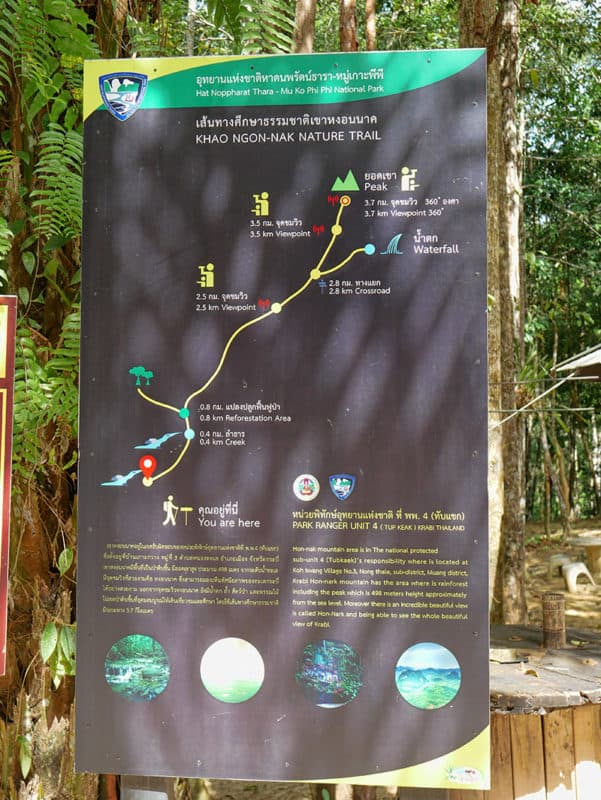
      You hike four kilometres through the park, passing a small waterfall and stream along the way. It takes several hours to reach the summit, from which you’ll be rewarded with a panoramic view of the surrounding area.

      565 metres above sea level, Khao Ngon Nak Viewpoint won’t disappoint. The cliff ledge jutting out from the mountain is closed to visitors as it’s too dangerous, but you can get a great view from the summit’s rock nonetheless.

      4.Koh Phi Phi Don

      The Phi Phi Islands are true Thailand gems and extremely popular with visitors. One of the reasons are their close proximity to Maya Bay, where the movie The Beach was filmed.

      Maya Bay got quite crowded, particularly in mid afternoon and is currently closed to visitors. This is to allow the island to recover from the effects of mass tourism.

      It’s worth staying overnight on Koh Phi Phi Don. Out of the six Phi Phi Islands, Koh Phi Phi Don is the only one that is inhabited.

      Head to Phi Phi Viewpoint at 186 metres high for fantastic views over Tonsai and Loh Dalum bay. From Tonsai Village, just head towards Loh Dalum Bay and follow the signs.

      It’s only about 30 minutes to the top and an easy walk as most of the path is paved. There’s a little snack stall at the top although it’s a good idea to take water with you for the climb, as well as around 30 baht for the entrance fee.

      Phi Phi Island Village Resort & Spa is one of the best hotels on Koh Phi Phi Don. This charming Thai hotel is located in a tranquil spot on Loh Bakao Bay.

      Also known as Loh Bagao, it overlooks the turquoise Andaman Sea. All the accommodation is in traditional Thai style but with modern comforts like air-con and high speed Wi-Fi.

      The 800 metre long bay faces North East but gets plenty of sunshine. Next to the resort, a path leads to the local village which has quite a few shops and places to eat such as Oasis Bar and Restaurant. At the end of the village, you’ll come to mangroves and a bridge nicknamed The Golden Gate by the locals.

      5.Koh Yao Noi

      This unspoiled island is one of our favourite hidden gems in Thailand. The name Koh Yao Noi means Island (Koh) Long (Yao) and Little (Noi).

      Getting here is part of the fun – you take a speedboat from the very swanky Phuket Yacht Haven. In 55 minutes you’re transported to Koh Yao Noi.

      Measuring just 50 square kilometres, this quiet Thai island has a rural charm. Walking around the island, you’ll see buffalo grazing in the shade.

      There are many rubber trees being tapped with a bucket to collect the sap. Despite being so tranquil, there are actually several five star hotels on the island. It’s also one of the closest places to James Bond Island, which makes a great day excursion.

      Koh Yao Yai is known for its wildlife, in particular the Oriental Pied Hornbill birds. These colourful creatures are distinguished by their yellow beak.

      They feed mainly on berries, figs and live mainly in tree canopies. One of the best places to spot them is at Paradise Koh Yao Yai.

      This beachfront boutique hotel is one of our favourite Thailand luxury escapes. They also have a new sister hotel next door where guests can stay in funky treehouses. From here you can kayak around the neighbouring islands or snorkel in the crystal clear waters.

      6.Koh Yao Yai

      Although this is the larger of the two Koh Yao islands, Koh Yao Yai is the least populated. Nestled in Phang Nga Bay, it’s just 10 minutes away from Koh Yao Yai by long tail boat. This makes it an ideal destination for Thailand island hopping.

      If travelling from Phuket, you can take a speedboat from Bangrong Pier to Klong Hia Pier. Koh Yao Yai is one of the most authentic Thailand hidden gems, with some lovely beaches.

      You can get around by tuk-tuk or by hiring a bicycle. There are also tours that will show you the highlights of the island, such as the rice paddy fields and a marine lobster farm.

      You might however prefer to sunbathe on Ao Muang or Son Bay beach, or to get a massage from Dr Saad, a blind masseur based in Ban Lo Po, Koh Yao Yai, who speaks excellent English.

      It’s best to stay overnight in order to truly appreciate the island’s beauty. Santhiya is an exceptional hotel in traditional Thai style.

      Ornate wooden carvings abound and master craftsmen are sculpting more in the lobby pillars. The views from the infinity pool are superb and there are several complimentary classes to initiate guests into Thai boxing and dance.

      7.Loh Samah Bay near The Beach

      As we mentioned, if you’re visiting iconic Maya Bay, aka The Beach, it can get crowded. Yet there is a more serene side to Maya Bay, if you know where to find it.

      Loh Samah Bay is on the other side of the island and accessible by traditional long-tail boat for confident swimmers. In fact, it’s possible to hire your own private long tail boat for the day.

      You can then travel to various nearby sights such as Monkey Bay, where you will see monkeys in their natural habitat, at the most convenient times. The Viking Cave is also interesting, having some wall paintings which are apparently quite recent.

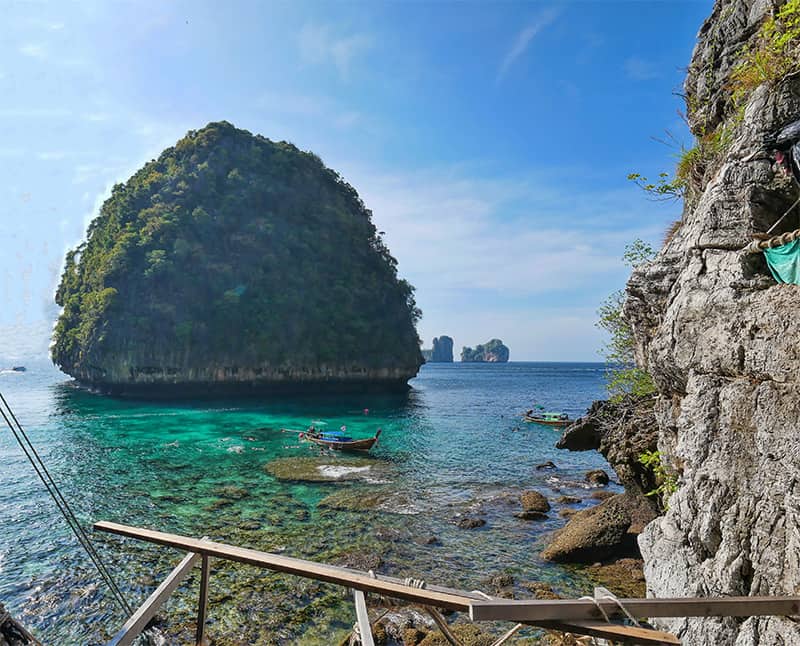
      For those arriving at The Beach itself, once you’ve admired Maya Bay and its limestone cliffs, then walk past the restrooms to Loh Samah Bay on the opposite side of the island. It’s only a few minutes walk. Here you’ll find wooden steps from which you can swim in the azure blue water.

      Snorkeling in the crystal clear water is a great experience, with a myriad of colourful fish to spot. Just be careful not to disturb the coral.

      Final Thoughts on Southern Thailand Hidden Gems

      As you can see, there are some truly impressive hidden gems of Thailand where you’ll enjoy tranquility and stunning scenery. Thailand’s Andaman Coast is a place of stunning natural beauty that still feels off the beaten path.

      If you’re looking for an amazing, but not overly touristy, vacation spot than this is the perfect destination for you. From snorkeling and diving in crystal clear waters to exploring atmospheric caves and jungle-covered temples, there are endless adventures to be had on the Andaman Coast.

      So what are you waiting for? Start planning your trip to one of Thailand’s best kept secrets today.

    5. What to See in Tel Aviv, Israel | 15 Best Tel Aviv Attractions

      What to See in Tel Aviv, Israel | 15 Best Tel Aviv Attractions

      The second largest city in Israel, Tel Aviv is known for its amazing beach, vibrant nightlife and gourmet vegan restaurants. The cosmopolitan atmosphere of Tel Aviv and the picturesque streets of Jaffa make this a must visit Mediterranean destination. Here are our recommendations of what to see in Tel Aviv, whether you’re there for business or pleasure.

      What to See in Tel Aviv

      The name Tel Aviv means hill of Spring. However the city has several nicknames, including Startup City, the first Hebrew City and the City that Never Sleeps.

      Its full name is Tel Aviv-Yafo, as the municipality includes Jaffa or Yafo, the historic sea port.

      1.Bauhaus Buildings

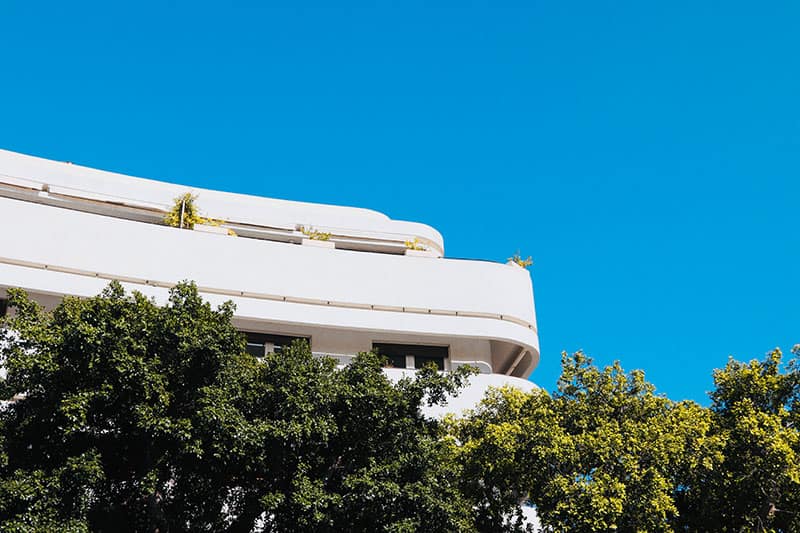
      The White City is a UNESCO World Heritage Site that is famous for the number of white buildings in the Bauhaus style. There are over 4,000 examples of this architectural style in Tel Aviv.

      Many of the Bauhaus buildings can be found on Rothschild Boulevard, one of the oldest streets in Tel Aviv. The Bauhaus style was popularized in the 1930s by Jewish architects who came to Tel Aviv to escape persecution in Germany.

      2.Frishman Beach

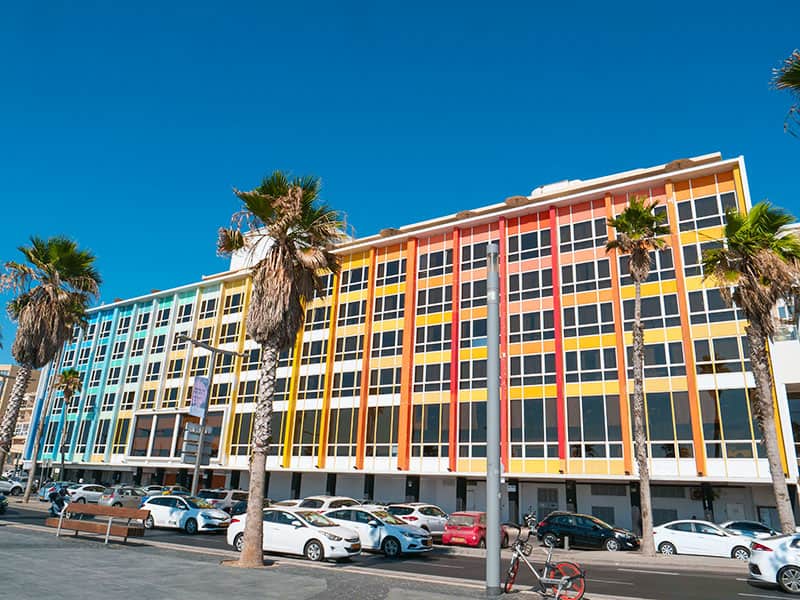
      There are many great beaches in Tel Aviv, including Gordon Beach, Hilton Beach and Jerusalem Beach. One of the best is located in front of the colorful Dan Tel Aviv Hotel. The facade of this beachfront hotel is a popular photo spot.

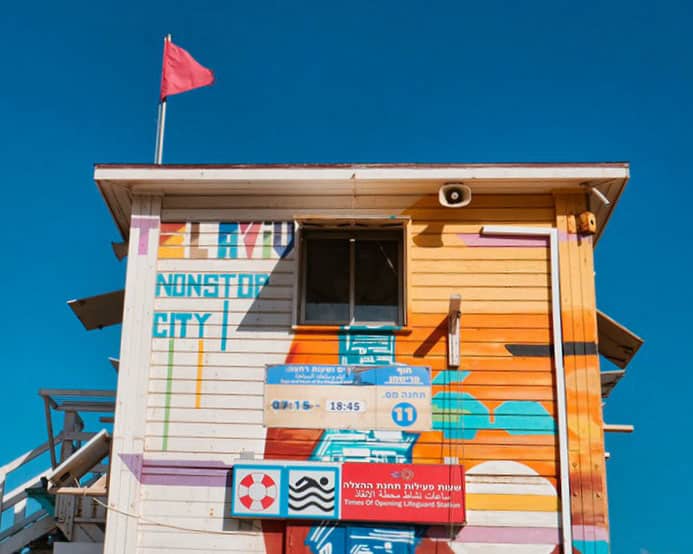
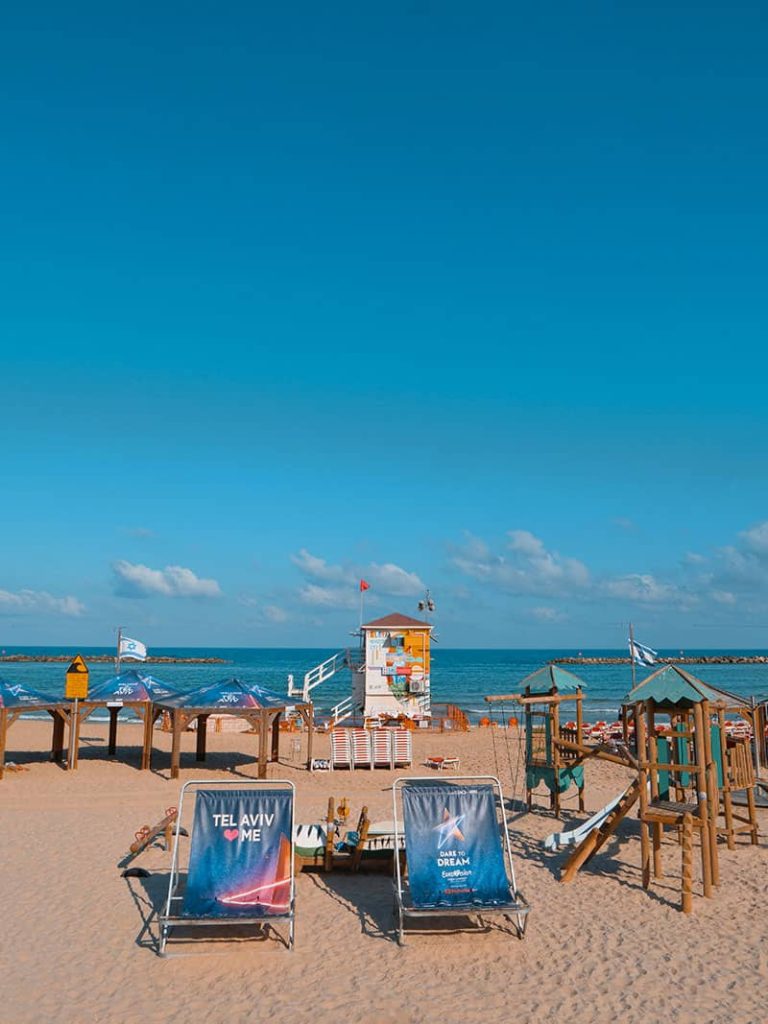
      Cross the Tayelet, or beach promenade and you’ll find a wide expanse of white sand with giant deckchairs and a children’s playing area. Go for a run or bike ride and check out the LA vibe. Many locals work out at the beach using the free exercise equipment.

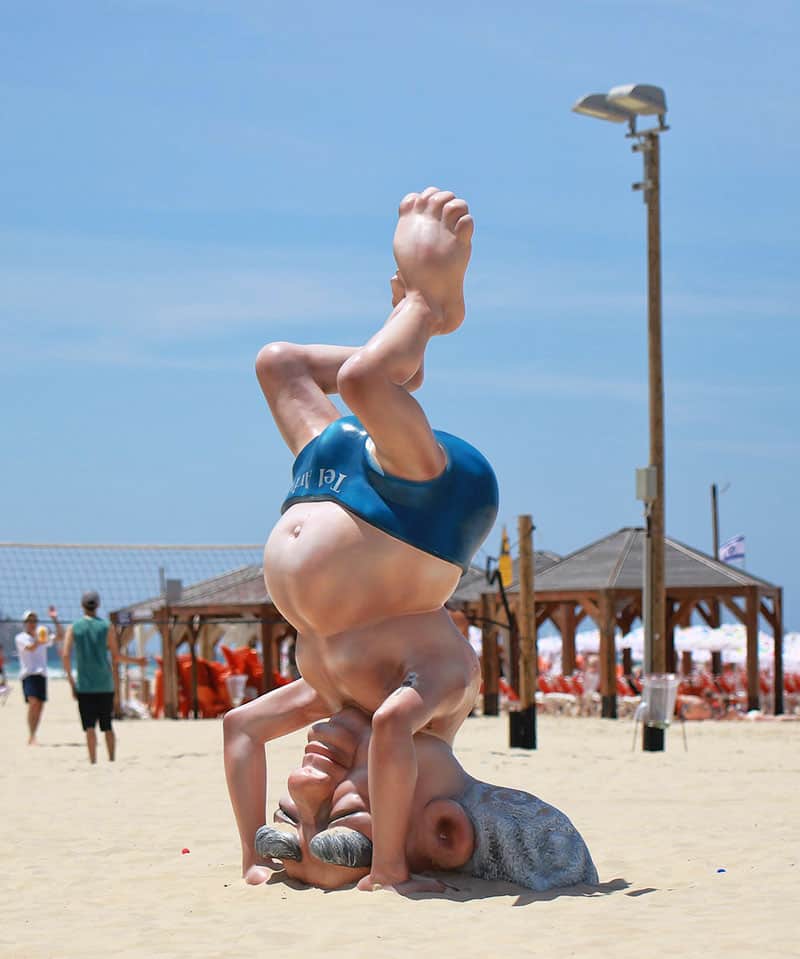
      The statue of David Ben Gourion, the first Prime Minister of Israel, doing a headstand on the beach is a quirky sight. Originally from Poland, he was a keen practitioner of yoga and often practiced it on the beach.

      3.Tel Aviv Port

      If you continue northwards along the beach, you’ll eventually come to Old Tel Aviv Port. The wooden deck stretches for 9 miles, all the way to Jaffa.

      Known as Namal El Taviv in Hebrew, this is a popular Tel Aviv dining destination. The former port is also known for its indoor farmer’s market, casual fashion stores and live music.

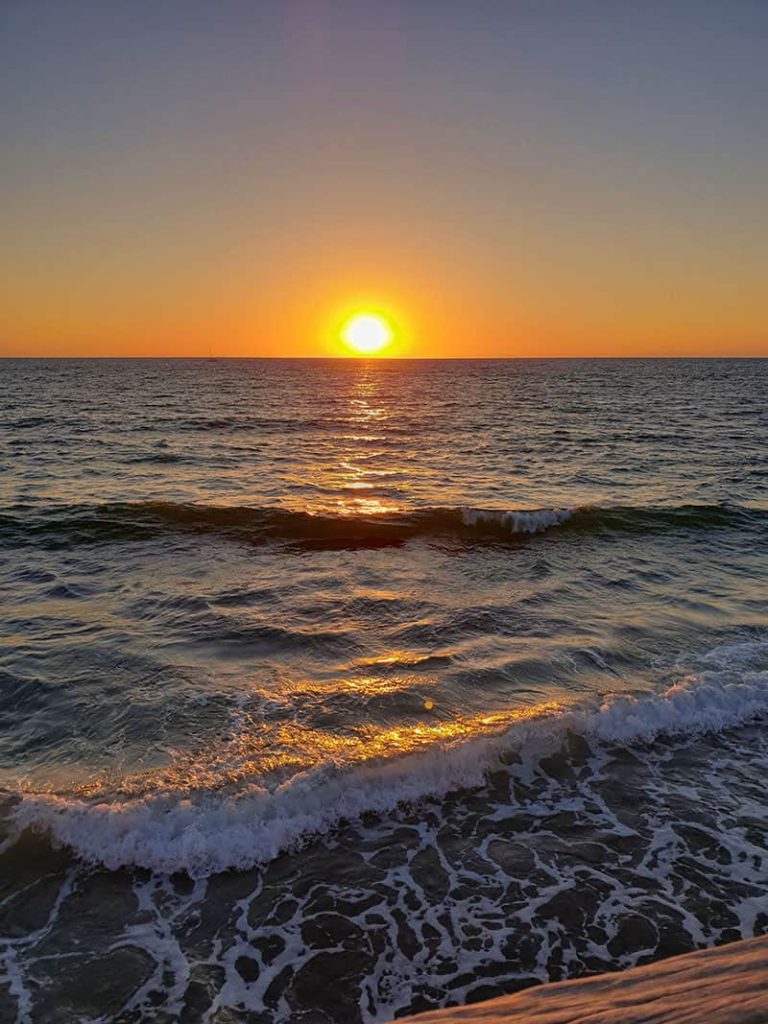
      There are several good restaurants with sea views such as Kitchen Market, and Yulia TLV, known for its seafood. Admire the sunset from Yulia’s spacious outdoor terrace.

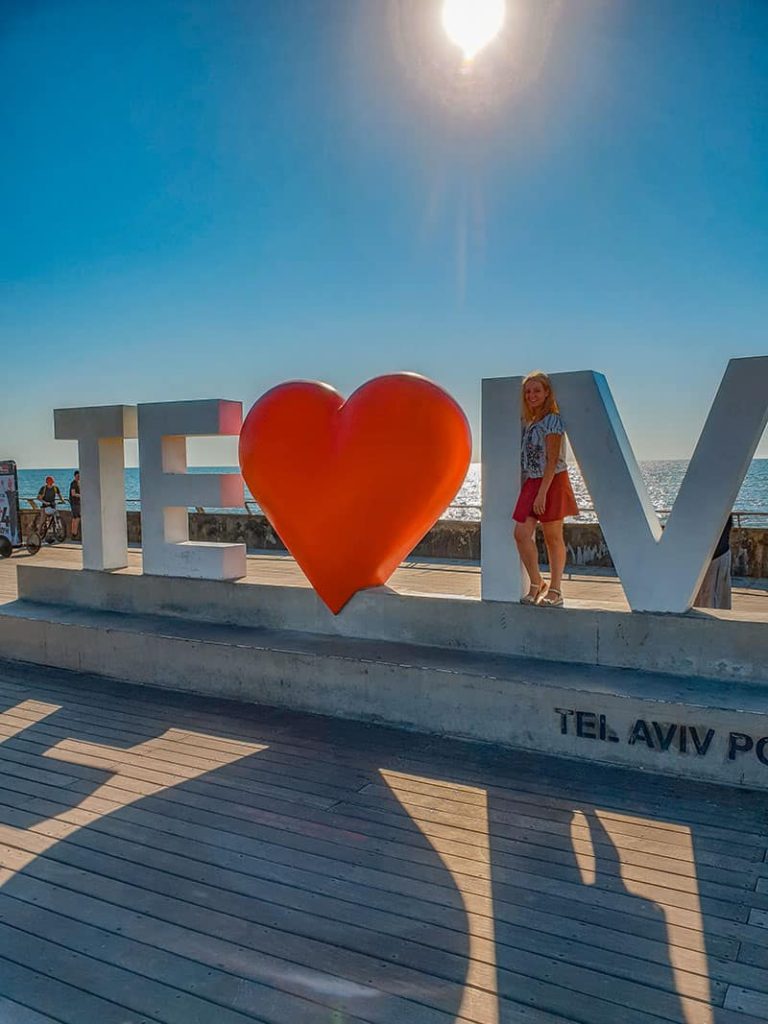
      On the boardwalk, the I Heart Tel Aviv sign is a perfect photo opportunity. In fact, it’s one of the most Instagrammable places in Tel Aviv.

      4.Haiku Skybar

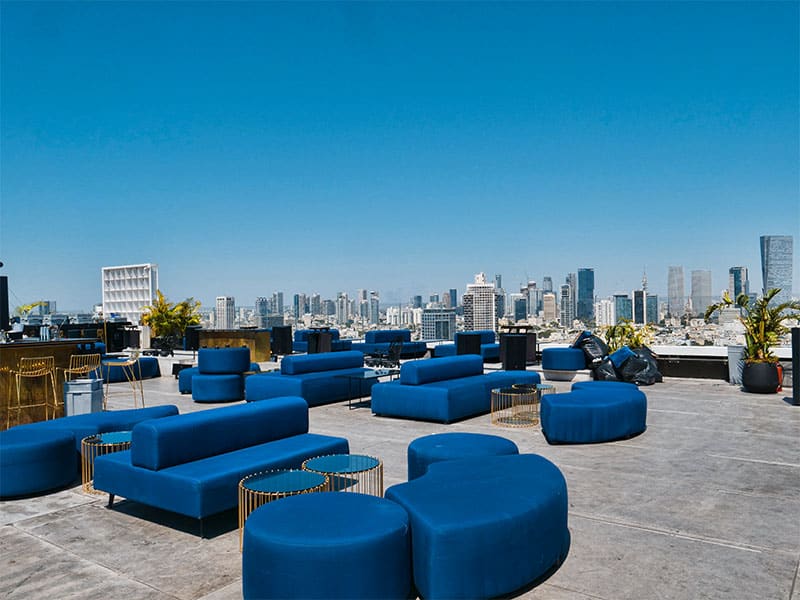
      For panoramic views of the Tel Aviv skyline and beach, head to Haiku Skybar on the 18th floor of the Lighthouse Hotel. Located at 1Ben Yehuda Street, this Tel Aviv rooftop bar and restaurant is popular with locals and hotel guests alike.

      It’s best to book in advance, to be sure to get in. If you’re feeling hungry, there are tasty yakitori dishes by Head Chef Guy Gamzo.

      5.Carmel Market

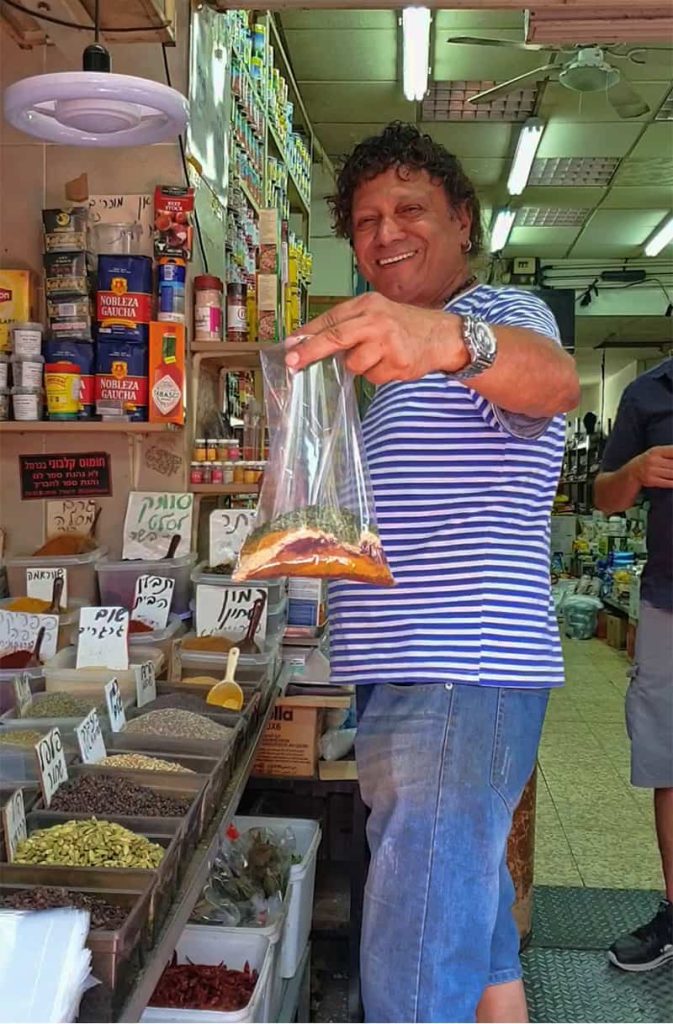
      Head to Carmel Market for a huge selection of spices, fruit and vegetables. On the edge of Allenby Street and Magen David Square, it’s also known as Shuk Ha’Carmel.

      Shuk means market and this is the largest one in Tel Aviv. In addition to food, you’ll also find clothing and kitchenware.

      If you’re into cooking, pick up some za’atar spice mix, baharat, carob powder or Dead Sea salt. Carmel Market is open from 8 am until 7 pm, Sunday to Friday with the stalls closing earlier on Friday.

      6.Nachalat Binyamin Market

      Two minutes walk from Carmel Market, you’ll find Nachalat Binyamin, the largest crafts market in Israel. The market is open twice a week, on Tuesdays and Fridays.

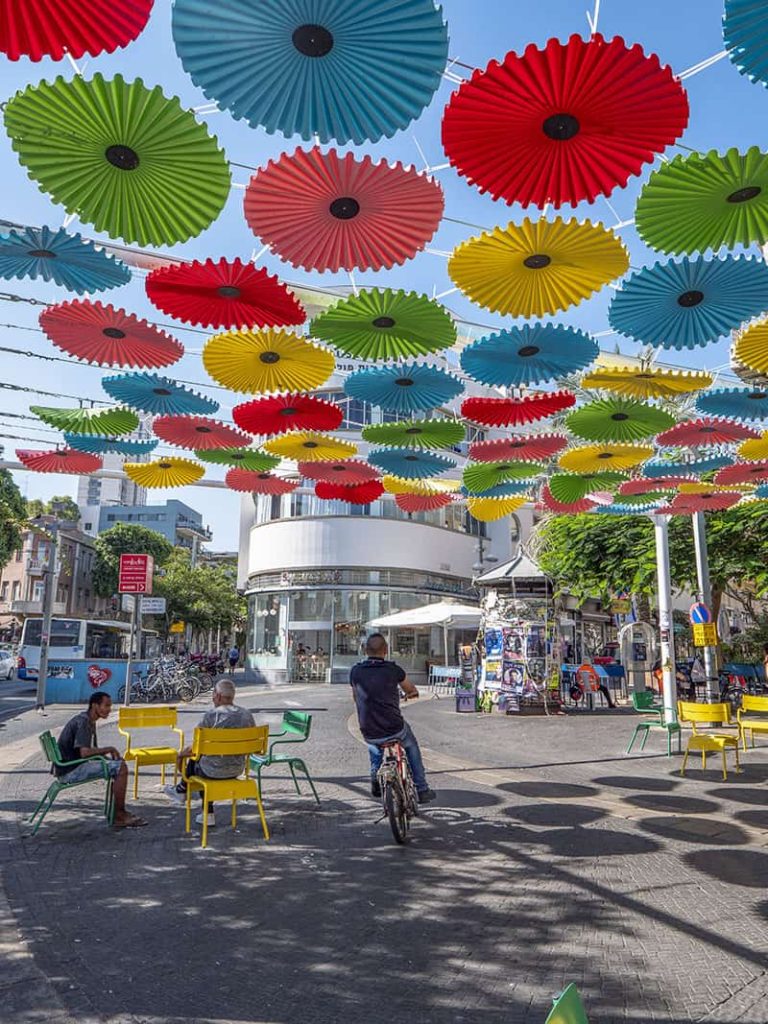
      This pedestrianized Tel Aviv market is a good place to find handmade jewelry and artworks. At the entrance to the market, you’ll see colorful umbrellas suspended in the sky.

      7.Neve Tsedek

      This picturesque area of Tel Aviv is known for its fashionable bars and boutiques. Established in 1887, it is the oldest district in Tel Aviv apart from Jaffa.

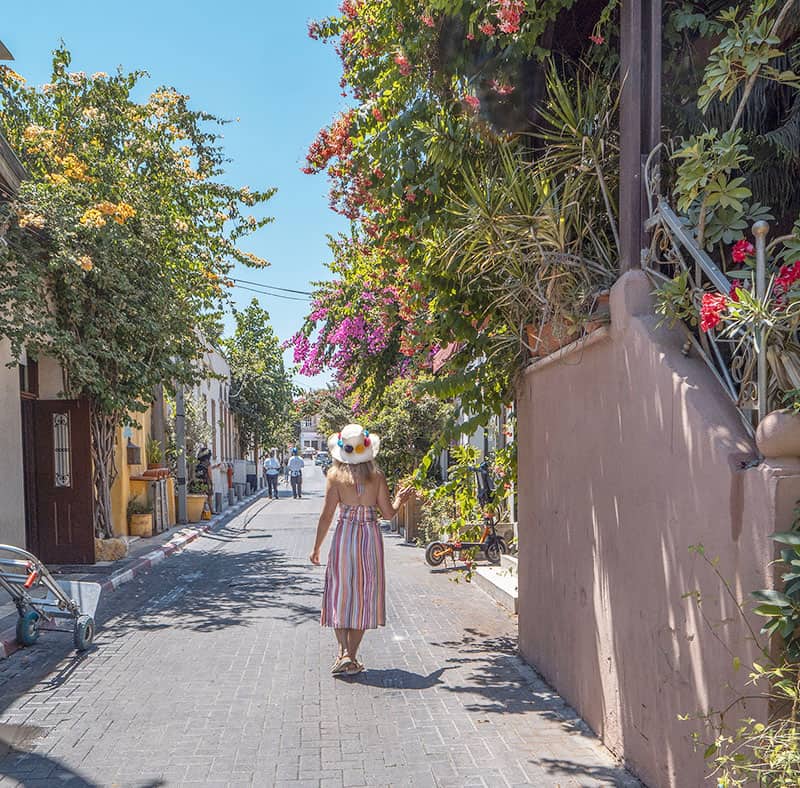
      Fans of modern dance will enjoy the performances at the world-renowned Suzanne Dellal Center. Many of the fashion and homeware boutiques in Neve Tsedek are located on Shabazi Street. However if you wander around the side streets, there are quite a few surprises like this flower-filled road.

      Neve Tsedek has long been popular with artists and writers. Notice the artworks dotted all over Shimon Rokach House, the oldest building in the area. They are by Leah Majaro Mintz, granddaughter of Shimon Rokach and a well known sculptor.

      Shimon Rokach was the founder of the Neve Tsedek district, as well as a hospital and community organization. Today, the house is a museum open to the public on Thursdays, Fridays and Saturdays.

      A Farmers’ Market takes place in HaTachana, a former railway station on the edge of Neve Tsedek every Friday. The Old Train Station also has several cool restaurants and shops open throughout the week.

      8.Israel’s First Whisky Distillery

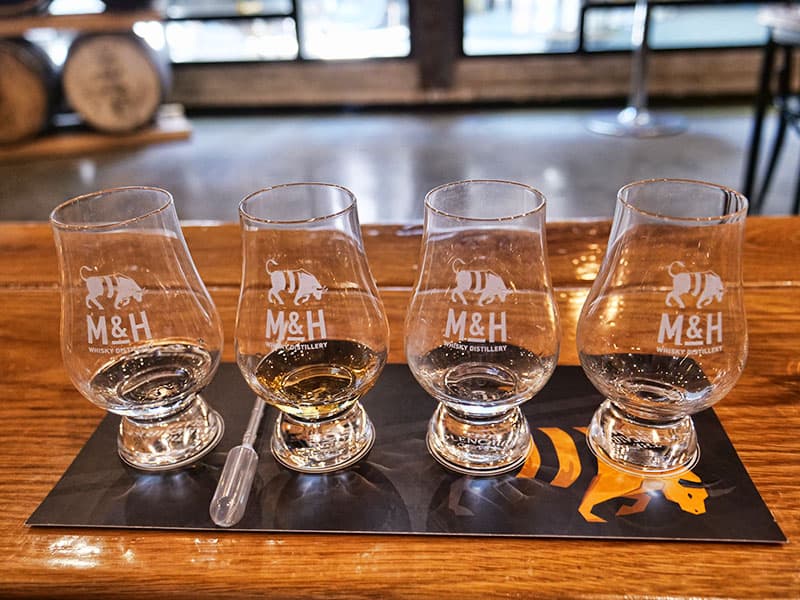
      Close to Jaffa and Bloomfield Soccer Stadium, whisky fans will love Milk & Honey. This enterprising venture is the first single malt whisky distillery in Israel.

      Established in 2014, M&H worked closely with the late whisky expert Dr James Swan to create a world class single malt. All the distillery’s whiskys, liqueurs and gins are kosher.

      Visitors to the distillery can enjoy informative tours and whisky tastings and purchase whiskys, herbal liqueur, and single malt gins. Tours must be booked in advance, and take place throughout the week.

      9.Levinsky Market

      Another great area for food in Tel Aviv is Levinsky Market. Located in South Tel Aviv, in the trendy Florentin neighbourhood, it is famous for its spices.

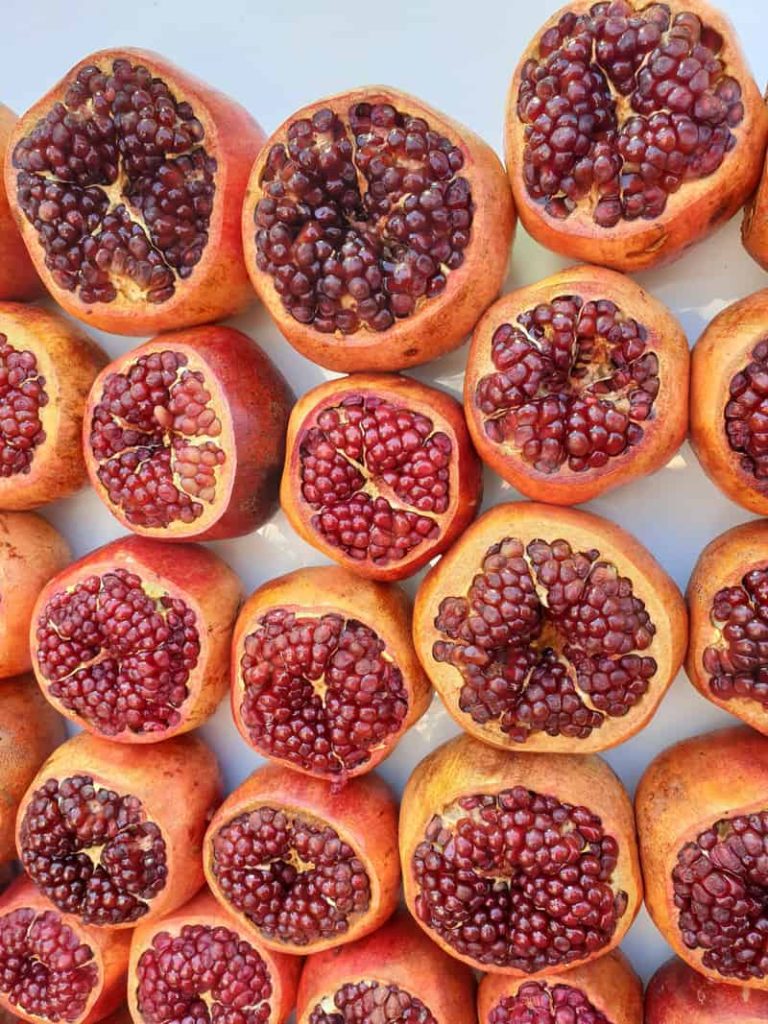
      There are many hip cafes and restaurants such as Beer Bazaar and Tony & Esther. Inside the market itself, check out the wide array of nuts and dried fruits at Shuk California. Stop for a coffee or fresh pomegranate juice or a bureka filo pastry at one of the stalls.

      10.Jaffa Old Town

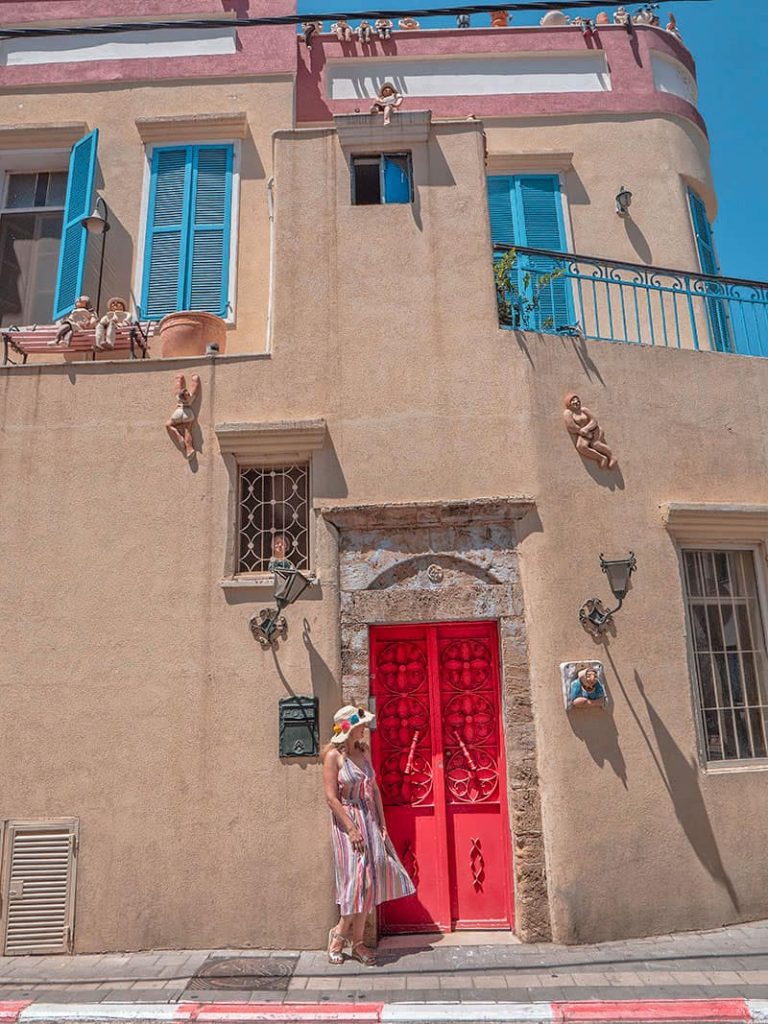
      Technically a suburb of Tel Aviv, Jaffa is renowned for its well preserved architecture. The ancient port of Jaffa is one of the oldest in the world and still used by fishermen today.

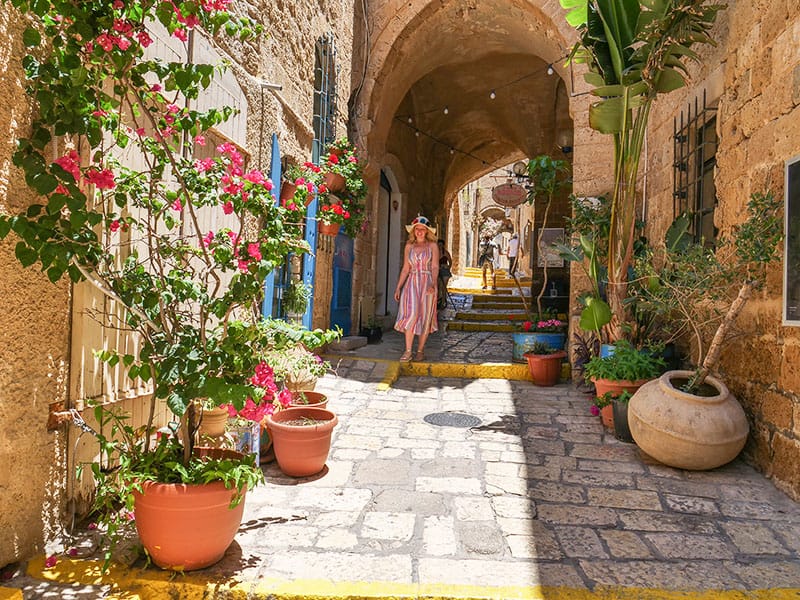
      Take some time to wander around the cobbled alleyways, admiring the honey colored stone buildings. There are many art galleries and design studios in Old Jaffa. A new museum highlighting the skills of Israeli illusionist Uri Geller is due to open on Mazal Arieh Street in November.

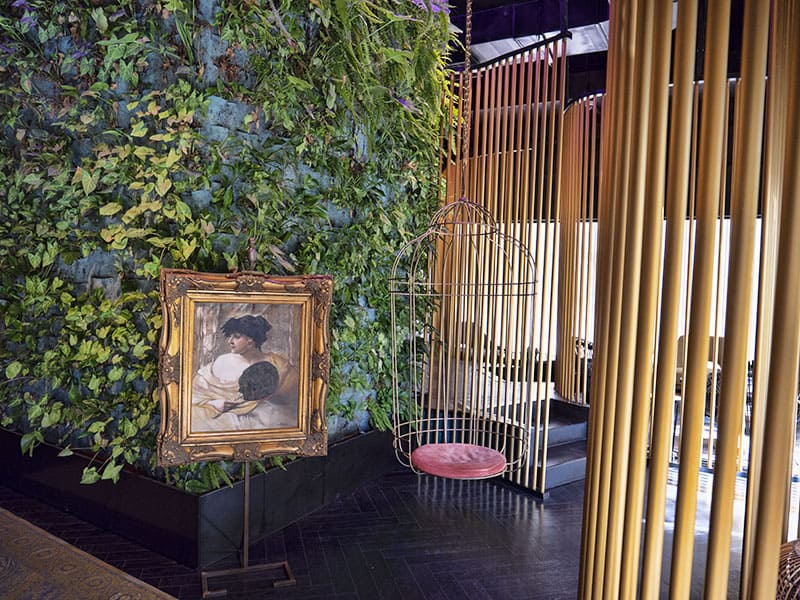
      The Jaffa is a former monastery and hospital that has been reimagined as a luxury hotel. In the lobby, the remnants of a 13th century wall is juxtaposed with contemporary paintings by Damien Hirst.

      Jaffa Flea Market is a good place to browse for vintage clothing and antiques. The market is open every from Sunday – Thursday from 10am to 6pm and from 10am to 2pm on Friday.

      11.Vegan Streetfood

      Israeli food is extremely varied and healthy. Did you know that per capita, there are more vegans in Israel than in any other country? It is estimated that over 400 restaurants in Tel Aviv are vegan or have vegan dishes on their menu.

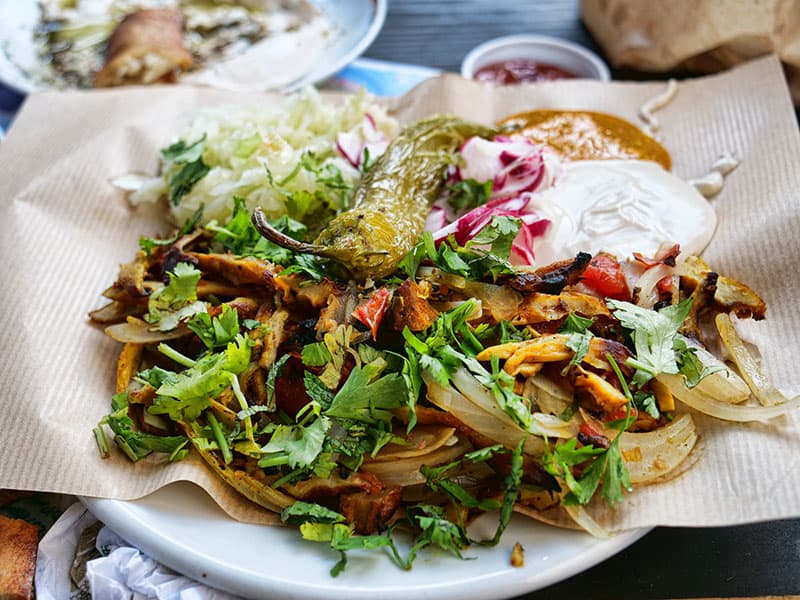
      One of the best vegan streetfood restaurants is Sultana, on Shlomo Ibn Gabirol Street. Head Chef Harel Zakaim specializes in vegan shawarma dishes, or kebabs.

      He and his team make clever use of forest mushrooms, with a texture similar to chicken. They combine these with amba, a mango pickle, salad, pickled vegetables, herbs, pita bread and tahini sauce, to create a delicious and nutritious meal. Wash down your shawarma with a refreshing sekanjabeen Persian mint cooler.

      12.Ilana Goor Museum

      The most famous female Israeli artist, Ilana Goor has created a fabulous museum in her house in Jaffa. Located on Mazal Dagim St, the house is over 250 years old.

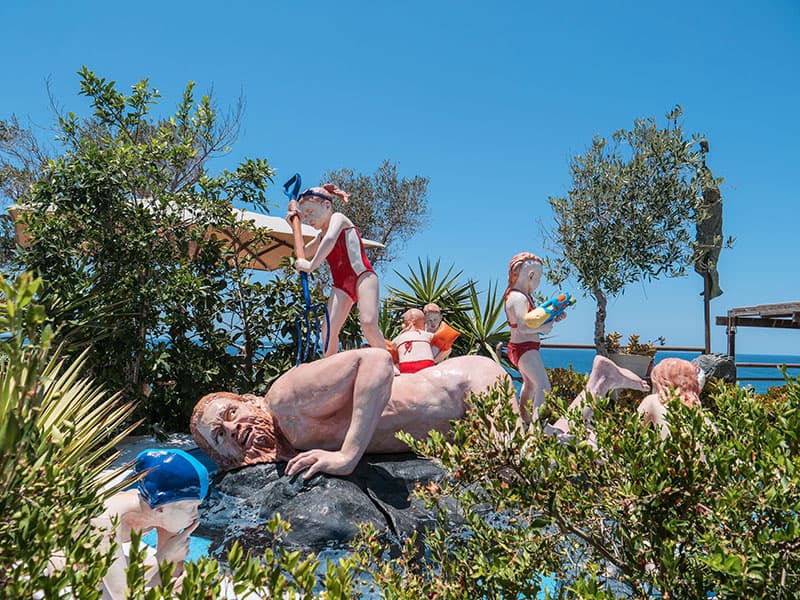
      The museum showcases Ilana’s collection of artworks from around the world, as well as her own sculptures and paintings. There are lovely views from the terraces, which are adorned with quirky artworks like this fountain.

      13.Hummus at Abu Hassan

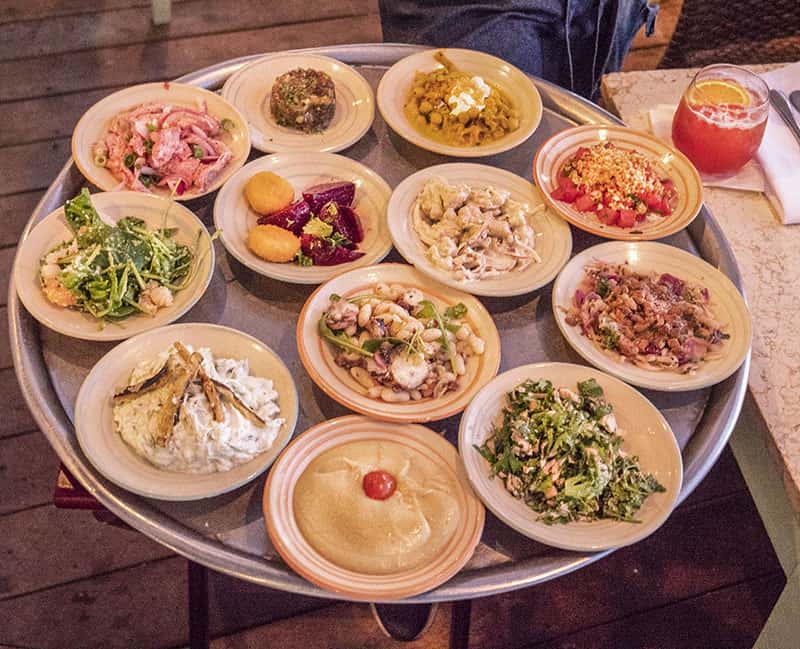
      Israel is famous for its delicious hummus and one of the best places to eat it in Tel Avis is at Abu Hassan. This casual all-day eatery on Ha-Dolfin Street is also known as Ali Karavan.

      Don’t miss the masabacha, hummus with fava beans and tahini that is served warm. Come early for lunch as it can get very busy.

      14.Ramses Gate

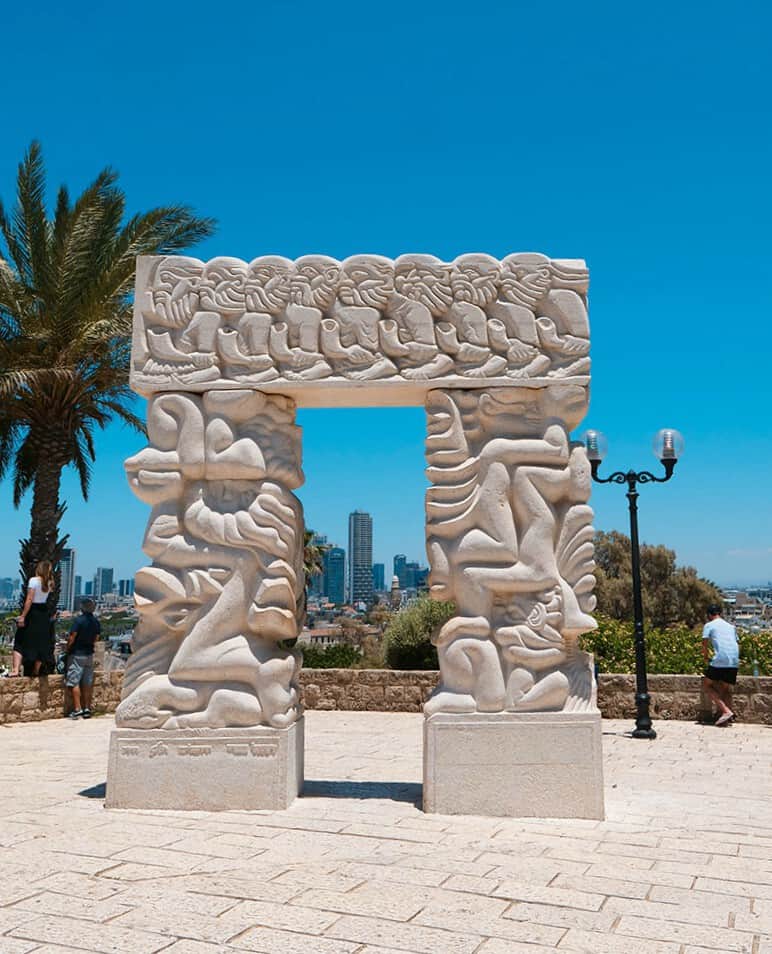
      Archaeological excavations have uncovered evidence of people living in Jaffa since Egyptian times. A moat and Egyptian fortress once stood on Mazal Dli Street.

      Ramses Gate is a reconstruction of how the fortress gate looked. It takes its name from the Egyptian ruler Ramses II, whose name was inscribed on the original gate. This is one of the highest points in Jaffa and the views from the gardens over the city are impressive.

      15.Beachside Dining at Manta Ray

      With a fantastic location on Tel Aviv Promenade, overlooking Jaffa Beach, Manta Ray is one of the best restaurants in Tel Aviv. There’s a large outdoor terrace and a light and airy interior.

      Manta Ray is particularly well known for its mezze plates which are ideal for sharing. You can also have breakfast here, with shakshuka being a popular choice.

      Getting to Tel Aviv

      There are regular flights to Tel Aviv from the UK, USA and Europe. Ben Gurion International Airport is modern and fairly compact, and has a good range of places to eat and shop. It can take a while to get through customs so allow plenty of time.

      To reach the center of Tel Aviv there are quite a few different options.

      • By Car Rental – As you have to take a shuttle bus to reach the cars, this option is best if you have plenty of time.
      • By Rail – Trains run every 30 minutes and the train entrance is just next to the main terminal building.
      • By Shuttle – Bus number 485 runs 24 hours a day, 6 days a week and takes around an hour.
      • By Taxi – the taxi rank is just outside the Arrivals hall. Sheruts or shared taxis are also popular and can be found at level G.

      Getting Around Tel Aviv

      There are several bike sharing companies including Tel-O-Fun and Pole Position TLV, which also has electric bikes. Riders can enjoy over 100 kilometers of cycle lanes.

      Electric scooters are also very popular in Tel Aviv. However, it’s best to exercise caution when riding one and to wear a helmet.

      As Tel Aviv is relatively compact, walking around the city is another good option. Uber does not operate in Israel, however there are several taxi apps including Gett and Yango.

      Where to Stay in Tel Aviv

      The LightHouse Hotel Tel Aviv By Brown Hotels has a handy location close to the beach but within walking distance of the city centre. Guests are greeted with a welcome drink and snacks in the stylish lobby. There’s a lovely sundeck on the 5th floor with loungers and a hot tub, as well as a spacious outdoor dining area.

      The 18th floor rooftop bar is one of hottest places to go at night in Tel Aviv. Later in the year, a gym and spa will be opening and in the meantime guests can use a nearby fitness center for free. There are also complimentary bicycles available for guests to borrow.

      The hotel’s 100 rooms and suites are quite spacious and stocked with Molton Brown toiletries. Breakfast is one of the best in the city, with a huge array of healthy dishes and fresh juices.

    6. Luxury Tokyo 3 Day Itinerary for First Time Visitors

      Luxury Tokyo 3 Day Itinerary for First Time Visitors

      Tokyo is one place where you won’t see the time pass, there is so much to do. This Tokyo 3 day itinerary will give you a taste of Electric Town, as the capital of Japan is nicknamed. Just don’t be surprised if you keep coming back for more.

      Luxury Tokyo 3 Day Itinerary

      From world class restaurants to beautiful gardens and temples, there’s something for everyone. Tokyo is a large city so it’s important to plan your itinerary before you set out and to concentrate on exploring just one or two areas each day.

      Day 1 in Tokyo

      Chuo

      Spelt Chūō, this central district of Tokyo is a thriving business area yet there’s plenty to entice visitors. On your first day in Tokyo, head to Hama-Rikyu Gardens at 1-1 Hamarikyu-teien.

      This is a real oasis of calm in the heart of Tokyo. Originally a hunting ground and nobleman’s residence in the Edo period from 1603, it was opened to the public in 1946.

      Surrounded by the skyscrapers of the Shiodome district, the gardens are beautifully landscaped. There’s a tea house in the middle of the lake where you can watch the birds landing.

      Hamarikyu Gardens are a great place in which to experience traditional culture in Tokyo. The garden has an unusual late blossoming cherry tree and some stunning camellia trees. Opening hours are from 9.00 to 17:00 and there’s a small entrance fee of :¥300.

      Tsukiji Fish Market is an interesting place if you’re keen on sashimi and fresh fish. Whilst the inner wholesale section has restricted opening hours for visitors, the outer market and restaurants are popular with locals and tourists alike.

      You can eat tasty fresh crab sticks and other delicacies at one of the many food stalls. Get there early to beat the crowds – it’s open from 5 am to 2 pm and closed on Sundays.

      Minato

      For lunch, we recommend a true Tokyo hidden gem. Tokyo Shiba Tofuya Ukai is a traditional merchant’s residence from the Samurai era. Located in the Shibakoen area of Minato district next to Tokyo Tower, this beautiful Tokyo restaurant is set in picturesque gardens.

      This beautiful Tokyo restaurant has a series of private dining rooms with traditional but comfortable seating, overlooking an inner courtyard garden. It is known for its tofu dishes cooked in a variety of ways as well as blowfish, a rare delicacy.

      There are quite a few interesting things to do in Minato including a visit to Tokyo Tower. Open every day from 9 am to 11 pm, this iconic Tokyo landmark is an imposing sight at 333 metres tall, with its bright orange steel framework.

      From the top you can see as far as Mount Fuji on a sunny day. Through the glass windows, you can spot a shrine and some colourful Autumn foliage.

      One floor down, there’s a fun sight – the Lookdown. You can see through a metal grid to the bottom of the tower. The highlight of our Tokyo Tower visit was the performers dressed in colourful costumes, singing Christmas songs in Japanese.

      For dinner in Minato, try Tarafukuuokin at 1-9-1 Shinbashi Minato is known as Codfish Fish Gold in English. It’s a traditional izakaya, a tavern popular with locals that serves some amazing sashimi dishes.

      Another option is Sarashina-Nunoya restaurant in Shibadaimon at 1 Chome−15−8. This family owned restaurant have been making soba noodles for hundreds of years. It’s a casual place where the noodles are the star of the show.

      Shinjuku

      On your 3 day Tokyo itinerary, why not take a photography tour by night in the Shinjuku commercial and entertainment area. It’s home to the busiest railway station in the world and the Tokyo Metropolitan Government Buildings.

      Check out the Robot Cafe and the Godzilla head above Hotel Gracery. Wander along the Golden Gai alleyways and have a bite to eat in one of the tiny taverns.

      Day 2 in Tokyo

      Asakusa

      Asakusa is one of the most popular places for visitors to Tokyo. Sensoji Temple in particular is a fascinating insight into Japanese culture and Buddhism. This is Tokyo’s oldest temple and with over 30 million visitors each year it’s the most popular spiritual site in the world.

      Head first to the viewing platform of the Asakusa Tourist Information Centre at 2 Chome-18-9 Kaminarimon. The view of the Kaminarimon or Thunder Gate is worth visiting, and there’s a cafe too.

      Walk along Nakamise Dori, which is lined with many souvenir shops. This famous Tokyo street is a good place to come for kimonos, obi belts, stationery and other gifts.

      Along the way you’ll notice quite a few Japanese women dressed in traditional kimonos, socks and sandals. You can rent them from the shops nearby and pose for photographs.

      Closer to Asakusa shrine, many people consult little strips of paper to find out their fortunes. The giant flipflop on the side of one shrine is intended to scare any potential demons who would think that a giant lives there.

      There are a few other interesting things to do in Asakusa, including a visit to a typical izakaya Japanese pub or to Hanayashiki, the oldest amusement park in Japan. Close to Asakusa, there’s the Tokyo Skytree observation tower and shopping centre in the Sumida district.

      Tokyo River Cruise

      With 3 days in Tokyo, you can also take a river cruise from Hinode to Asakusa. There are regular day and night time tours.

      Ours took us past 12 bridges, including the Rainbow Bridge which looked stunning at night. The best spot for taking photos is at the back of the boat on the outside deck. On a chilly night you might prefer to sit on the inside deck but was quite mild.

      Day 3 in Tokyo

      Ginza

      On the last of your 3 days in Tokyo, head to Ginza in the Chuo district. Shopping in Ginza is second to none, with many luxurious department stores and malls such as Ginza Six and Ginza Plaza. Ito-ya is a stylish stationery store spread over 9 floors.

      There are also some fantastic restaurants in Ginza including Shunjukusei Ginza Grill which specializes in the highest quality Japanese Tajima beef.

      Ristorante Hiro Ginza is another great choice for its delicious Italian-Japanese fusion food.

      What else is there to do in Ginza? Kabukiza Theater is the perfect place to see a kabuki performance. This traditional Japanese art form is known for its elaborate costumes.

      Chiyoda

      The Imperial Palace is one of the most Instagrammable places in Tokyo. If you’re visiting Tokyo in Springtime, the cherry blossoms along the moat are a beautiful sight.

      The official residence of the Emperor and Empress of Japan, it was previously the site of Edo Castle. The public can visit Kita-no-maru-koen Park, Kokyo Higashi Gyoen (Imperial Palace East Gardens) and Kokyo Gaien free of charge.

      The latter is the plaza directly in front of the palace, which is a good vantage point for the Nijubashi bridges by which you enter the inner palace. Talking of which, it’s not generally possible to visit the inner grounds apart from on 2 January and 23 December.

      The business district of Marunouchi is also worth a visit. For shopping in Tokyo, Kitte is an excellent choice.

      This upmarket shopping mall has many international boutiques as well as Japanese household goods and trendy eateries spread over 7 floors. There’s a great view of Tokyo Station from the top floor observation deck.

      Shibuya

      One of the main attractions in the Shibuya district is Meiji Jingo shrine. Inaugurated in 1920, this peaceful Shinto shrine is dedicated to Emperor Meiji and Empress Shoken.

      Nestled in a serene forested area, the temple grounds exude an essence of tranquility. Walking along the pathways, one is struck by the awe-inspiring architecture and the grandeur of the sacred rituals that are still practiced here.

      Any itinerary for Tokyo should include Shibuya Crossing, the world’s busiest traffic intersection, Shibuya Crossing. Known as “The Scramble” it’s been estimated that up to 1000 pedestrians on average are crossing at any given time.

      The area around Shibuya Station is popular with young people and covers 15.11 km2. With giant screens displaying advertisements, it’s particularly buzzing at night.

      When to Visit Tokyo

      For those looking for an unforgettable trip to Tokyo, timing is everything. The city is known for its stunning cherry blossom season, which typically occurs from late March to early April.

      However, the best time to visit Tokyo extends beyond just the beauty of the sakura trees. To truly experience the city at its finest, consider planning a visit during the autumn months when the weather is mild and the foliage takes on hues of gold, red, and orange.

      Additionally, the winter months offer a unique perspective of Tokyo with its colorful light displays and festive atmosphere. No matter the season, Tokyo is a city that is always ready to impress and captivate its visitors.

      How to Get to Tokyo

      Tokyo has two international airports, Haneda and Narita. Haneda is closer to the city centre and the majority of domestic flights land there. Our ANA flight from London Heathrow to Haneda airport was peaceful and waiting staff were friendly and attentive.

      There are quite a few companies flying to Tokyo including Emirates, Japan Airlines and British Airways.

      How to Get Around Tokyo

      If you prefer to get around by taxi, you can hail them on the street quite easily or order a Uber cab. The subway is extremely clean, safe and reliable. We took it a few times during our stay and it wasn’t too crowded though we didn’t take it in rush hour.

      You can buy individual tickets or a 1 or 3 day pass. The subway is fairly easy to navigate as there are direction signs in both Japanese and English.

      Where to Stay in Tokyo

      There’s no shortage of luxury hotels in Tokyo and a surprising amount of reasonably priced options too. We particularly like these Tokyo hotels:

      • Celestine Tokyo Shiba for its excellent value and contemporary decor.
      • The Mandarin Oriental for fantastic service and great food.
      • The Peninsula for its central location and beautiful spa.

      Other Fun Things to Do in Tokyo

      We hope you’ve enjoyed these suggestions of what to do in Tokyo in 3 days. With more time in Tokyo you could also visit Tokyo Disneyland or Akihabara Electric Town, famous for its manga shops.

      Alternatively, why not combine your visit with a trip to the beautiful region of Oita in Kyushu, only an hour and a half away by plane. It has the most hot springs of any area of Japan and some stunning scenery.

      What is your favorite place in Tokyo?