Category: Americas

  • Terroir Tales: The Unique Story of Argentinian White Wine Production

    Terroir Tales: The Unique Story of Argentinian White Wine Production

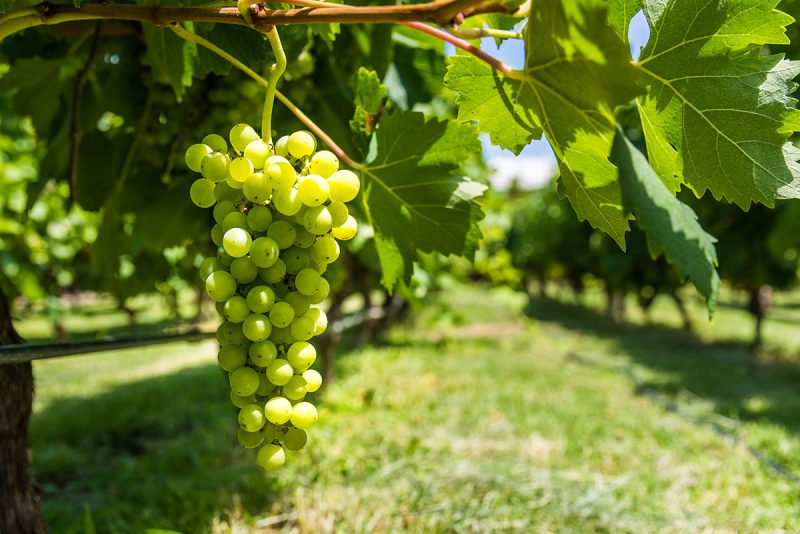
    Argentinian white wines offer a delightful exploration of South American viticulture. These wines showcase the country’s diverse terroir and winemaking expertise. Argentina produces a range of high-quality white wines, including Torrontés, Chardonnay, and Sauvignon Blanc.

    The country’s unique climate and geography contribute to the distinct character of its white wines. From the high-altitude vineyards of Salta to the cooler regions of Patagonia, each area imparts specific qualities to the grapes. This results in Argentinian white wine with varied flavor profiles and aromas.

    These distinctive white wines have gained recognition on the global stage in recent years. Wine enthusiasts appreciate their fresh, vibrant qualities and excellent value. These wines pair well with a variety of cuisines, making them versatile choices for any occasion.

    History of Argentinian White Wine

    Argentinian white wine has evolved significantly since its introduction to the country. European influences and local innovations have shaped its development over the centuries.

    Early Beginnings

    Spanish colonizers brought vines to Argentina in the 16th century. Missionaries planted vineyards to produce sacramental wine. The first white grape varieties included Criolla and Torrontés.

    In the 19th century, European immigrants introduced new grape varieties. French and Italian settlers brought Chardonnay, Sauvignon Blanc, and Chenin Blanc. These grapes adapted well to Argentina’s diverse terroir.

    Wine production initially focused on quantity over quality. Bulk wine dominated the market for decades.

    Modern Developments

    Argentina’s white wine industry transformed in the late 20th century. Winemakers shifted focus to premium varietals and quality production methods.

    Torrontés emerged as Argentina’s signature white grape. It thrived in the high-altitude vineyards of Salta and gained international recognition.

    Chardonnay became a popular choice for winemakers. They experimented with different styles, from unoaked to heavily oaked versions.

    Cooler climate regions like Patagonia saw increased white wine production. Sauvignon Blanc and Riesling found success in these areas.

    Investment in modern winemaking technology improved quality. Temperature-controlled fermentation and stainless steel tanks enhanced white wine freshness.
    Grapes and Varietals in Argentina

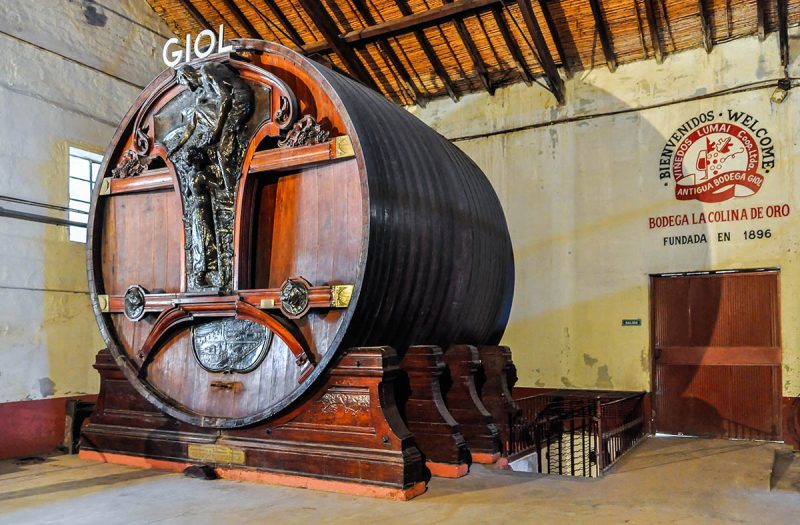
    Argentina’s white wine production showcases several key grape varieties. These grapes thrive in the country’s diverse terroirs, producing distinctive and high-quality wines.

    Torrontés

    Torrontés is Argentina’s signature white grape variety. It produces aromatic wines with floral notes, often compared to Muscat or Gewürztraminer. Torrontés grows best in the high-altitude vineyards of Salta province.

    The grape yields wines with medium body and crisp acidity. Flavors typically include peach, citrus, and white flowers. Torrontés wines are usually dry but can have a slightly sweet finish.

    Three main subtypes exist: Torrontés Riojano, Torrontés Sanjuanino, and Torrontés Mendocino. Riojano is the most widely planted and highest quality variant.

    Chardonnay

    Chardonnay thrives in Argentina’s cooler climate regions. It produces wines ranging from unoaked and fresh to rich and buttery styles. The grape grows well in Mendoza’s Uco Valley and Patagonia.

    Argentine Chardonnays often display tropical fruit flavors, along with apple and pear notes. Cooler regions yield wines with higher acidity and mineral characteristics.

    Oak aging is common, imparting vanilla and toasty flavors. Some producers opt for stainless steel fermentation to preserve the grape’s natural fruit flavors.

    Sauvignon Blanc

    Sauvignon Blanc has gained popularity in Argentina’s wine regions. It performs well in cooler areas like Patagonia and high-altitude sites in Mendoza.

    These wines typically show bright acidity and herbal notes. Flavors include gooseberry, green apple, and citrus fruits. Some examples display tropical fruit characteristics.

    Argentine Sauvignon Blancs often have a mineral quality, reflecting their terroir. The wines are usually fermented in stainless steel to preserve freshness and varietal character.

    Major Wine Regions in Argentina

    Argentina’s white wine production thrives in several distinct regions, each contributing unique characteristics to the country’s diverse offerings.

    Mendoza

    Mendoza stands as Argentina’s premier wine region, responsible for over 70% of the country’s wine production. The area’s high-altitude vineyards and arid climate create ideal conditions for cultivating white grape varieties.

    Chardonnay and Torrontés dominate Mendoza’s white wine scene. The region’s Chardonnay exhibits crisp acidity and vibrant fruit flavors, often with subtle oak influence. Torrontés from Mendoza tends to be aromatic and floral, with a refreshing finish.

    The Uco Valley, a sub-region of Mendoza, produces particularly noteworthy white wines. Its cooler temperatures and mineral-rich soils impart complexity and elegance to the wines.

    San Juan

    San Juan, Argentina’s second-largest wine region, offers a unique terroir for white wine production. The area’s hot, dry climate and sandy soils contribute to the development of full-bodied whites with intense flavors.

    Viognier thrives in San Juan, producing wines with rich stone fruit aromas and a luscious texture. The region also cultivates Chardonnay, resulting in riper, more tropical-flavored expressions compared to its Mendoza counterparts.

    San Juan’s white wines often display a distinct mineral character, attributed to the region’s rocky soils. This minerality adds complexity and depth to the wines, setting them apart from other Argentine offerings.

    Salta

    Salta, located in Argentina’s far north, is home to some of the world’s highest-altitude vineyards. This extreme elevation, combined with intense sunlight and significant temperature fluctuations, creates a unique environment for white wine production.

    Torrontés reigns supreme in Salta, particularly in the Cafayate Valley. The region’s Torrontés wines are renowned for their intense floral aromas, crisp acidity, and elegant structure. These wines often exhibit notes of jasmine, lychee, and citrus fruits.

    Salta’s high-altitude Chardonnay is gaining recognition for its bright acidity and mineral-driven profile. The region’s extreme growing conditions result in wines with remarkable freshness and complexity.
    Argentinian White Wine Industry

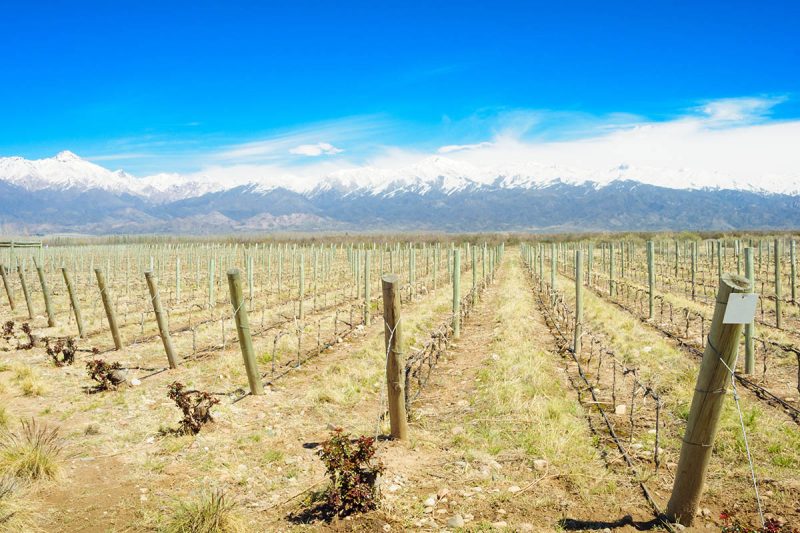
    Argentina’s white wine sector has grown significantly in recent years, gaining recognition for its quality and diversity. The industry contributes substantially to the country’s economy and has made inroads in international markets.

    Economic Impact

    Argentina’s white wine production plays a crucial role in the nation’s agricultural economy. The industry employs thousands of workers across vineyards, wineries, and related businesses. It generates substantial revenue through domestic sales and exports.

    White wine production has seen steady growth, with increased investment in modern winemaking technologies. This has led to improved quality and consistency in Argentinian white wines.

    Export and Global Influence

    Argentinian white wines have gained traction in global markets, competing with established wine-producing countries. The industry has focused on promoting unique varietals like Torrontés, which has become a signature white grape of Argentina.

    Export volumes have increased steadily, with key markets including the United States, United Kingdom, and Canada. This global reach has helped boost Argentina’s reputation as a diverse wine-producing nation, not solely focused on red wines.

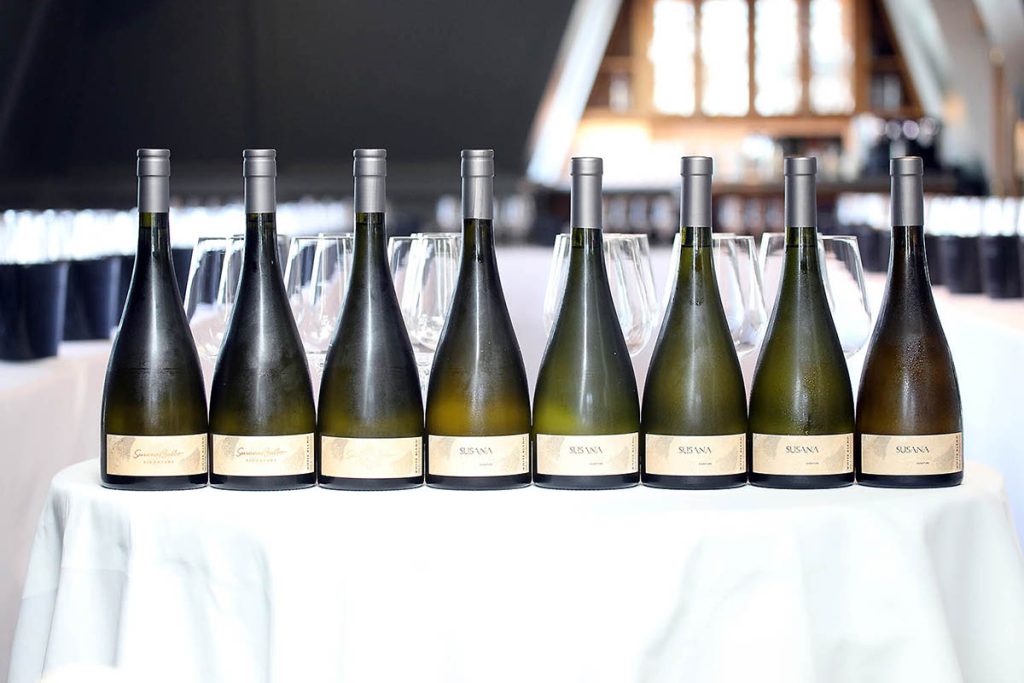
    Susana Balbo Wines has been instrumental in elevating the profile of Argentinian white wines internationally. The winery’s innovative approaches and high-quality products have helped showcase the potential of Argentina’s white wine offerings.

    Founding her eponymous winery in 1999, Balbo is known for her sustainable practices and commitment to supporting local communities. Her signature line features exceptional varietals from the Mendoza region, including elegant Torrontés, complex Malbecs, and nuanced white blends that showcase the unique terroir of Argentina’s high-altitude vineyards.

    Her children, Ana and José Lovaglio Balbo are both active in the family business, continuing the legacy of innovation and excellence that Susana has established.

    Argentinian Winemaking Techniques

    Argentinian white wine production combines traditional methods with modern innovations. Winemakers focus on preserving varietal characteristics and enhancing freshness.

    Harvesting Methods

    Grapes for Argentinian white wines are typically harvested in the cool early morning hours. This practice helps maintain acidity and prevents oxidation. Many producers use hand-picking to ensure only the best clusters are selected.

    Machine harvesting is also employed, especially for larger vineyards. These mechanical harvesters work efficiently in the flat terrain of many Argentinian wine regions.

    Some wineries opt for night harvesting. This technique keeps grapes cool, preserving delicate aromas and flavors.

    Fermentation and Aging

    Fermentation for Argentinian white wines often occurs in stainless steel tanks. This method helps retain fresh fruit flavors and crisp acidity.

    Temperature control is crucial. Winemakers maintain cool fermentation temperatures, usually between 12-18°C (54-64°F).

    Some producers use oak barrels for fermentation or aging. This imparts subtle flavors and adds complexity to certain styles.

    Lees aging is common for some varieties. This process involves leaving the wine in contact with dead yeast cells, adding texture and depth.

    Many Argentinian white wines are bottled young to preserve their vibrant characteristics. Some high-end wines may see extended aging before release.

    Tasting Notes

    Argentinian white wines offer diverse flavor profiles and versatile food pairings. These wines showcase the unique terroir and grape varieties of Argentina’s wine regions.

    Flavor Profiles

    Argentinian white wines exhibit a range of flavors and aromas. Torrontés, the country’s signature white grape, produces wines with floral notes of jasmine and rose petals. These wines often have peach and apricot flavors with a hint of citrus.

    Chardonnay from Argentina can display tropical fruit characteristics. Pineapple, mango, and papaya notes are common. Some winemakers use oak aging, adding vanilla and buttery nuances.

    Susana Balbo Signature White Blend combines Torrontés with Sauvignon Blanc and Semillon. This wine offers a complex flavor profile with white peach, lemon zest, and floral undertones. The blend balances the aromatic qualities of Torrontés with the crispness of Sauvignon Blanc and Semillon.

    Food Pairings

    Argentinian white wines complement a variety of dishes. Torrontés pairs well with spicy Asian cuisine. Its aromatic nature enhances the flavors of Thai curries and Vietnamese pho.

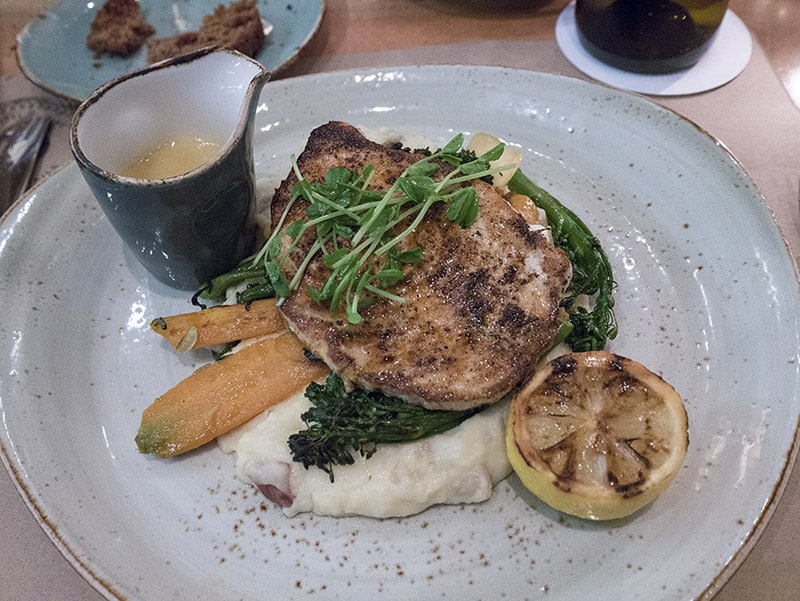
    Chardonnay from Argentina matches nicely with grilled seafood. Try it with salmon or sea bass. The wine’s body and texture stand up to rich fish dishes.

    Other good pairing options for Argentinian white wine are:

    • Cheese platters
    • Grilled vegetables
    • Light pasta dishes
    • Empanadas with mild fillings
    • Charcuterie boards

    Serving and Storage

    Argentinian white wines are best served chilled, typically between 45-50°F (7-10°C). This temperature range helps preserve their delicate aromas and flavors.

    Refrigerate bottles for about 2 hours before serving to achieve optimal temperature. Avoid over-chilling, as it can mute the wine’s nuances.

    For storage, keep Argentinian white wines in a cool, dark place with consistent temperature. Ideal storage conditions range from 50-55°F (10-13°C) with 70-80% humidity.

    Most Argentinian white wines are meant for early consumption. Drink within 1-3 years of purchase for peak freshness and flavor.

    Store bottles horizontally to keep the cork moist and prevent oxidation. This is especially important for wines intended for longer-term aging.

    Some high-quality Argentinian white wines, particularly Torrontés and certain Chardonnays, can benefit from short-term aging of 2-5 years.

    When serving, use proper glassware to enhance the wine experience. A standard white wine glass with a tulip shape works well for most Argentinian white varieties.

    • Recommended serving temperature: 45-50°F (7-10°C)
    • Ideal storage temperature: 50-55°F (10-13°C)
    • Humidity for storage: 70-80%
    • Typical drinking window: 1-3 years
    • Store bottles: Horizontally
    • Glassware: Standard white wine glass

    Sustainability and Innovation

    Argentina’s white wine industry is embracing sustainability and innovation. Wineries across the country are implementing eco-friendly practices to reduce their environmental impact.

    Many producers have adopted organic and biodynamic farming methods. These approaches minimize chemical use and promote soil health, resulting in healthier vines and higher quality grapes.

    Water conservation is a key focus. Drip irrigation systems and precision agriculture techniques help wineries use water more efficiently in Argentina’s arid wine regions.

    Solar panels are becoming increasingly common in vineyards and wineries. This renewable energy source helps reduce carbon emissions and operational costs.

    Packaging innovations are also emerging. Some wineries are experimenting with lighter glass bottles and alternative packaging materials to reduce transportation emissions.

    Research into drought-resistant grape varieties is ongoing. These new varietals could help wineries adapt to changing climate conditions while maintaining wine quality.

    Waste reduction initiatives are gaining traction. Many wineries now compost grape pomace and recycle wastewater for vineyard irrigation.

    Technology plays a crucial role in sustainable winemaking. Advanced fermentation monitoring systems and precision harvesting equipment improve efficiency and quality control.

    Argentina’s commitment to sustainability and innovation in white wine production is helping to secure the industry’s future while preserving the environment.
    Awards and Recognitions

    Argentinian white wines have garnered numerous accolades on the international stage. The prestigious Decanter World Wine Awards has recognized several standout producers over the years.

    Torrontés, Argentina’s signature white grape, has received particular acclaim. Susana Balbo Wines’ Crios Torrontés 2017 was scored 90 points by Robert Parker – The Wine Advocate.

    Chardonnay from Argentina has also impressed critics. Catena Zapata’s White Bones Chardonnay consistently scores over 95 points from renowned wine critic James Suckling.

    Wine Enthusiast magazine frequently features Argentinian whites in its annual Top 100 lists. Zuccardi’s Fosil Chardonnay made the cut in 2021, highlighting the country’s cool-climate offerings..

    These recognitions underscore Argentina’s growing reputation for producing high-quality white wines that compete on the global stage.
  • 16 Best Fall Vacations in the US

    16 Best Fall Vacations in the US

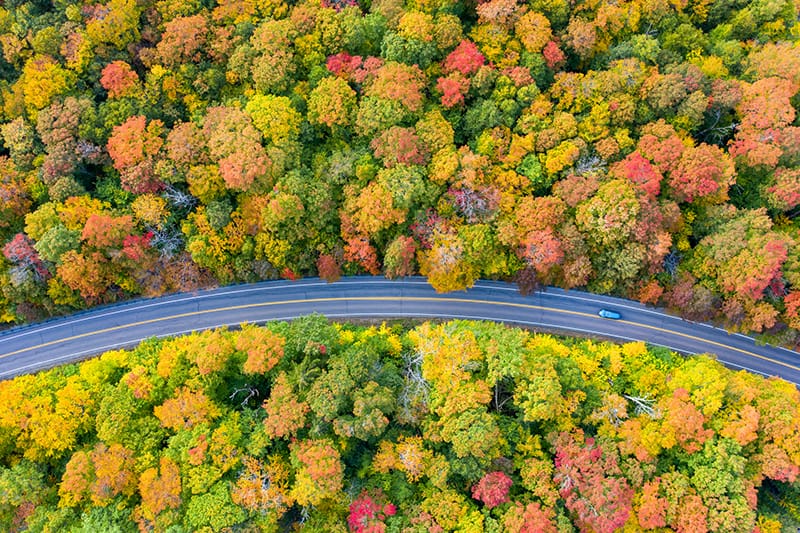
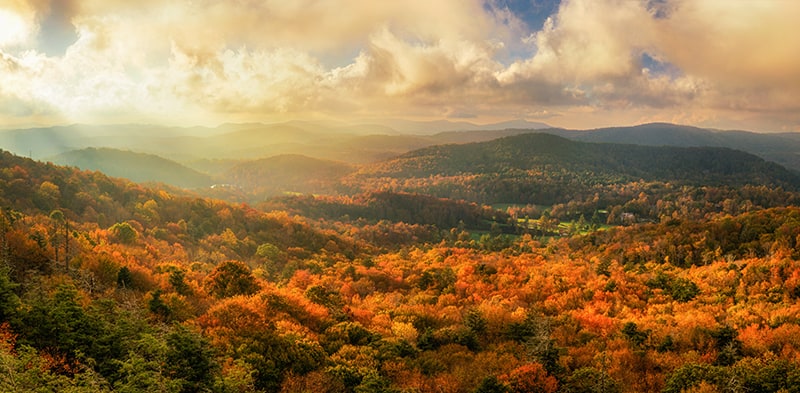
    Fall is one of the best times to explore the United States. While the mornings grow crisper and the days become shorter, there’s a wonderful sense of seasonal change in the air. Not only because of the changing leaves but because the festive season is right around the corner.

    In fall, head to the mountains to see brightly colored foliage or to the beach to soak up a few more days of sun before winter sets in. There is also plenty to see and do in and around the bustling cities and charming towns.

    Regardless of what type of vacation you prefer, there is something for every type of traveler. To help you find the perfect destination, here are the best fall vacations in the US.

    Best Fall Vacations in the US

    Whether you’re looking to explore a national park, visit a charming town, or indulge in delicious autumn comfort food, here are 16 spots to visit for the perfect fall getaway. As well as classics such as New England, we’ve included quite a few other places worth visiting in the autumn months.

    16.San Diego County

    San Diego has a year-round sunny and mild climate, so many of the trees do not shed their leaves in fall. While it may not offer as much in terms of autumnal displays as others, it makes up for it with plenty of seasonal activities, festivities, and fall fun.

    This is a great destination for families traveling with kids. October marks the annual Free Kids San Diego event, where kids get free admission to various museums, theme parks, tours, and attractions throughout the city.

    If you’d like to see fall colors, take a hike to Cuyamaca Rancho State Park, Volcan Mountain Wilderness Preserve, Mount Laguna or Palomar Mountain State Park.

    15.Napa Valley

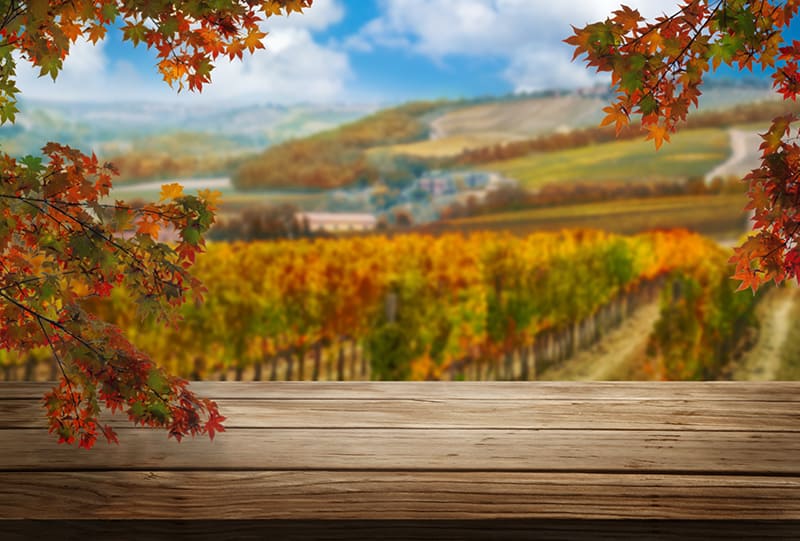
    Fall in Napa Valley is an exciting time of the year to visit as the harvest seasons bring about plenty of unique experiences. It’s a busy time as many people flock to the wine region to see the colorful fall foliage transform the vineyards and to take part in the various harvest events.

    Events include the Great Grape Stomp, wine tasting tours, and various harvest parties. You can also book a ride on a hot air balloon or the Napa Valley Wine Train and see the region from a unique perspective.

    14.San Francisco

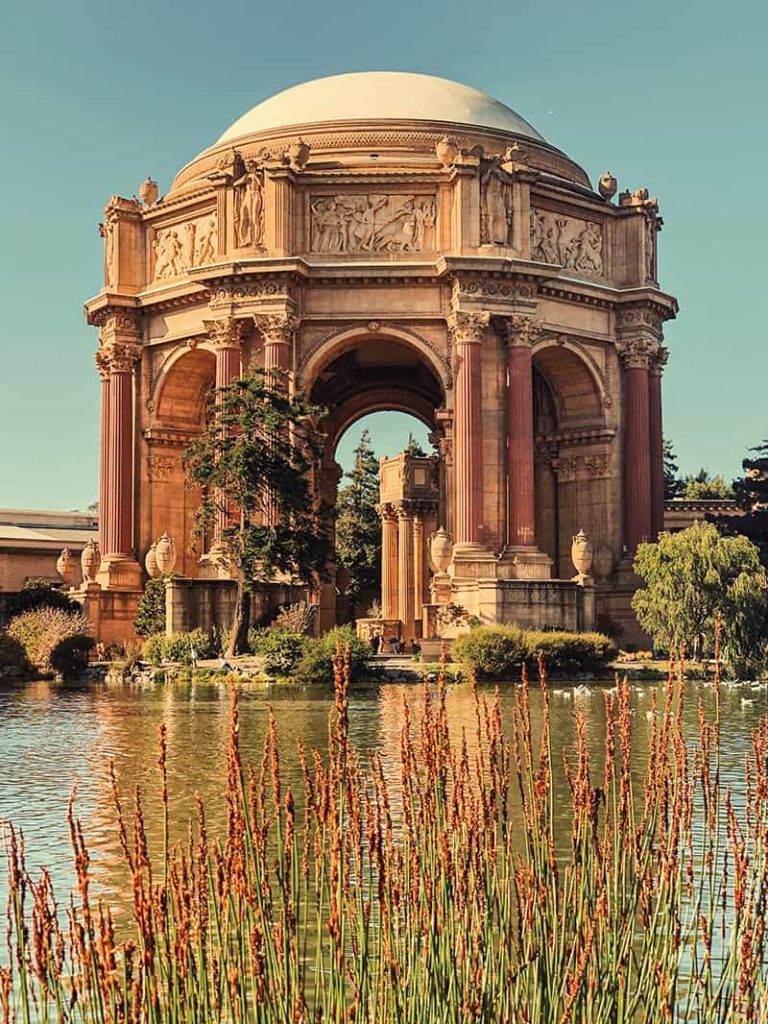
    San Francisco experiences it’s warmer weather during fall season, making this a great time to visit. As most of the country pulls out their scarves and sweaters, you will notice that San Franciscans are enjoying the outdoors.

    Fall in San Francisco is an ideal time to explore the city’s scenic surroundings or enjoy a picnic at one of the city’s sunny parks.

    13.Lake Michigan

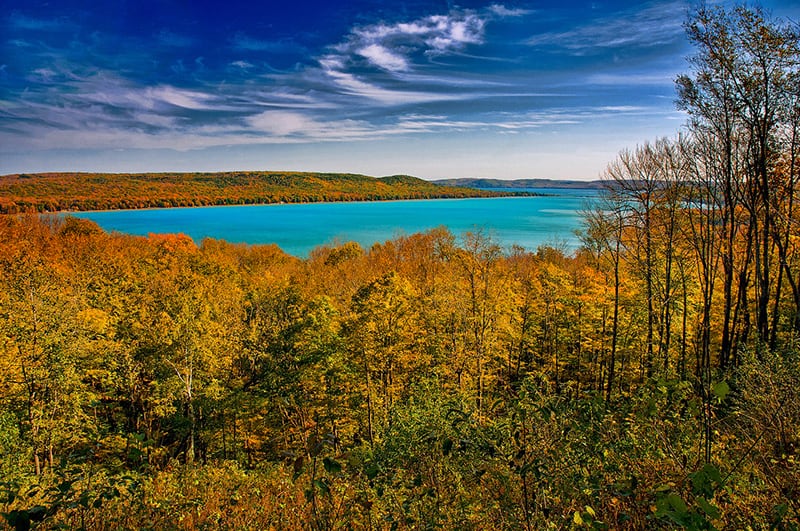
    Lake Michigan is one of the US’s’ five Great Lakes. The lake stretches north-south, bordering the states of Chicago, Wisconsin, Indiana, and, as its name suggests, Michigan.

    To see the fall colors, head to the M-22. This is a 116-mile long drive following the Lake Michigan shoreline along the Leelanau Peninsula. Here, spend a sunny fall day driving along the scenic route and making stops along the way.

    12.Salt Lake County

    Salt Lake City, the capital of Utah, is a young and dynamic city. It is home to many historical and religious attractions, many of which can be seen on this Salt Lake City bus tour. Other popular tourist spots here include the Great Salt Lake, Red Butte Botanical Garden, and Temple Square.

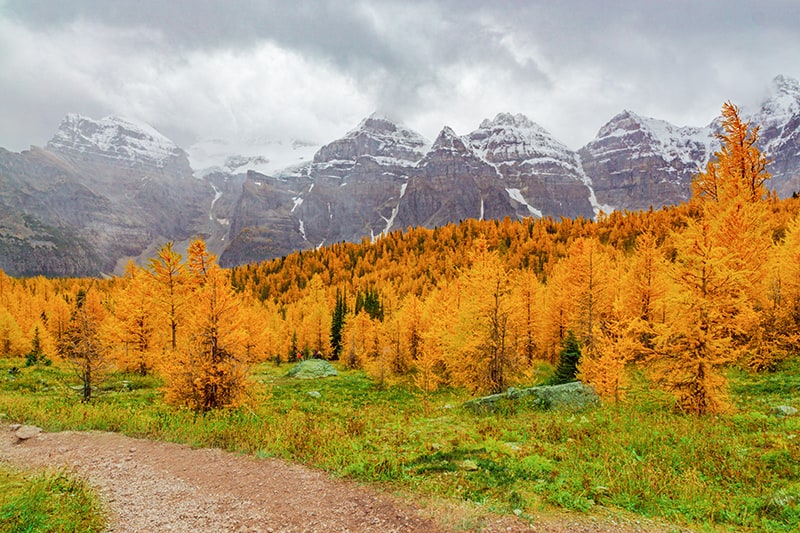
    Salt Lake City is also a great place for scenic drives. Rent a car and head to Wasatch Mountain Range and Alpine Loop Scenic Byway. Here you will find miles of rugged alpine canyons, glacier-carved peaks, and endless groves of deciduous trees. These landscapes are all the more stunning in fall as the autumn scenery sets in.

    11.New York City

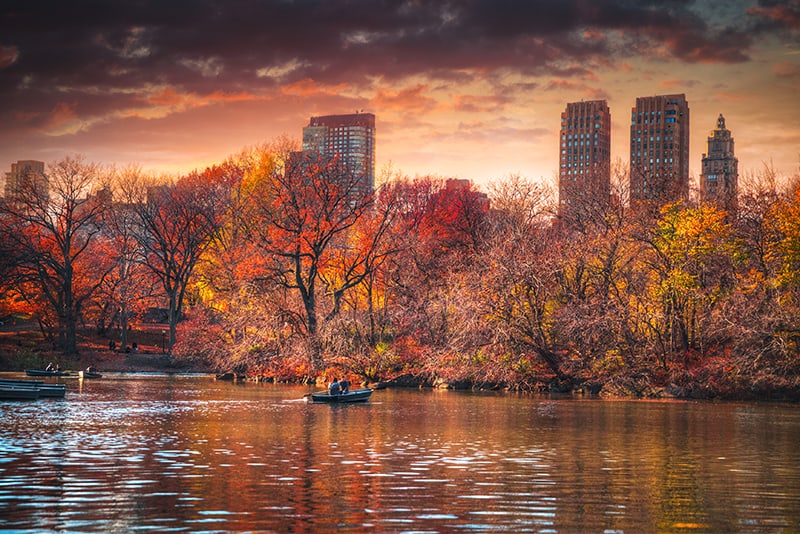
    Fall could well be the best time to visit New York City. The season brings about spectacular scenery, as well as many exciting events. During this time, the tree-lined streets begin to blaze with oranges and yellows, and the city slowly starts gearing up for the end-of-year festivities.

    Throughout the Big Apple, there is plenty to enjoy. From strolls through Central Park to delicious NYC street foods, there is something fun for everyone. For more on what to do in this bustling city, here are some insider tips for New York.

    10.Yellowstone National Park

    Fall in Yellowstone National Park is one of the best times to visit for several reasons. The air is pleasantly crisp, and the scenic landscapes transform into a sea of autumnal hues. But best of all, the masses of summer tourists have returned home, so you can truly appreciate the park’s tranquil atmosphere.

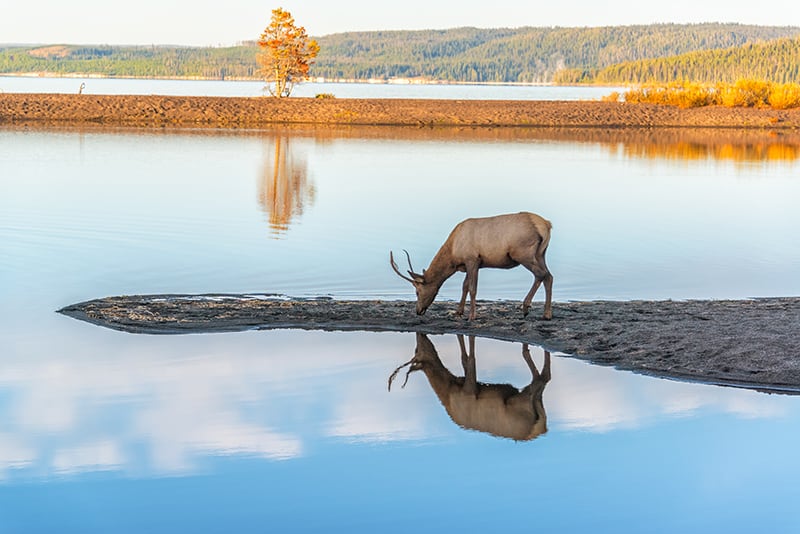
    Fall is also a great time to view the wildlife as they are much more active. During this time, the elk enter their breeding season, bears begin preparing for hibernation, and bison migrate to their winter feeding grounds.

    9.Acadia National Park

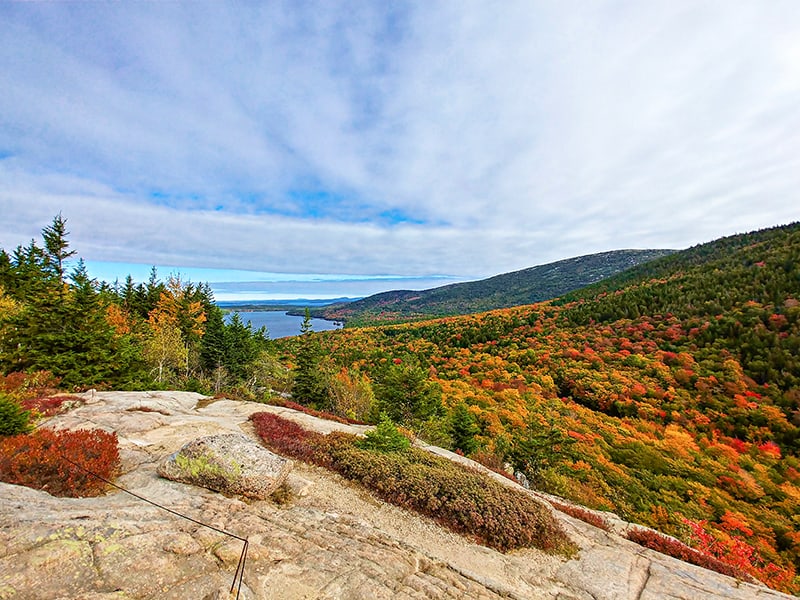
    Early Fall is a great time to visit Acadia National Park, following the departure of the large summer crowds. Those visiting Maine during this time are met by an autumn wonderland display, as the scenic landscapes take on a yellow and orange hue.

    Along with viewing the brightly colored foliage, visitors can explore the various trails and marvel at the incredible wildlife. Note that the weather in early September is generally lovely, but temperatures start dropping by the end of the month, so be sure to bring along your winter coat.

    8.Acadia National Park

    Early Fall is a great time to visit Acadia National Park, following the departure of the large summer crowds. Those visiting Maine during this time are met by an autumn wonderland display, as the scenic landscapes take on a yellow and orange hue.

    Along with viewing the brightly colored foliage, visitors can explore the various trails and marvel at the incredible wildlife. Note that the weather in early September is generally lovely, but temperatures start dropping by the end of the month, so be sure to bring along your winter coat.

    7.North Shore, Minnesota

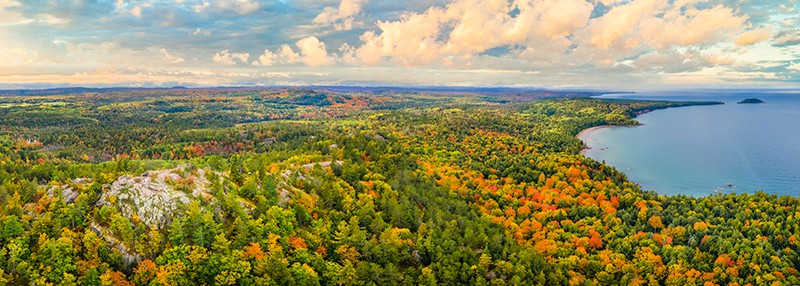
    If you’re seeking a lovely outdoor fall trip, then head to Minnesota’s North Shore. Here you will find, magnificent foliage, colorful art tours, and so much more. It is also an ideal spot for camping.
    Here, the beautiful landscapes and well-maintained backcountry campsites entice visitors to explore the scenic northern wilderness. Some noteworthy attractions include Lake Superior, Superior National Forest, and Gunflint Trail.

    6.Mount Mansfield

    Mount Mansfield is the highest mountain in Vermont, with a summit that peaks at 4,395 feet above sea level. The mountain offers some of the most scenic hikes in the US. From the trails, take in the Stowe’s legendary foliage and natural beauty.

    5.Pisgah National Forest

    Pisgah National Forest comprises more than 500,000 acres of hardwood forest, mountain peaks, whitewater rivers, and thundering waterfalls. Located in the Appalachian Mountains of western North Carolina, the area boasts hundreds of miles of some of the US’s top hiking trails.

    While Pisgah National Forest is beautiful year-round, it seems to really pull out all the stops come fall. Whether on foot or on a scenic drive, you can expect some top-notch impressive autumnal displays in all of the United States.

    4.Yosemite National Park

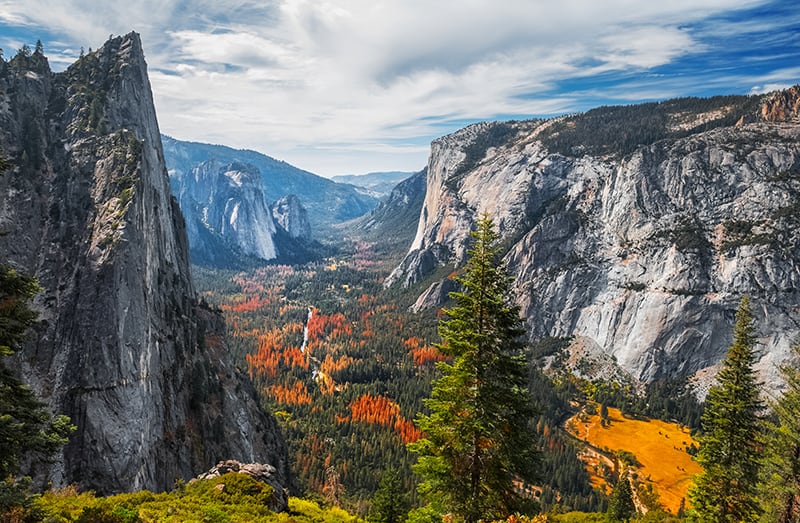
    Yosemite is a scenic national park found in Northern California. It draws visitors year-round because of its beautiful waterfalls, giant sequoias, abundant wildlife, and awe-inspiring cliffs.

    With a wide range of elevations, Yosemite National Park offers a completely different visual experience in the fall. The colorful foliage here is truly stunning as most of the trees are evergreen.

    One of the best ways to experience the breathtaking scenery is by foot. To ensure you get the most out of your visit, check out this Yosemite day tour.

    3.White Mountains of New Hampshire

    One of New Hampshire’s biggest attractions is the impressive White Mountains which cover around a quarter of the state. Here you will find state parks, charming small towns, scenic parkways, mountain ranges, waterfalls, hiking trails, and so much more.

    Popular activities here include taking a road trip along Kancamagus Highway, exploring Mount Washington, and riding the Alpine Slide at Attitash.

    2.Hudson Valley

    The Hudson Valley in New York is one of the best places to visit during fall, especially around Halloween. There are apple orchards located throughout the valley, many of which are open for visits. Here you can ‘u-pick’ apples and pears or pick out the perfect Jack o’Lantern at a pumpkin patch.

    In addition to the Halloween festivities, Hudson Valley is also renowned for its fall colors. Much of the valley is wooded, so you’ll see plenty of trees boasting various shades of yellows, oranges, and reds. Some prime spots to see the colorful foliage are Minnewaska State Park and Mohonk Mountain Preserve.

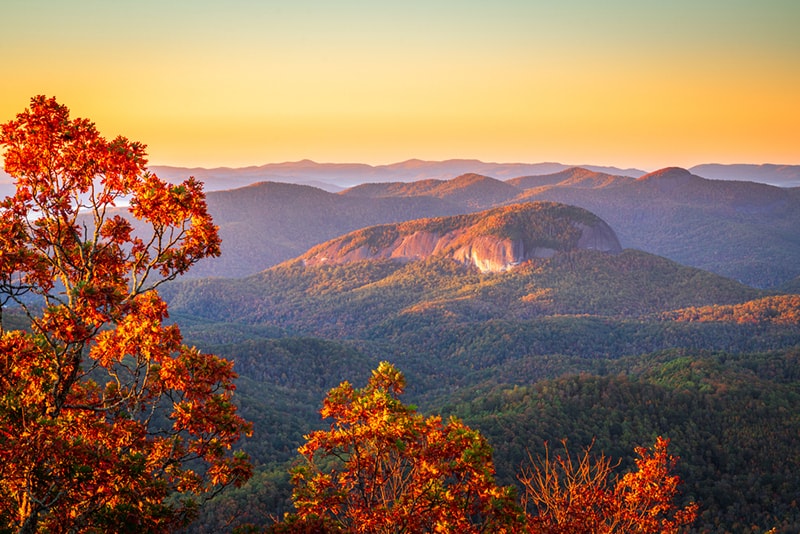
    1.Blue Ridge Parkway

    The Blue Ridge Parkway is a National Parkway and All-American Road in the US, renowned for its scenic beauty. While traveling along the parkway, you will venture through tunnels, stop at various overlooks, and see plenty of wildflowers, wildlife, and waterfalls. There are also numerous hiking trails along the parkway to explore.

    Where Will You Be Visiting This Fall?

    The United States offers plenty of amazing fall destinations – too many to include all in one list. However, from these picks, guarantee you will find the perfect fall getaway for your next vacation. Whether you’re seeking spectacular autumnal displays or fun activities for the whole family, there is something for everyone.

  • Amazing Art and Culture in Mayakoba on the Riviera Maya

    Amazing Art and Culture in Mayakoba on the Riviera Maya

    Mexico has a long tradition of folk art and music, yet a new generation of artists and other cultural exponents are successfully marrying past traditions with modern innovation. From local handicrafts to inspiring photography, art and culture is thriving in Mayakoba, a luxurious resort on the Riviera Maya.

    This Mexican resort is known for it’s eco credentials and stunning wildlife. Mayakoba is also making a name for itself as an arty hotspot. Come with us as we explore the cultural scene in Mayakoba.

    Art and Culture in Mayakoba, Riviera Maya

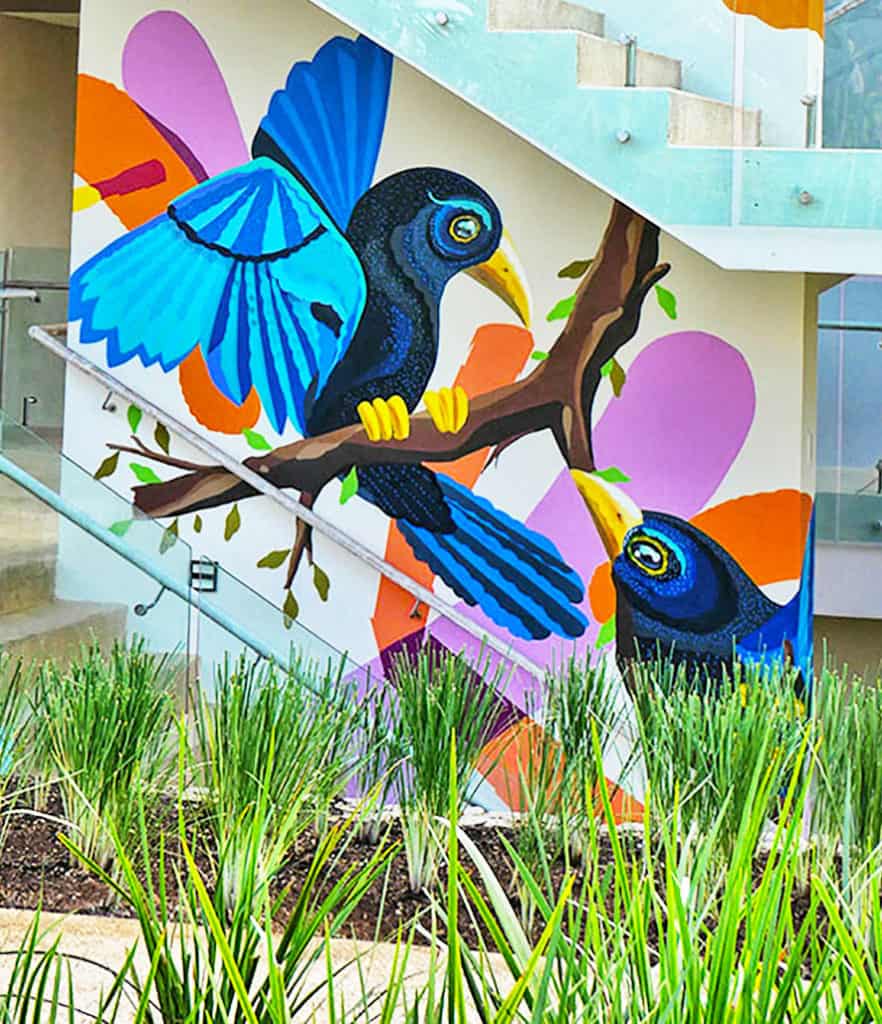
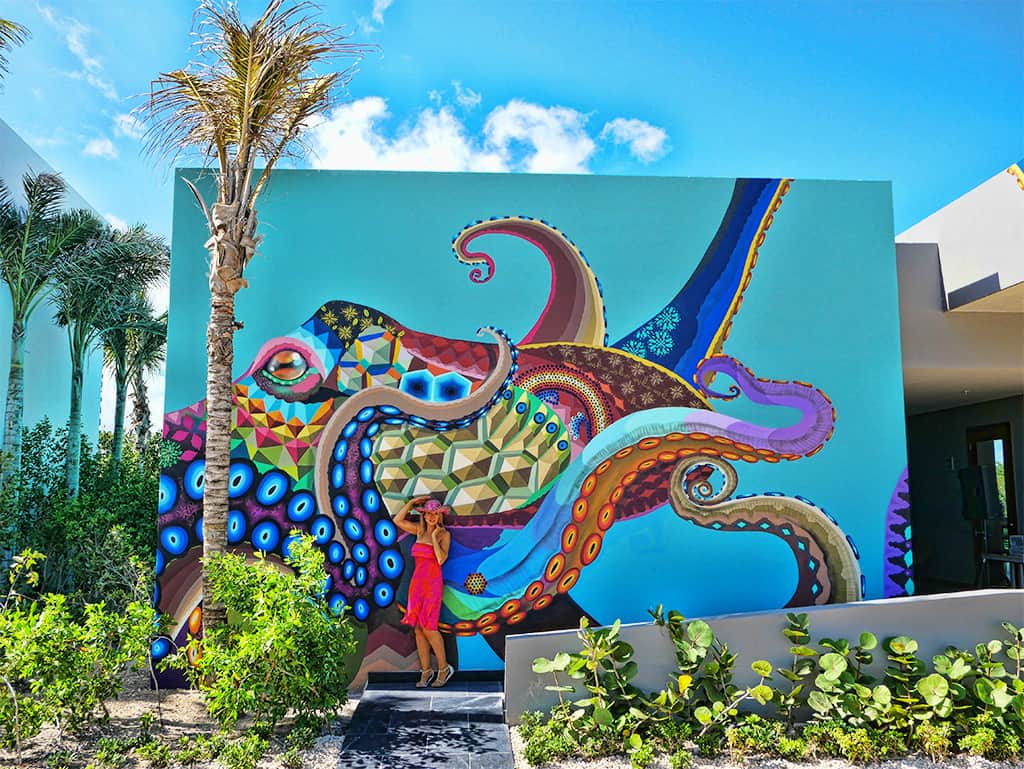
    Andaz Mayakoba has some striking murals painted by Senkoe, chosen by Andaz to be one of their Cultural Insiders. He’s from Playa del Carmen but his colourful creations are popular worldwide.

    Senkoe takes inspiration from Mexico’s bright colours, the sea, nature and comics to bring animals to life. We met him as he was putting the finishing touches to one of his artworks, celebrating the birds of Mayakoba.

    There are several adorning the resort’s stairwells and Senkoe has also created many murals in the surrounding towns.

    The octopus by the beachfront pool at Andaz is our personal favorite.

    Its tentacles have spread over the side of the building. Much of Senkoe’s work is focused on regenerating existing public spaces so it’s fascinating to see what he has come up with for this brand new hotel.

    Frida Kahlo Experience

    The octopus mural was the star of the show during my recent Frida’s Wardrobe Experience at Andaz Mayakoba. Whether you’re a fan of Frida Kahlo or less familiar with this iconic Mexican artist, the photo shoot is great fun.

    You get styled up in a couple of lovely outfits before having your photo taken by Sol and her expert team. She’s also one of the Cultural Insiders at Andaz and knows the very best locations throughout the property.

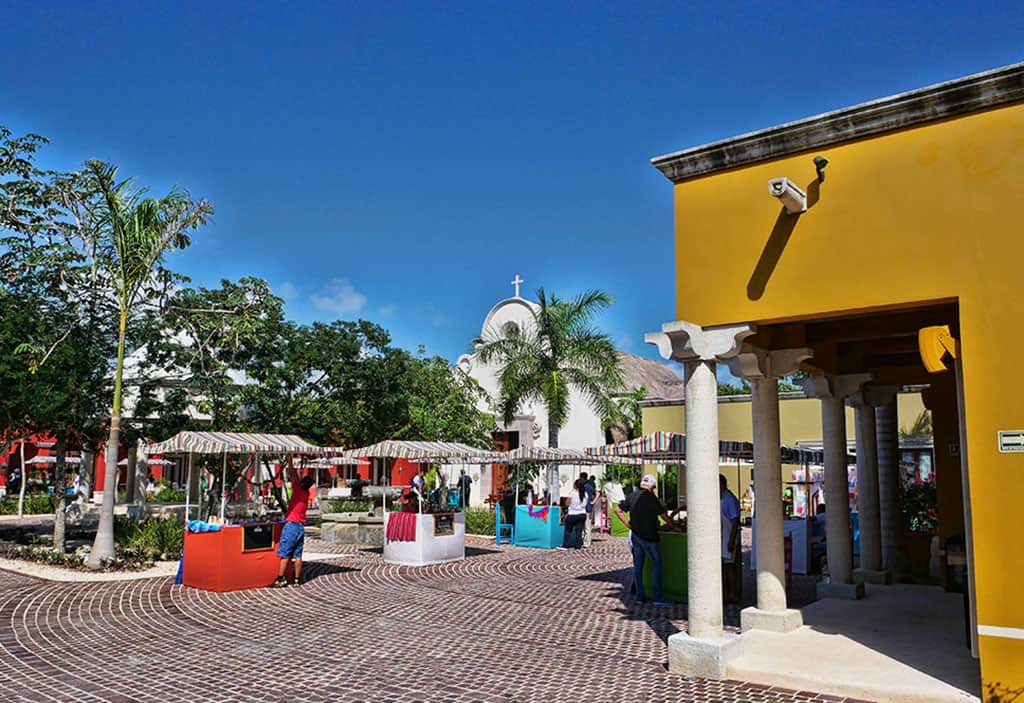
    You can get to our next port of call, El Pueblito, by golf buggy, by bike or on foot along the nature trail. The buggies at Andaz Mayakoba are adorned with inspiring life journey quotes by famous artists like Frida Kahlo and Salvador Dali.

    El Pueblito

    At El Pueblito, the resort’s traditionally inspired village square, you can purchase vibrant Mexican handicrafts like this Frida Kahlo knitted doll and these colourful masks.

    On Sundays there’s a Farmer’s Market in Mayakoba with local producers selling their wares. It’s a good place to pick up organic beauty products and gourmet food.

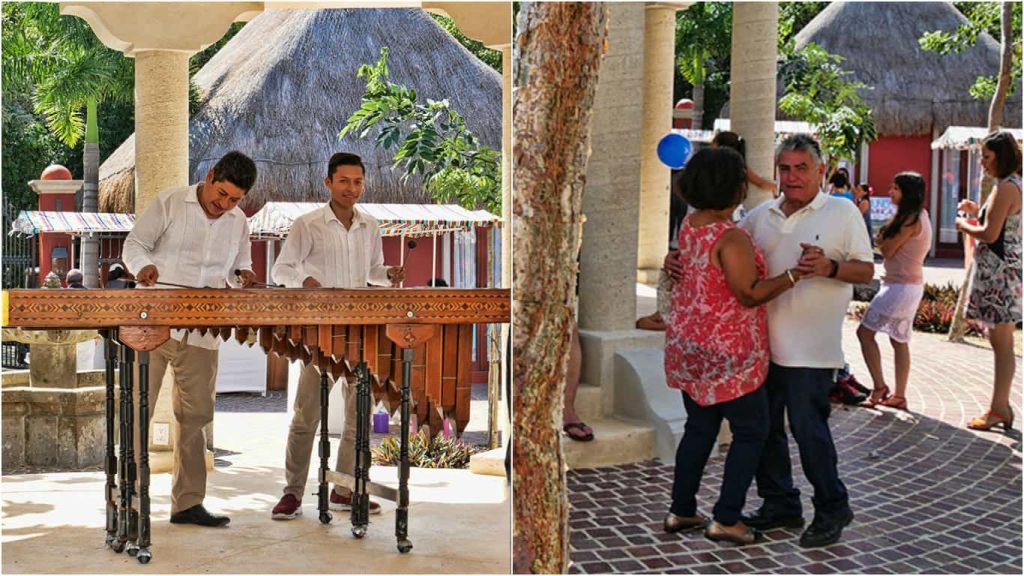
    Adding to the ambiance, these musicians were playing in the square’s pergola while a couple danced.

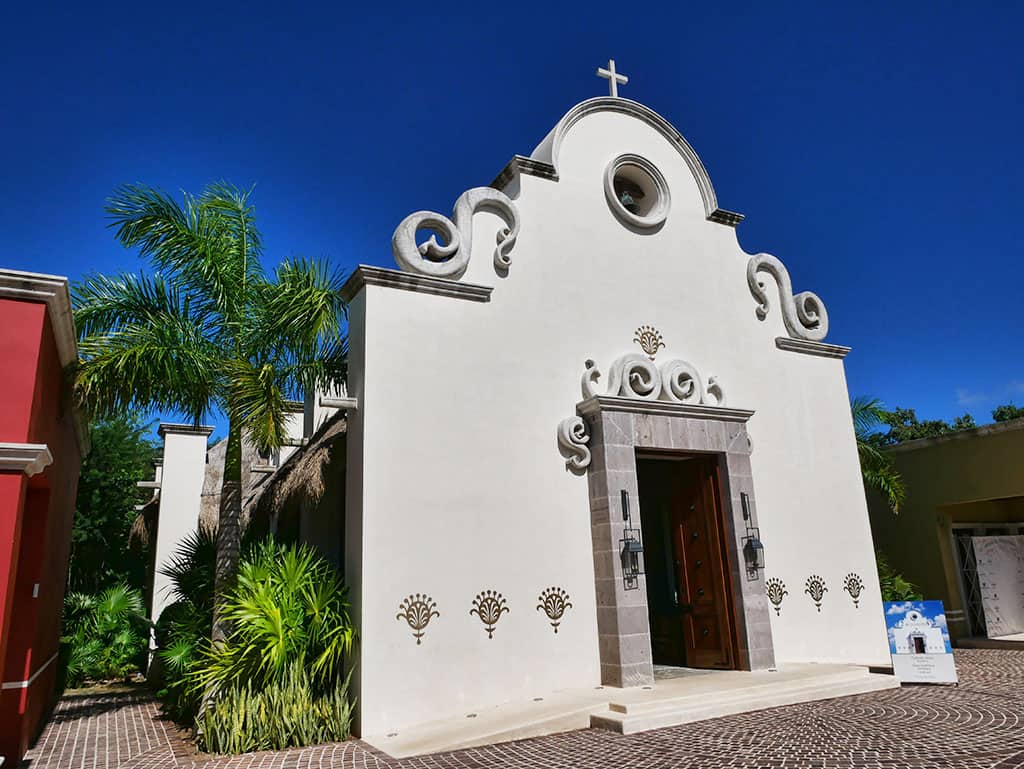
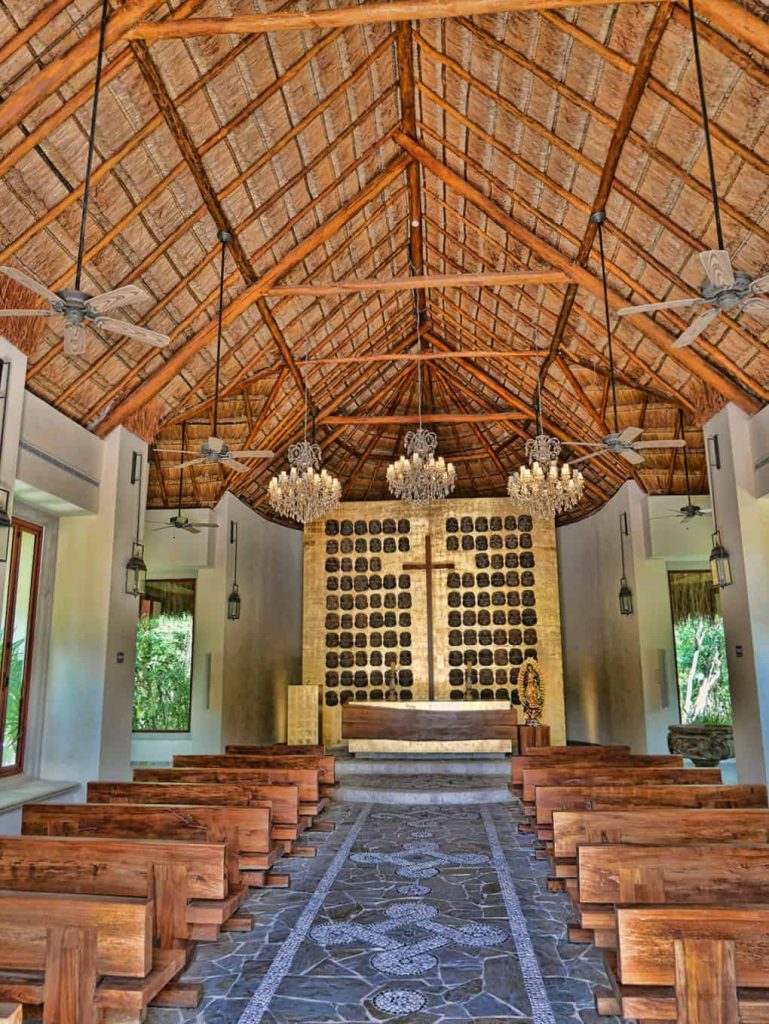
    There’s a picturesque chapel, La Santa Cruz which has a Sunday mass and hides a surprise inside.

    The chapel at Mayakoba has a stunning interior with a thatched roof, crystal chandeliers and striking pebble floor.

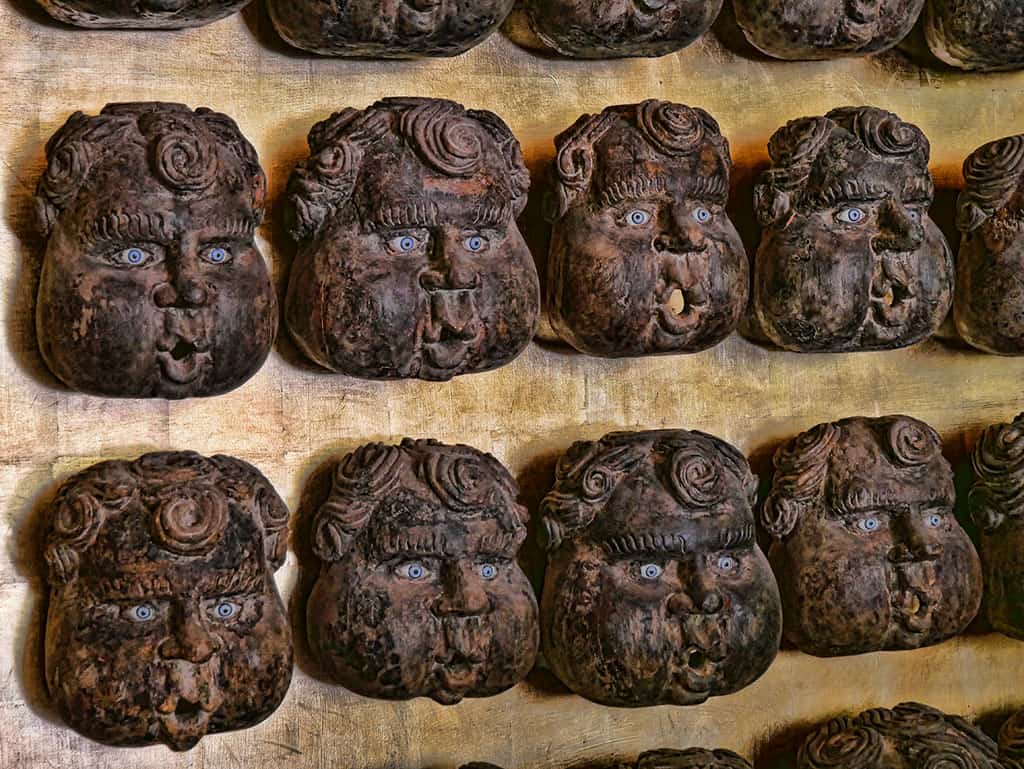
    Approach the gilt altar a little closer and you’ll discover these incredible cherubs. They’re all slightly different and equally intriguing! The chapel is available to hire and a lovely spot for a wedding or christening.

    Traditional Mexican Crafts

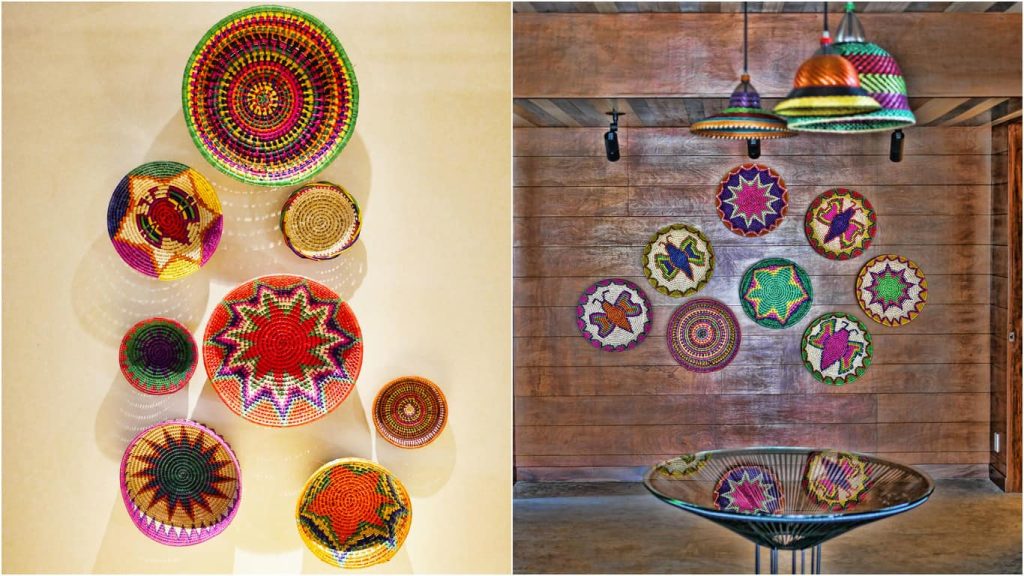
    At Andaz Mayakoba, there are lots of colourful decorative touches like these traditional baskets decorating the walls of our suite and of Olla Taco, the casual beachside eatery that serves up delicious Mexican cuisine.

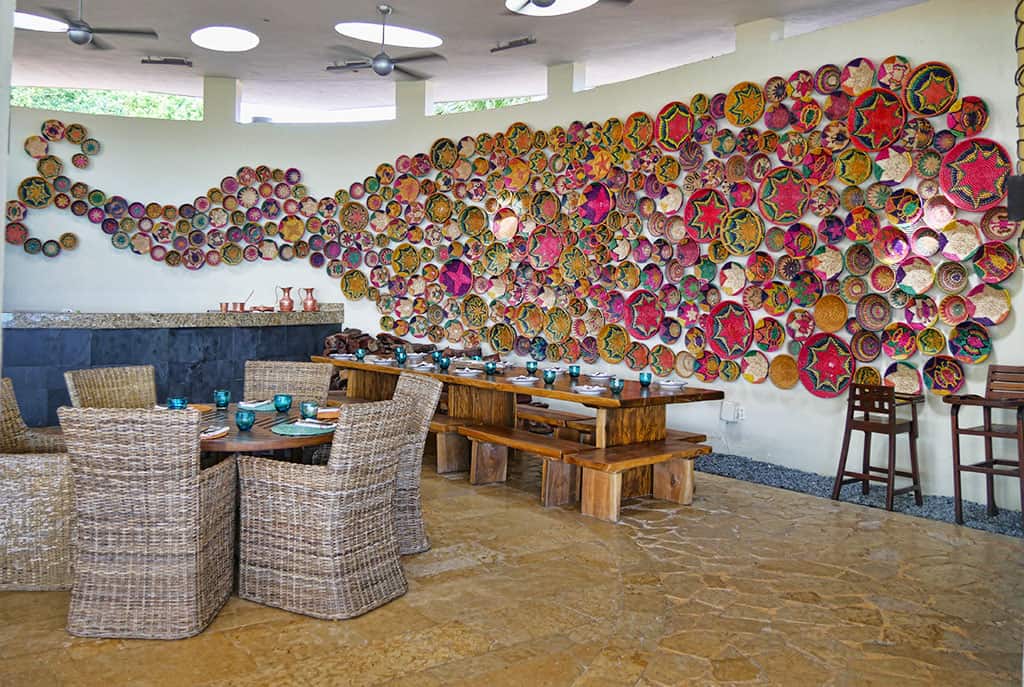
    Over at Rosewood Mayakoba, a giant whale composed of a multitude of baskets adorns the walls of Punta Bonita. Diners can enjoy beautiful views of the Rosewood’s swimming pool and the Caribbean Sea while feasting on specialties from the Riviera Maya.

    Mexican Tequila Tasting

    Of course, the culture in Mexico isn’t limited to art, crafts and music. Food and drink plays an integral part and tequila is the tipple of choice. Aren’t these tequila bottles artworks in their own right? You can have an amazing tequila tasting experience in Mayakoba.

    We hope you enjoyed this guide to the exciting art and culture in Mayakoba.

    Which of these experiences is your favorite?

  • Mayakoba Animals: Amazing Wildlife in Mayakoba, Rivera Maya

    Mayakoba Animals: Amazing Wildlife in Mayakoba, Rivera Maya

    At Mayakoba, an eco-friendly luxury resort on the Riviera Maya in Mexico, the four luxury hotels integrate harmoniously with the landscape. The focus is on preserving wildlife in Mayakoba, with a Reef Restoration Program and a resident naturalist. Spread over 250 hectares, there’s an amazing amount of Mayakoba animals in the 250 hectares.

    Wildlife and Animals in Mayakoba

    The Riviera Maya, which stretches for 75 miles south of Cancun, is home to a huge variety of flora and fauna as well as the second largest coral reef in the world. Mayakoba, which means “the city over water”, won the coveted Ulysses Prize for “Responsible Tourism Development” by the World Tourism Organization.

    This innovative ecotourism destination was the first resort in Latin America supported by the Rainforest Alliance and has a unique habitat of beach, sand dune, mangrove and jungle. All four of the Mayakoba resorts have received Rainforest Alliance Certification.

    Architects, biologists and geologists preserved nature and restored the mangrove area so well that wildlife has grown by over 500%.

    Mexican Wildlife on an Eco Boat Tour

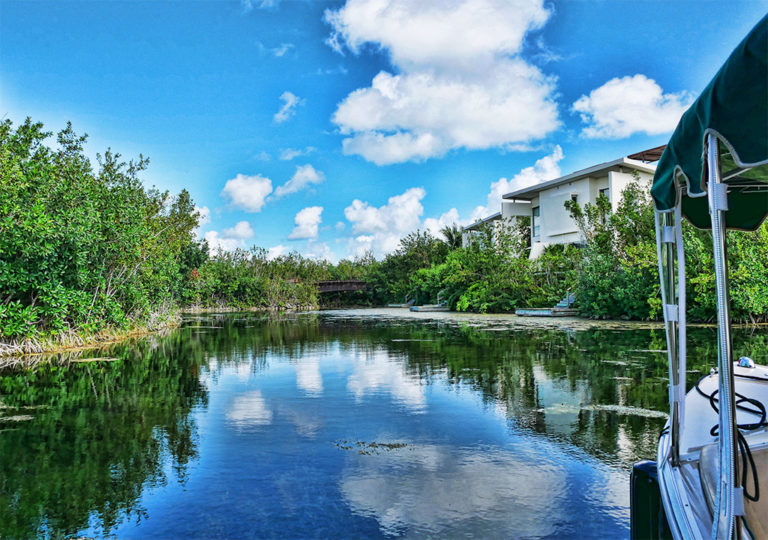
    A lagoon system of artificial canals has been created over 13 kilometers and 25 hectares, connecting the four hotels together.

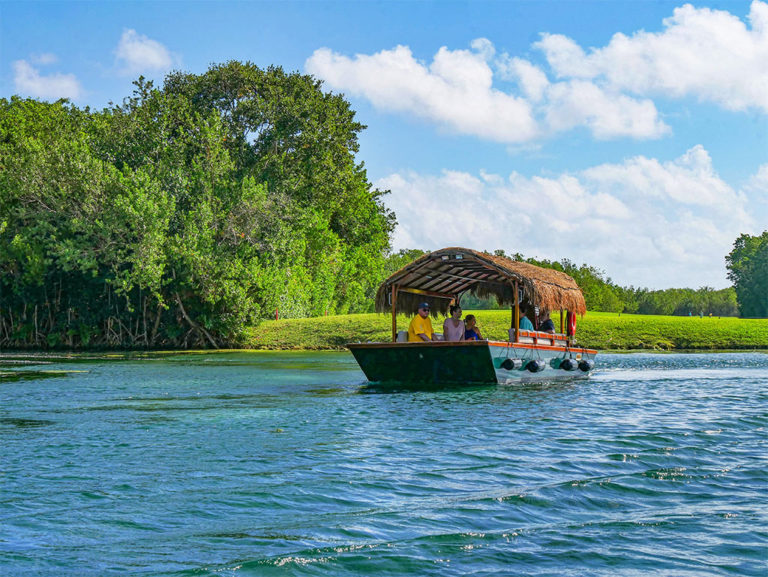
    Electric boats, many in a traditional Mexican style, transport you to the Andaz, Banyan Tree, Fairmont and Rosewood hotels in style. The Mayakoba Connection, as the ferry service is known, also connects you with El Pueblito, a traditional village square in the heart of the resort.

    It’s worth taking a private wildlife spotting tour to see the animals at Mayakoba, on board one of the Andaz’s luxurious boats. There are now over 200 species of wildlife in Mayakoba, compared to 70 before the canals were created.

    Birds, fish, crustaceans and reptiles all live together in perfect harmony. The first thing you notice is how well the hotels and residences blend into the landscape.

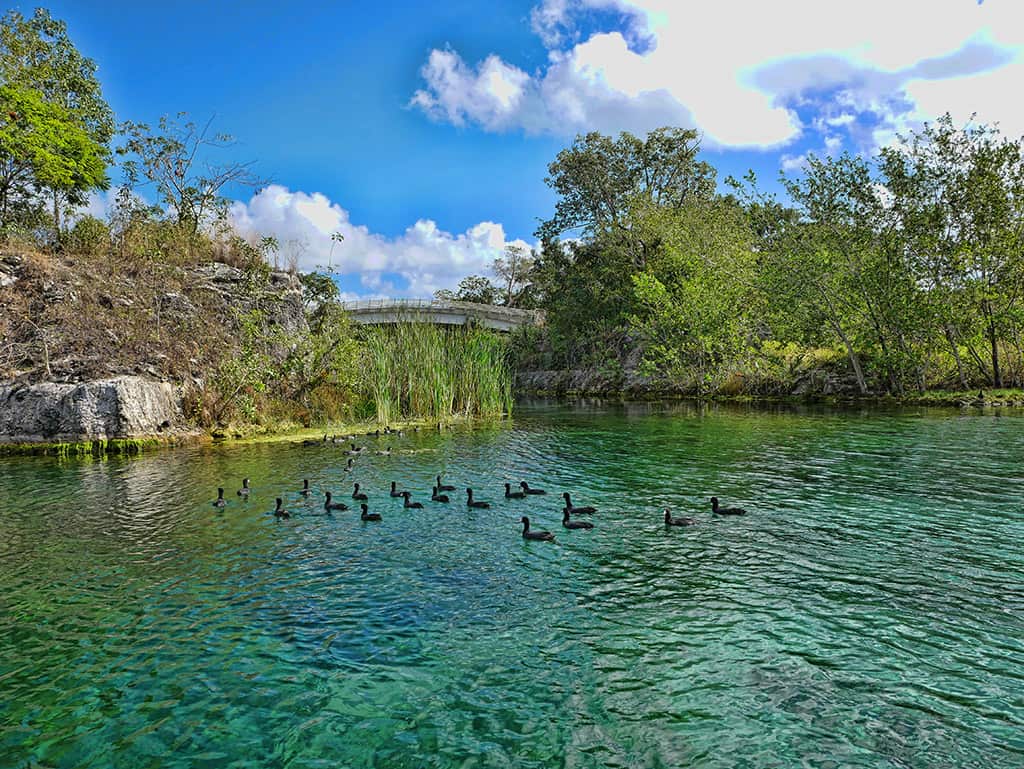
    It was only a minute or so before we spotted the first wildlife, a host of American Coots swimming by.

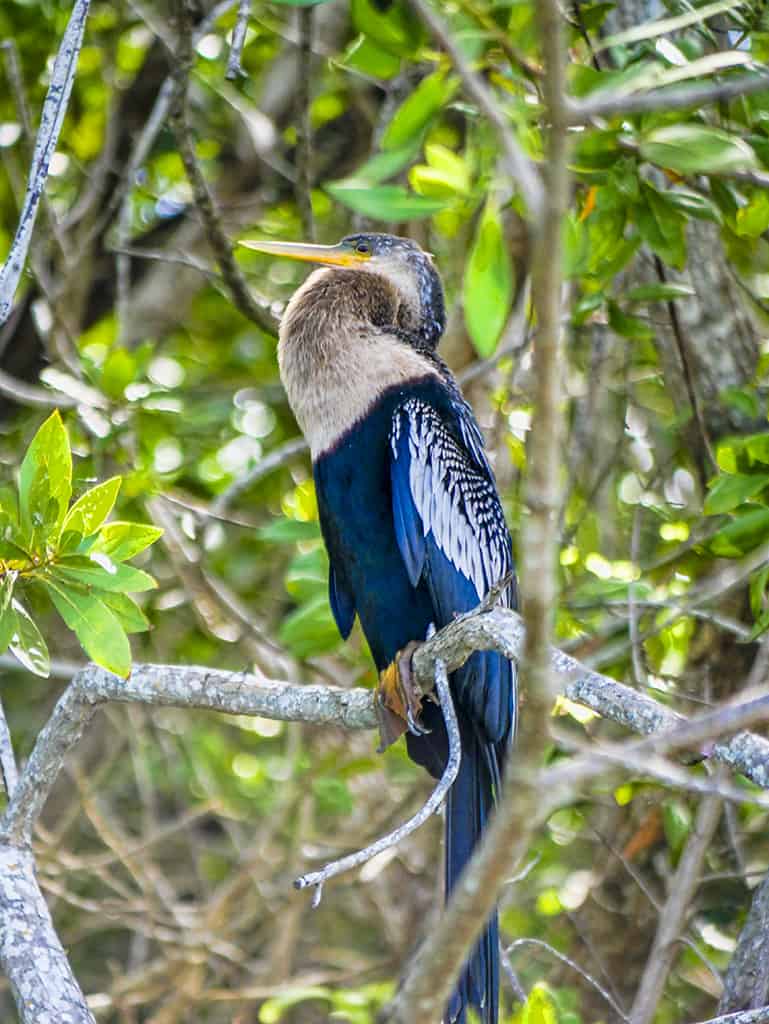
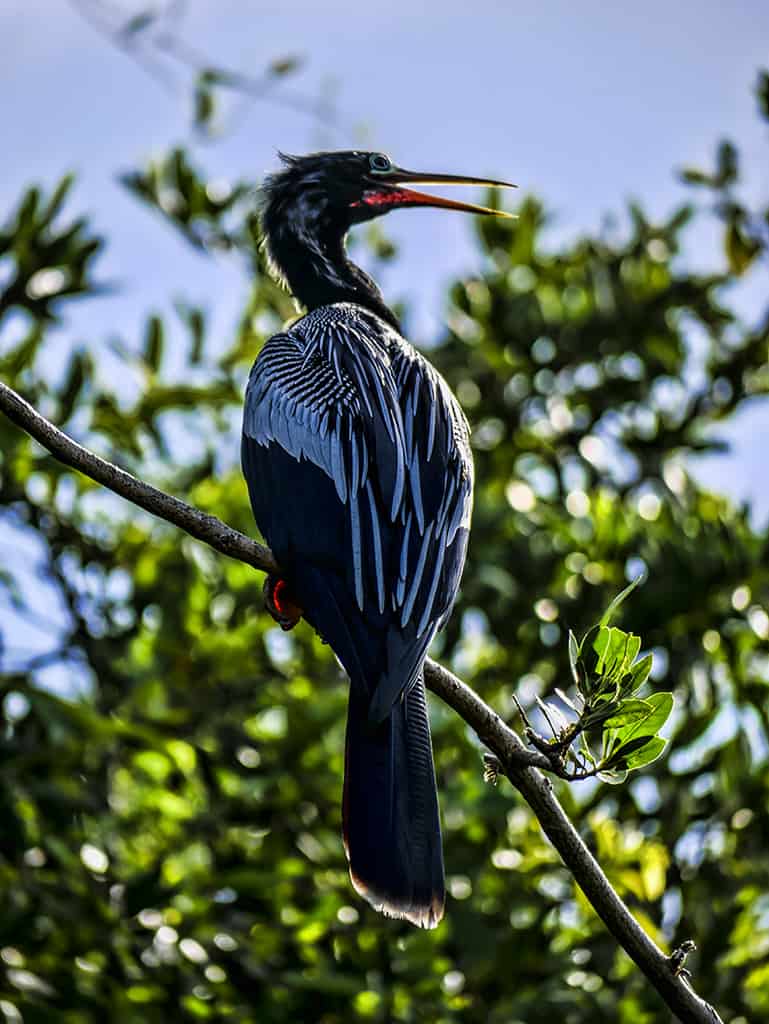
    We were struck by this Anhinga’s bright blue eyes and striking feathers. There’s a beautiful book, Birds of Mayakoba with photos by James Batt.

    From this, we learned that anhingas have no oil in their feathers so they have to dry their wings after diving for food. James kindly confirmed which type of birds we managed to photograph, as we wouldn’t have identified them all ourselves!

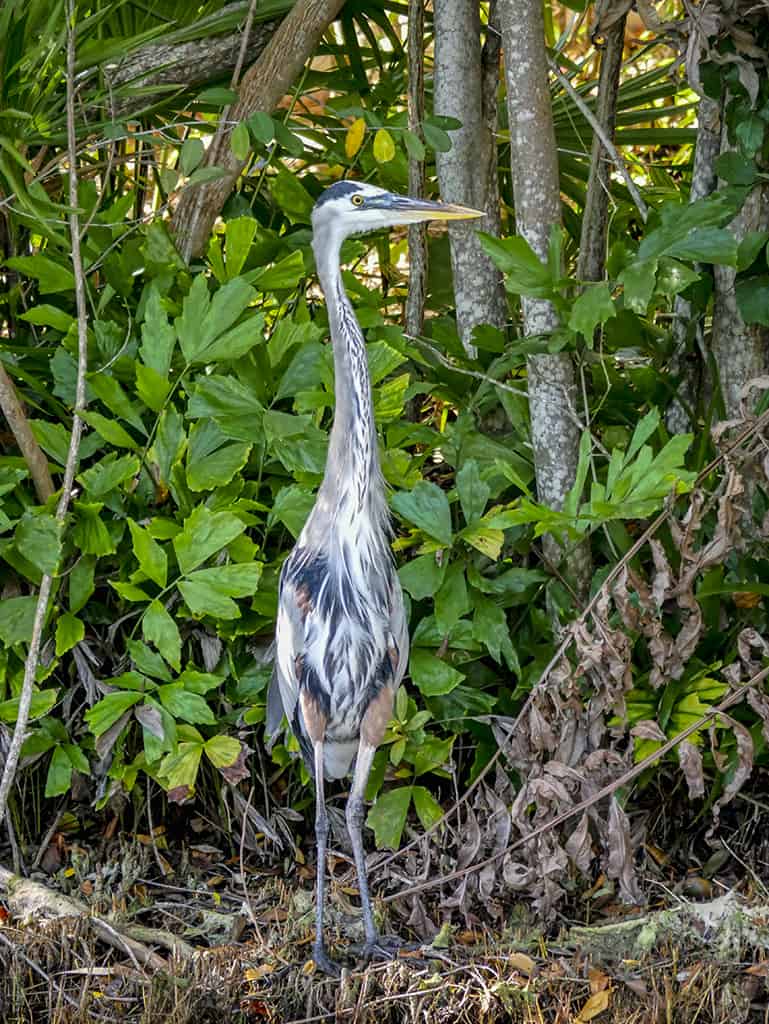
    You may also spot a Great Blue Heron. This is a wading bird and expert fisher.

    Mayakoba Animals

    Around the resort, there are 20 species of fish, 68 types of reptile, 49 species of mammals, 14 kinds of amphibians and 178 species of birds! Luckily, Mayakoba has the assistance of a veterinarian specialized in wildlife care.

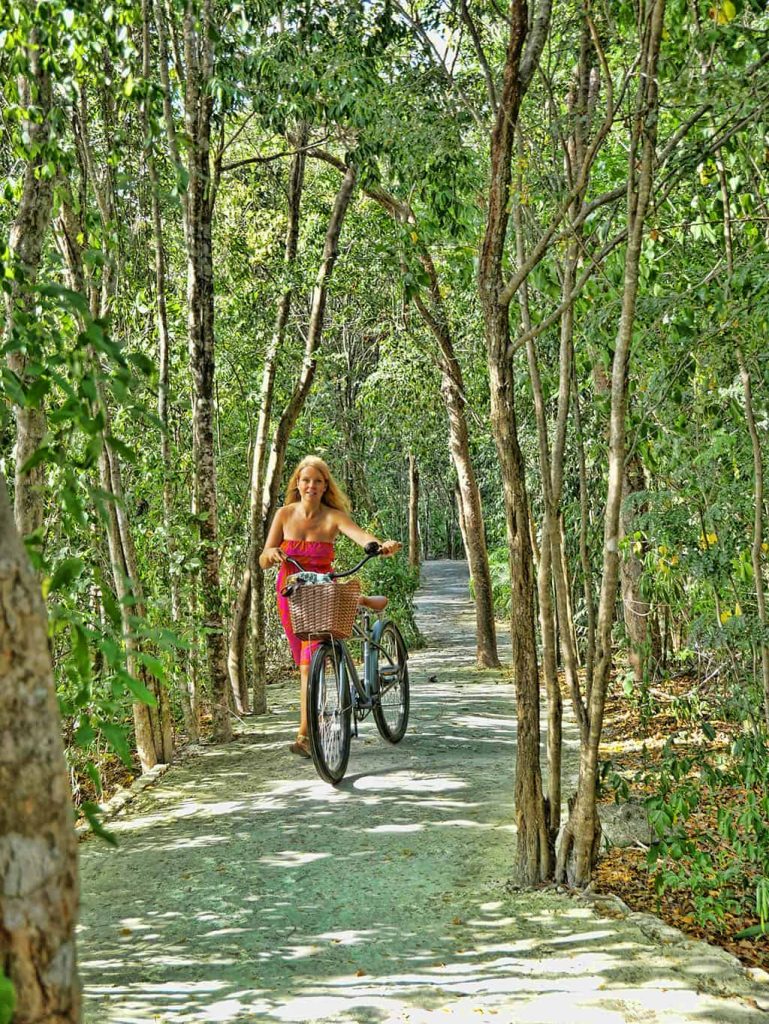
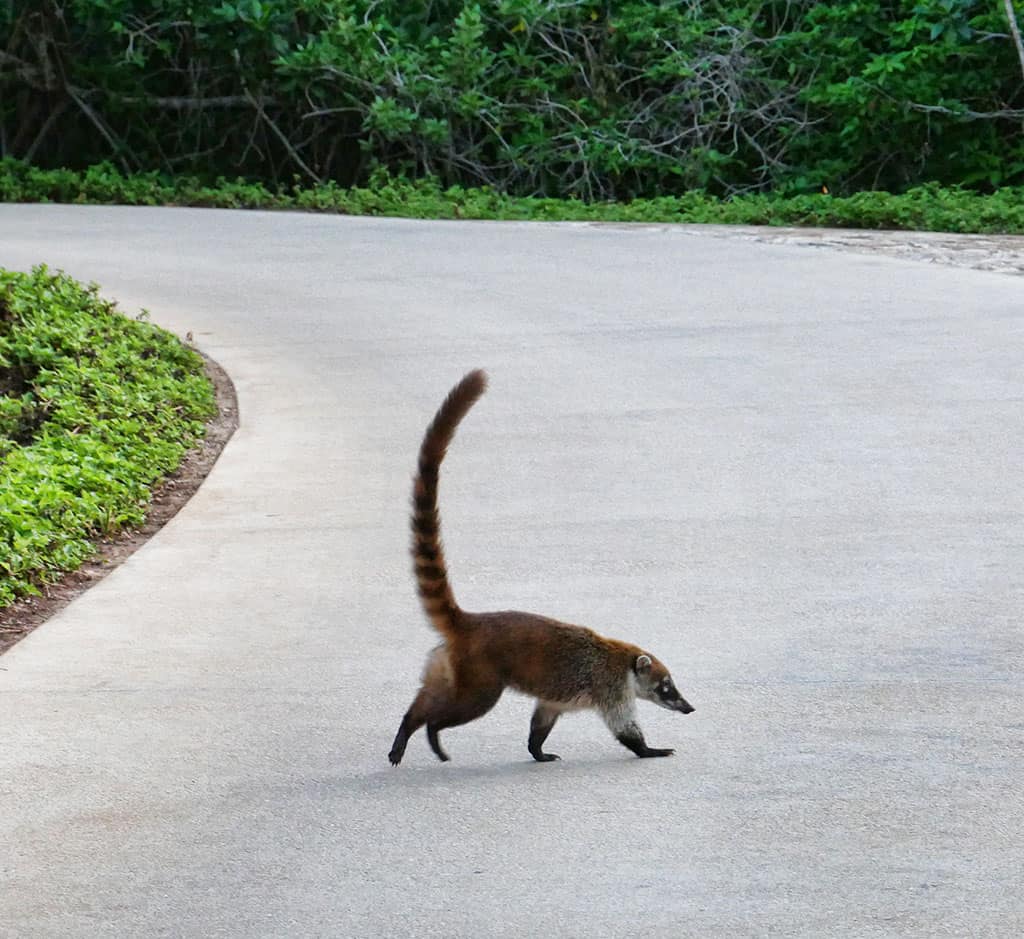
    You can get around Mayakoba on foot or be picked up by a golf buggy if you prefer. We also borrowed their complimentary bicycles quite a few times. If you’re lucky, you’ll spot one of these coati on a ride or walk around the resort.

    We’d heard about these little creatures before our trip and were keen to see some. A member of the racoon family, they’re also known as Mexican tejón.

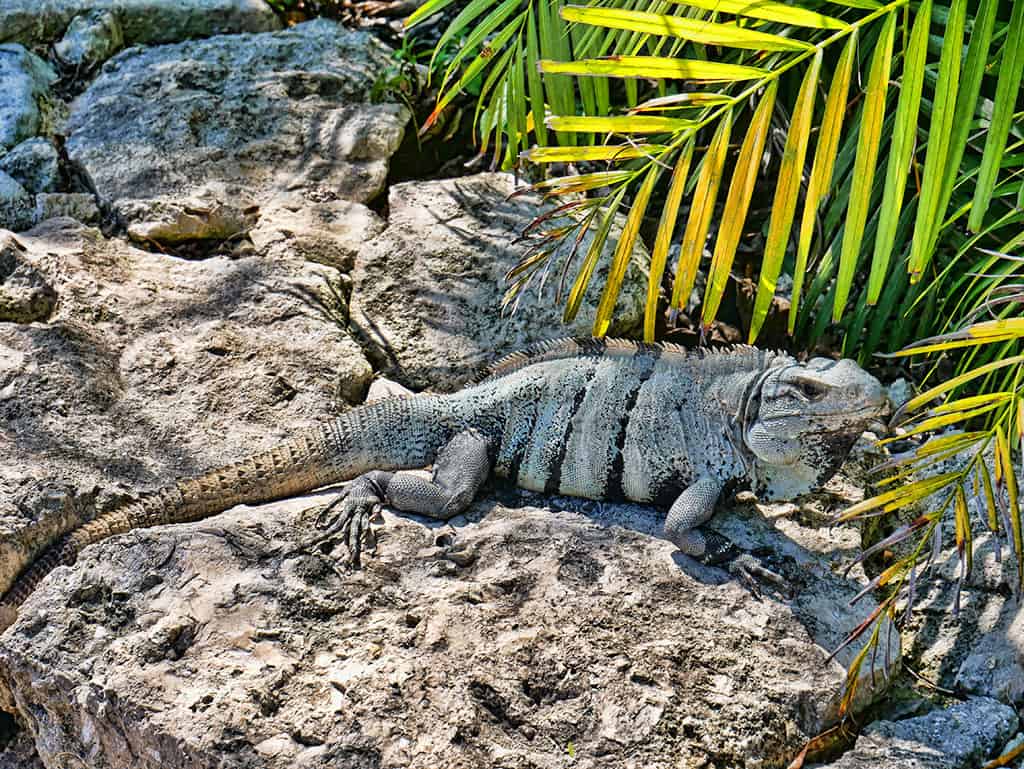
    We soon realized that several iguanas had a favourite sunny spot at one of the road intersections and we managed to see them every day. We came across this one close to the golf course – apparently there’s also a family of monkeys that like to hang out there.

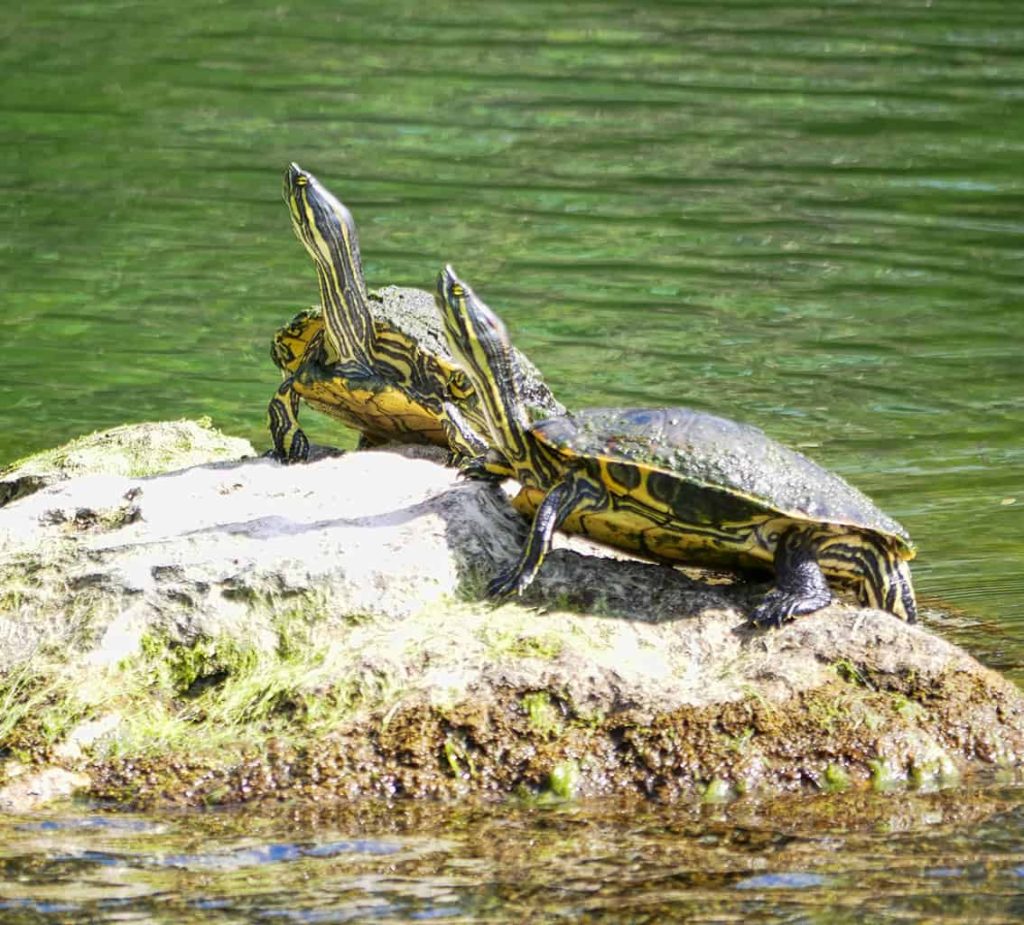
    These turtles are basking in the sun. The Mayakoba Turtle Camp works with the local community to conserve turtle numbers.

    There’s also an alligator named Sophie whom you might spot on your visit.

    Eco-friendly White Sand Beach

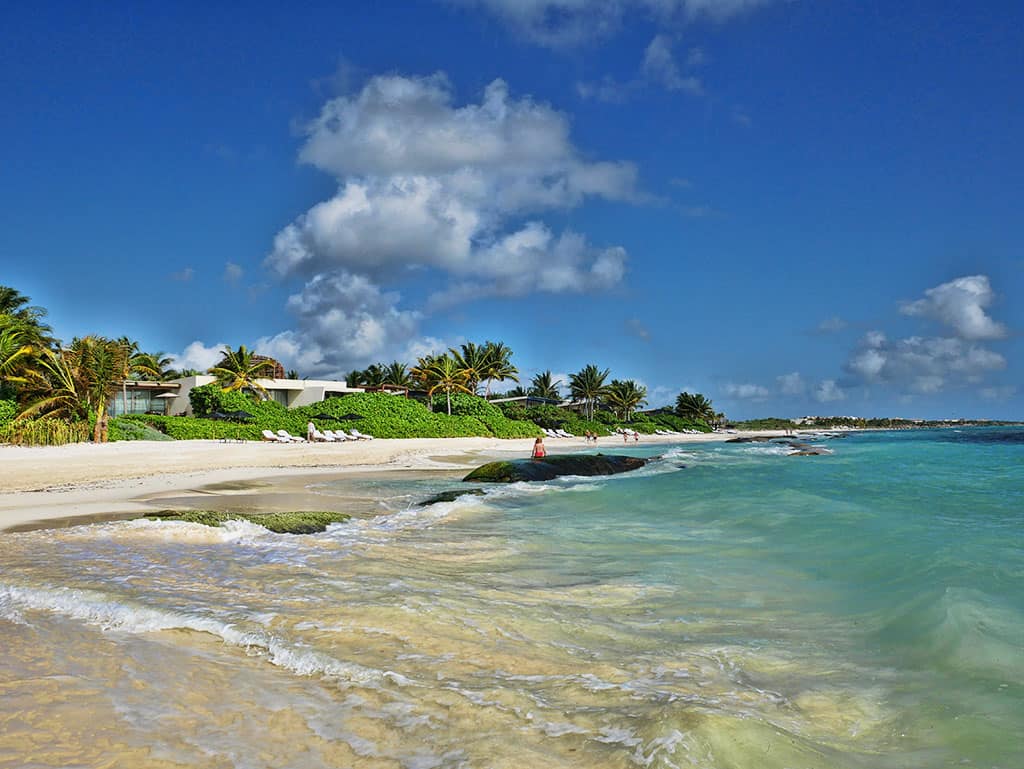
    There’s a stunning white sand beach at Mayakoba that has also been preserved by an artificial reef to prevent any erosion. You can walk from one resort to another yet it’s not at all crowded.

    A Reef Restoration Program is protecting over 1,000 colonies of elk horn coral.

    Mexican Cenote

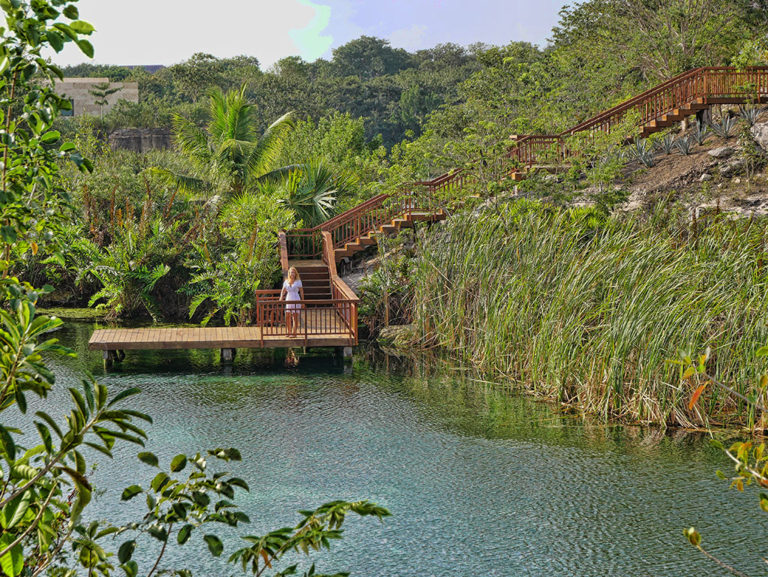
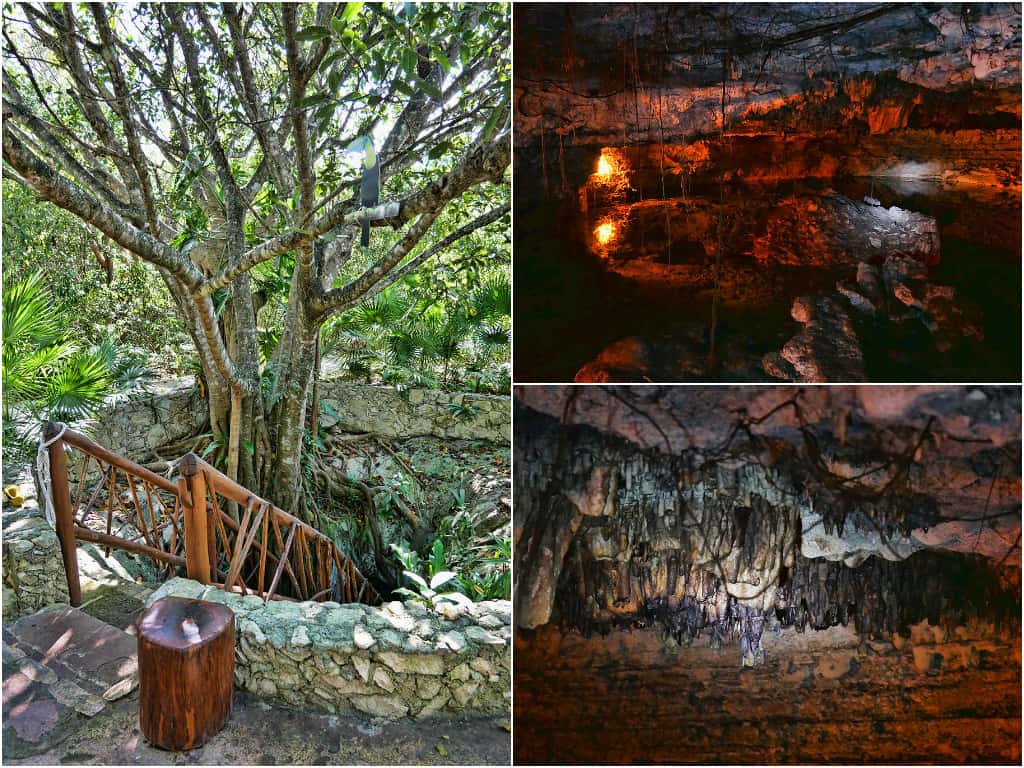
    A four and a half kilometer nature trail winds its way around the resort and has some fantastic surprises in store. The first of these was the cenote.

    These natural sinkholes are particular to Mexico and the result of limestone bedrock collapsing and revealing the water underneath. We were shown around by Mayakoba’s resident naturalist.

    He pointed out the bats on the ceiling and the eerily still water. It’s perfectly safe to go by yourself but you might want to bring a torch to get a good look at the inside.

    The trail is mainly in the shade so if you’re feeling energetic you can cycle or even jog around it.

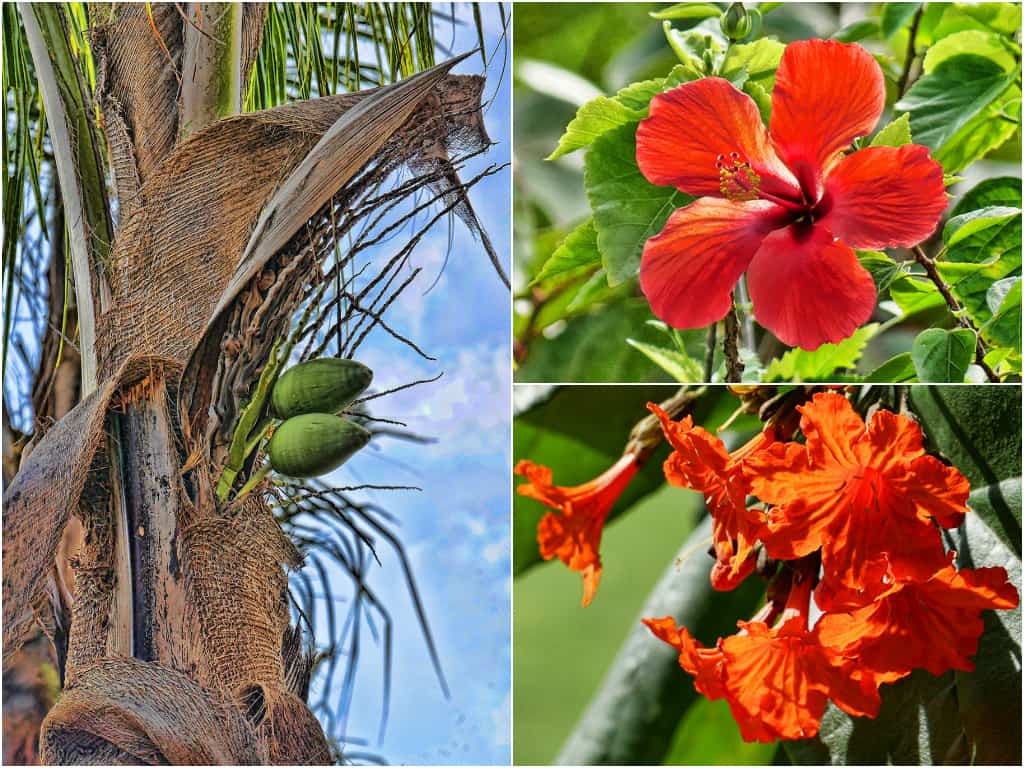
    Around the trail and in the resort grounds we also came across some beautiful flowers and coconut palms. It really is like paradise.

    Final Thoughts on Wildlife in Mayakoba

    You can get a full flavour of the wildlife in Mayakoba here in our video with a splash of swimming pools and gourmet cuisine thrown in. Our eco getaway was an incredible experience and one that we’d recommend to anyone.

    By staying here, you’re investing in the local community and wildlife and that’s a great feeling.

  • 13 Great Things to See in Florida Besides Theme Parks

    13 Great Things to See in Florida Besides Theme Parks

    Calling all adventure-seekers! If you’re looking for an exciting and action-filled vacation, then look no further than Florida. From the welcome sign of sunny beaches and blue skies to the palm tree lined highways, there are many more things to see in Florida besides just theme parks.

    What to See in Florida Besides the Theme Parks

    For constant sunshine, a safe environment, excellent food and luxurious hotels with plenty to visit nearby. Florida fits the bill perfectly! From world class museums to fantastic waterside restaurants, there’s a lot to enjoy in the Sunshine State.

    With its stunning architecture, vibrant nightlife and outdoor activities ranging from boat tours to hiking excursions – Florida has something special waiting around every corner. Get ready to uncover hidden gems that will make your trip unforgettable!

    1.Venetian Pool Coral Gables

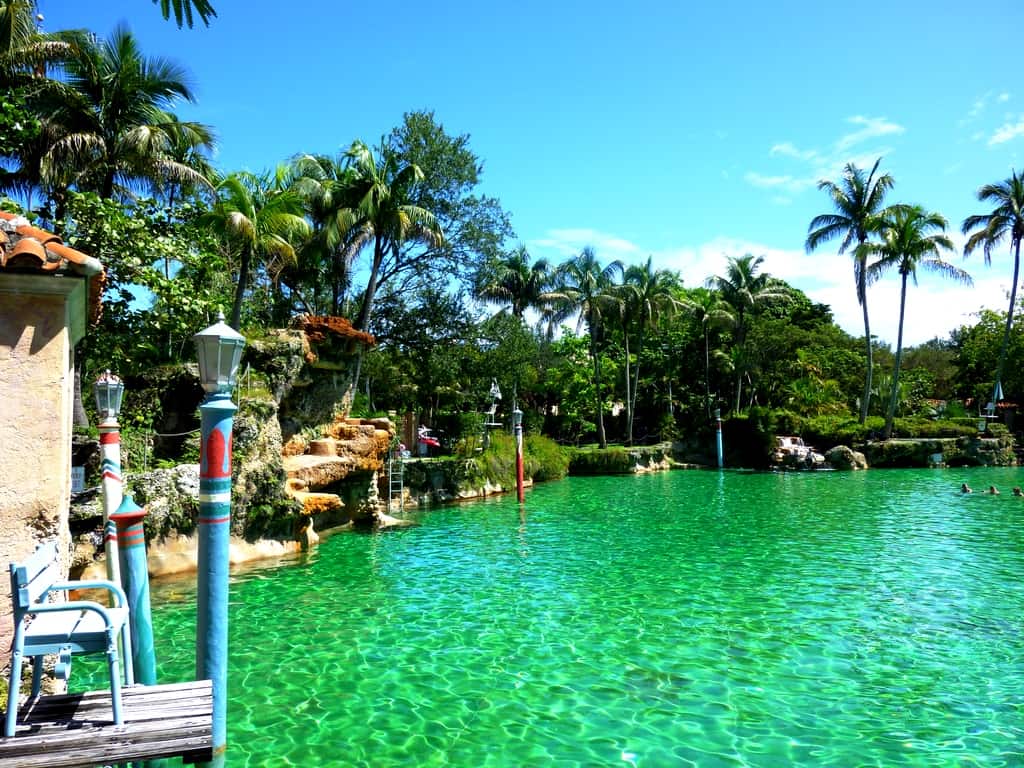
    A few minutes walk from The Biltmore Hotel, The Venetian Pool Coral Gables has to be the nicest public swimming pool that we’ve ever come across. If we hadn’t have had such an amazing pool at our hotel, we would definitely have come for a dip.

    If you don’t have time for a swim, you can pay a small fee and just walk round as we did.

    2.The Biltmore Coral Gables

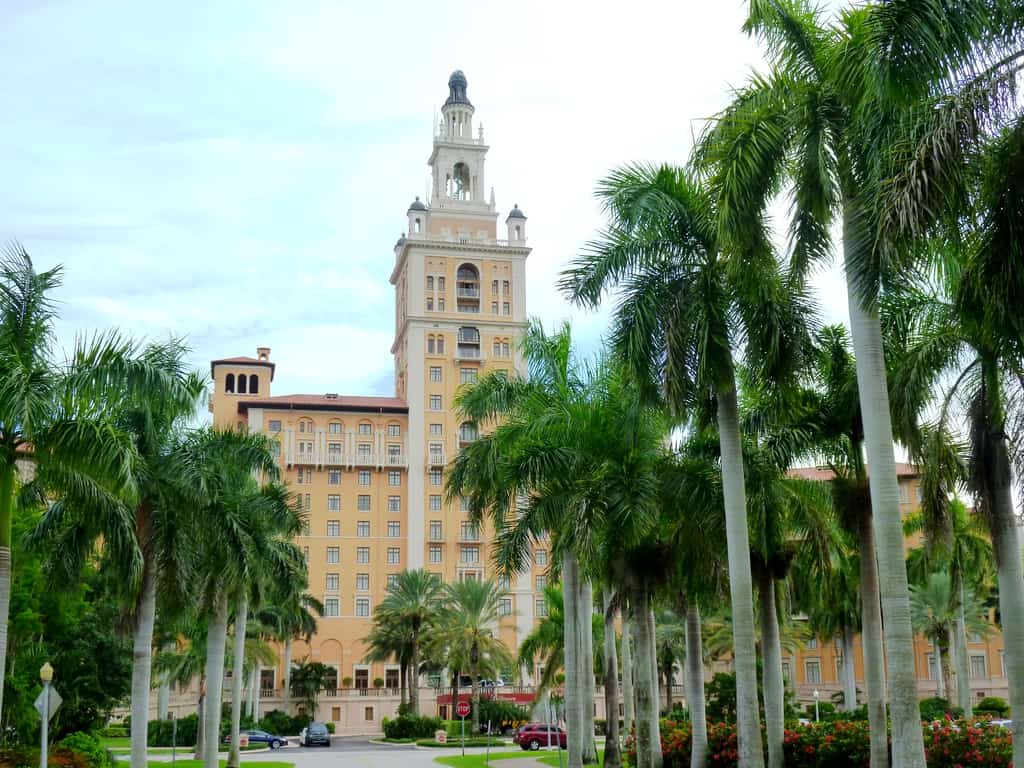
    One of the best Florida hotels is The Biltmore in Coral Gables. It’s a luxury resort set in 150 acres of land, including an 18 hole championship golf course.

    The Biltmore Hotel was constructed in 1926 and designated a National Historic Landmark in 1996. Coral Gables itself was one of the first ever planned communities, with a Mediterranean Revival style, wide tree-lined avenues and ornate fountains.

    At one point the Biltmore’s pool was the largest in the world and it’s swimming instructor was none other than Johnny Weissmuller before starring in Tarzan.

    3.Vizcaya Museum and Gardens

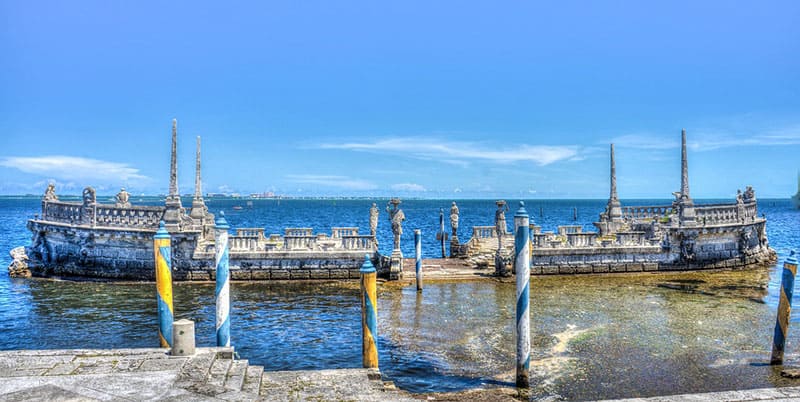
    And now for a bit of culture – Vizcaya Museum and Gardens is a beautiful museum in the very trendy area of Coconut Grove, Miami. This Italian Renaissance mansion was built in the 1920s, with a stunning jetty overlooking Biscayne Bay.

    Vizcaya is one of the top American historic homes. Originally owned by James Deering, the tractor industrialist, the estate is now run by Miami-Dade County.

    With its impressive collection of European art and furnishings, visitors are transported to a bygone era of opulence and glamour. But what truly sets Vizcaya apart are its breathtakingly beautiful gardens.

    Designed by famed landscape architect Diego Suarez, the gardens blend Italian and French styles with a touch of Mediterranean flair. From the cascading waterfalls to the perfectly pruned topiaries, every inch of the gardens is a feast for the senses.

    It’s no wonder that Vizcaya has been the backdrop for countless weddings, photo shoots, and other grand events. A visit to the Vizcaya Museum and Gardens is truly an unforgettable experience.

    4.Downtown Miami

    Downtown Miami is a vibrant hub of activity, where the city’s dazzling architecture rises up amongst the glass-covered shopping malls and luxurious condos. The area is full of excellent restaurants, shops, and attractions, including the FTX Arena, Phillip & Patricia Frost Museum of Science, and the Perez Art Museum.

    Located in the Downtown area of Miami, this striking building featured in the opening credits of Miami Vice. The Atlantis Condominium on Brickell Avenue has a spiral staircase, jacuzzi and palm tree in its middle.

    5.Little Havana

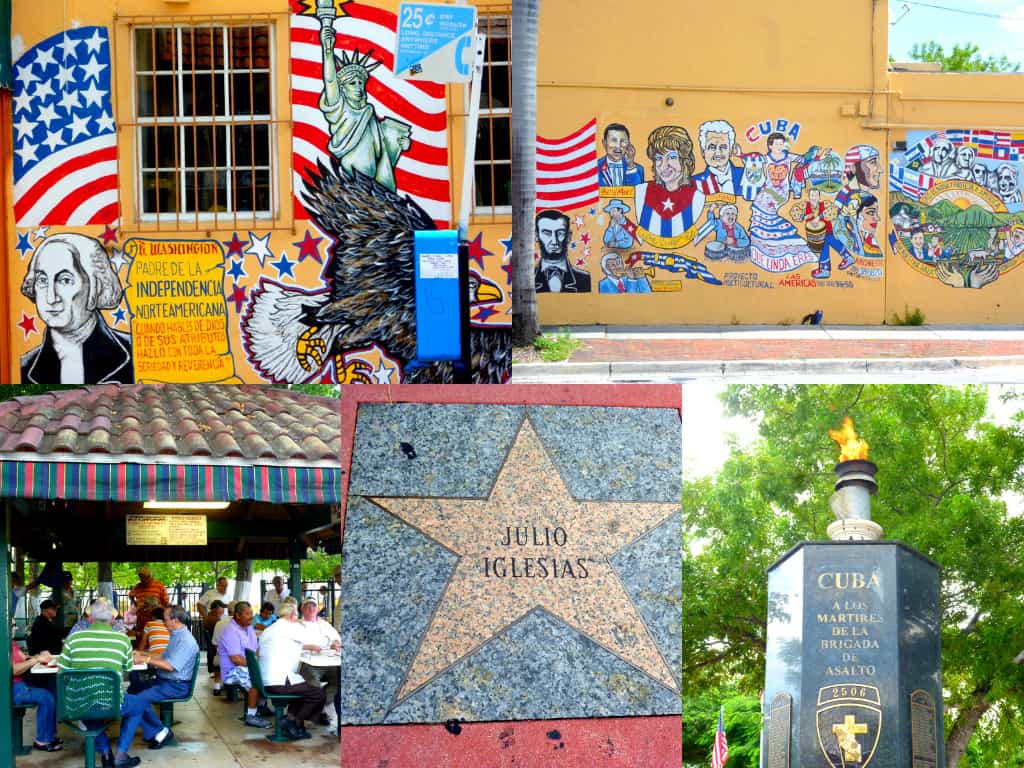
    This is another interesting area of Miami to visit. Little Havana is a vibrant neighborhood where you can immerse yourself in Cuban culture.

    With dominoes being a popular pastime amongst locals, domino parks can be found on several squares. You will also see plenty of Cuban restaurants and cafes where you can enjoy traditional Latin cuisine like cuban sandwiches and café con leche.

    Little Havana is known for it’s Walk of Fame featuring Latin artists such as Gloria Estefan and Julio Igelsias. It’s easy to spend an afternoon appreciating the vivacious atmosphere of Little Havana.

    6.Miami Beach Art Deco Architecture

    As soon as you step foot in The Miami Beach Architectural District, you will be visually struck by landmarks such as The Carlyle and the iconic Miami Beach Post Office. The glimmering white buildings are the epitome of Miami Art Deco architecture.

    This historical district has been skillfully preserved so that modern-day visitors can experience a slice of 1930s Miami nostalgia in all its glory. Many Art Deco buildings in Miami have been renovated in the last few years. The Webster is a three storey lifestyle boutique at 1220 Collins Avenue that was designed in 1939 by architect Henry Hohauser.

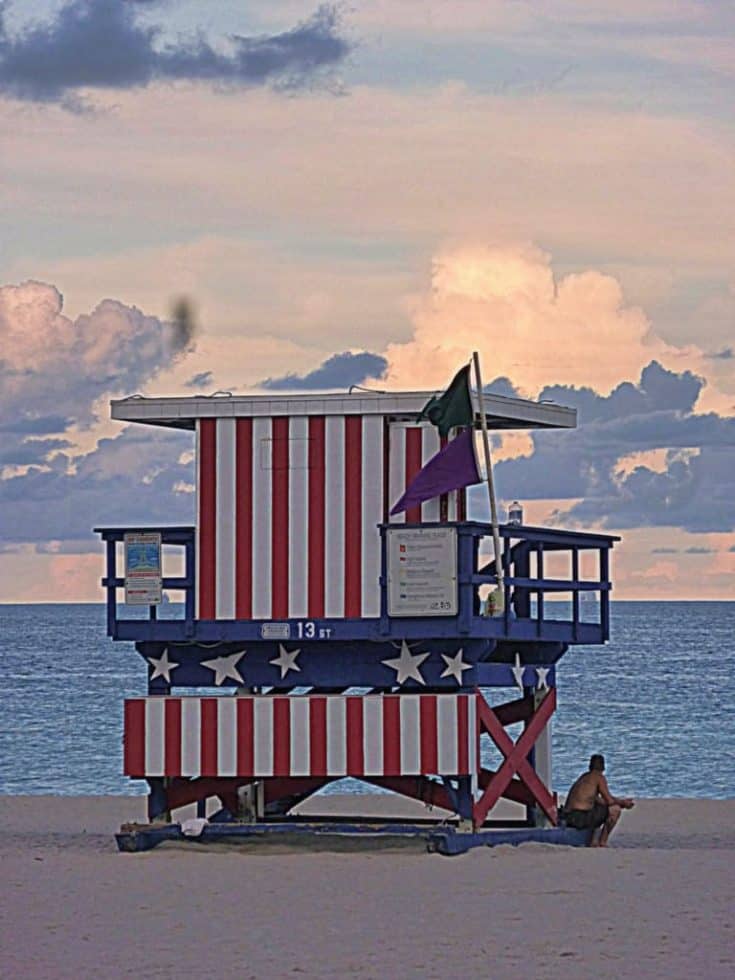
    South Beach Miami really comes to life at night and the many beachside lounge bars are at their best. Check out the Delano, the Shore Club and the Loews bars.

    7.Miami Beaches

    With more than 15 miles of beautiful beaches that offer marine life and stunning views, Miami is simply one of the most enviable vacation destinations in the world. The city’s coastline offers acres of idyllic sugar white sandy beaches overlooking the Atlantic Ocean.

    This makes Miami an ideal place to spend lazy summer days soaking up the sun and admiring marine life such as dolphins, sea turtles, manta rays and fish. South Florida is a great place to see manatees and bottlenose dolphins.

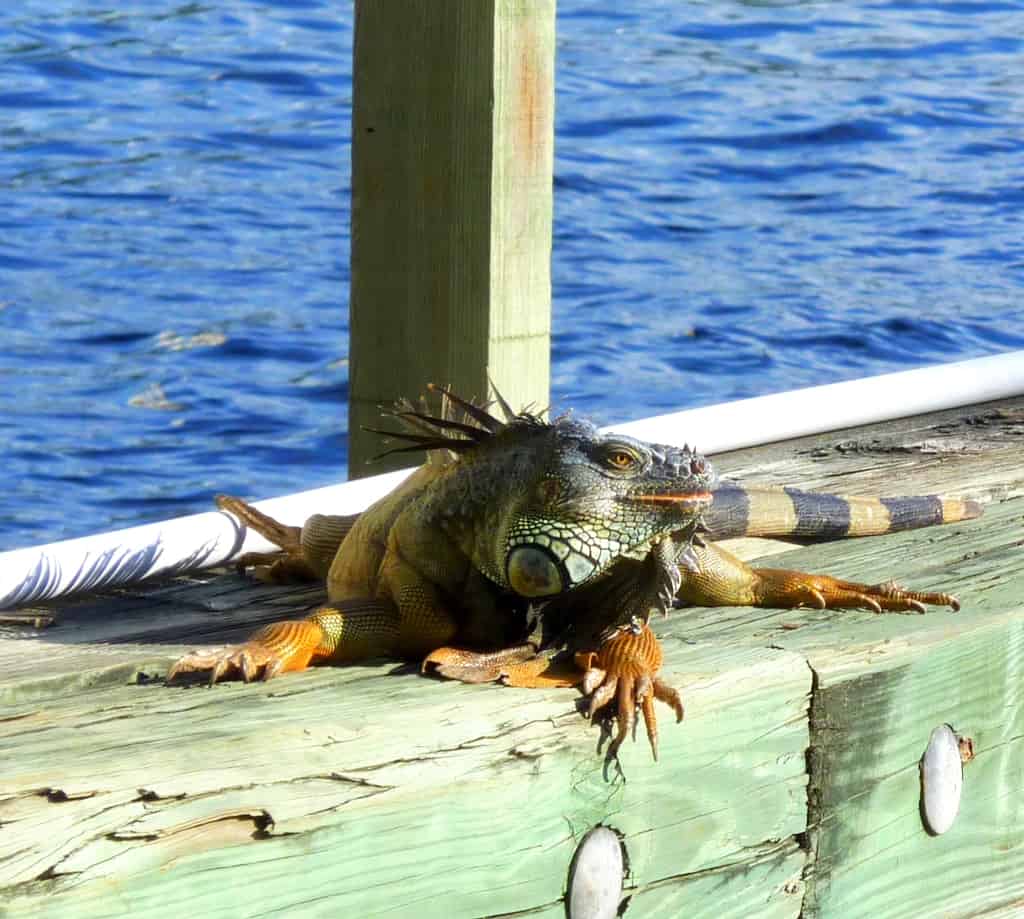
    If you’re lucky, you’ll also spot iguanas sunning themselves by the shore in Miami. Whether you seek a day of sun-filled rest and relaxation or are looking for an oasis to escape winter’s chill, Miami’s range of beaches cater for all kinds of beach-lovers.

    8.Airboat Everglades Tour

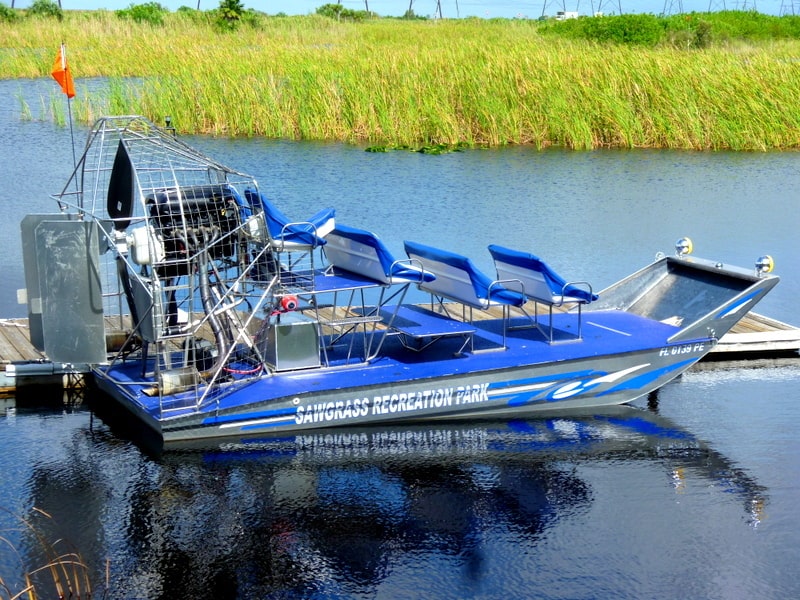
    There are quite a few tours of the Everglades out there. We chose the one in Sawgrass as we’d read good reviews about it.

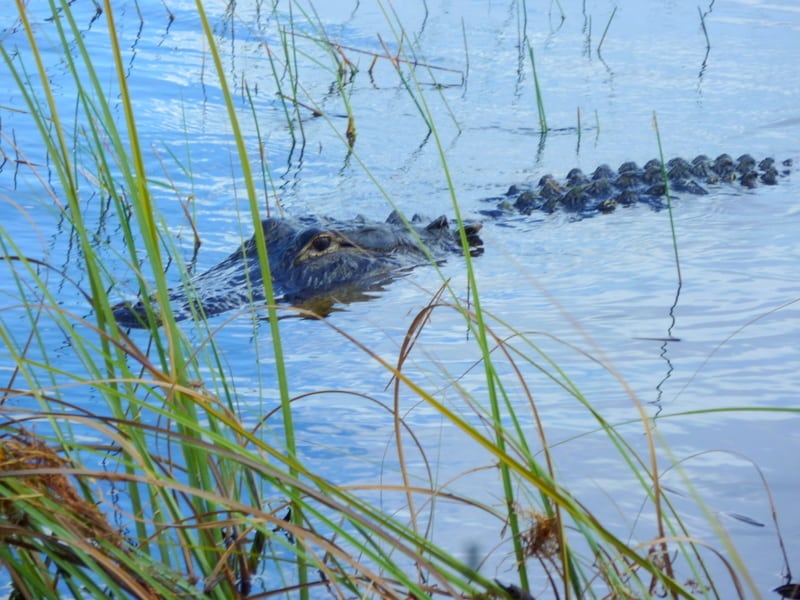
    We certainly managed to see quite a few alligators and crocodiles. Just bear in mind that the air boats can’t go right into the heart of the Everglades, since they’re noisy, so if you really want to get up close to the wildlife, an Everglades kayaking tour is best.

    We’d always wanted to go on an airboat, having seen so many films featuring them, and it is great fun. We’d advise that you take a waterproof, or you may get drenched at some point.

    The Everglades National Park is actually the only eco-system in the world where alligators and crocodiles live side by side. Alligators only thrive in fresh water because they can’t digest salt, however crocodiles can live in both salt and fresh water.

    In the Everglades, fresh water from the Florida Bay meets the salt water of the Gulf of Mexico so both species live there together. Do remember to cover yourself in anti-mosquito repellent, we used some but I still got lots of bites!

    On your way back to Coral Gables, make a pit stop at the quirky Pit Bar-B-Q. Hopefully you won’t encounter any panthers on the road 😉

    9.Worth Avenue Palm Beach

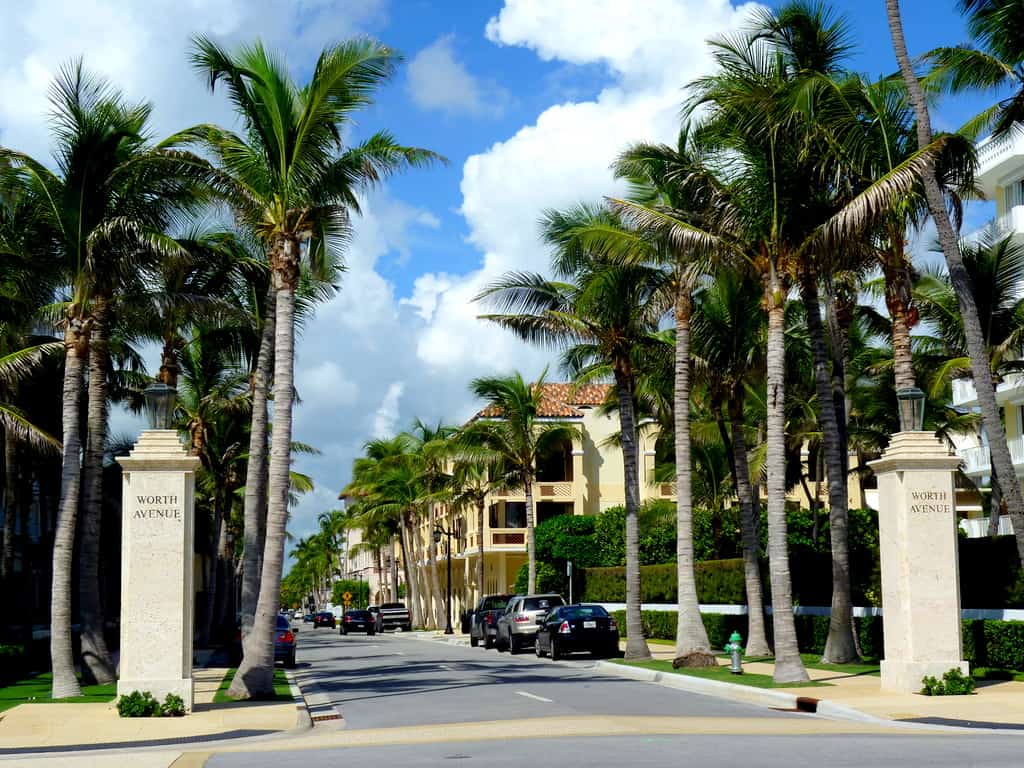
    Worth Avenue Palm Beach is an iconic shopping destination in Florida. This one-mile long street is defined by impressive Mediterranean Revival and Georgian architecture.

    Its zip/post code 33480 is the wealthiest in America and is filled with some of the most luxurious brands in the world. Boasting many elegant boutiques and restaurants, Worth Avenue offers something for everyone.

    Whether you’re looking for haute couture or a one-of-a-kind keepsake item from one of the locally owned boutiques, it’s easy to find what you’re looking for. No matter what your shopping needs are, Worth Avenue is sure to have just what you need.

    With its beautiful atmosphere and extensive offerings, this premier shopping avenue provides a unique retail experience that can’t be found anywhere else.

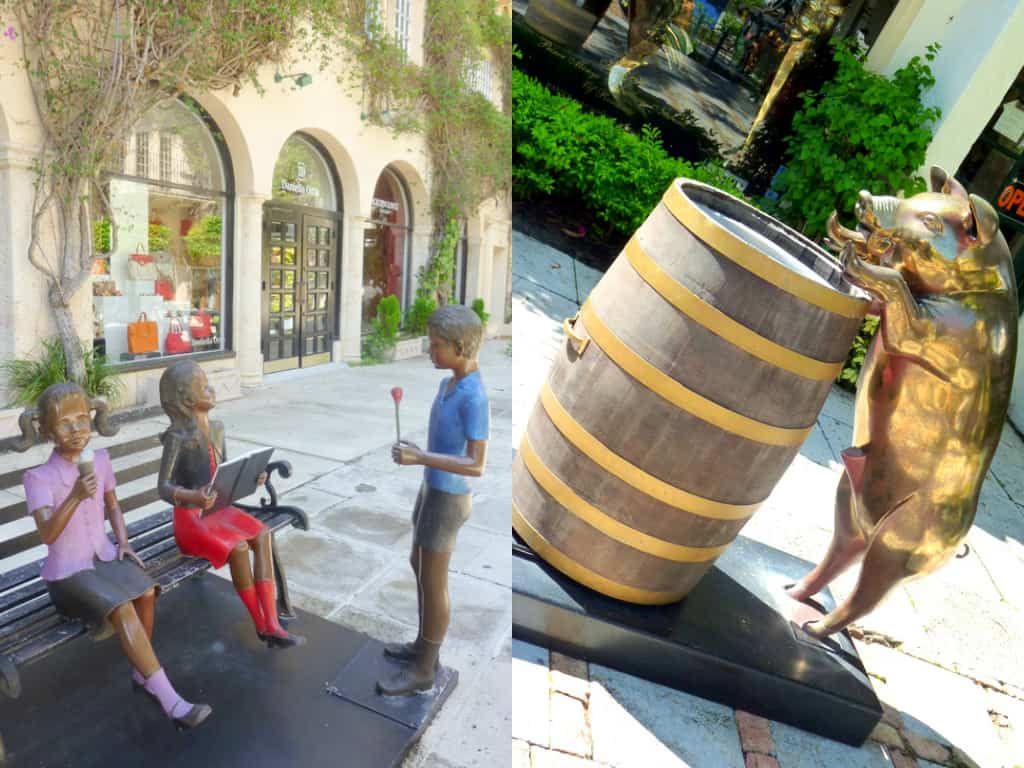
    These life-sized sculptures of children and a pig sticking its nose into a trough are to be found in Gucci Courtyard, just off Worth Avenue.

    10.West Palm Beach

    West Palm Beach is a great place to explore and enjoy the Florida sunshine. From unique boutique shopping, to outdoor activities, the possibilities are endless.

    Adventure seekers can check out the kayaking tour of Grassy Waters Preserve for an up-close look at some of the area’s wildlife. Foodies can enjoy mouthwatering BBQ from one of West Palm’s downtown eateries or relax with a glass of wine at one of the many wineries in Palm Beach County.

    Culture-seekers should not miss a visit to the Norton Museum, where local art, music and theater performances take center stage. Shoppers will enjoy strolling around CityPlace, while night owls should make sure to hit Clematis Street, where lively bars and clubs await them until all hours!
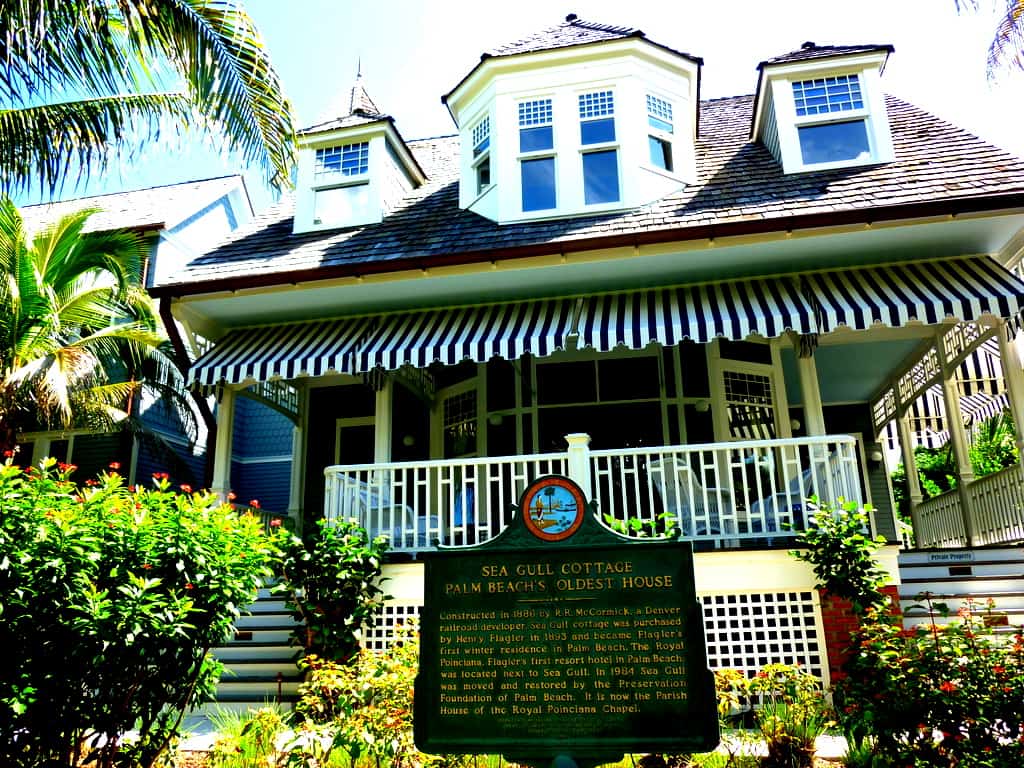
    Charming Sea Gull Cottage is the oldest house in Palm Beach. Built in 1886, it has been beautifully restored. Unfortunately you can’t visit the inside.

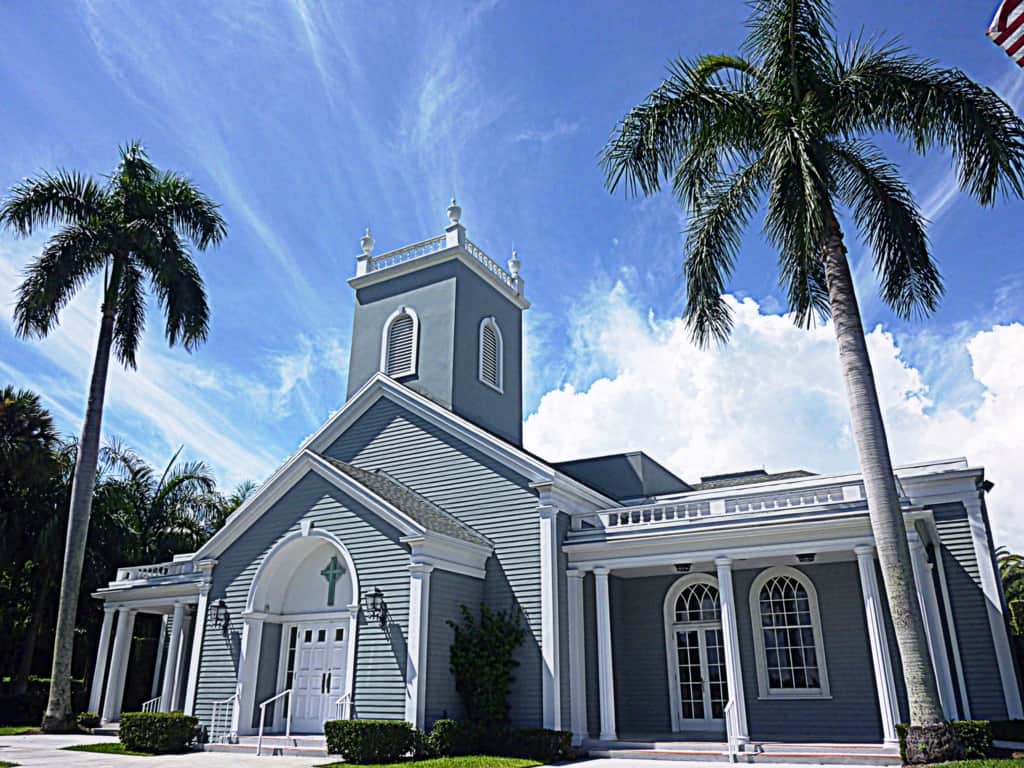
    The non-denominational Royal Poinciana Chapel on Cocoanut Row is picture perfect. Opened in 1876, this historic Palm Beach landmark occupies a lot donated by Henry Flagler.

    No matter your interest or age, West Palm Beach is bound to have something fun for everyone!

    11.Henry Morrison Flagler Museum

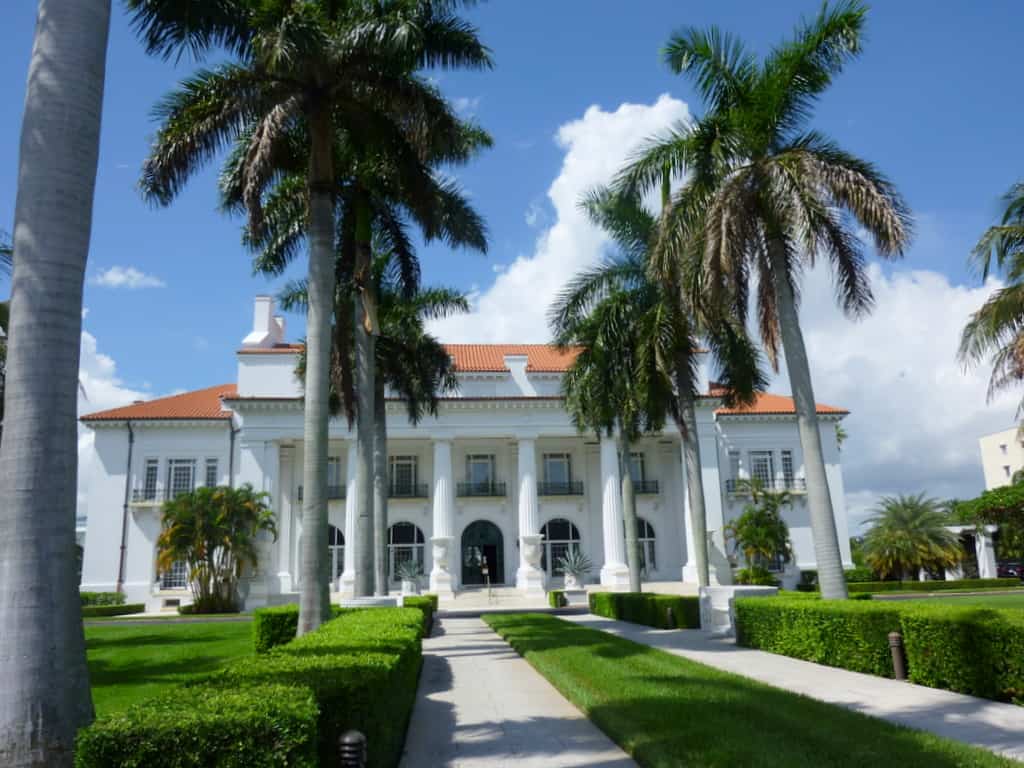
    The Flagler Museum in Palm Beach, Florida is an amazing historical landmark that showcases the history and luxury of the Gilded Age. This South Florida landmark was created by Henry Flagler as a wedding present for his third wife and completed in 1902.
    The interiors are really impressive, and it is also a National Historic Landmark, well worth a visit. Not only does the museum have a prime location overlooking the Atlantic Ocean, but it also contains many fascinating exhibits about Henry Morrison Flagler, who was one of the founding fathers of Palm Beach and his family.

    Visitors to this grand estate can explore all floors with their original furnishings from when it was first constructed and learn about Flagler’s business feats as well as what life was like during that era.

    12.The Breakers Hotel, Palm Beach

    The Breakers Palm Beach is our next port of call. It’s another historic hotel resort, in fact you can even take a guided tour if you’re not staying there.
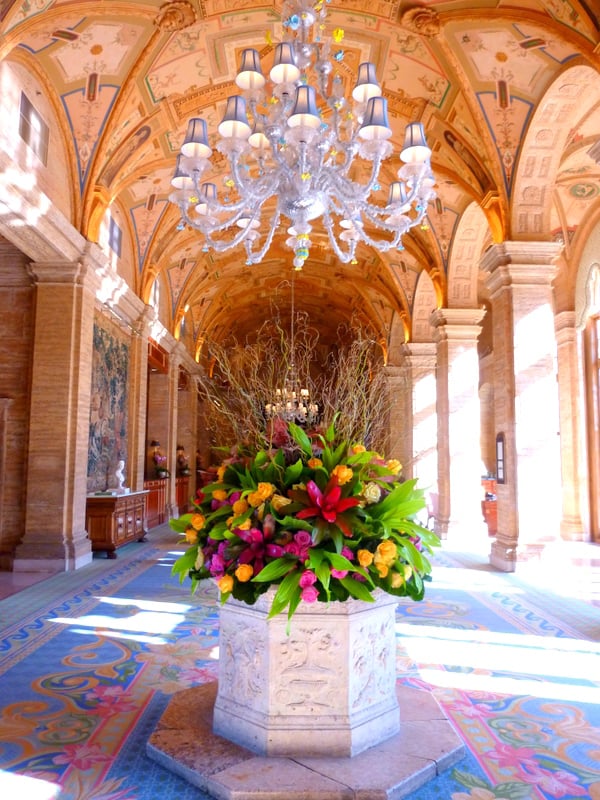
    Decorated in an Italian Renaissance style, The Breakers was the brainchild of oil and railroad magnate Henry Flagler. In 1896, Flagler built a hotel called The Palm Beach Inn and guests started to request rooms “over by the breakers.” When Flagler redoubled the hotel’s size, he renamed it The Breakers.
    This elegant hotel quickly became popular with the Rockefellers, Vanderbilts, Astors and J.P. Morgan. It’s been beautifully modernised and the swimming pool is a great place to take in the sunset.

    13.Fort Lauderdale

    Fort Lauderdale offers plenty of activities to keep visitors entertained. From experiencing the natural beauty of the beaches, to exploring local attractions, there is something for everyone in this South Florida city.

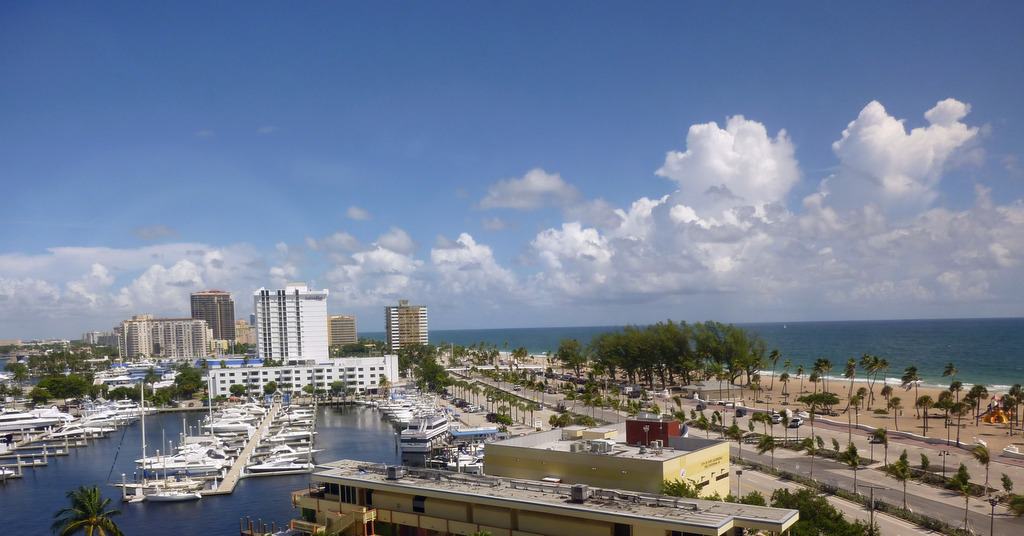
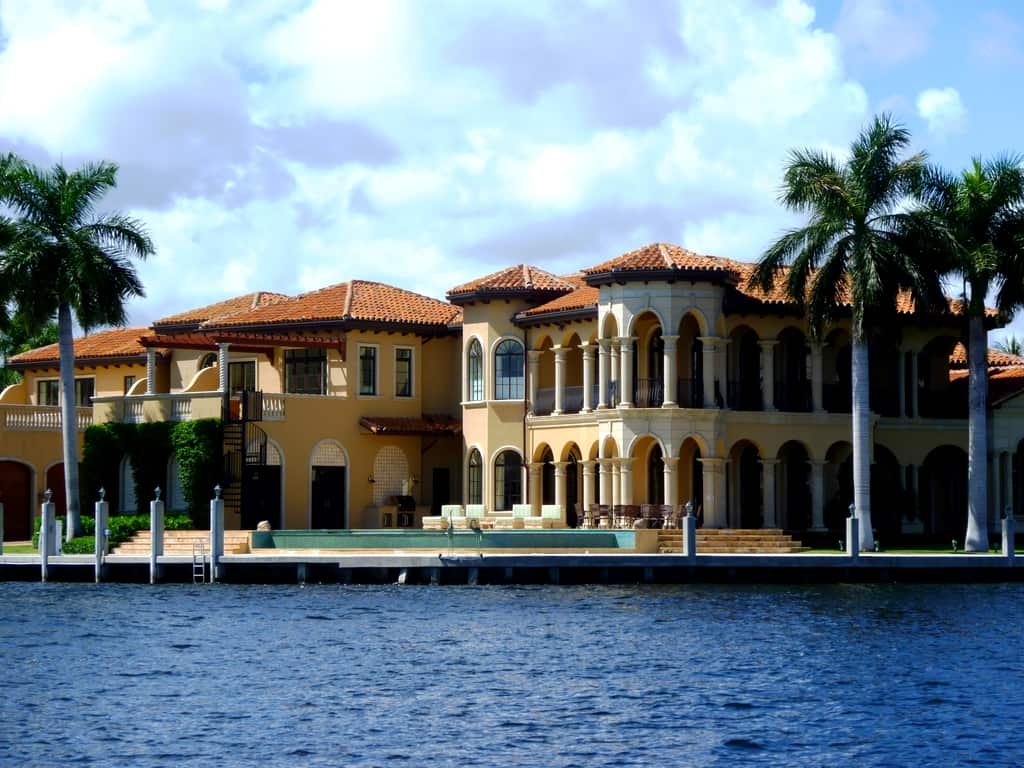
    Visitors can take a boat tour of Millionaire’s Row and see some of the most expensive waterfront homes or they can hop on a water taxi or gondola and view the city from a unique perspective. The Atlantic Coast provides vast expanses of coastline that are perfect for sunbathing, surfing, windsurfing and swimming.
    For a bit of culture, there are art galleries, museums and cultural centers offering exhibits about Fort Lauderdale’s past. Shopping enthusiasts will enjoy discovering art and clothing boutiques along Las Olas Boulevard.

    Foodies should make time to sample delicious local cuisine from seafood restaurants scattered throughout the city.

    The canalside houses are quite something. In fact, Fort Lauderdale property is among the most expensive in Florida.

    The Wreck Bar at the B Ocean has porthole views through to the hotel’s swimming pool and was featured in a scene from Analyze This with Robert de Niro and Billy Crystal. It’s great fun to have a drink in the Wreck Bar and to see someone swim past!

    Final Thoughts on Things to Do in Florida Besides Theme Parks

    Florida is a beautiful state with plenty to offer beyond world-famous theme parks.

    From natural wonders to small-town charm, there’s something for everyone in the Sunshine State.

  • The 12 Best Restaurants in Sarasota County In 2024

    The 12 Best Restaurants in Sarasota County In 2024

    Sarasota County is blessed with some fantastic dining options, from steakhouses to fresh seafood and salads. Whether in Downtown Sarasota, Siesta Key, St Armand’s Circle, or Venice, Florida there are some wonderful places to eat. Here are some of the best restaurants in Sarasota that are a treat for your taste buds.

    The Best Restaurants in Sarasota County

    Sarasota County is spread over 725 miles, with 35 miles of coastline. Several of these popular restaurants have waterfront views. What they all have in common is consistently great food.

    The thriving culinary scene of Sarasota, Florida is something that all should experience. From traditional American and Italian-American cuisine to a variety of locally caught seafood dishes, everything you’d ever want food-wise can be found in this city.

    Additionally, if you wander around the downtown core or one of the many local markets, you’ll find something extra special – street food from all corners of the world! Tacos with exotic spices and flavors, crepes with delightful fillings – no matter what you’re looking for, it can be found here.

    The next time you’re in Sarasota, stop by some of these nice restaurants to enjoy their unbelievable creations.

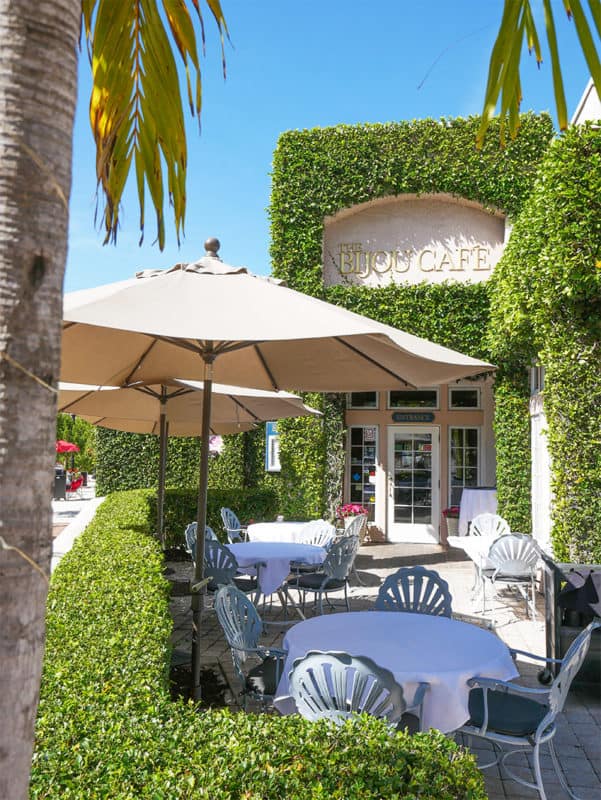
    12.Bijou Garden Cafe

    Since opening in 1986, Bijou Garden Cafe Sarasota has been wowing diners with its Continental-American food. Chef Jean-Pierre Knaggs and his wife Shay have received many accolades including the Open Table Diner’s Choice Award 2017.

    This popular Sarasota restaurant has an elegant feel with two courtyards for al fresco dining. There are also several dining rooms inside, giving Bijou Cafe an intimate ambiance.

    Try the shrimp and crab bisque soup or the pepper steak with a secret spicy sauce.

    1287 First Street, Sarasota

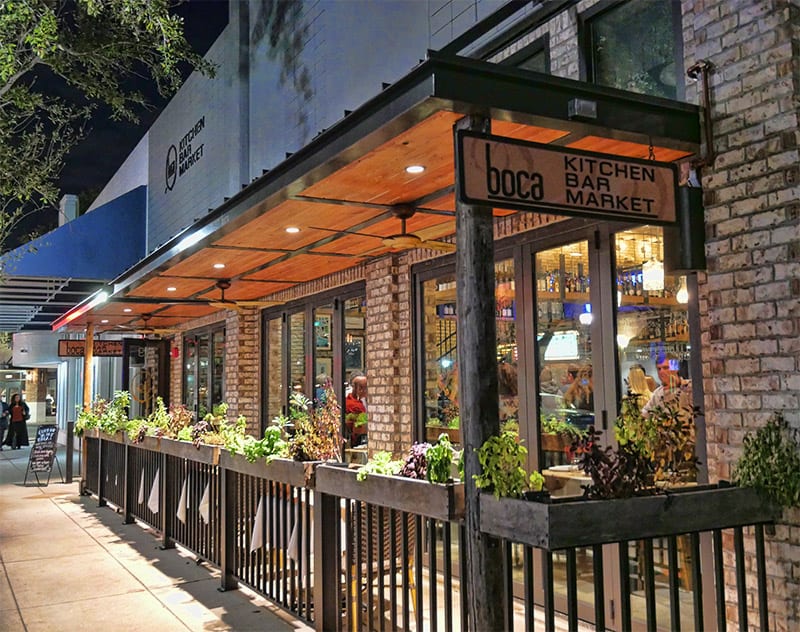
    11.Boca Kitchen Bar & Market

    A staple on the Sarasota dining scene, Boca is very popular for casual dining. This stylish restaurant focuses on farm to table dining and you can buy some of the local produce to take home. It’s also one of the best bars in Sarasota.

    Speaking of which, there are some great Sarasota farmers markets open weekly. All the ingredients at Boca are fresh and there are some great market specials like the Tecumseh Farms smoked cachaca chicken with brussels hash and crushed chimichurri.

    Much of the seating is communal in order to encourage a sense of community. This is a fun place to come with friends and enjoy their skirt steak, pork belly tacos and grouper piccata with mashed potatoes.

    There is another branch of Boca at 358 North Park Ave., Winter Park.

    19 S. Lemon Avenue, Sarasota

    10.Clasico Italian Chophouse

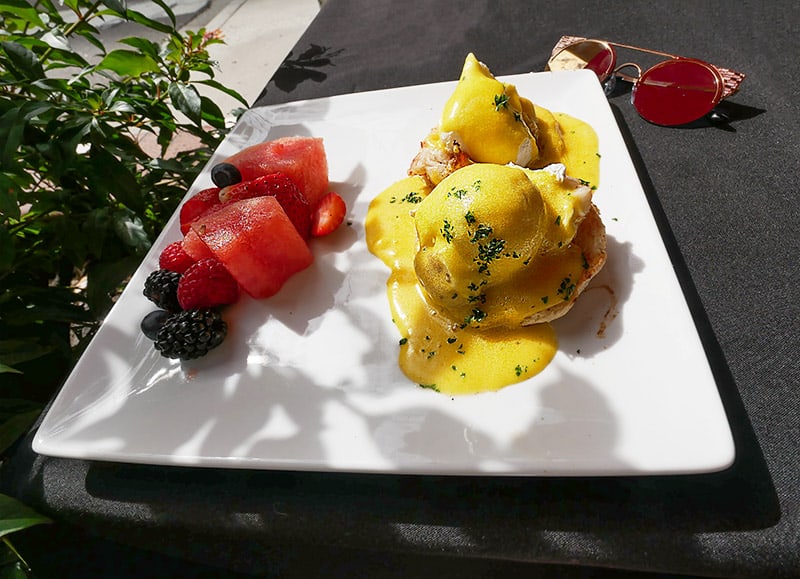
    One of the best places for drinks and contemporary Italian cuisine, Clasico Cafe Bar is an all day eatery with a lovely location on Main Street in Downtown Sarasota. Relax in the comfy outdoor seating and tuck into menu items such as lobster Benedict or Chef Guillaume’s beef Bourguignon, a family recipe.

    On several nights there’s live music, such as a one man Cuban band on Wednesdays, a DJ on Thursdays, Fridays and Saturdays and an open mic night on Sundays. Clasico Sarasota happy hour is Monday through Friday from 3 to 6 pm.

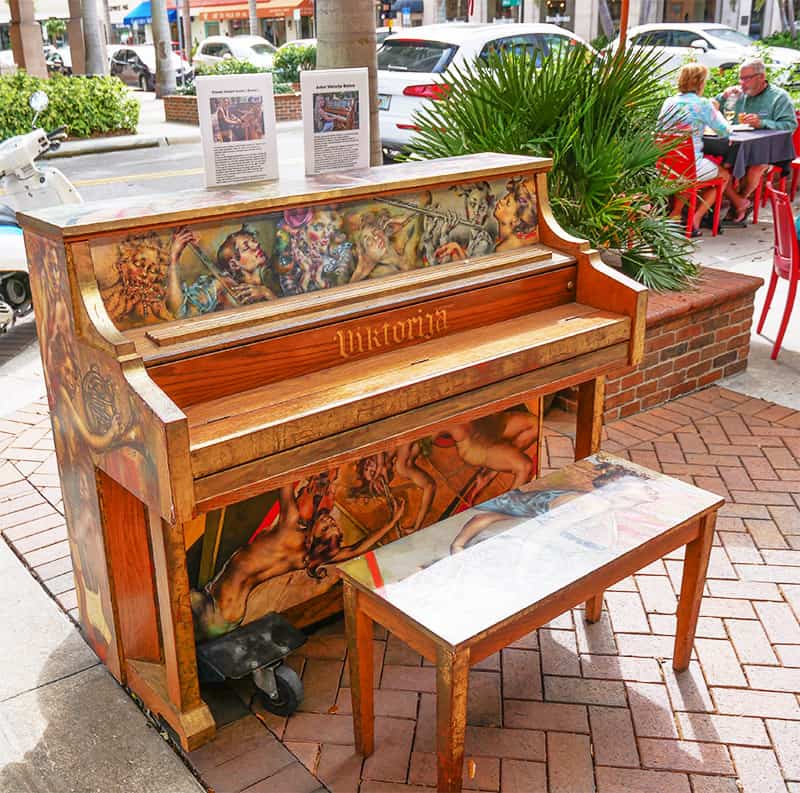
    Diners at this Italian restaurant can also try their hand at playing the piano decorated by artist Viktorija Bulava. One of several placed around the city by Sarasota Keys and the Arts and Cultural Alliance of Sarasota County, it became an internet sensation when a passerby filmed a homeless man, Donald Gould, playing it.

    Donald is a classically trained pianist and since starring in the YouTube video, he’s played the National Anthem for the San Francisco 49ers season opener and got a recording contract.

    1341 Main St., Sarasota

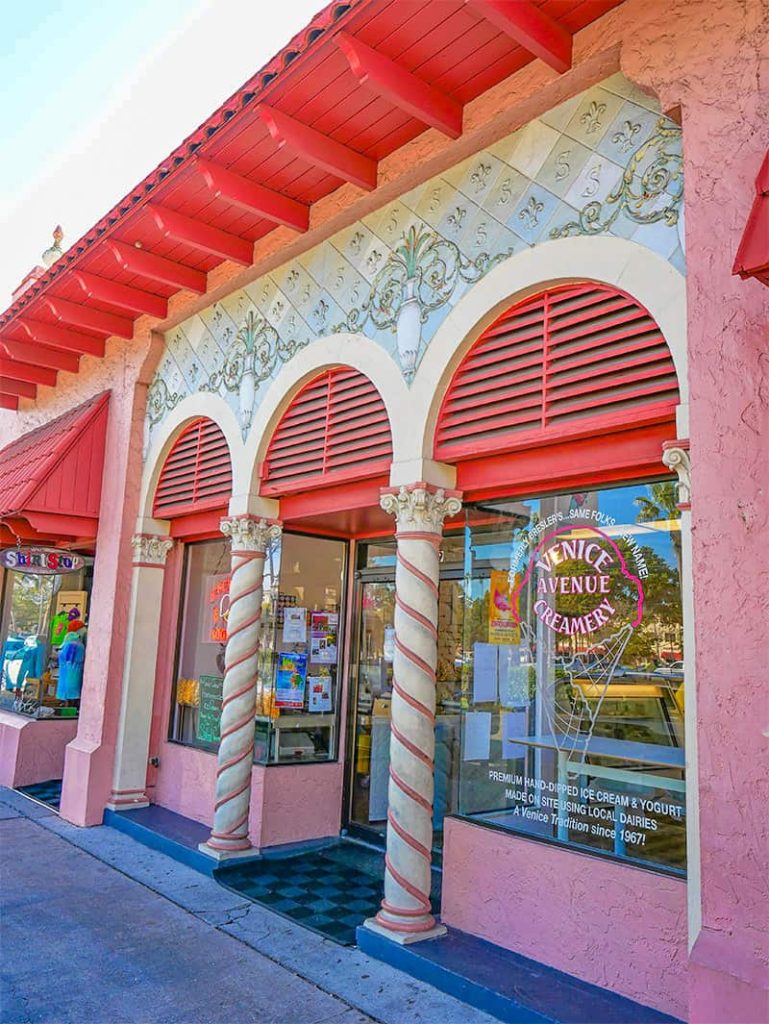
    9.Venice Avenue Creamery

    This historic ice cream store isn’t a restaurant per se but is somewhere you won’t want to miss if visiting Venice, Florida. Family-owned and operated since 1967, their friendly staff serve handmade ice-cream, sorbet, frozen yogurt and waffle cones.

    The Key Lime Pie yogurt, Cookie Monster and Chunky Salted caramel ice creams are worth writing home about ;-).

    249 W Venice Avenue, Venice

    8.Fins at Sharky’s

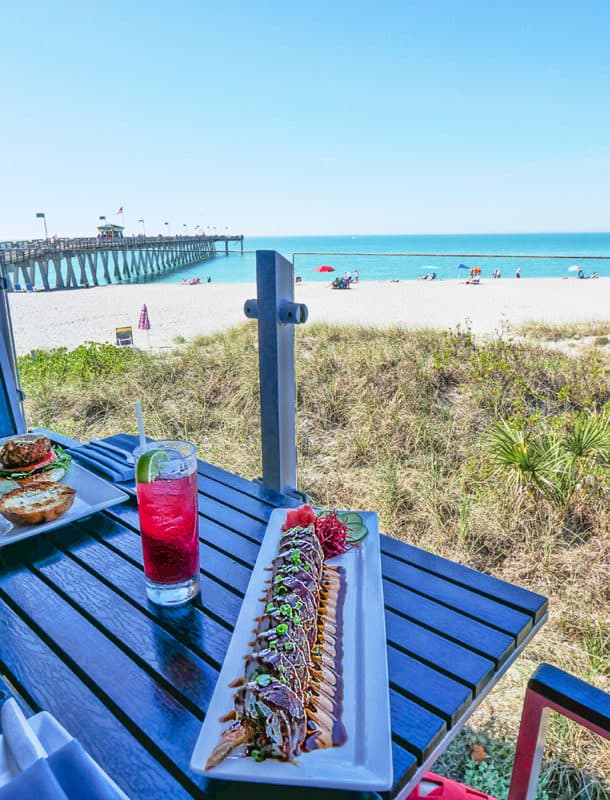
    Renowned as a “steakhouse with a serious seafood side”, Fins at Sharky’s has an incomparable location on the beach. With direct views of Venice Fishing Pier, it has a stylish coastal decor.

    There’s even a giant fin on the roof! Serving up fresh fish and seasonal ingredients from South Florida, they offer delicious salads, Gulf seafood, sushi and oysters.

    The Surf and Turf Sushi Roll is a real treat, with asparagus, Maine lobster, tempura shrimp and avocado topped with sweet soy sauce, sriracha mayo and a hoisin glaze.

    1600 Harbor Drive South, Venice

    7.Island Organics

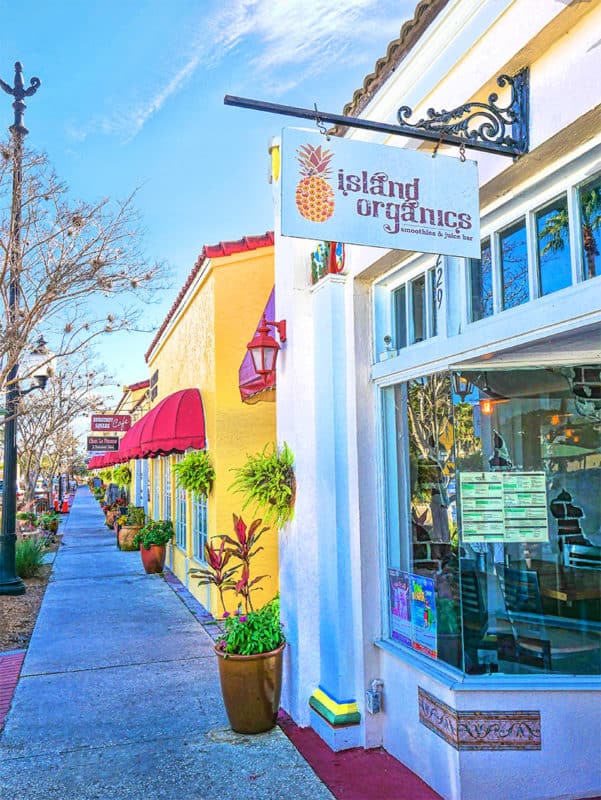
    Not strictly a restaurant but more of a cafe, Island Organics is nonetheless one of our favorite places for juices, smoothies and healthy food in Venice, Florida. Owner Alexa Dippolito spotted a gap in the market for juices made from organic fruit and vegetables and since opening in 2013, Island Organics has been popular for its healthy breakfast and lunch menu.

    There are options for gluten free, vegan and vegetarian diets.

    231 Miami Avenue W, Venice

    6.Jack Dusty

    The Ritz-Carlton Sarasota is known for its chic decor and impeccable service and its new restaurant, Jack Dusty, is one of the best restaurants in Downtown Sarasota. With a relaxed atmosphere, superb bayside views and a large outdoor terrace, this Sarasota hotspot is popular with locals and visitors alike for its fresh coastal cuisine.

    If you’re wondering who Jack Dusty was, it’s an 18th century term for a naval store clerk. Try a Sandy Bottom cocktail for sharing with a group, or a craft microbrew.

    One of their signature dishes is Sarasota Cioppino with gulf shrimp, grouper, bay scallops, clams and mussels in a tomato and orange peel broth. Ridley’s Porch Bar at The Beach Club is another popular Ritz-Carlton Sarasota eatery.

    1111 Ritz Carlton Drive, Sarasota

    5.Le Colonne Restaurant

    A family affair, Le Colonne Restaurant specializes in authentic Italian food. Their cosy dining room is located at St Armands Circle, a charming retail and dining destination.

    Their pizzas are prepared daily with a low-calorie dough and cooked in a wood-fired oven. The handmade pasta is also prepared fresh every day and is particularly tasty.

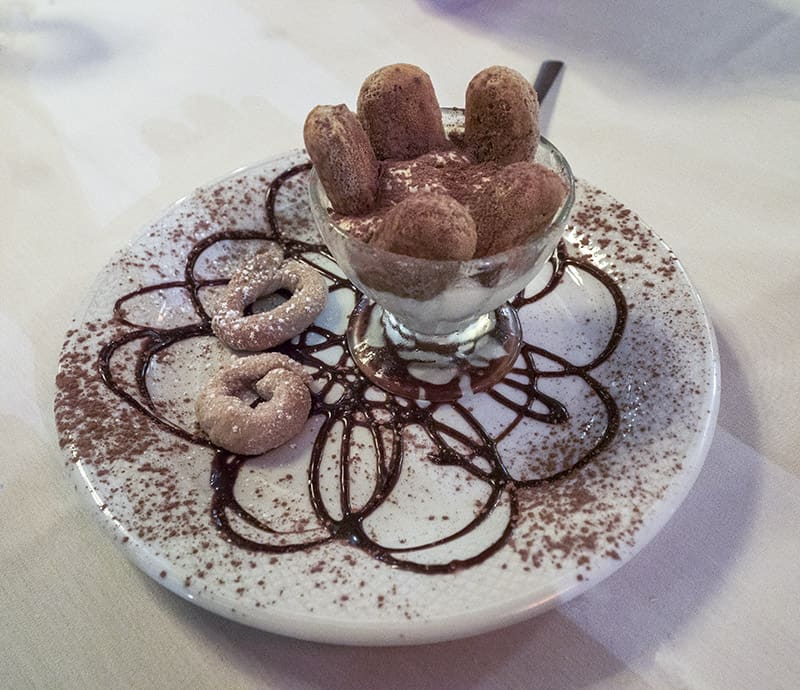
    Save some room for the traditional tiramisu, also homemade daily.

    2 S Boulevard of the Presidents, Sarasota

    4.Lido Key Tiki Bar

    For sundowners on the beach, Lido Key Tiki Bar is the place to come. This fun Sarasota bar is part of The Ritz-Carlton Residences but open to all.

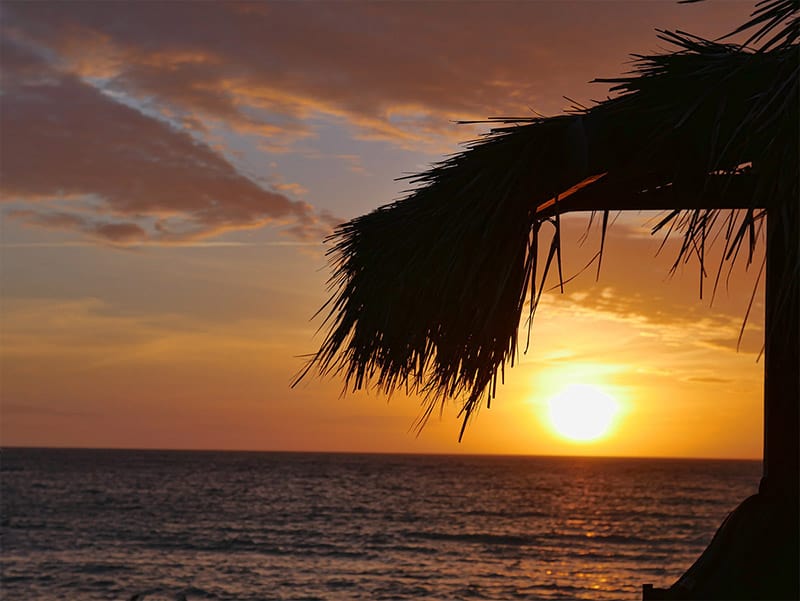
    The rustic, open-air beach bar is a great place to watch the sun set whilst sipping a Lido Key Mai Tai, a Margarita or an ice cold beer. One of the most popular tiki bars in Sarasota, its food menu offers handhelds like burgers, wraps and tacos, with ice-cream sandwiches for dessert.

    1234 Benjamin Franklin Drive, Sarasota

    3.Michael’s on East

    The only AAA Four Diamond Award restaurant in Sarasota, Michael’s on East is celebrating its 30th anniversary. Michael Klauber and his business partner Phil Mancini are founding members of the Eat Like a Local movement which gathers together locally owned restaurants sharing a passion for delicious food.

    He is also Co-Chair of Forks & Corks, a renowned Florida food and wine festival, held at The Ringling Museum in January each year. In addition to the award-winning restaurant, there’s a contemporary wine cellar which can be rented for private events.

    For larger events, there’s the Michael’s on East Ballroom in Midtown Plaza. Back at Michael’s on East, diners can enjoy healthy dishes such as chimichurri tenderloin, Southwestern mahi-mahi and butter-roasted flounder.

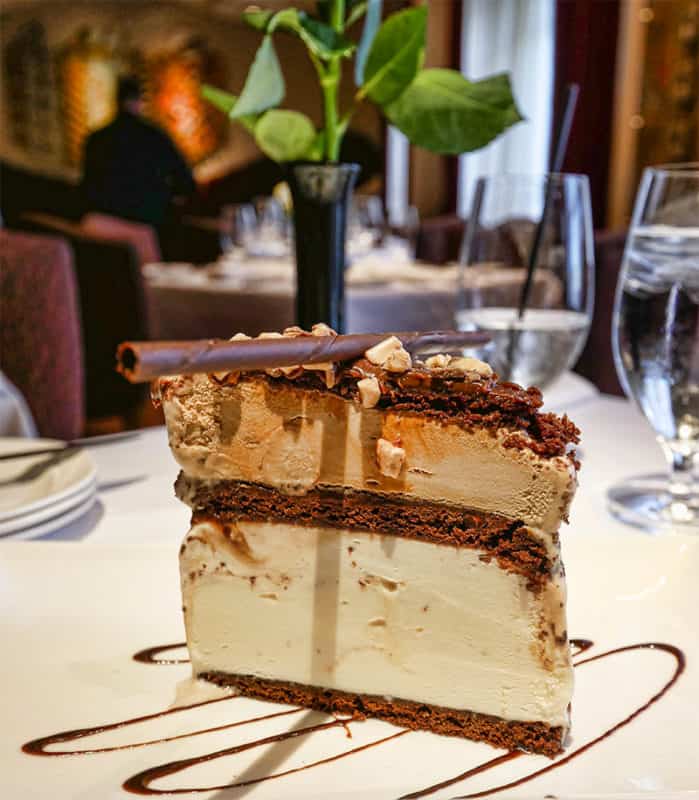
    The signature Chocolate Blackout Cake has layer upon layer of chocolate custard cake covered with chocolate Jimmies.

    1212 S. East Avenue, Sarasota

    2.Shore Restaurant

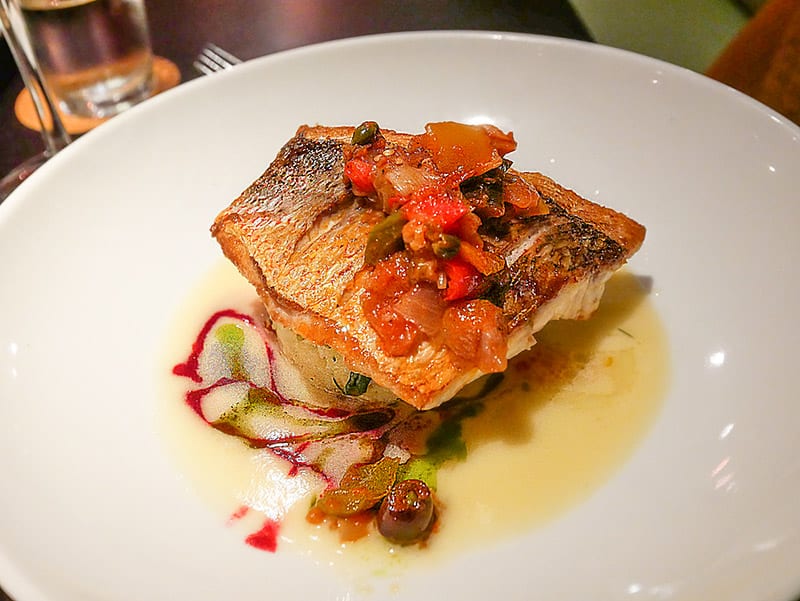
    Cool beach lifestyle store Shore also has an al-fresco eatery serving signature dishes such as St Louis Jenga pork ribs, Key West shrimp and scallop risotto and pan-fried red snapper with wilted spinach, arancini cake, caponata and citrus butter. Why not try the truffle fries with parmesan and chives on the side.

    Shore St. Armands Circle is a vibrant place by night, serving up handcrafted cocktails. This upscale restaurant is also popular for its brunch dishes like marinated steak and eggs.

    Shore Longboat Key on Broadway Street is another popular Sarasota dining destination for relaxed dining and beautiful views on the docks.

    465 John Ringling Boulevard #100, Sarasota

    1.Ophelia’s on the Bay

    Siesta Beach was voted Best Beach in North America 2020 in the TripAdvisor Traveler’s Choice Awards and Best Beach in America 2017 by Dr. Beach. After spending some time on the magnificent white sand beach, why not head to one of the great Siesta Key restaurants nearby, such as Siesta Key Oyster Bar.

    Another great option is Ophelia’s on the Bay, one of the best restaurants in Siesta Key, with a magical setting on the waterfront. It’s an elegant place with a bayside patio and floor-to-ceiling windows and a hit since opening in 1988.

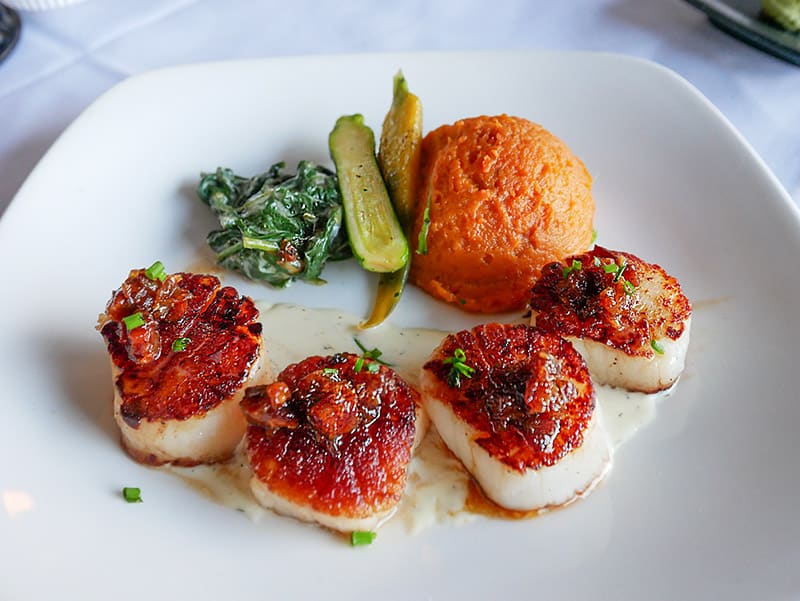
    Executive chef Daniel Olson has created a great tasting menu with fine dining dishes such as New England diver scallops with beurre noisette, bacon jam, sweet potato purée and smokey dill scented Champagne beurre blanc. Service is really friendly and if you’re lucky you may spot blue herons and dolphins from your patio table.

    9105 Midnight Pass Road, Sarasota

    In Conclusion: The Best Restaurants in Sarasota County

    Sarasota County is a great place to find good food. With so many different types of restaurants, there is something for everyone. Whether you are looking for a casual meal or a fine dining experience, Sarasota County has it all. Be sure to check out our other travel articles for more information on the best places to eat in the area.

    These are the best restaurants in Sarasota that we’ve personally tried. Many of you also suggested your favorite restaurant in Sarasota, including Duval’s, Indigenous, Selva Grill, Owen’s Fish Camp, First Watch and Antoine’s on Tuttle Avenue. They are all great tips for where to eat in Sarasota.

  • Best Natural Hot Springs in the US | 12 Rejuvenating Pools

    Best Natural Hot Springs in the US | 12 Rejuvenating Pools

    Relax and unwind, rejuvenate your mind, body, and soul, while frolicking in mineral-rich waters in one of these natural thermal pools sprinkled across the United States. From Wilbur Hot Springs in Northern California to the network of bubbling waters at Hot Springs, Arkansas, you’re in for a treat.

    Across the US, you can easily find hot springs that fit every travel preference, whether you’re looking to take a dip in nature after a tiresome hike or prefer a private hot tub room for a spa-like experience. This list of hot springs is ideal for planning a relaxing vacation.

    So, if this sounds delightful to you, let’s read on and take a look at the best natural hot springs the USA has to offer.

    Psst…If you have an interest in natural cascades and other breathtaking water sources to dip into, take a look at this list of the most beautiful waterfalls you won’t want to miss.

    Top Natural Hot Springs In the US For a Relaxing Soak

    Mother Nature spoils us with a clean supply of steamy water that bubbles up and gives us divine temperatures. Now, let’s take a dive into the best natural hot springs around the USA.

    1.Glenwood Hot Springs Resort, Colorado

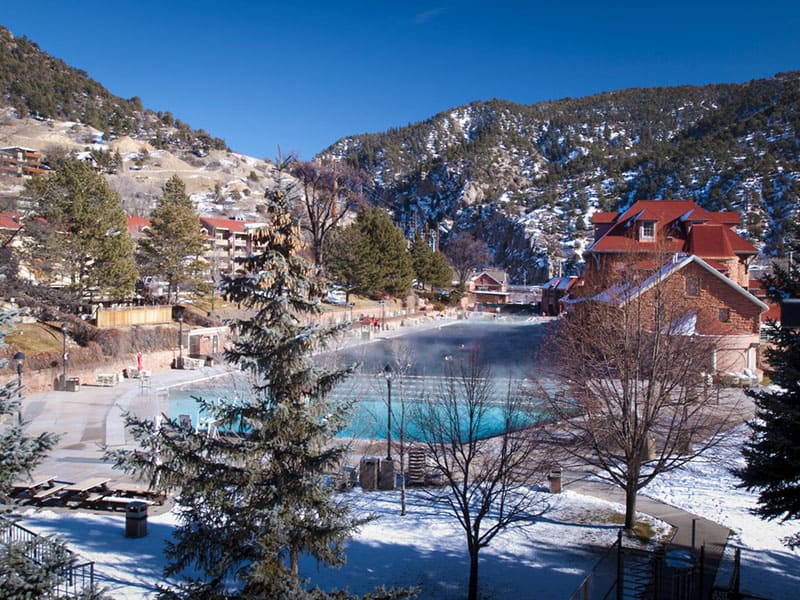
    Nestled between the luxurious ski resorts of Aspen and Vail in Colorado, Glenwood Hot Springs claims the title as the world’s largest hot springs pool. And the Glenwood Resort got its claim to fame for holding these wold famous hot springs.

      The soothing mineral waters of the pools are sourced from the nearby Glenwood springs, but there are also luxury spa treatments and other rejuvenating therapies available at the resort. And with lakes, canyons, and mountains surrounding the area, there are plenty of activities to excite all kinds of travelers.

      Picture cutting down the ski slopes in the wintertime before dipping into some revitalizing, warm mineral waters thereafter – sounds delightful, right?

      Also in Glenwood, there are sixteen soaking pools and a family pool next to the Colorado River at Iron Mountain Hot Springs. And don’t miss one of the only natural geothermal steam baths in North America at Yampa Spa & Vapor Caves.

      2.Hot Springs National Park, Arkansas

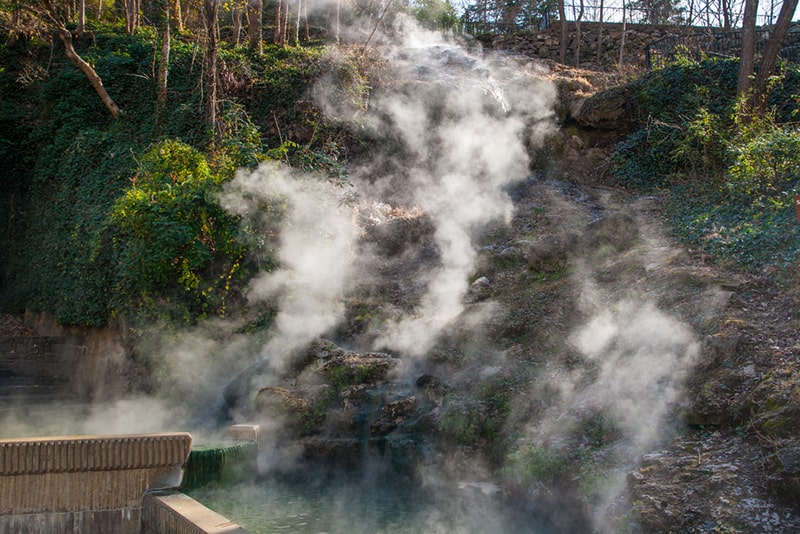
      The city of Hot Springs, Arkansas, is promptly named “Valley of the Vapors.” And with 47 natural hot springs that rise up through the vents in the streets and causing the town to fall under a geothermal fog, this name is deemed appropriate.

      All of the 47 hot springs are located within the Hot Springs National Park. Here you’ll find plenty of activities, from forested hikes and abundant trickling creeks to thermal waters.

      Visit Bathhouse Row or Quapaw Baths to soak in the geothermal waters or head to the Display Springs or Hot Water Cascades to see the bubbling pools in their natural setting.

      3.Wilbur Hot Springs, California

      Located in Northern California, Wilbur Hot Springs is a naturally occurring hot spring nestled in a health sanctuary, retreat, and nature reserve in Williams. These thermal waters come from the ground near Bear Creek and boast cozy temperatures ranging between 140 to 152 °F.

      At Wilber, guests are able to enjoy a solar-powered health retreat with natural healing hot springs centered in the heart of the 1800-acre nature preserve. Enjoy hiking and biking on the many trails before taking a dip in the clothing-optional hot springs to relax.

      Due to the remote location of this hot spring resort, it’s essential to make a reservation.

      4.Sierra Hot Springs, California

      These natural hot springs are located around 40 minutes north of Truckee in the Sierra Nevada Mountains. For centuries, Native Americans have regarded this area as a sacred healing place, and today, it’s an 800-acre non-profit retreat and workshop center.

      At these California hot springs, visitors are provided with an array of clothing optional pools, including a large swimming pool, a hot pool inside a large geodesic dome, and several shallow pools dotted in the Aspen Forest. There are also seasonal hot tub rooms inside private places to relax and unwind.

      5.Hot Springs State Park, Wyoming

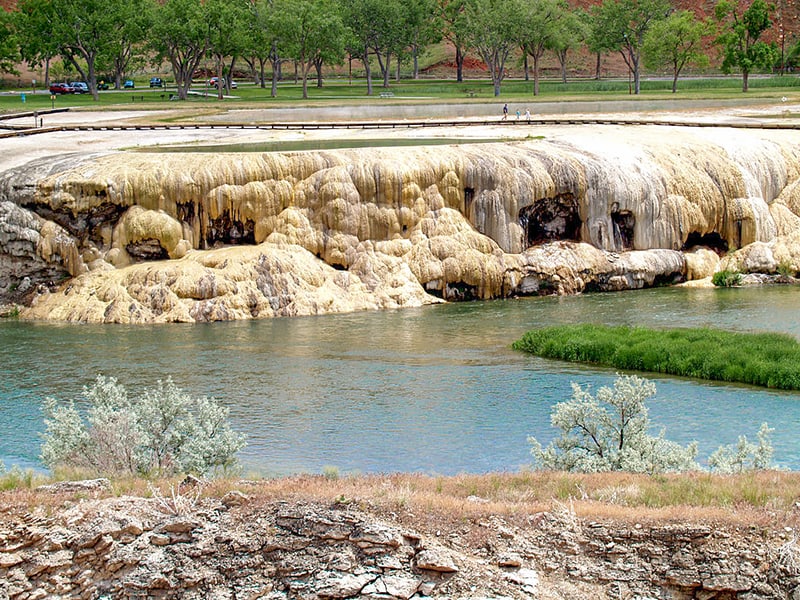
      Hot Springs State Park in Wyoming is a few hour’s drive away from the popular Yellowstone National Park. It’s nestled along the Big Horn River at Thermopolis, where hot springs flow at a constant temperature of around
      135 °F.

      The park features plenty of hiking trails and thermal pools surrounded by a beautiful landscape. There’s a free bathhouse with an indoor and outdoor pool fed by the surrounding mineral hot springs – ideal for a relaxing soak and for soothing your muscles after a vigorous hike in the park.

      Note: Keep a lookout for the bison herds that call the park home.

      6.Wild Willy’s Hot Springs, California

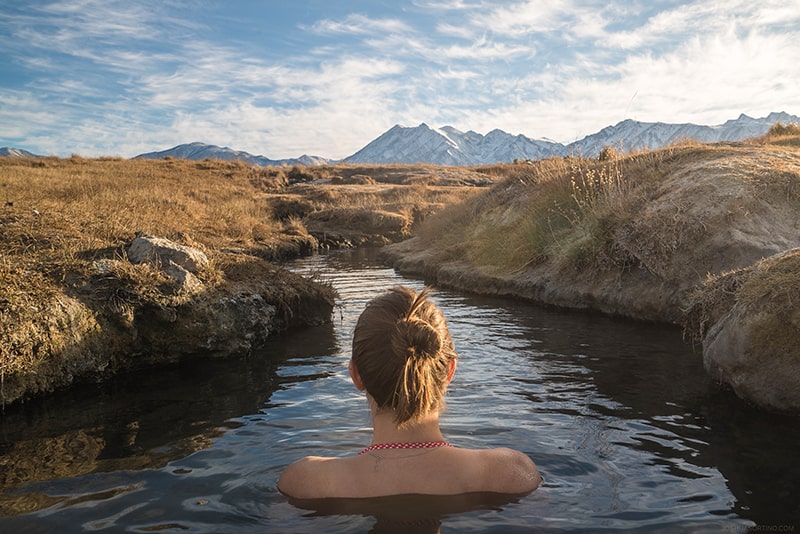
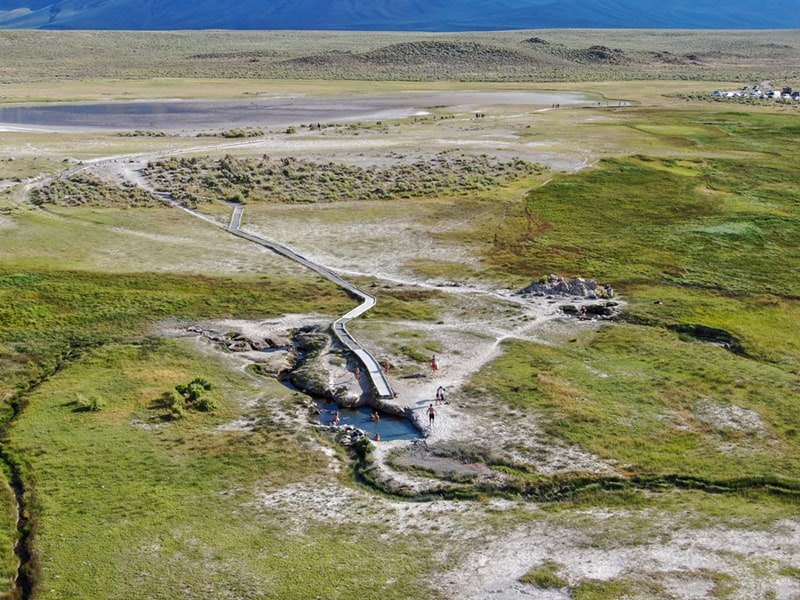
      Located south of Mammoth Lakes in Long Valley Caldera, Wild Willy’s Hot Springs boasts natural thermal waters that bubble up in the middle of a beautiful, unpopulated area. Visitors can leave their cars in the designated parking lot and take the elevated, wooden walkway for about 0.2 miles to reach the hot springs.

      The geothermal water temperatures range between 95 and 105°F, varying slightly each day. The larger pool is the main draw here; it’s deeper and can hold a handful of people comfortably. The smaller pool is shallower and can hold a maximum of two soakers.

      Take a dip in the hot springs and be spoiled with vast views of the grassy plains and the towering mountains as the backdrop.

      7.Valley View Hot Springs, Colorado

      Valley View Hot Springs is located around an hour’s drive north of Great Sand Dunes National Park in Colorado. The clothing-optional retreat welcomes visitors to a series of all-natural soaking ponds hugging an array of wilderness trails.

      The temperatures range from 93 to 107°F, depending on the season and which soaking pond you’ve chosen to dip in. The resort also features a hydroelectric-powered sauna, where you can frolic in a water-based therapy bath.

      Note: To preserve the delicate ecosystem, visitation is managed through a guest quota, so reservations are required.

      8.Deep Creek Hot Springs, California

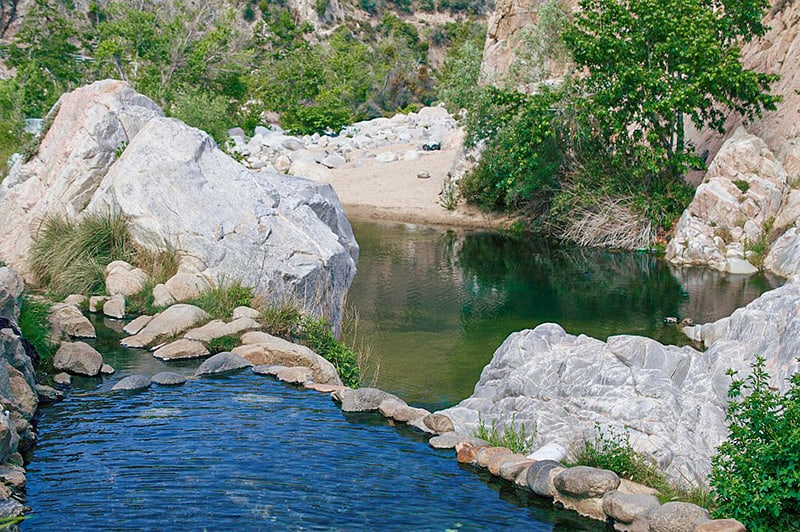
      Located hugging the northern Mojave Desert in the San Bernardino National Forest, Deep Creek Hot Springs offers soakers three large steamy hot pools. Here the waters vary in temperatures from 96 to 102°F.

      There are two entry points to access the hot springs. You can either take the 6-mile hike starting at Arrowhead Lake Road and head east along the Pacific Crest Trail. Alternatively, you can embark on a steeper hike along the Freedom Trail for two miles, starting at Bowen Ranch.

      Those that brave the hikes, either way, are rewarded with picturesque scenery of the rugged desert mountains and large natural soaking pools.

      Note: Deep Creek Hot Springs is a day-visit area only, so there’s no overnight camping permitted.

      9.Langford Hot Springs, Texas

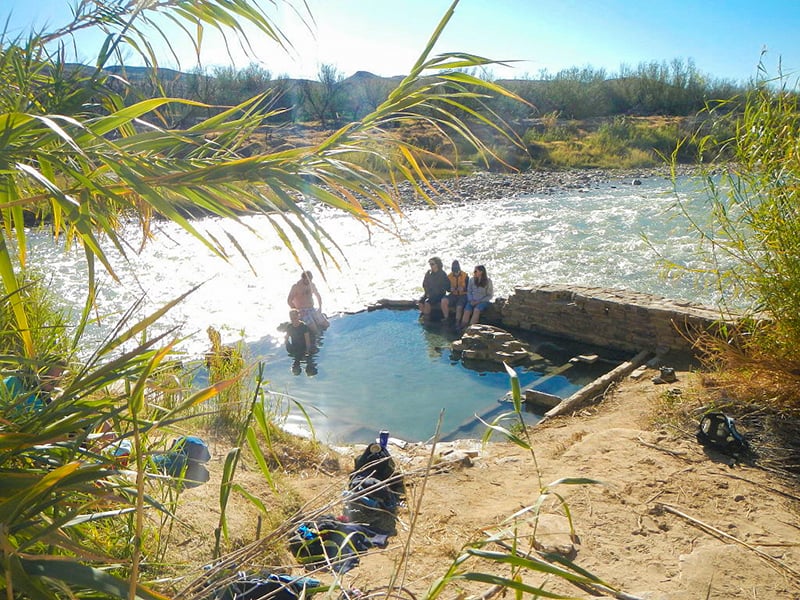
      Langford Hot Springs, also known as Boquillas or Big Bend, is located west of Rio Grande Village in the Big Bend National Park, 85 miles from Texas. It’s a short 0.5-mile round trip hike to get to these thermal springs nestled in the Rio Grande. Once you arrive, you’ll be spoiled with a primitive bathing experience, all while enjoying picturesque views of the surrounding area.

      These hot springs are considered fossilized waters that are heated by a geothermal process. The pools reach around 105°F and contain dissolved mineral salts with healing powers – cool right?

      Note: The road gets narrow and a little bumpy on the way, so be sure to come in a 4X4 wheel drive, high clearance vehicle.

      10.Yellowstone National Park

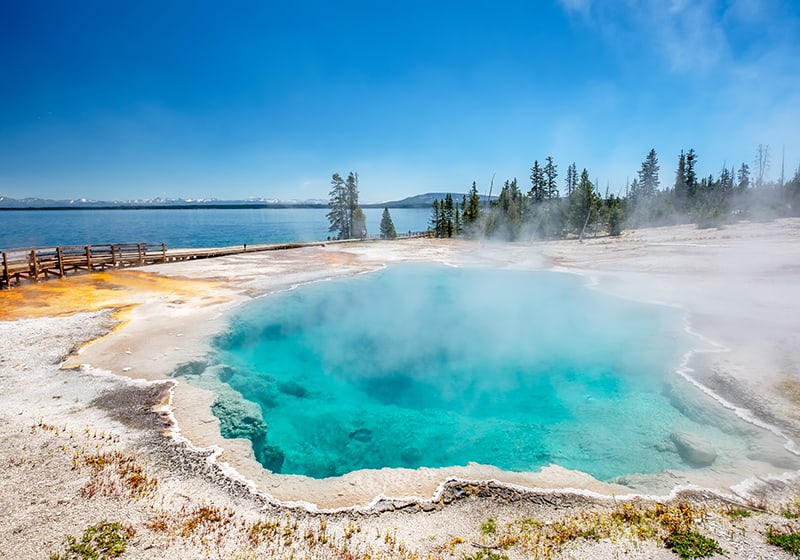
      It’s illegal to swim and soak in most areas of Yellowstone National Park. That’s because these natural hot springs are so hat that they can scald you.

      However, even though you cannot bathe there, the hot springs are still impressive to view. If you’re keen for a swim, there are two permitted areas within Yellowstone National Park:

      • The Boiling River Swim Area – be careful as the Gardner River current can be fast.
      • The Firehole Swim Area – usually only open from mid Summer. Swimming and wading are prohibited at Midway Geyser Basin and in the Upper Geyser Basin on Firehole River.

      Do not do as Pierce Brosnan allegedly did and leave the boardwalk at Mammoth Hot Springs, it is not allowed!

      A more relaxing option is to visit commercially run hot spring pools in Thermopolis. The following attractions are located within Hot Springs State Park Bath House:

      • Star Plunge – attractions include a steam cave, fountain waterfall and water jets.
      • TePee Pools and Spa – amenities include a water slide and indoor and outdoor hot tubs.

      11.Barton Springs Pool, Austin, Texas

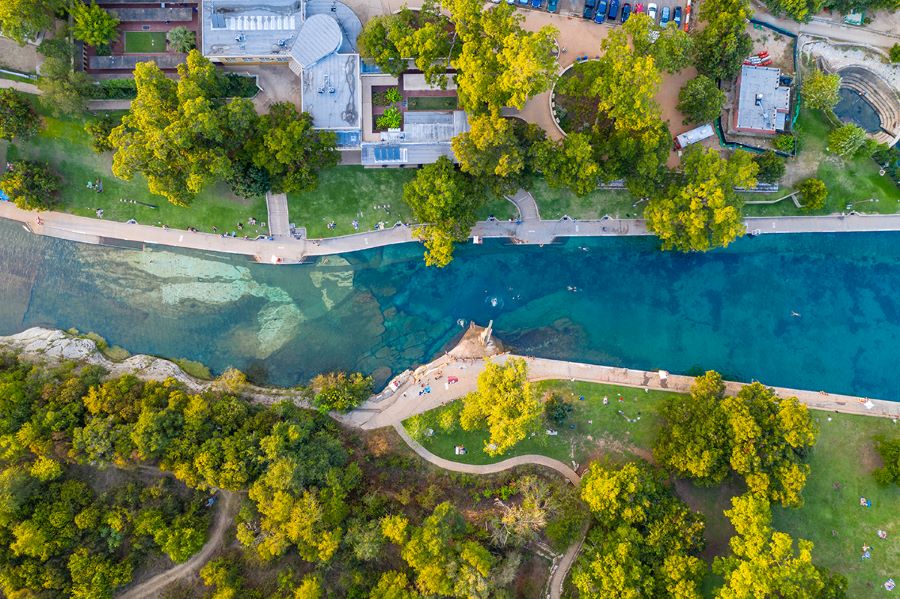
      Located amid the rolling hills of Zilker Park in Austin, Texas lies the sparkling spring-fed waters of Barton Springs Pool. This historic swimming hole has provided respite from the sweltering Texas heat since 1837.

      Fed by underground springs, the 68-70 degree water remains a constant, refreshing temperature year-round. Visitors delight in Barton Springs’ tranquil setting, where majestic old pecan trees provide shade and Spanish moss dances in the breeze.

      The pool stretches over three acres and ranges from just a few feet deep to over 18 feet. It’s a favorite spot for recreational swimmers, who glide through the clear water, as well as competitive swimmers, who utilize the pool for rigorous training. Robert Redford learned to swim here when he was 5 years old.

      Barton Springs attracts people of all ages – kids splashing on the shallow end, college students sunbathing on the lawn, and seniors swimming laps early in the morning. This natural oasis provides the perfect escape from the bustle of downtown Austin, inviting you to dive in and immerse yourself in its cool, restorative waters.

      12.Chena Hot Springs, Alaska

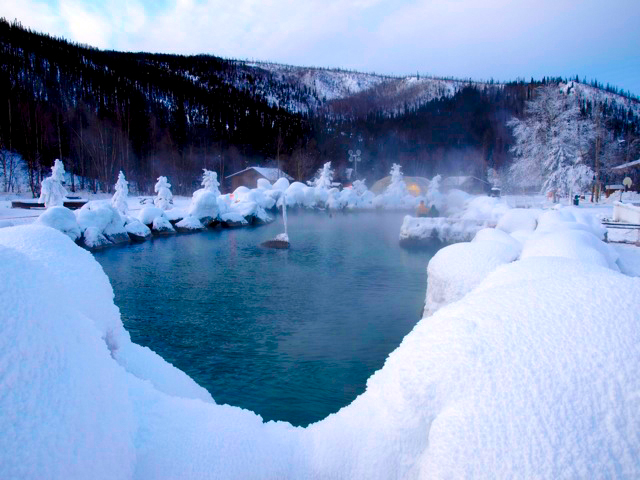
      In the remote wilderness of central Alaska, Chena Hot Springs is an oasis of geothermal wonder. These mineral springs produce waters heated deep underground to temperatures as high as 156 degrees Fahrenheit.

      As the hot water surfaces, it cools slightly before cascading into a series of steaming pools perfect for soaking. Snow-dusted evergreens surround the ethereal mist rising from the springs, where visitors soak away stress and tension.

      The area also features the Aurora Ice Museum, with world-class ice carvings and fantastical designs. Though off the beaten path 60 miles from Fairbanks, the scenic journey to Chena Springs rewards visitors with tranquility and renewed energy from a warm mineral soak amid Alaska’s pristine wilderness.

      A Footnote on the Best Natural Hot Springs in the USA

      No matter the time of year, natural hot springs pools offer a relaxing, and rejuvenating experience basked in geothermal waters surrounded by scenic settings.

      So, there you have it; the best hot springs in the USA. If you’ve been to any of these thermal waters or know of some other natural mineral pools that are absolute jewels to mention, please share; we’d love to know.

    1. 11 Luxurious Things to Do in Los Cabos, Mexico

      11 Luxurious Things to Do in Los Cabos, Mexico

      Los Cabos is a beautiful area located at the tip of Baja California Sur, Mexico. This region is well-known for its stunning beaches, incredible golf courses, and world-class resorts.

      However, there is much more to Los Cabos than just luxury hotels! In this article, we will discuss 11 fun things to do in Los Cabos that are perfect for visitors of all ages. Whether you are looking for an adventure or simply want to relax on the beach, Los Cabos has something for everyone!

      Where is Los Cabos?

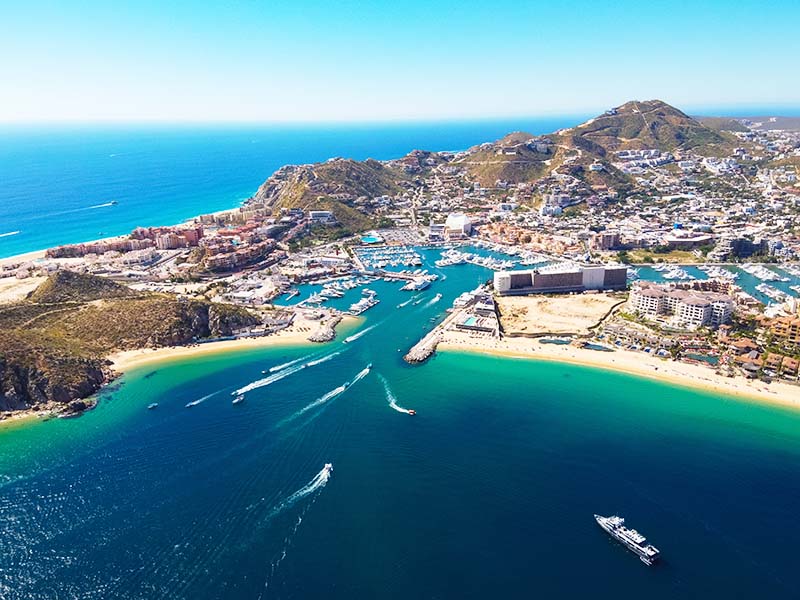
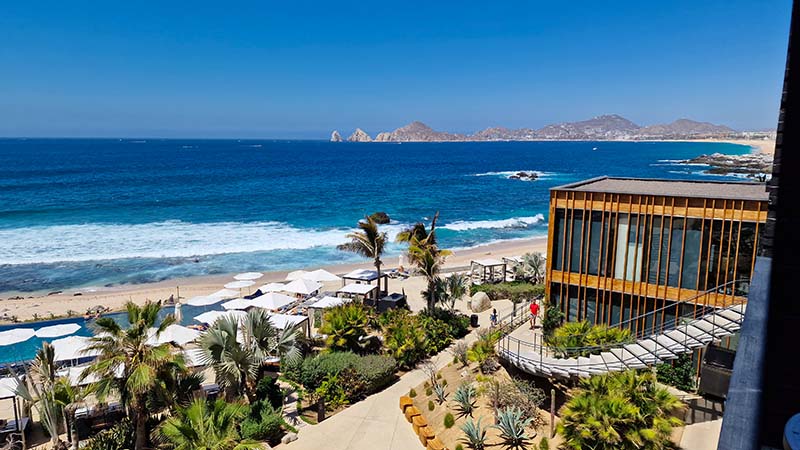
      Los Cabos is a municipality located at the southern tip of the Baja California Peninsula, in the Mexican state of Baja California Sur. It includes the towns of Cabo San Lucas and San José del Cabo, as well as the Resort Corridor area along the Trans-peninsular Highway.

      Los Cabos is also home to a number of interesting historical and cultural attractions. The area was first settled by the native Cochimi people and later became a part of the Spanish Empire. The name Los Cabos means The Capes in Spanish.

      In the early 19th century, Los Cabos was frequented by pirates, who used the area as a base for their operations. Today, Los Cabos is a thriving area that’s popular with luxury travelers.

      Best Things to Do in Los Cabos

      There’s no shortage of things to do in Los Cabos. Here’s our pick of the best activities. Depending on the amount of time that you have available and your personal preference, you might choose to visit a couple or the whole list!

      1.Cabo San Lucas Marina

      Home to luxury yachts and lively restaurants and bars, the marina is a great place to people watch and enjoy the vibrant atmosphere. You’ll also find a number of boutiques in the Golden Zone shopping areas, selling souvenirs and local artisan products.

        In addition, the Cultural Pavilion holds regular dance and theater events. There are a number of charter companies offering fishing, snorkeling, and whale watching tours.

        2.San José del Cabo

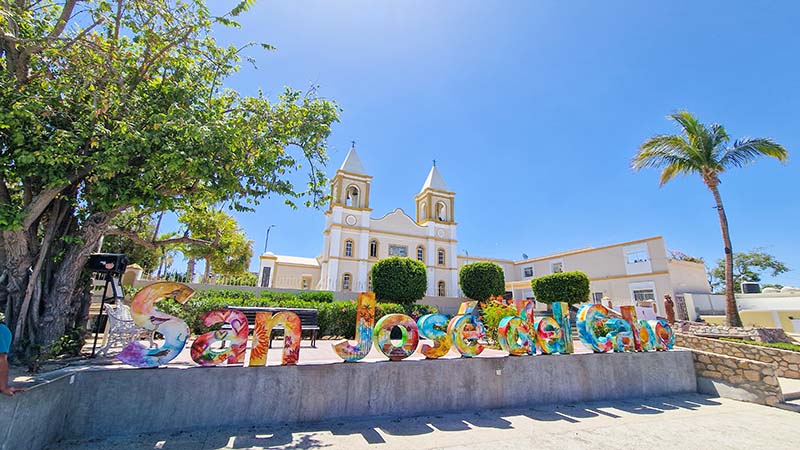
        One of the best things to do in Los Cabos is to explore the charming town of San José del Cabo. This quaint city features beautiful architecture, lively plazas, and a number of excellent restaurants.

        Visitors can also enjoy art galleries, museums, and shopping in San José del Cabo. Stroll through the cobbled streets, browse the colorful markets, and soak up the laid-back atmosphere of this charming place.

        Held every Thursday evening, the San Jose del Cabo Art Walk is a great opportunity to admire the work of local artists. San José missionary church is located in the old town on Plaza Mijares, and was reconstructed in 1940.

        San José del Cabo is also known for its sandy beaches such as Playita Beach and El Ganzo. Head to San José Estuary nature reserve to see herons, ibis and hummingbirds in their natural habitat.

        3.Beaches in Los Cabos

        Los Cabos is home to some of the best beaches in Mexico. Just be sure to check before swimming that they are safe as the currents can be strong in parts.

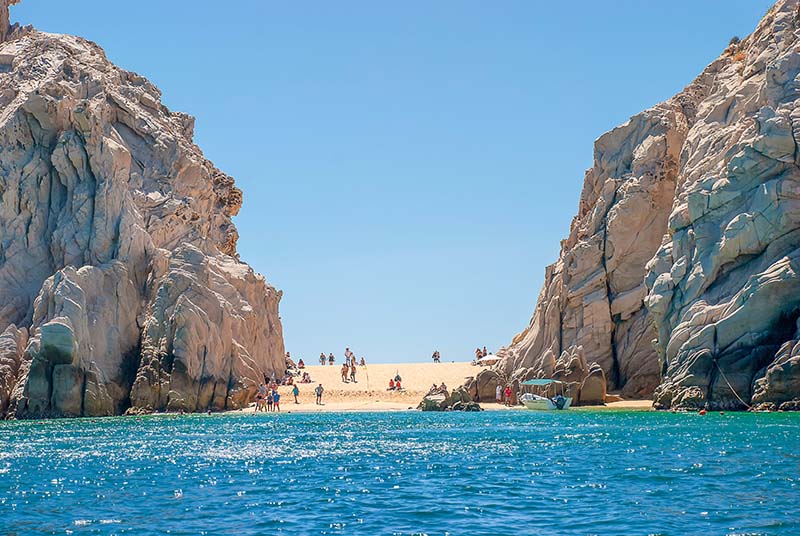
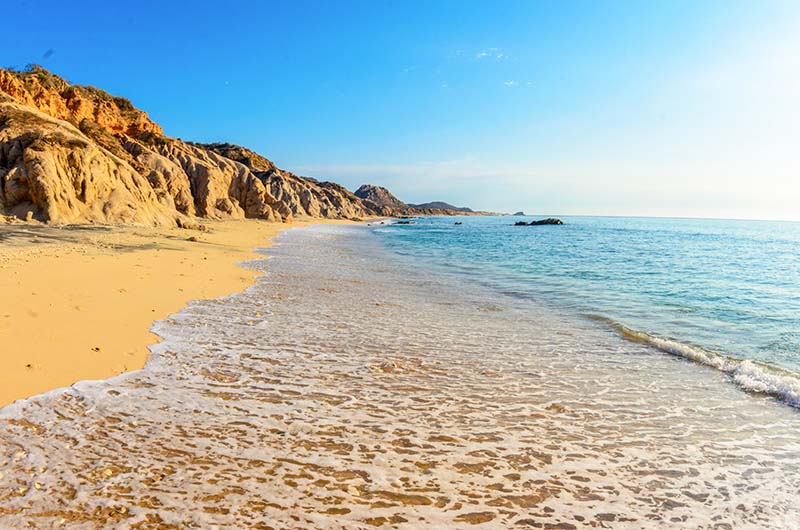
        Playa del Amor, also known as Lover’s Beach, is a secluded beach that can only be accessed by boat. Some say that it takes its name from the fact that two seas are brought together here: the Pacific Ocean and the Gulf of California.

        For those who want to experience Los Cabos’ nightlife, Medano Beach is the place to be. This beach is located in the heart of Cabo San Lucas and is full of bars, restaurants, and nightclubs. Visitors can also enjoy plenty of water sports such as jet skiing, parasailing, and deep-sea fishing.

        Divorce Beach is located just south of Cabo San Lucas, and is known for its dramatic cliffs and crashing waves. It’s not safe to swim here due to the strong currents.

        4.El Arco de Cabo San Lucas

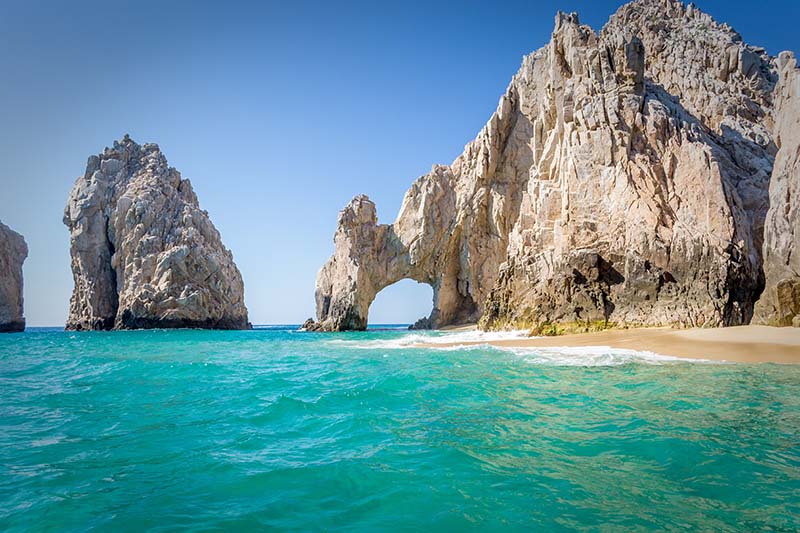
        Another great activity in Los Cabos is to take a boat tour to see the iconic El Arco rock formation. El Arco de Cabo San Lucas is one of Los Cabos’ most popular attractions.

        Located at the southern tip of the Baja Peninsula, El Arco is a natural arch formed by centuries of erosion. Also known as Land’s End, the famous landmark has become a symbol of Los Cabos.

        This natural wonder is the spot where the Sea of Cortez meets the Pacific Ocean. While the arch is beautiful to look at, it’s also a great place to go swimming, snorkeling, and kayaking.

        There are many tour operators in Los Cabos that offer trips to El Arco, and it’s an experience that you won’t want to miss. These tours typically include stops at nearby beaches and reefs, making them the perfect way to spend a day in Los Cabos.

        5.Los Cabos Golf Courses

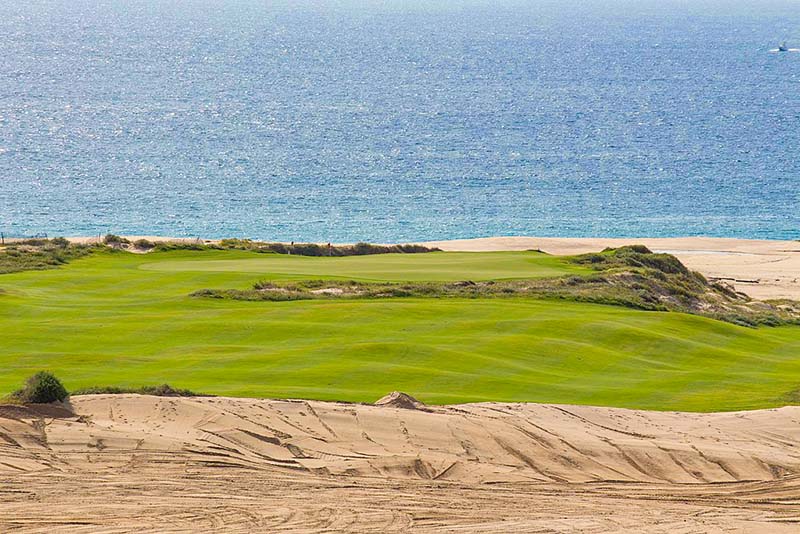
        Los Cabos is also known for its world-class golf courses that wind their way through desert landscapes and along the Sea of Cortez. Golf enthusiasts will be spoiled for choice with 18 different courses, including the Jack Nicklaus-designed Cove Club Course at Cabo del Sol and the spectacular Norman Course imagined by Greg Norman at Puerto Los Cabos.

        These courses offer stunning views, challenging hole designs, and impeccable conditions. Los Cabos is home to some of the most prestigious golf tournaments in the world, such as the the Cabo del Sol Pro-Am.

        For those who want to perfect their swing, there are several golf academies located in Los Cabos. Whether you’re a seasoned pro or a casual player, there’s a course for you in Los Cabos.

        6.Wildlife Activities in Los Cabos

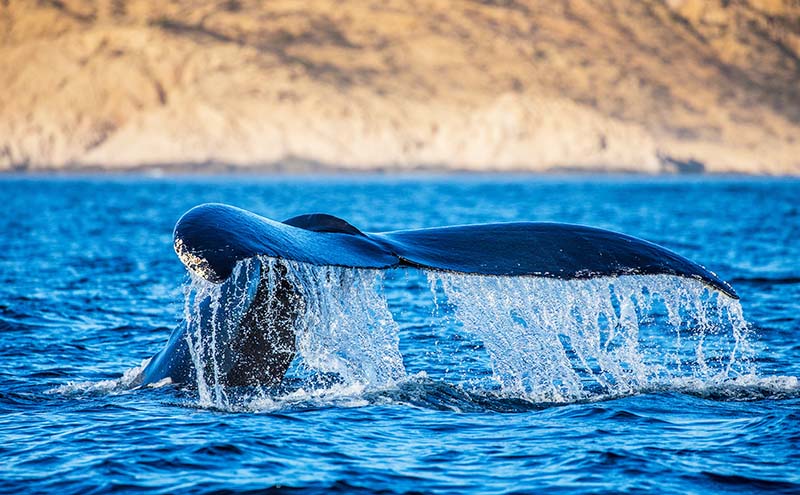
        Los Cabos is also a great place for wildlife lovers. You can spot egrets, cormorants, humpback whales, sea lions and dolphins at certain times of the year.

        For those who want to get up close and personal with marine life, Los Cabos is home to several whale watching tour operators. On land, you can find desert animals such as lizards and snakes, as well as a wide variety of bird species.

        As well as iconic species like the desert bighorn sheep, the area is also home to a number of lesser-known animals, such as the Baja California Tree Frog. These creatures play an important role in the local ecosystem, and their presence helps to keep Los Cabos biodiversity healthy.

        7.Sierra de la Laguna Mountain Range

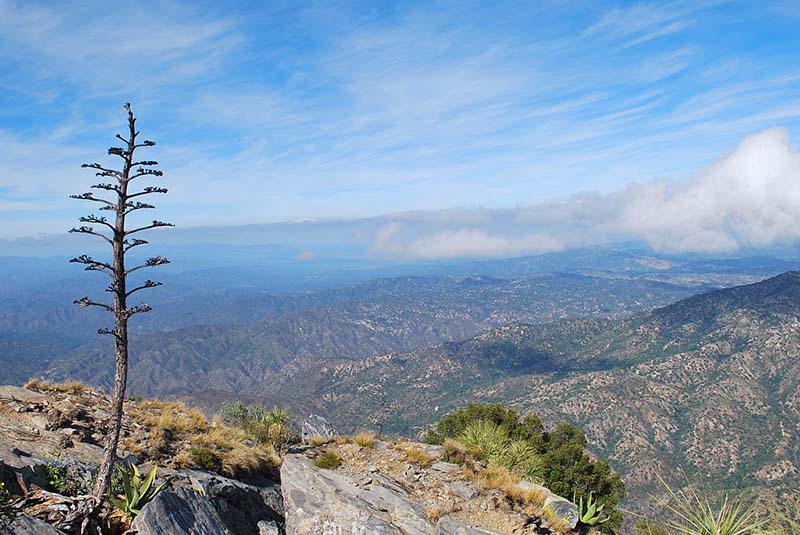
        Los Cabos is home to some of the best hiking in Mexico. The Sierra de la Laguna Mountains are a stunning natural backdrop for hiking, biking, and bird watching.

        The mountains are home to a variety of wildlife, including golden eagles, mountain lions, and mule deer. With its dramatic landscapes and abundance of activities, the Sierra de la Laguna Biosphere is one of Los Cabos’ best-kept secrets.

        They offer trails of varying difficulty, meaning there is something for everyone. And, at the end of a long day of hiking, you can relax in one of the many hot springs that dot the mountainside. Hiking in Los Cabos is an experience you won’t want to miss!

        8.Cabo Pulmo National Park

        One of the best things to do in Los Cabos is to visit Cabo Pulmo National Marine Park. Located on the east coast of the Baja Peninsula, it is home to the largest coral reef in the Gulf of California.

          Visitors can go snorkelling or scuba diving in the clear waters at Cabo Pulmo Beach, and see a variety of fish, turtles, and other marine life. The park also offers hiking and bird watching opportunities, making it the perfect place to enjoy the natural beauty of Los Cabos.

          Thanks to its natural beauty, this UNESCO World Heritage Centre is one of Cabo’s most popular tourist destinations.

          9.Gastronomic Experience at Tamarindos

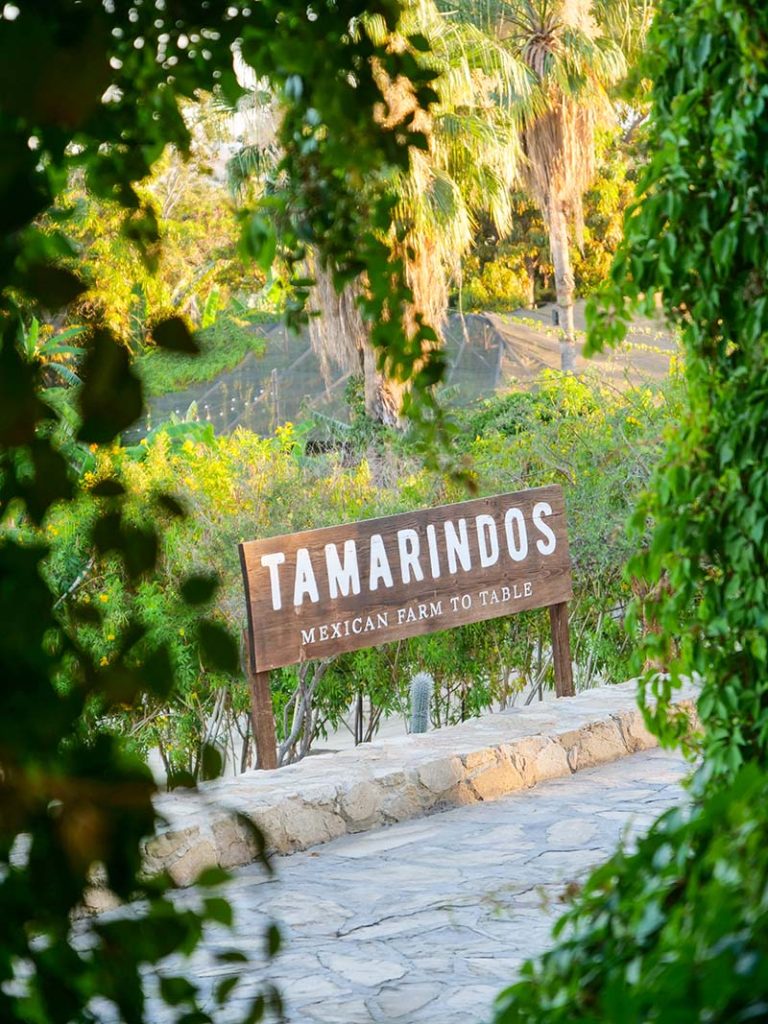
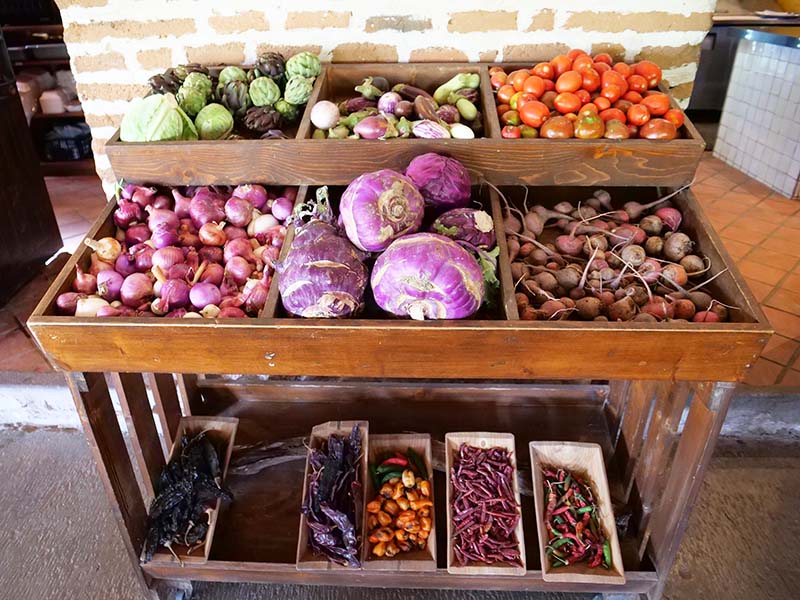
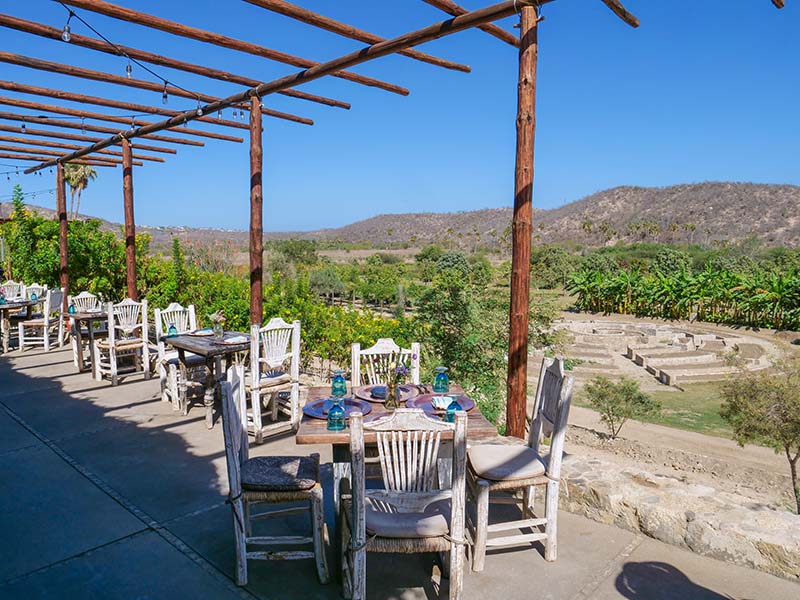
          Tamarindos is a cookery school and farm-to-table restaurant in San Jose del Cabo that offers an array of fresh, locally-sourced dishes. The restaurant is located in a beautiful setting with an outdoor patio that overlooks the farm.

          Tamarindos is committed to using only the freshest ingredients, and they source their produce from their own farm wherever possible. The menu features traditional Mexican dishes that have been updated with a modern twist. In addition to their seasonal menu, Los Tamarindos also offers cooking classes, farm tours, and a variety of other events.

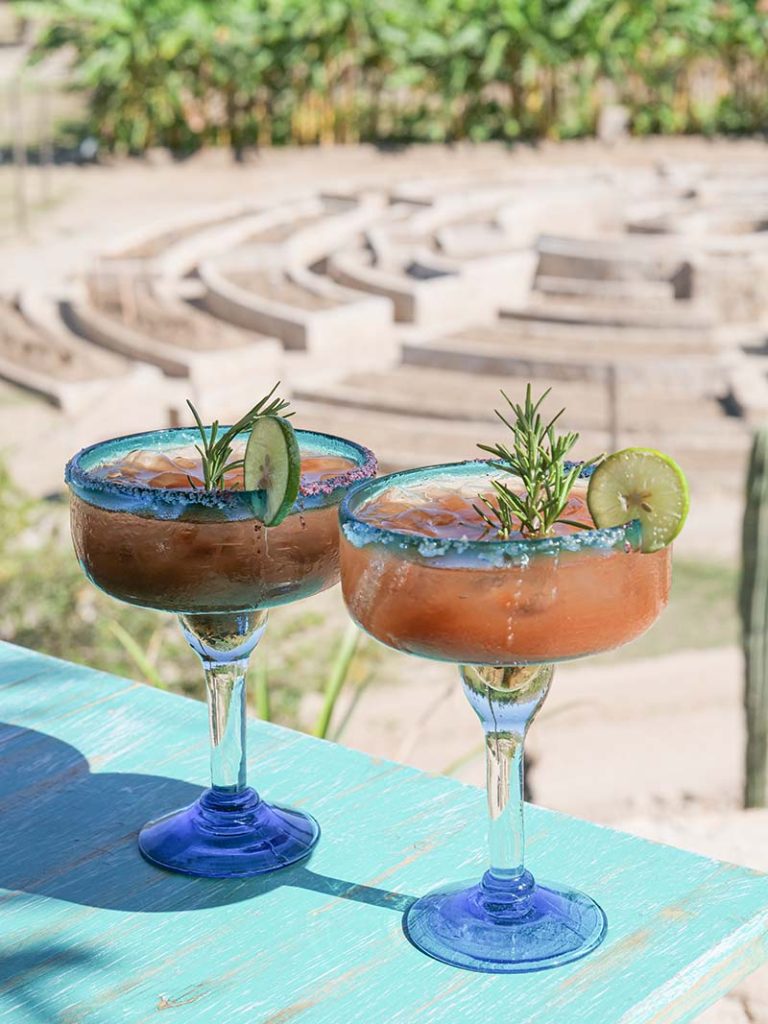
          Whether you’re looking for a delicious meal or a fun activity, Tamarindos is the perfect place to experience the best of Los Cabos. We enjoyed a welcome cocktail before heading on a tour of the farm, then helping to prepare some dishes like guacamole before sitting down to a delicious dinner.

          10.Todos Santos

          This small town is located just north of the municipality and is known for its quaint shops and cafes. Todo Santos is also home to a number of art galleries, making it a great place to spend a day exploring the local culture.

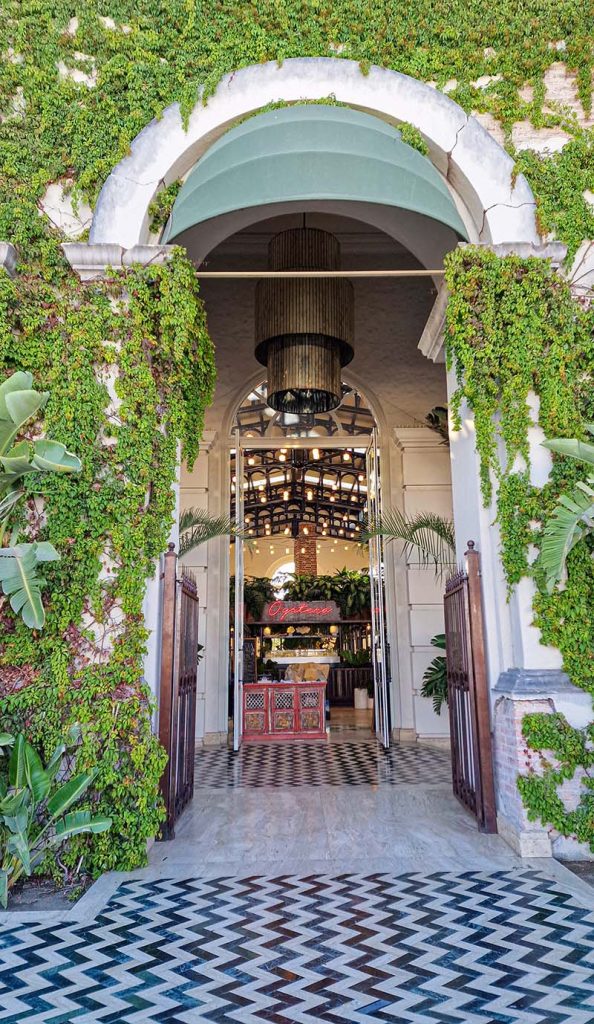
          Visitors to Todo Santos can enjoy a variety of activities, including exploring the historic center, shopping for handmade crafts, and sampling local cuisine. Oystera is a beautiful oyster bar and shopping gallery. You can also see the original Hotel California

          The town hosts a number of annual festivals, including the Tropic of Cancer Music Series in January and the Todos Santos Film Festival in November.

          Head to El Faro Beach Club & Spa for some rest and relaxation. The chef here is very talented and also cooks at El Mirador Oceanview Restaurant, which has panoramic coastal views.

          11.Take a Sunset Cruise

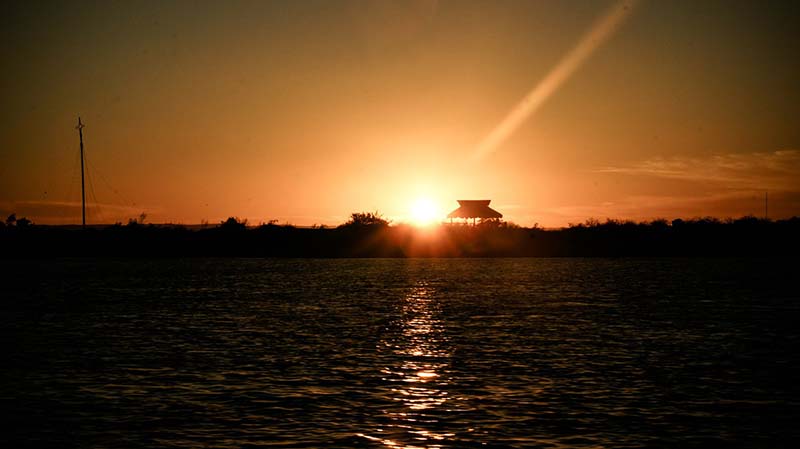
          Looking for something special to do on your Los Cabos vacation? Why not take a sunset cruise? Los Cabos is renowned for its stunning sunsets, and there’s no better way to experience them than on the water.

          Cruises typically last around two to three hours and include dinner and drinks. You’ll get to watch the sun dip below the horizon while enjoying the cool ocean breeze.

          And of course, you’ll have plenty of opportunities to take some amazing photos. So if you’re looking for a truly memorable experience, be sure to add a Los Cabos sunset cruise to your list of things to do.

          How to Get to Los Cabos

          Los Cabos is a beautiful vacation destination that is easily reached by plane. If you’re flying, Los Cabos International Airport (also known as San José del Cabo Airport or SJD) is located just a few miles from the city center.

          Several airlines offer direct flights from major U.S. cities. Aeromexico also has flights from Mexican cities. We took an Aeromexico business class flight (Clase Premier) from London Heathrow to Mexico City, visited the capital and then flew on to Los Cabos from there.

          The journey time between Ciudad de Mexico and San José del Cabo is just one hour and twenty minutes. The business class seats are extremely comfortable and you’re served snacks and a soft drink of your choice. Once you land, you can take a taxi or shuttle to your hotel.

          If you’re driving, Los Cabos is about a 22 hour drive from San Diego. There are several toll roads along the way, so be sure to have some pesos on hand.

          Getting Around Los Cabos

          We recommend hiring a car to get around Los Cabos, as public transportation is limited. We rented a Jeep Wrangler from Avis which we picked up in Los Cabos and returned to La Paz airport.

          They offer a wide variety of vehicles to choose from, so you can find the perfect one to suit your needs. We recommend hiring a SUV, so that you can explore the area’s many beaches and trails. You’ll have all the freedom you need to explore everything this stunning destination has to offer.

          And with Avis’s convenient online booking system, it’s easy to find the perfect car and get on the road in no time. So whether you’re visiting Los Cabos for business or pleasure, Avis is a great choice for car hire.

          Where to Stay in Los Cabos

          Los Cabos is home to some of the most beautiful resorts in Mexico. For those who are looking for luxury, Zadún, a Ritz-Carlton Reserve is the perfect choice. This resort offers stunning ocean views, delicious food at El Barrio and Humo as well as agave tastings at Candil bar. You can enjoy a fantastic massage at Alkemia Spa as well as a unique Savasana experience, before participating in a stargazing experience arranged by the resort’s Ambassadors of the Environment.

          The Cape, A Thompson Hotel is a stunning property located in the heart of Cabo San Lucas. The hotel boasts breathtaking views of the Sea of Cortez and features an infinity pool, a spa, and a rooftop bar, as well as a variety of dining options. The staff are incredibly friendly and helpful.

          Guaycura Boutique Hotel Beach Club & Spa is situated in the heart of Todos Santos. This charming property owns the lovely El Faro Beach Club nearby as well as El Mirador Oceanview Restaurant. You can enjoy incredible sea views while tasting delicious Mexican food.

          Practical Information for Los Cabos

          Mexican pesos and US dollars are accepted in most locations – bearing in mind that ATMs in Los Cabos dispense money in pesos. You can exchange money at local banks, the airport and some hotels. While credit cards are welcome at most major hotels and restaurants, tipping should be done in cash in either pesos or dollars.

          The weather in Los Cabos varies depending on the time of year that you visit. August is generally the hottest month, with highs of 91°F and lows of 78°F. The coolest month tends to be January, with lows of 61°F and highs of 79°F. The average temperature from December to March is below 81°F.

          The temperature can dip quite a bit during the evenings so pack a jacket or light sweater.

          In Conclusion: Things to Do in Los Cabos

          Los Cabos is a fantastic area that has something for everyone. Whether you are looking for an adventure, to play on world-class golf courses or simply want to relax on beautiful beaches, Los Cabos is the perfect family destination for a vacation of a lifetime. So what are you waiting for? Book your trip to Los Cabos today!

          Looking for more things to do in Mexico? Check out our featurea on the best things to do in Mexico City and La Paz.

          Have you ever been to Los Cabos? What was your favorite activity? Let us know in the comments below!