Author: Chris Raine

  • 7 Tips for Visiting Big Buddha in Phuket, Thailand

    7 Tips for Visiting Big Buddha in Phuket, Thailand

    If you’re travelling to Phuket, Thailand’s largest island, then you shouldn’t miss a visit to Big Buddha Phuket. This iconic landmark is revered by the Thai people and is an impressive sight. Standing tall at 45 metres high, it towers over the surrounding countryside.

    Why Visit Big Buddha in Phuket

    Whilst Thailand has some incredible luxury retreats, there’s a strong spiritual side to the island. The majority of Thais follow Buddhism and visiting a holy site such as Big Buddha will help you to understand their culture. It’s also a nice change from sunbathing and Phuket nightlife.

    Getting to Big Buddha

    The site is around 10 kilometres from Phuket Town. It’s too far to walk but there are a few options to get there. A group tour is a good way to see the Big Buddha and you’ll learn a lot about the historical importance of the monument.

    Alternatively, book a taxi for a few hours or a one-way taxi and take your chances finding one for the return when you’ve finished your visit. You could combine your trip with a visit to Phuket Night Market or other nearby sights.

    However we don’t recommend taking a one-way taxi as phone reception can be patchy on the hill. There are often a few taxis waiting at the site to take visitors back but you really can’t count on it.

    We also don’t recommend hiring a car to visit Big Buddha as there is very limited parking at the site and in the surrounding area. If you do decide to hire one, follow the signs from route 4021 to Nakkerd Hills, Chaofa West Road near Chalong. It’s about a 40 minute drive from Phuket or a 50 minute drive from Patong.

    When to Visit Big Buddha

    If you prefer to see Big Buddha when it’s less crowded then we’d suggest going at sunrise as it gets quite busy at sunset. All Buddhas face East and therefore if you go in the morning there will hopefully be blue sky behind the statue.

    The site opens at 6 am and it’s particularly peaceful at this time. For those visiting at sunset, try to arrive by around 6.30 pm.

    How to Dress Appropriately for Phuket Big Buddha

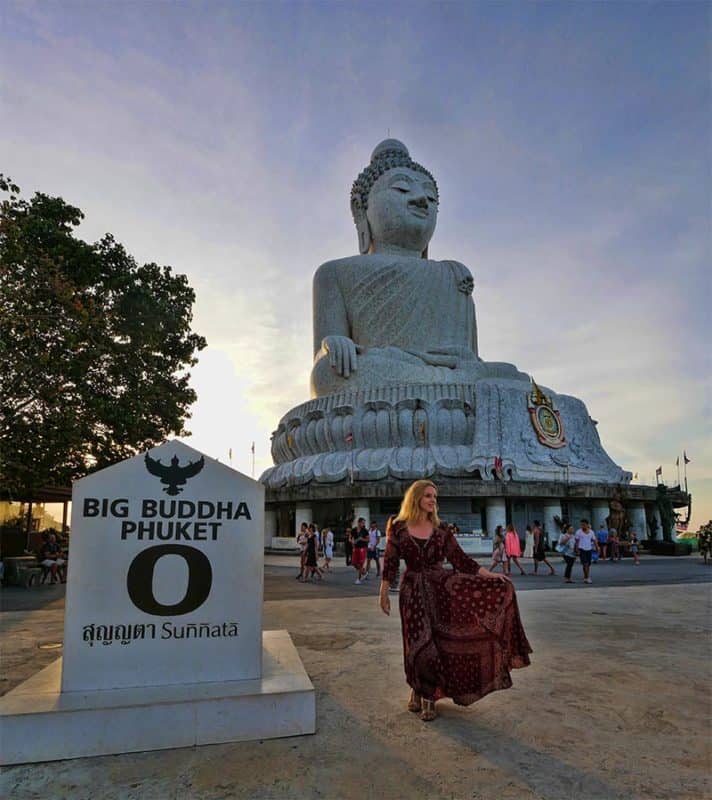
    All visitors should ensure that their shoulders are covered and that their clothing covers their knees. Out of respect, avoid wearing t-shirts with provocative slogans.

    It’s possible to borrow a sarong free of charge at the entrance to the temple. The most appropriate outfits are long dresses with covered sleeves, skirts or trousers with a long sleeved top.
    Highlights of Big Buddha Phuket

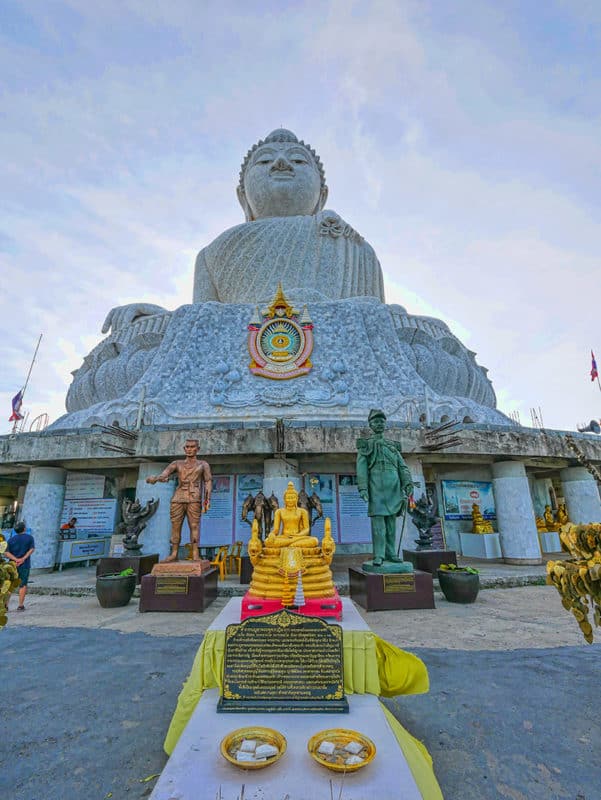
    Outside the temple there are many interesting sights to see. In the Sala of Faiths, you’ll find information boards telling you more about Buddhism and Big Buddha. The monument’s official Thai name is the Phra Puttamingmongkol Akenakkiri Buddha.

    Construction of the main Phuket Big Buddha monument was completed in 2004. It’s built from concrete, covered with Burmese white jade marble.

    However some elements such as a 999 step staircase are still being built. Visitors can help contribute to the building costs and site maintenance by several means.

    There are donation boxes as well as a stall in front of the temple selling tiles and golden metal hearts. They are sold for a few bahts and visitors then write a message on them before attaching them to a tree.

    There is also a smaller brass Buddha statue behind the main one, which looks like gold as it glitters in the sun. On the temple’s exterior walls there are some impressive small golden Buddhas.
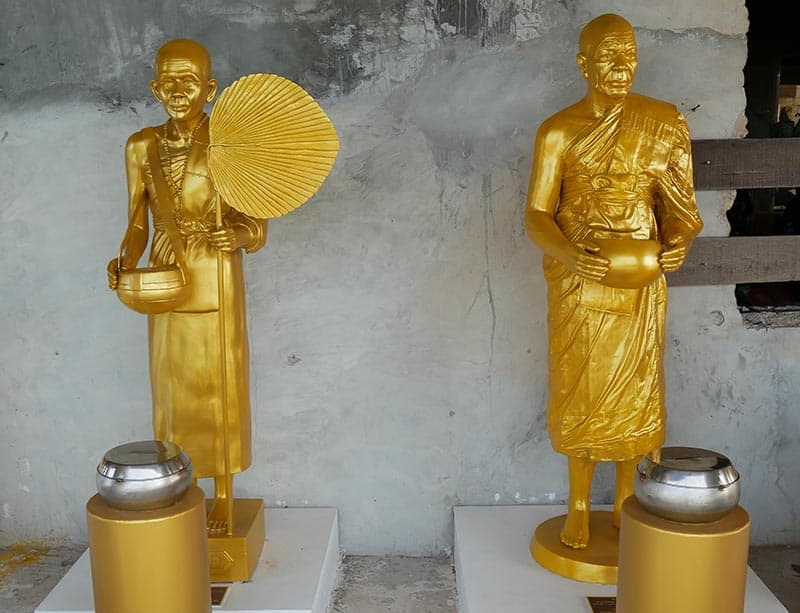
    Before entering the temple itself, take off your shoes outside and make sure not to point your feet in the direction of Buddha. Inside the temple there are frequent religious ceremonies. What strikes many visitors is how close you can get to the holy monks.

    There’s no separation as you’ll often find in some religious ceremonies. Visitors are free to mingle with the monks though obviously not to disturb them as they go about their religious service.

    You’ll also notice the Buddhist chanting during the services. It’s a melodic and uplifting sound.

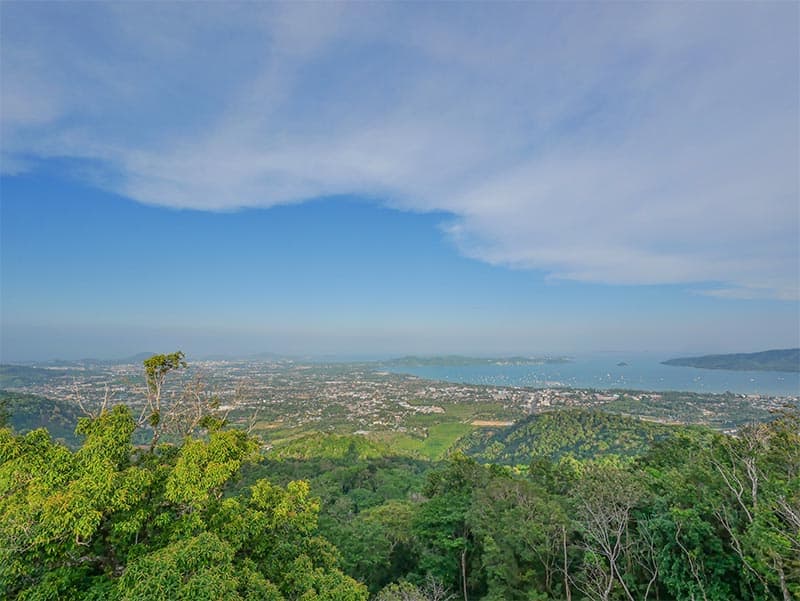
    Back outside, there are panoramic 360° views over the surrounding countryside and towards Chalong Bay and Kata Bay.
    Practical Information for Visiting Big Buddha

    Opening hours: from 6 am to 7.30 pm daily

    WC: on your way out from the site, halfway down the stairs

    Refreshments: there are no refreshment points on site but there are some restaurants on Nakkerd Hill

    Souvenirs: bear in mind that for Buddhists, it’s considered wrong to use Buddha as decoration or as a tattoo. For this reason, you won’t find any Buddha figurines to purchase as souvenirs at Big Buddha Phuket. It’s far more appropriate to help with the construction of the temple.

    Where to Stay near Big Buddha Temple

    Cape Panwa is a luxury hotel that’s just 38 minutes drive from Big Buddha. Leonardo di Caprio stayed here when he was filming The Beach nearby.

    There are two swimming pools, a stylish lobby and spacious guest bedrooms. Enjoy a traditional Thai massage at the in-house spa.

    Famous Buddhists

    Did you know that Fabien Barthez, Herbie Hancock, Jet Li, Kate Bosworth, Leonard Cohen, Orlando Bloom, Richard Gere, Sharon Stone, Tiger Woods and Tina Turner are all Buddhists? It’s estimated that there are around 500 million practising Buddhists worldwide, representing approximately 10% of the world’s population.

    Final Thoughts: Visiting Big Buddha Phuket

    Whether you’re island hopping in Thailand, discovering hidden gems on the Andaman Coast or having a beach stay in Phuket, a visit to Big Buddha will leave you inspired.
    Have you visited Big Buddha in Phuket?

  • 12 Hidden Gems in Washington DC You Need to Visit

    12 Hidden Gems in Washington DC You Need to Visit

    Beyond the iconic monuments and world-famous museums that draw millions to the US capital each year lies a treasure trove of lesser-known attractions waiting to be discovered. These hidden gems in Washington DC offer unique experiences, fascinating history, and peaceful respites from the crowded National Mall.
    Whether you’re a first-time visitor looking to venture beyond the typical tourist path or a local seeking new adventures, these underappreciated destinations showcase the depth and diversity of the nation’s capital.

    1.Kenilworth Park & Aquatic Gardens

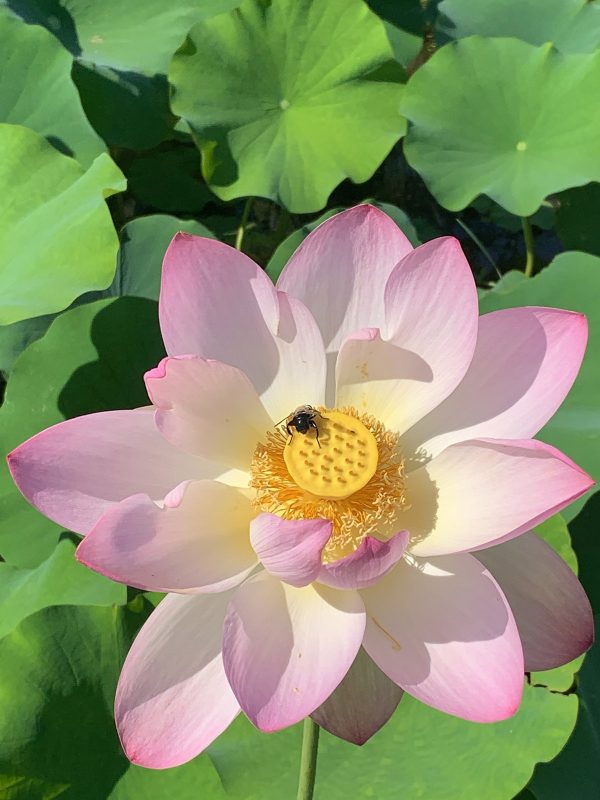
    Tucked away in Northeast DC, these gardens showcase magnificent lotus flowers and water lilies in full bloom during summer months. The peaceful ponds and marshland trails offer a serene natural escape within city limits that most tourists never discover.

    2.Folger Shakespeare Library

    Home to the world’s largest Shakespeare collection, this architectural gem houses rare manuscripts, a beautiful Elizabethan theater, and regular performances. The Stuart and Mimi Rose Rare Book and Manuscript Exhibition Hall showcases a variety of priceless works. These include a first edition of Winnie-the-Pooh, an advance press copy of Martin Luther King Jr.’s I Have a Dream speech and an inscribed first edition of Galileo Galilei’s Dialogo.

    The reading rooms and exhibitions provide literary enthusiasts with a peaceful retreat from Capitol Hill’s busier attractions. Grab a bite at Quill & Crumb Cafe after your visit.

    3.Dumbarton Oaks

    This historic estate in Georgetown features stunning terraced gardens designed by landscape architect Beatrix Farrand. Beyond the spectacular gardens, you’ll find a world-class museum with Byzantine and Pre-Columbian art collections that often get overlooked by visitors focused on the more famous Smithsonian museums.

    4.Albert Einstein Memorial

    This charming 12-foot bronze statue depicts Einstein casually seated with mathematical equations at his feet. Located at the National Academy of Sciences, it’s a perfect photo opportunity that many visitors miss while focusing on the more prominent monuments.

    5.Franciscan Monastery of the Holy Land in America

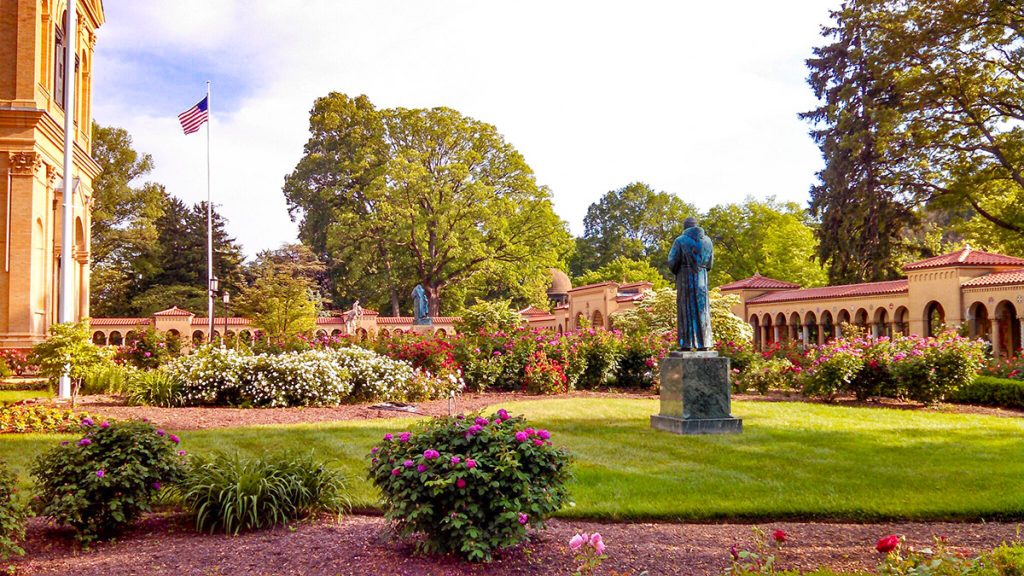
    This unexpected oasis in Brookland features beautiful Byzantine-style architecture, replicas of Holy Land shrines, and meticulously maintained gardens. The peaceful grounds and catacombs offer a contemplative space away from DC’s hustle and bustle.

    6.Café Riggs

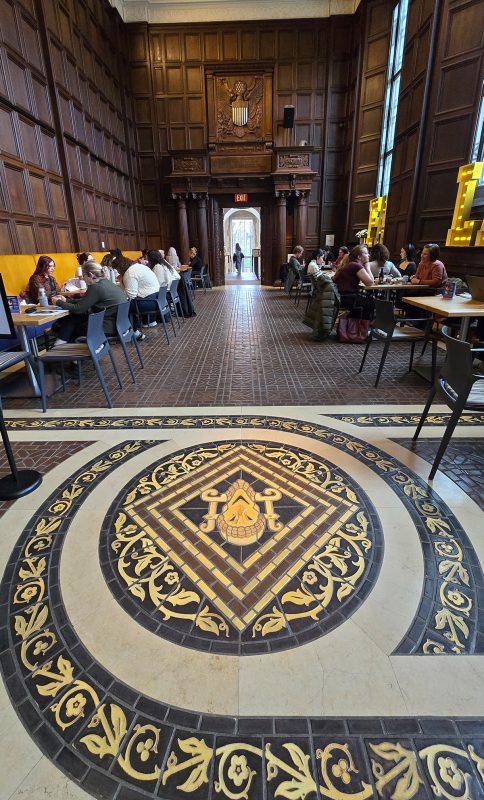
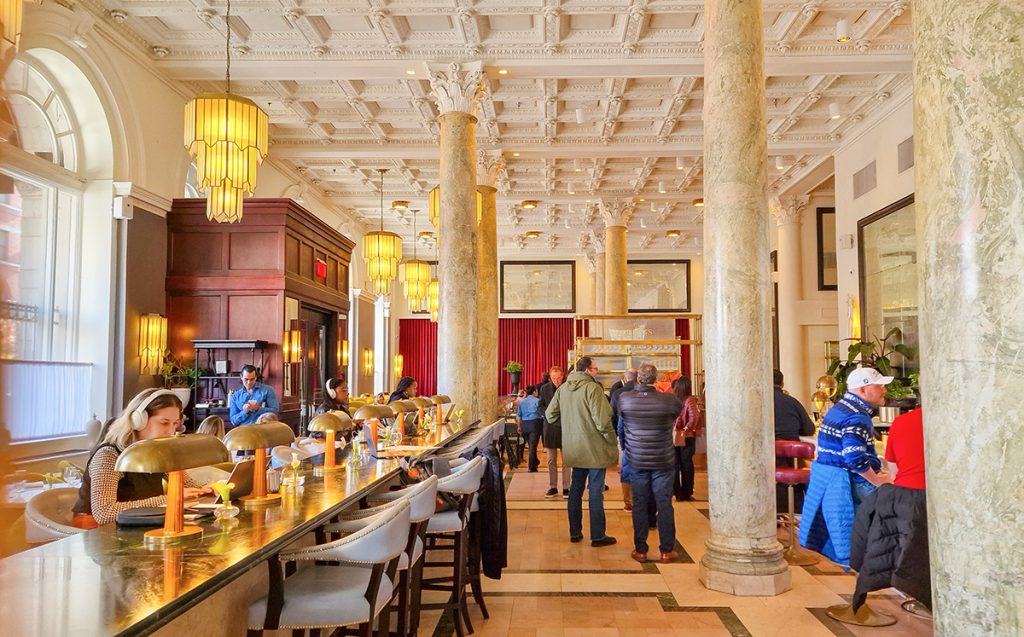
    Housed in the former Riggs National Bank building, this sophisticated café combines historic architecture with contemporary dining. The vault-inspired bar and ornate details make it a stylish spot for cocktails or coffee that escapes most guidebooks.

    It’s a handy pit stop if visiting the stunning National Portrait Gallery nearby.

    7.Rock Creek Park

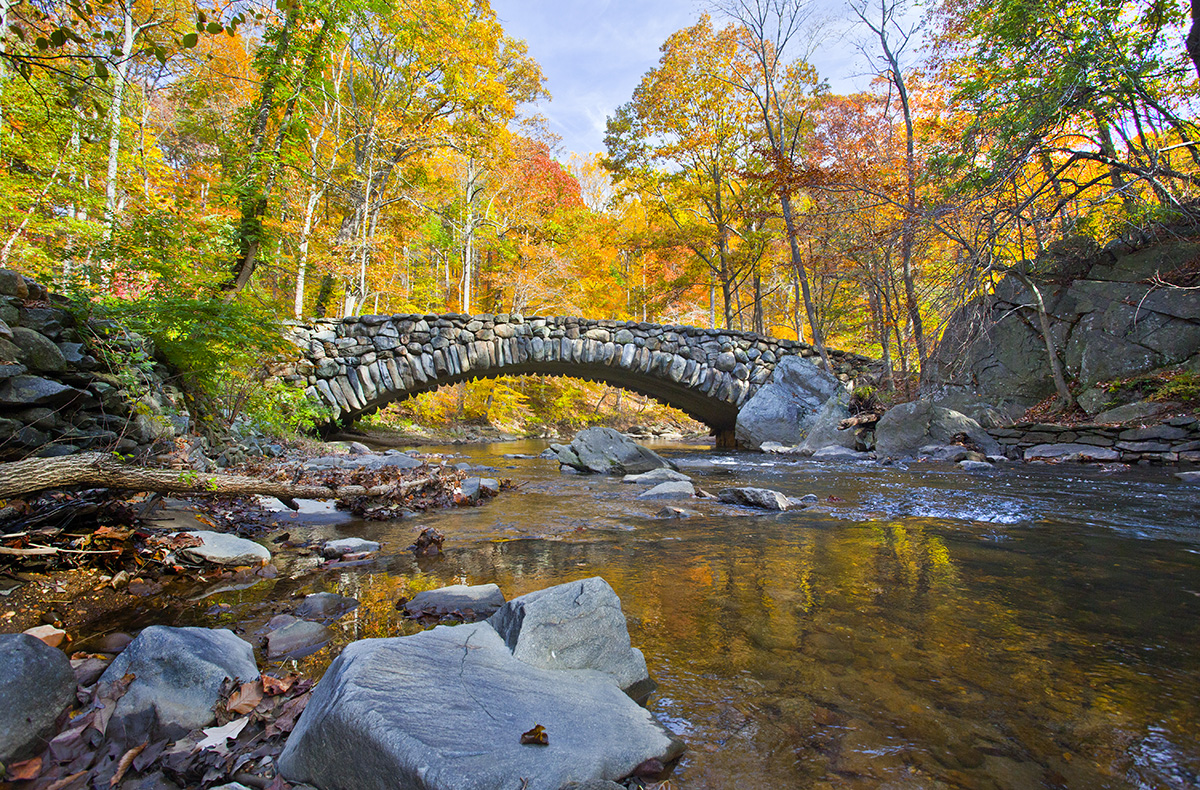
    While locals treasure this 1,754-acre urban forest, visitors often overlook its miles of hiking trails, horseback riding paths, and historic Pierce Mill. The nature center and planetarium offer educational programs that provide a refreshing contrast to museum-hopping.

    8.Adams Morgan Neighborhood

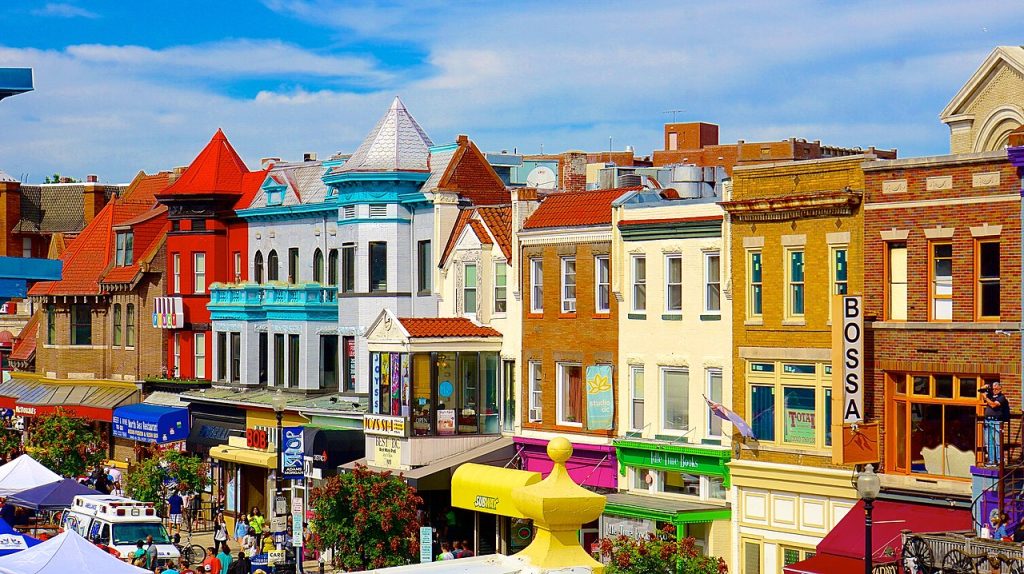
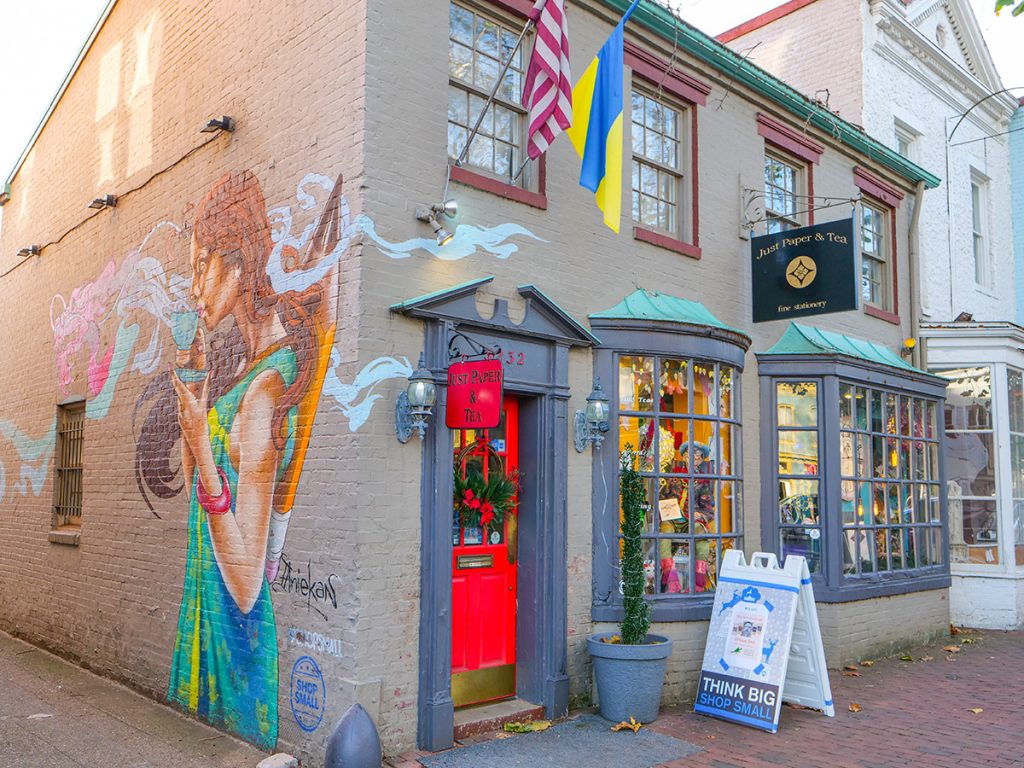
    This vibrant, multicultural neighborhood boasts colorful rowhouses, international restaurants, independent bookstores, and eclectic shops. The lively nightlife scene and street murals make it perfect for experiencing local DC culture beyond the tourist zones.

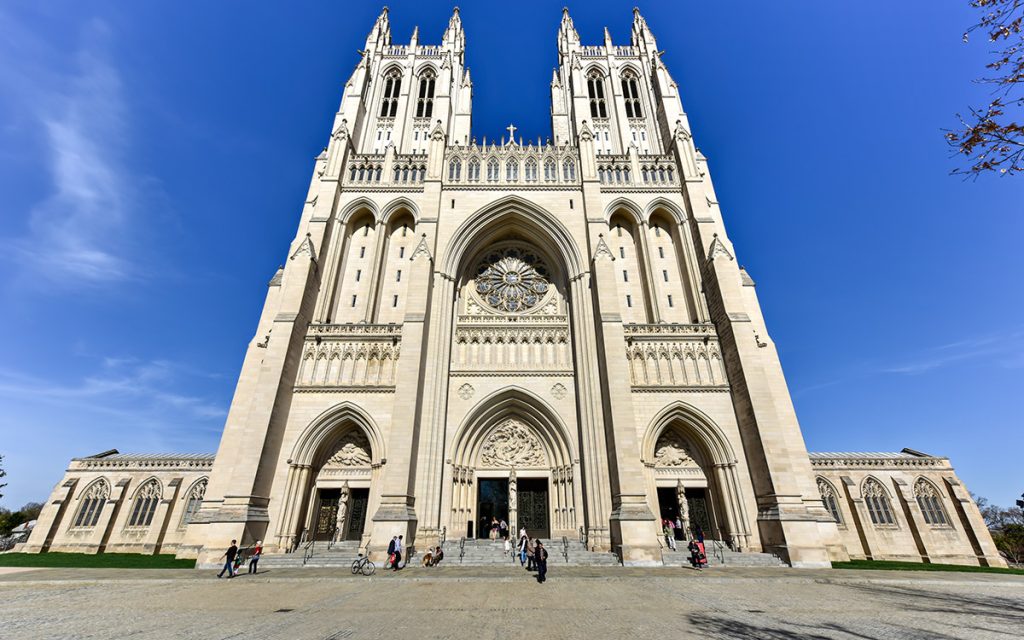
    9.Washington National Cathedral

    Despite its grandeur, this Gothic cathedral often gets missed by tourists focused on government buildings. That’s largely due to its location away from downtown DC, in the Cathedral Heights neighborhood.

    The intricate architecture, stained glass (including a space-themed window containing moon rock), and gargoyles (including a unique Darth Vader grotesque) reward careful exploration.

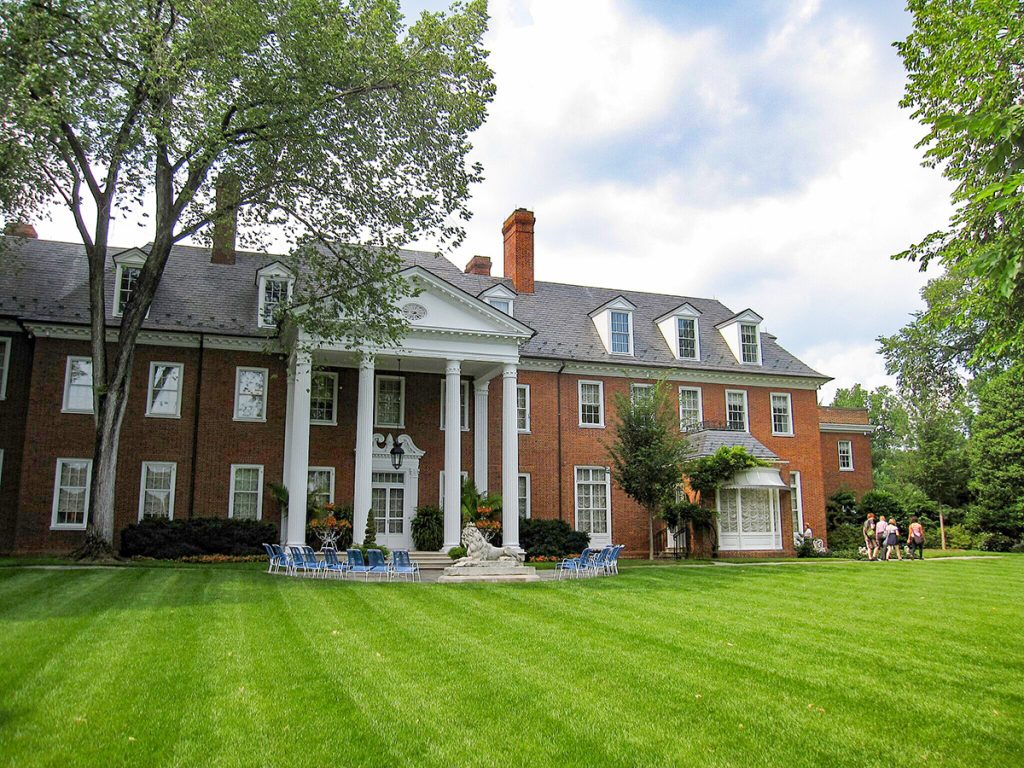
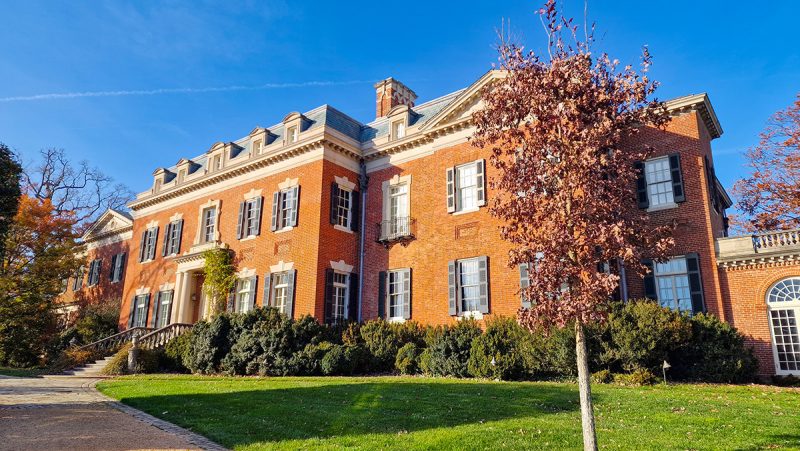
    10.Hillwood Estate Museum & Gardens

    The former residence of Marjorie Merriweather Post showcases an impressive collection of Russian imperial art and French decorative pieces. The manicured gardens and opulent interiors provide a glimpse into America’s Gilded Age rarely found on standard DC itineraries.

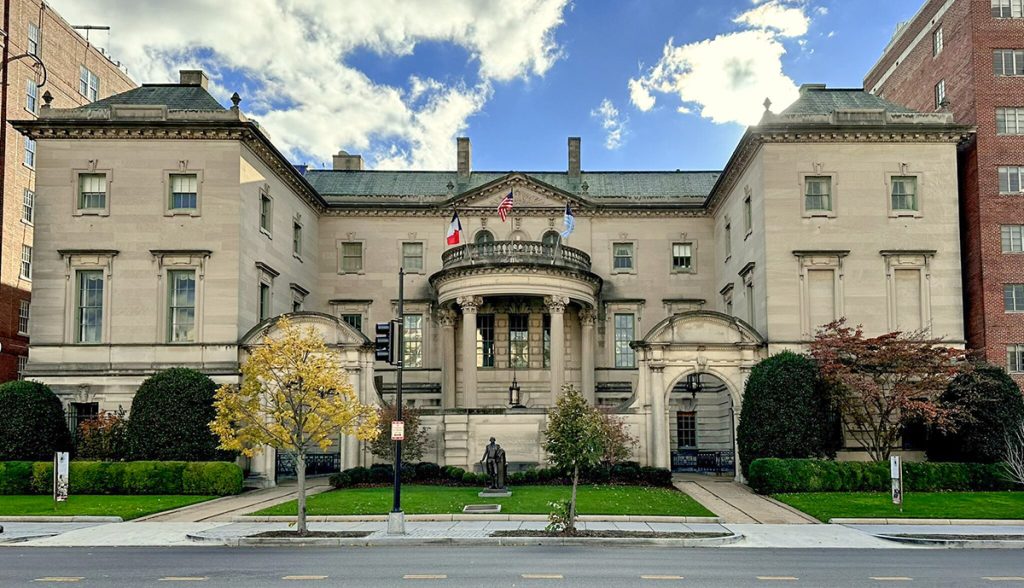
    11.Larz Anderson House

    This Beaux-Arts mansion on Embassy Row serves as the headquarters for the Society of the Cincinnati. It houses an impressive collection of Revolutionary War artifacts and art.

    The ornate interior and formal gardens transport visitors to America’s early days.

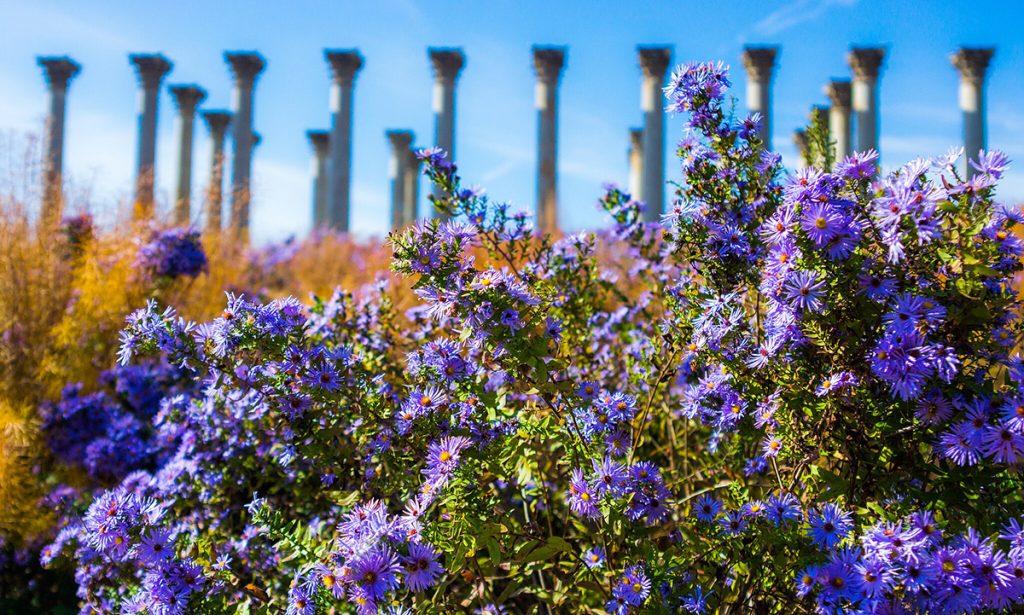
    12.U.S. National Arboretum

    This 446-acre living museum features themed gardens, research facilities, and the iconic National Capitol Columns. The bonsai collection and azalea displays offer spectacular seasonal beauty in a peaceful setting far from the crowds at more famous attractions.

    1. Lustica Bay Review – An Unspoiled Luxury Retreat in Montenegro

      Lustica Bay Review – An Unspoiled Luxury Retreat in Montenegro

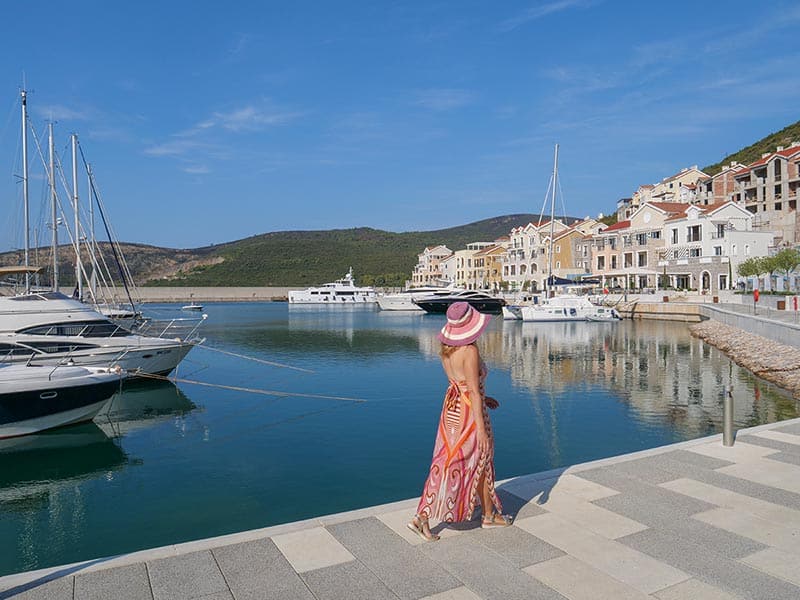
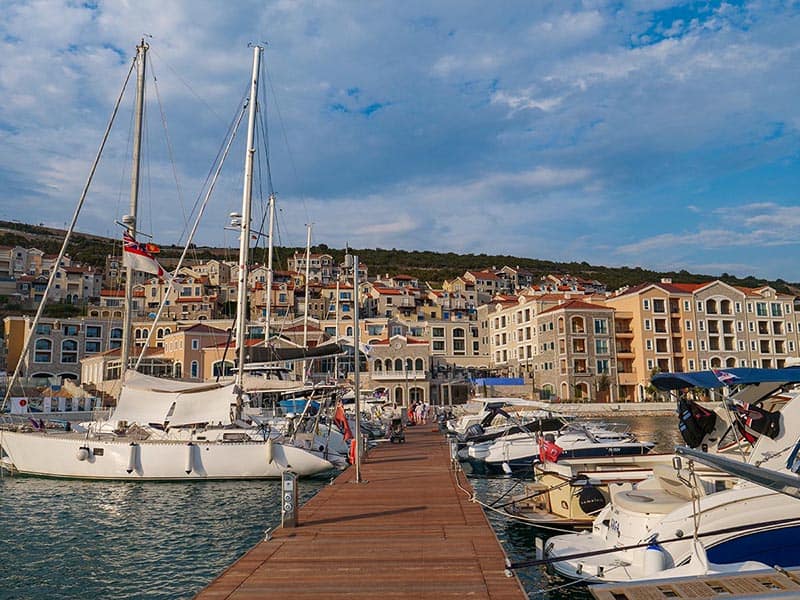
      Nestled on a secluded area of the coast in Montenegro, you’ll find Lustica Bay. This former military base has been re-imagined as a luxurious haven of Montenegrin hospitality. From the harbour, there are spectacular views of the Adriatic Sea.

      Lustica Bay Review – A Montenegro Hidden Gem

      The team behind the El Gouna leisure development in Egypt are transforming the old military base into a superb coastal retreat. There are 176 berths in the marina, with a second marina already being planned. The only 18 hole championship golf course in Montenegro, designed by Gary Player is being created here. It will have unparalleled views of Boka Bay and the Adriatic from all its holes.
      A wide range of public facilities will be built inland, with the name Centrale. These will include a school, park and a clinic as well as shops and a market.

      There are also plans to open seven hotels here. The first of these, The Chedi hotel opened in August 2018, together with several independent restaurants and shops along the waterfront.

      The Chedi Lustica Bay

      At the launch of The Chedi Lustica Bay, the Prime Minister of Montenegro gave a speech emphasizing the importance of this new development to tourism in Montenegro. The legendary Nile Rodgers and Chic then performed on a floating stage, with the event culminating in a spectacular fireworks display.

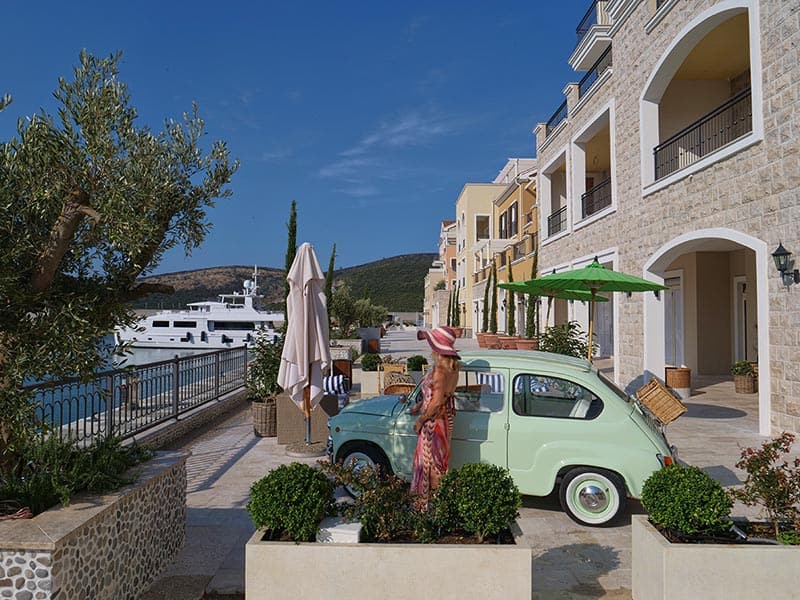
      The Chedi Lustica Bay has been designed to fit in with the local area. It’s a low rise development with an emphasis on barefoot luxury, and stone facades that are typical in Montenegro. The focus on sustainability includes electric charging points for cars.

      Guests can walk along the old military fortifications for a great sea view. The word “chedi” means a place to meditate and the intention with The Chedi Lustica Bay is to create a tranquil space where guests can relax and feel rejuvenated.
      Leisure Facilities in Lustica Bay

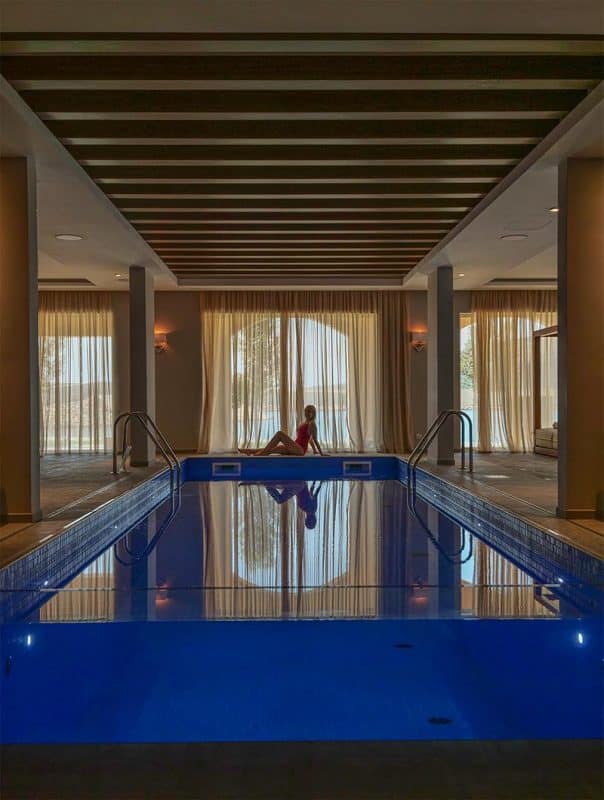
      One of the highlights of a stay in Lustica Bay is The Spa. There’s a stunning indoor pòol with a glass panel, surrounded by comfortable day beds. You’ll also find a rain shower and steam room as well as a fully equipped gym. The Spa use luxury organic products by VOYA for their Asian inspired treatments.
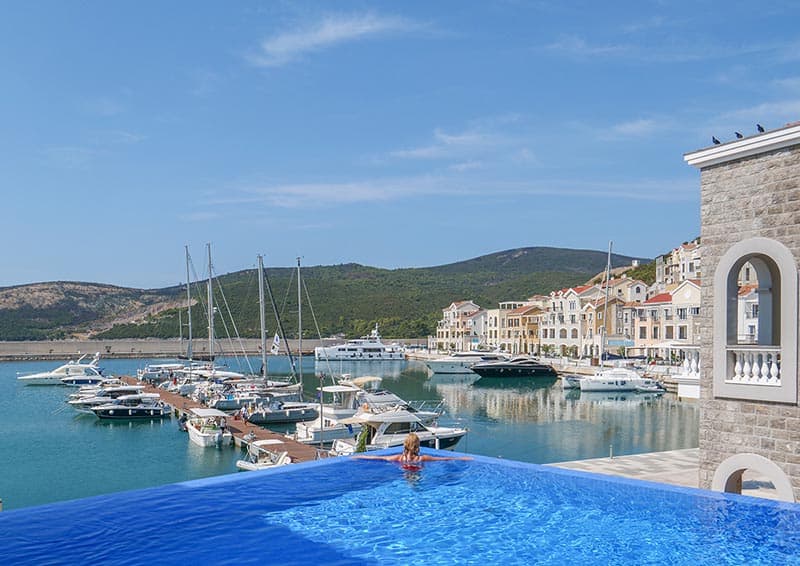
      Next to the health centre there’s the heated outdoor infinity pool – the perfect place to lounge around.

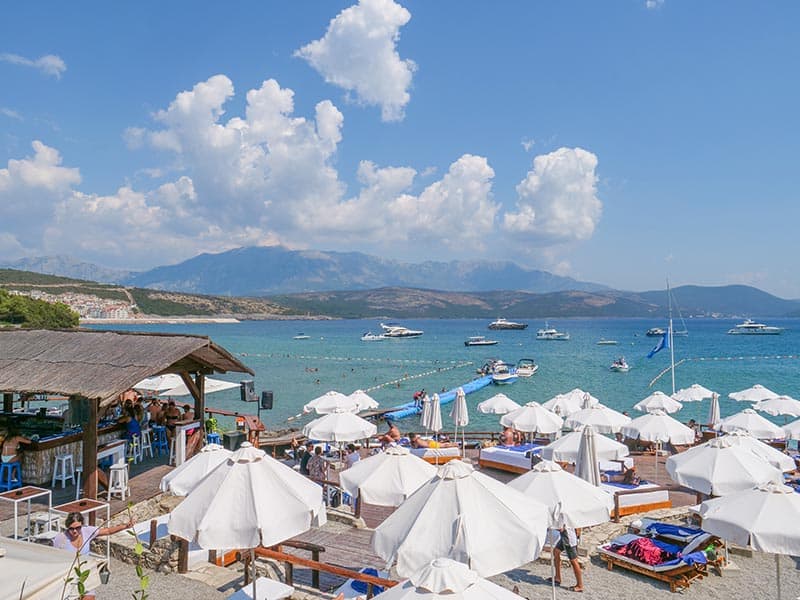
      A few minutes walk from here, you’ll come to the beach. It has a relaxation area with colourful bean bags as well as The Rok beach bar. The sea is generally quite warm however we’d advise you to bring swim shoes as the beach is pebbly, although there is a floating pontoon from which you can enter the water directly. There are also paddle boards available for guests to use.

      A driving range and the first few holes of the 18 hole championship golf course are scheduled to open in 2018. A golf village will include a 300 room golf hotel and spa.

      Accommodation at Lustica Bay

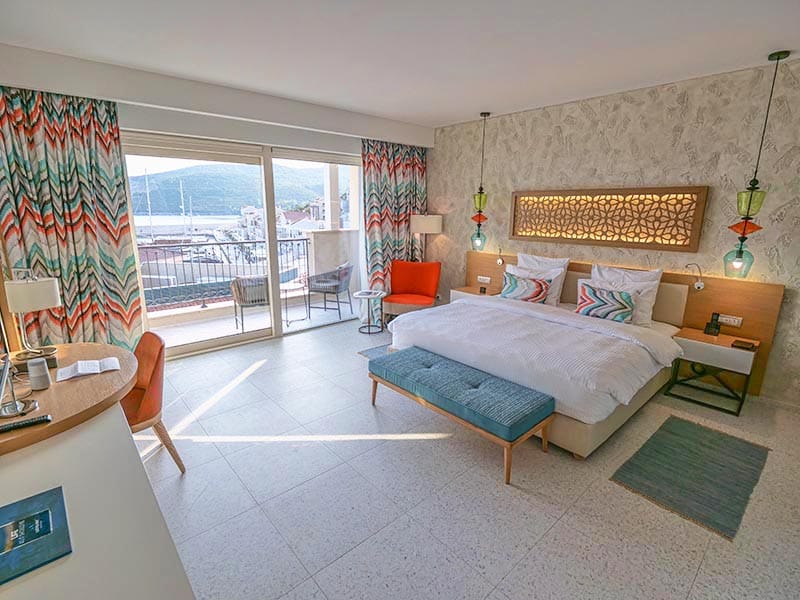
      The Chedi Lustica Bay has 111 rooms and suites, most with sea views. They’re designed by GG & Grace and stylishly decorated in tones of teal blue and orange, with striking light fittings. They’re also well equipped, with USB phone chargers next to the beds, air conditioning and a safe. The bathrooms have double sinks and Aqua di Parma toiletries.

      There are also several apartments and private villas available, The Chedi Residences

      Where to Eat in Lustica Bay

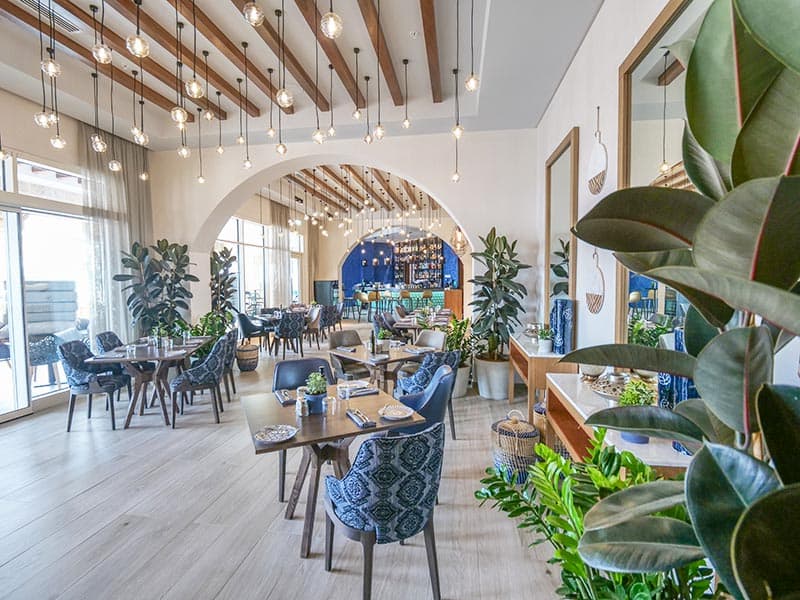
      • The Restaurant, Chedi Lustica Bay – this chic restaurant serves a full buffet breakfast and a la carte dinner
      • The Lobby Bar – for cocktails and afternoon tea
      • The Rok – this informal beach bar serves light bites all day
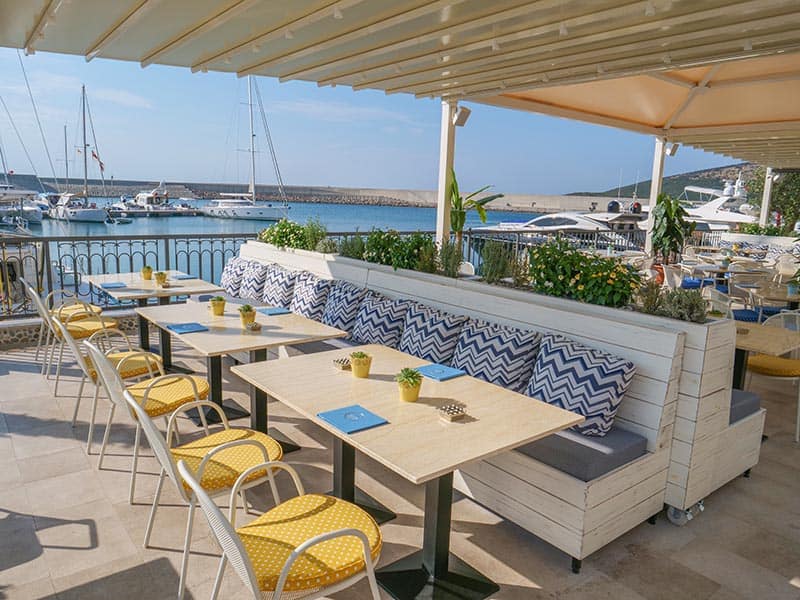
      • The Spot – has a charming outdoor terrace that is popular in the evenings. It specializes in healthy Asian food.

      There are also several independent waterfront restaurants including Sea Forest and “21” restaurant.

      Things to do near Lustica Bay

      • Day trip to Kotor – this UNESCO World Heritage Site is not to be missed. Walk up 1350 steps to San Giovanni Castle or stroll along the old town walls.
      • Lunch at Restaurant Galion – fine dining overlooking the Bay of Kotor.
      • Boka Bay boat tour – The bay resembles a Norweigan fjord and the catamaran will take you past Mamula, a former WWII concentration camp which is not visitable. You will however be able to visit Our Lady of the Rocks, a picturesque islet with a church containing some interesting relics in its museum.
      • Almara Beach Club on Oblatno Beach – renowned for its early-evening beach parties. They also have a restaurant that serves tasty seafood. Service can be slow so you may prefer instead to head to their beach bar where a hipster bartender will rustle you up a cocktail in no time.
      If you’re visiting Montenegro, it’s definitely worth exploring Lustica Bay. The unusual setting and magnificent sea views make the peninsula particularly enticing. It’s also quite easy to get there, being 46 kilometres from Dubrovnik airport, 90 kilometres from Podgorica and just 10 kilometres from Tivat international airport.

      Do you have plans to visit Montenegro or the Balkans?

    2. Slow Travel Around Historic Via Francigena, Tuscany

      Slow Travel Around Historic Via Francigena, Tuscany

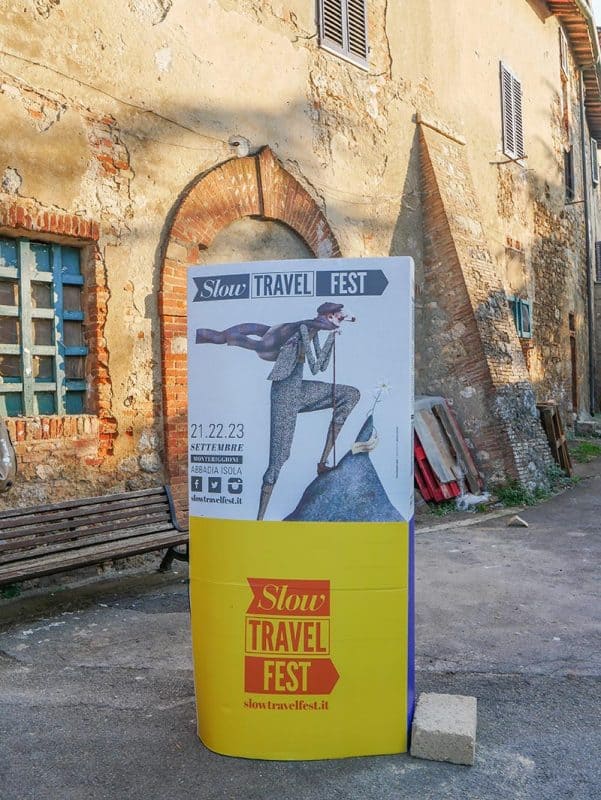
      The art of slow travel is one that we should all celebrate. Taking the time to appreciate local culture and to meet new people is what travel is all about. Slow Travel Fest is a collection of festivals focusing on outdoor experiences and slow travel, along and around the iconic Via Francigena in Tuscany, Italy.

      Slow Travel around Via Francigena in Tuscany

      There are three annual editions of Slow Travel Fest in different parts of Tuscany:

      • Lunigiana Folks and Family, in June
      • Camaiore Hike & Climb in September
      • Monteriggioni Walks & Talks in September

      What they all have in common is a great range of events to encourage people to get outdoors and experience travel in a different way. Slow travel is all about sampling local food specialties and trying new activities.

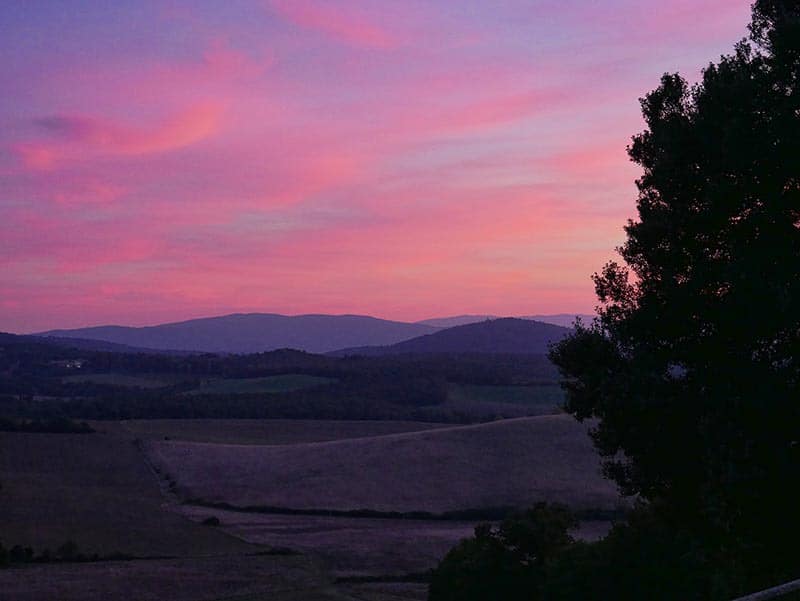
      Closely connected with the Slow Food movement, it enables you to experience immersive travel. It’s also a way of reconvening with nature, and admiring the simple beauty of the sun setting over the Tuscan hills.

      Via Francigena, Tuscany

      An ancient pilgrims route leading from Canterbury, England via France and Switzerland to Rome, Via Francigena is a popular walking trail. It was designated a Major Cultural Route by the Council of Europe in 2004.

      In recent times, the pathway has enjoyed a resurgence of popularity, particularly in Italy. You can travel on foot, by bike or on horseback.

      Whether your journey is a religious one or more of a spiritual way of enjoying nature, we recommend picking up a Pilgrim’s Passport. It’s a memento of each stage of your time along the Via Francigena, as local churches and municipalities stamp your passport.

      The form can be ordered online from the European Association of the Via Francigena or collected from the Tourist Office of the City of Monteriggioni. The Region of Tuscany has encouraged an initiative to restore the path and increase signage, as well as developing low impact infrastructure for those travelling along it.

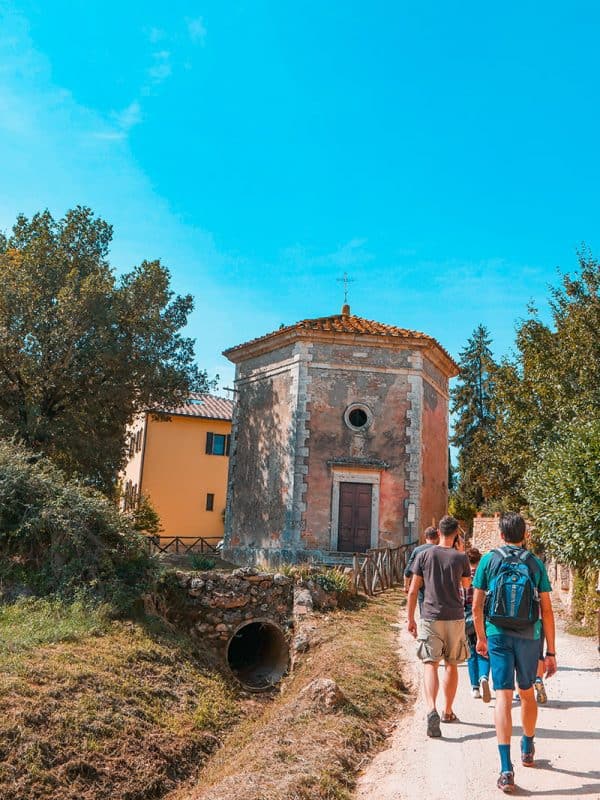
      In Tuscany, the Via Francigena covers 354 kilometres from Pontremoli to Radicofani. One of the most beautiful sections of the route is from San Gimignano to Monteriggioni. It passes by the charming hamlet of Abbadia a Isola, with its medieval cloisters, and Monteriggioni, a picturesque walled town.

      Slow Travel Fest in Monteriggioni

      The Monteriggioni edition of Slow Travel Fest is organized by Ciclica. It’s sponsored by Comune di Monteriggioni and Regione Toscana with the help of Toscana Promozione Turistica.

      This three day festival features a range of activities suitable for all the family and all levels of physical ability.

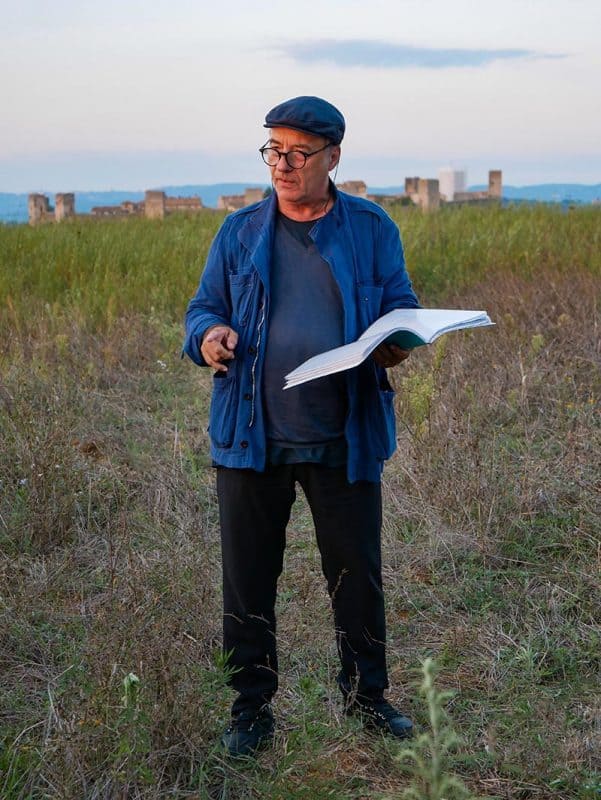
      The 4th edition was held recently, with fun experiences such as cycling tours, orienteering and travel writing workshops. An entertaining performance by the clown Ugo Sanchez Jr. was held in the church garden at Abbadia a Isola.

      There was also a fascinating initiation to wilderness and bushcraft survival techniques by Andrew T. Price. One of our personal highlights was rafting on the Elsa River. Working as a team, you pass by Diborrato waterfall and through the sparkling turquoise water.
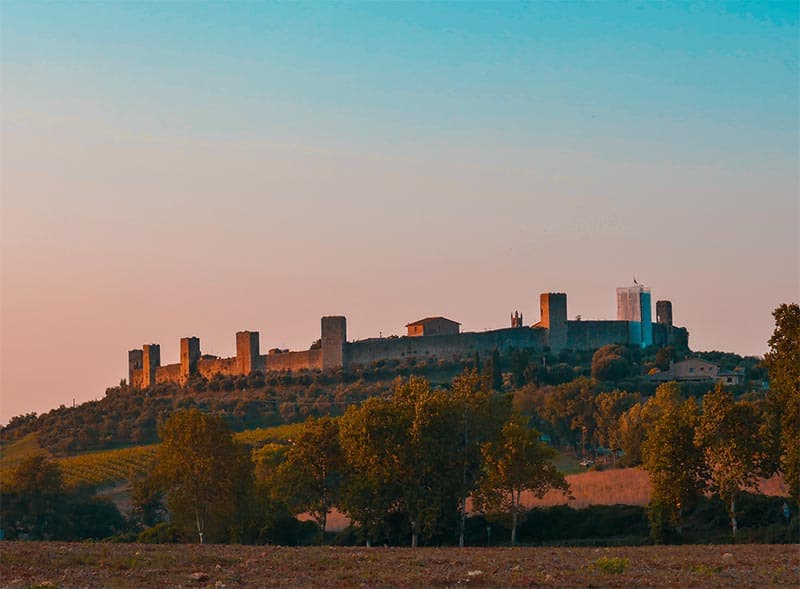
      If you’re attending Slow Travel Fest in Monteriggioni, don’t miss the opening walk along the Via Francigena to Abbadia Isola. You get a lovely view of Monteriggioni Castle from a distance as the sun sets.

      Another interesting excursion is the guided walk around the Montagnola Senese, a hillside area with rich vegetation and abundant wildlife.

      San Salvatore Abbey

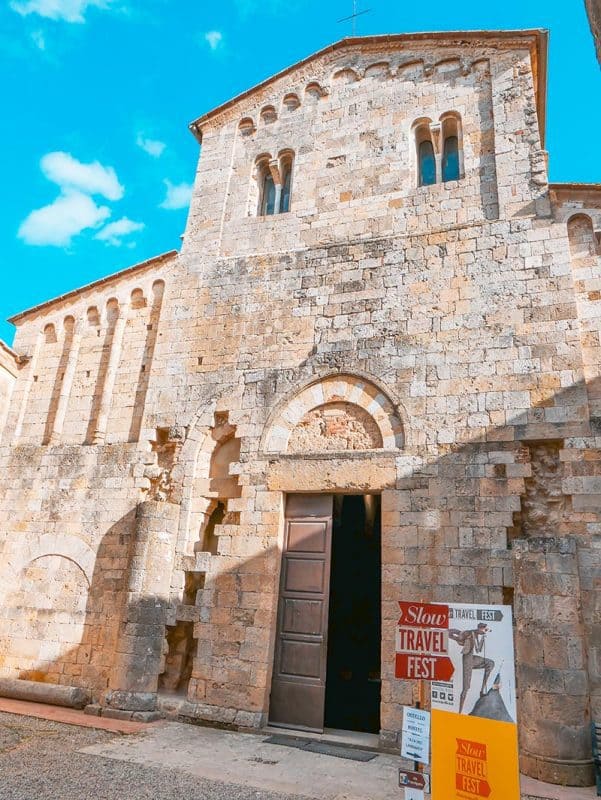
      Many of the Slow Travel Fest Monteriggioni activities depart from Abbadia a Isola, known for its medieval abbey. Founded in the 10th century, San Salvatore Abbey was a popular place for pilgrims to stop along the Via Francigena in Tuscany.

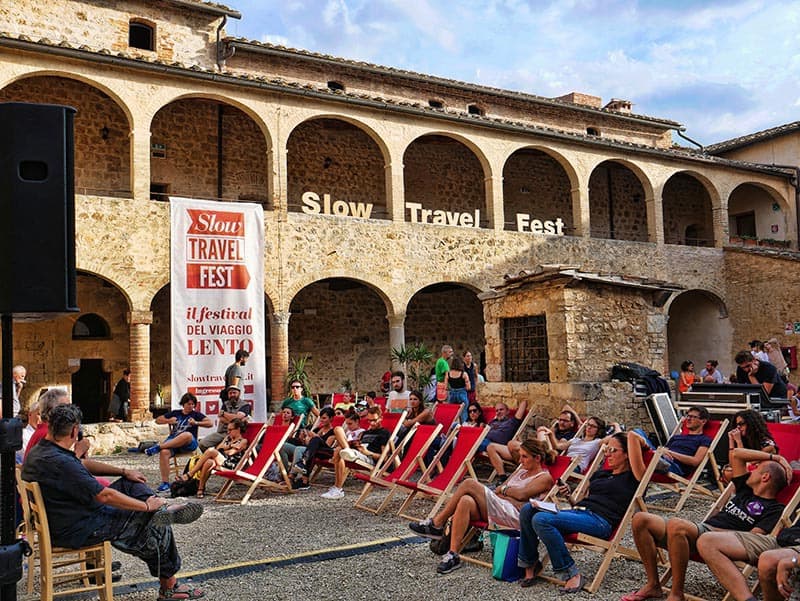
      The interior is impressive, with a high timbered ceiling and a marble baptismal font. At the adjacent cloisters, visitors to Slow Travel Fest can relax in the deckchairs whilst listening to talks.

      There’s local food, beer and wine to enjoy, as well as artisanal products such as organic toiletries to purchase. In the evening, the illuminated cloisters look magical.

      They’re the perfect backdrop for the evening entertainment, with DJ sets and live bands playing while the crowds dance and party.

      Monteriggioni Walled Town

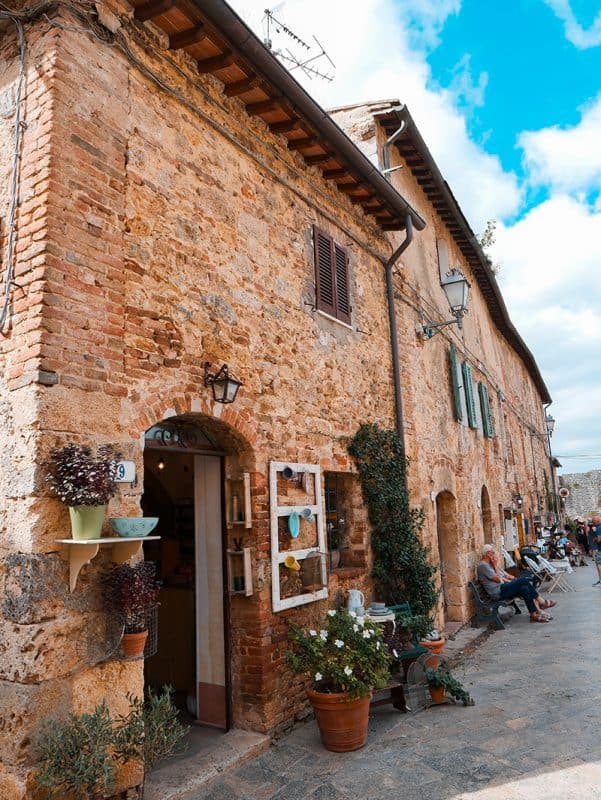
      While you’re in the area, don’t miss the nearby town of Monteriggioni. Lesser known than San Gimignano but equally charming, it dates from the 13th century.

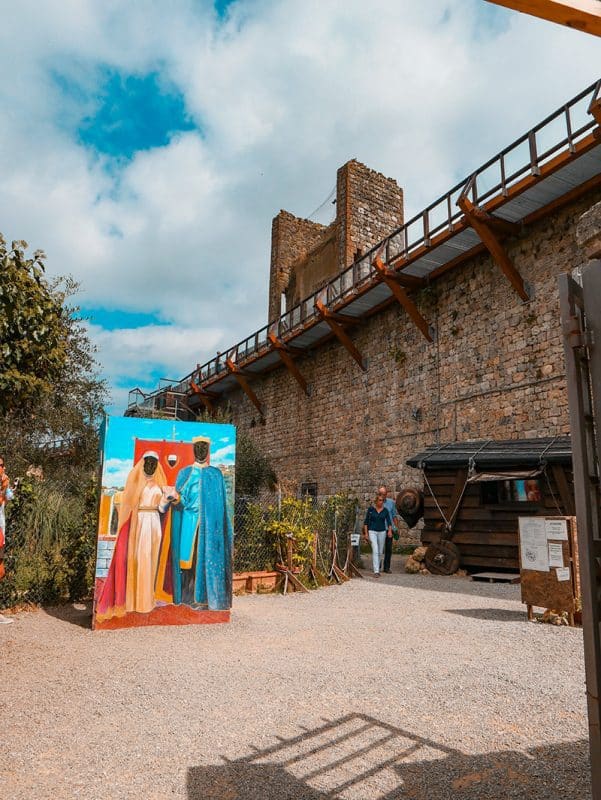
      Considered to be one of the best preserved walled towns in Italy, it was built to defend the people of Siena from the Florentines.

      There are 14 watchtowers dotted along the ten metre high walls and you can walk along several sections. Monteriggioni features in the Assassin’s Creed video games and was mentioned by Dante in his Divine Comedy.

      ‘Because on its circular parapets
      Monteriggioni crowns itself with towers‘

      It has a lovely main square, Piazza Roma, where you’ll find the Church of Santa Maria Assunta. At the Museum of Weaponry and Armour, you’ll learn how the locals defended themselves against attacks. What makes this museum unusual is that visitors can try on some of the armour and also wield the weapons.

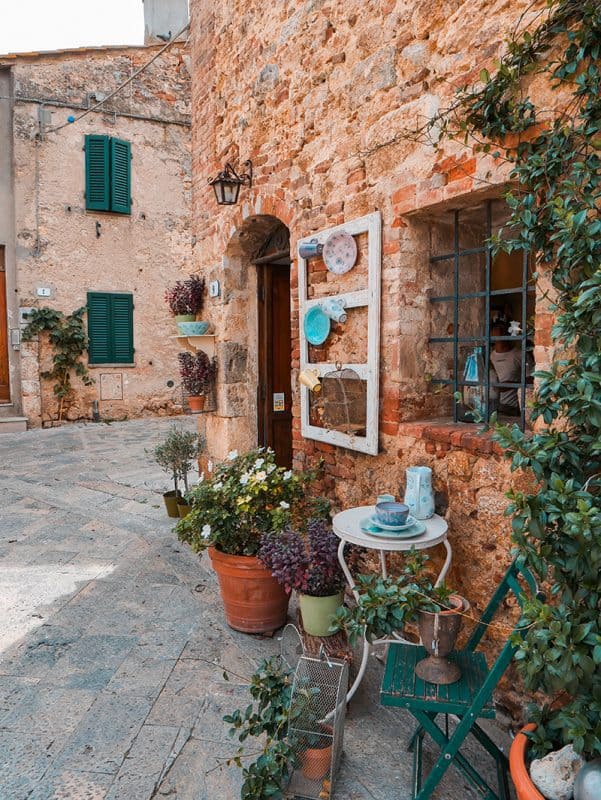
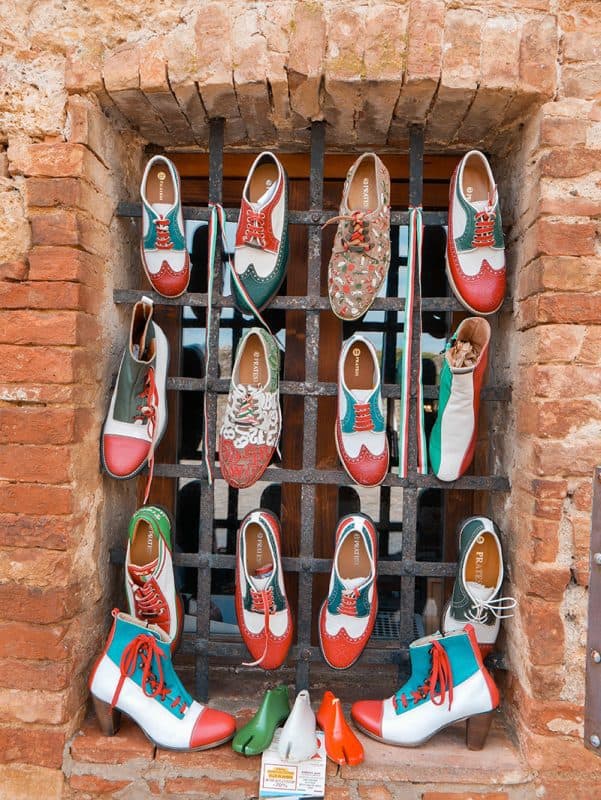
      There are many restaurants in Monteriggioni, as well as boutiques selling handmade items such as these colourful shoes. You can also see artisans making clothing on hand looms and creating jewellery.

      The area is known for its vineyards and there are several shops where you can taste and purchase the local wine and olive oil. Sienese pork from wild pigs, pecorino cheese and porcini mushrooms are also well worth trying.

      Where to Stay for Slow Travel Fest

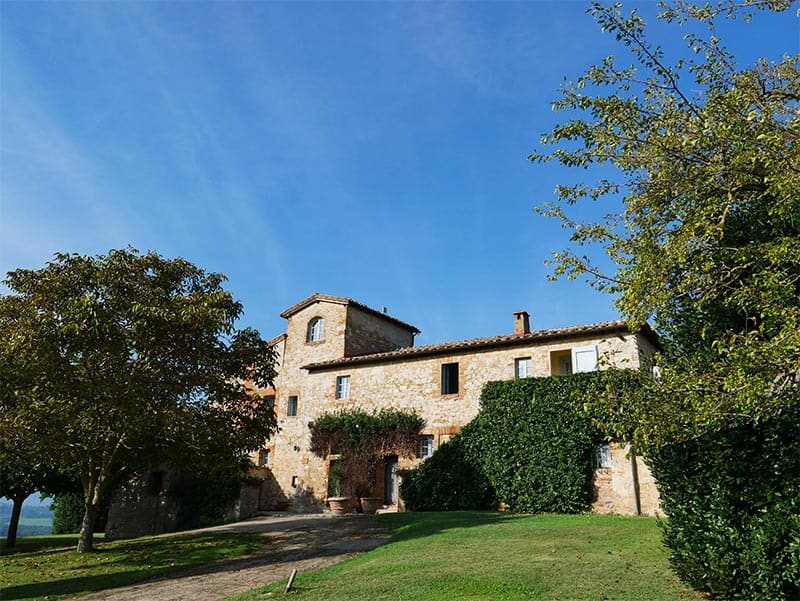
      There are some lovely places to stay near Abbadia a Isola and Monteriggioni. One of our favourites is the Relais Castel Bigozzi. This luxurious hotel is set in a medieval castle dating from 1000.

      There’s a gorgeous Travertine marble swimming pool, a wellness centre with sauna and treatment rooms and a cosy lounge bar. Guests take their breakfast overlooking the olive groves and there’s also a barbecue area within the hotel grounds.

      The staff are very friendly and make your stay here very enjoyable.

      It’s easy to get to Monteriggioni from Florence or Pisa airport and once you’re there, you may well not want to leave. Slow travel is becoming increasingly popular and Slow Travel Fest is the perfect introduction to this new movement.

      Have you ever been to Tuscany? What does slow travel mean to you?

    3. Top Things to Do In Georgetown DC: History & Modern Charm

      Top Things to Do In Georgetown DC: History & Modern Charm

      Georgetown, one of Washington DC’s oldest and most charming neighborhoods, offers a perfect blend of history, shopping, dining, and outdoor activities. From historic landmarks to scenic waterfront paths, here’s your comprehensive guide to the best things to do in Georgetown DC.

      Georgetown Waterfront Park

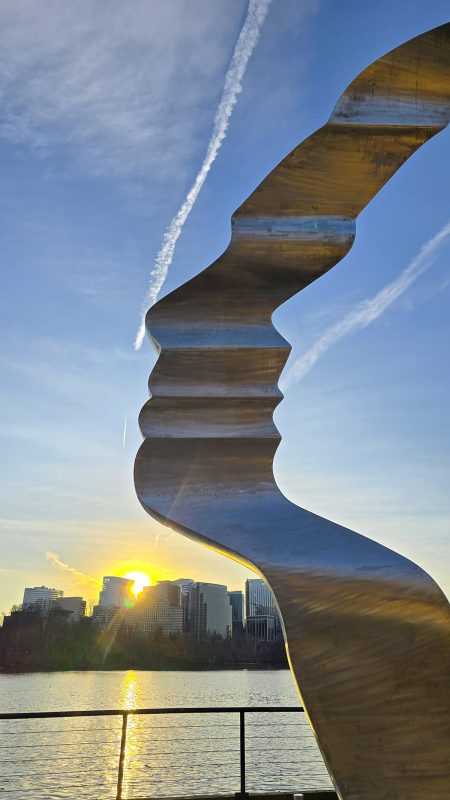
      This 10-acre park along the Potomac River provides a refreshing escape from the urban environment. Enjoy the riverside promenade, interactive fountain, Mother Earth sculpture and green spaces perfect for picnicking.

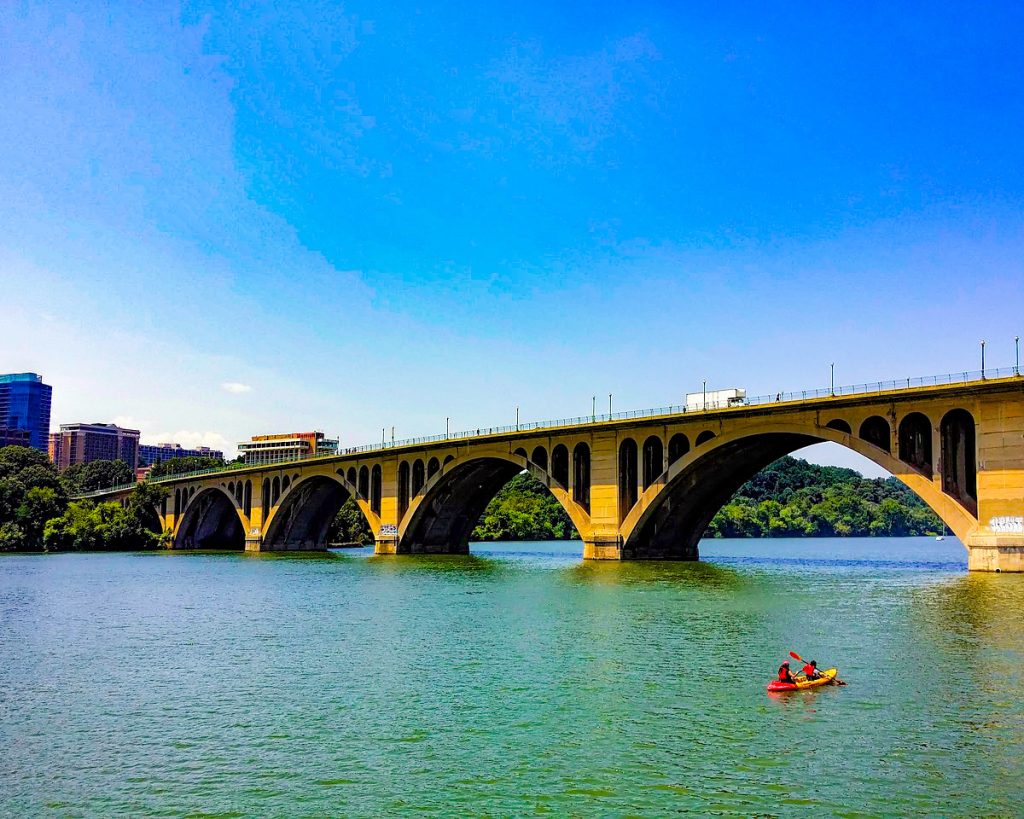
      The park offers stunning views of Key Bridge, Roosevelt Island, and the Kennedy Center and connects to the Capital Crescent Trail for cycling enthusiasts. It’s perfect for picnics, watching rowing teams practice, or simply enjoying the sunset.

      Dumbarton Oaks

      This historic estate stands as a masterpiece of landscape architecture. features 16 acres of terraced gardens, including the famous Rose Garden and Orangery.

      Visit in spring for peak blooming or autumn for spectacular fall colors. Allow time to admire the art museum with its thoughtfully curated pieces.

      Book Hill

      A charming neighborhood, Book Hill represents Georgetown’s cultural heart with its independent bookstores, antique shops, and art galleries. The area comes alive during cherry blossom season with its own collection of blooming trees.

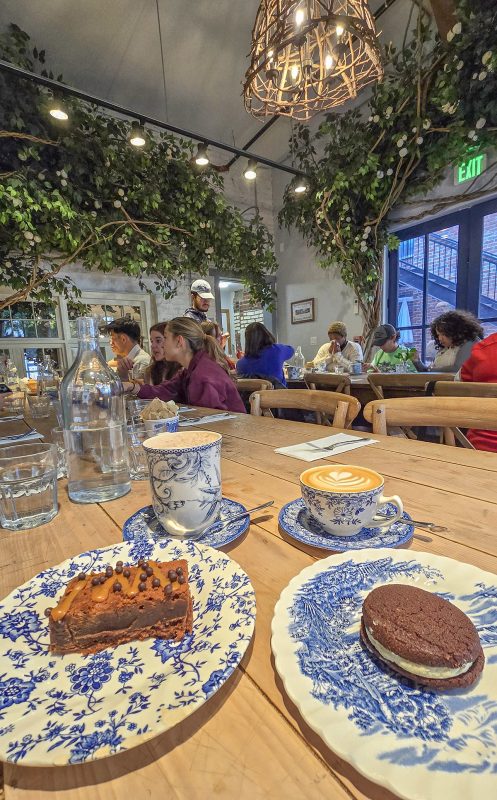
      Maman Cafe brings Parisian charm with its Instagram-worthy decor and famous nutty chocolate chip cookies. Perfect for afternoon tea or a light lunch.

      The Exorcist Steps

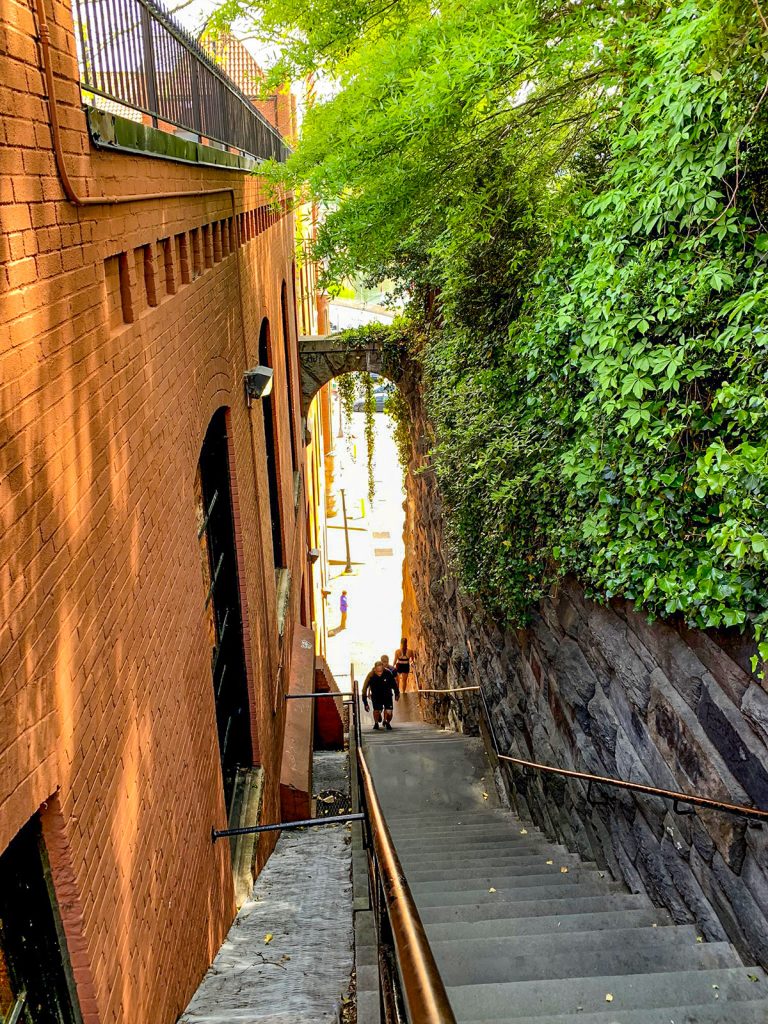
      Film buffs shouldn’t miss the infamous stone staircase between M Street and Prospect Street where the climactic scene from “The Exorcist” was filmed. These 75 steep steps offer not only a piece of cinematic history but also a challenging workout.

      They are located at the corner of Prospect Street and 36th Street NW.

      Martin’s Tavern

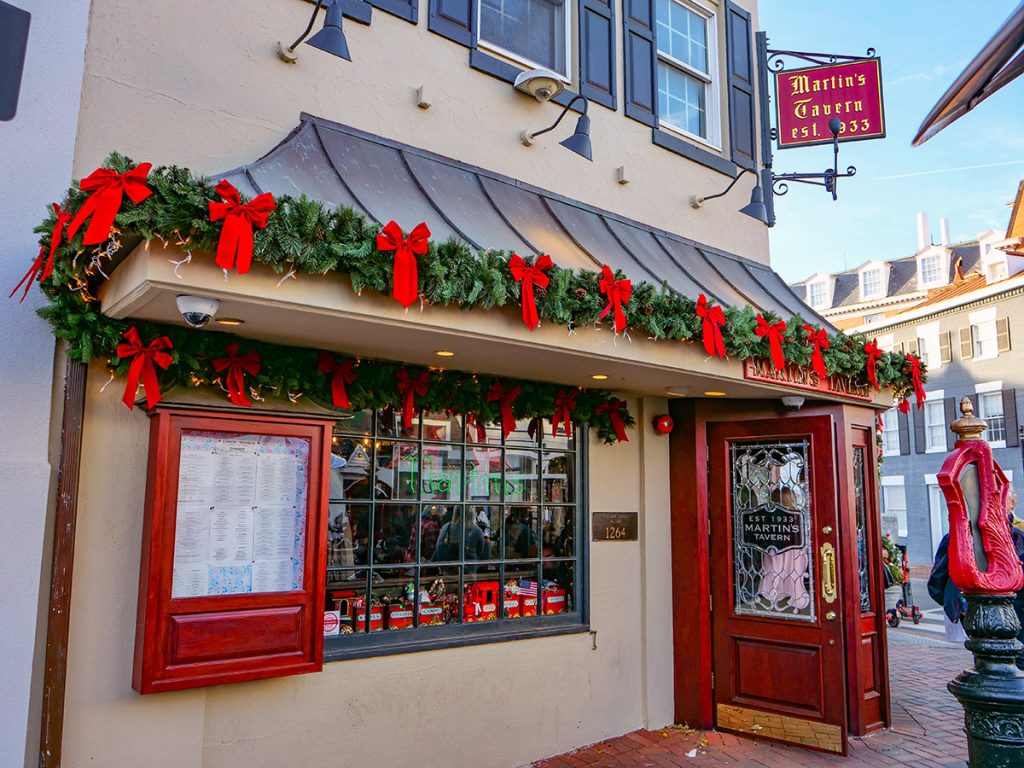
      Step into a piece of Georgetown history at Martin’s Tavern, a family-owned establishment that has been serving locals and luminaries since 1933. This beloved institution has hosted every U.S. president from Harry Truman onwards, earning its nickname as “The Presidential Watering Hole.”

      Most famously, Booth 3 (known as the “Proposal Booth”) is where JFK reportedly proposed to Jackie in 1953. The tavern retains its classic dark wood interior, stained glass windows, and cozy booths while serving hearty American comfort food.

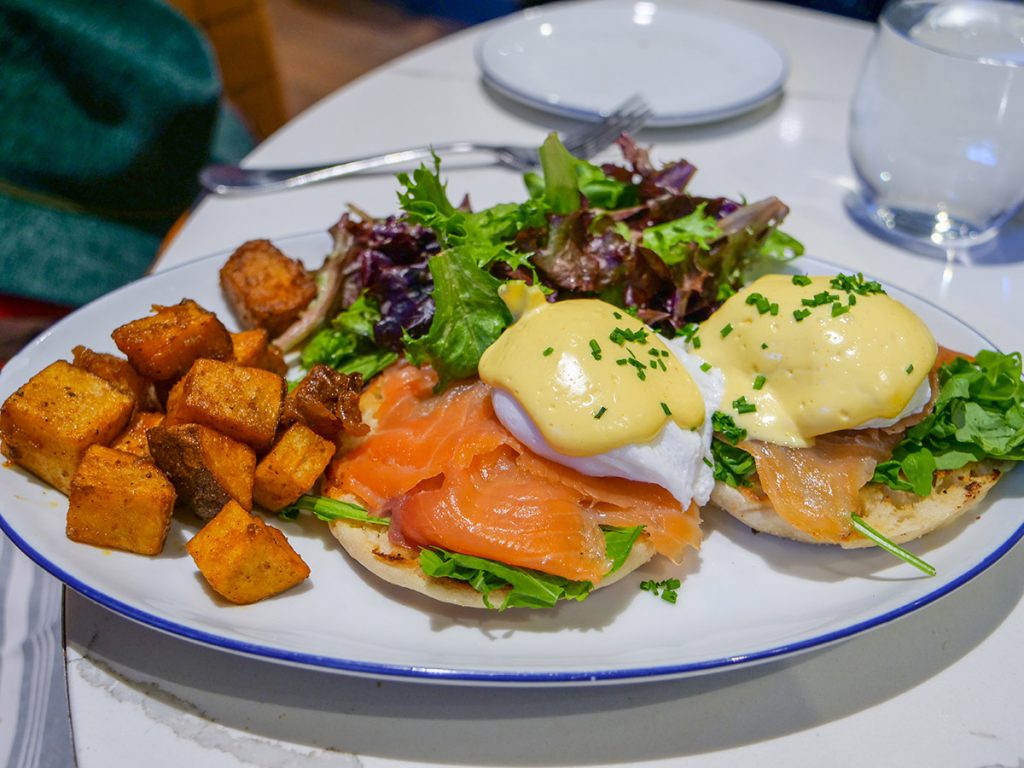
      Their Sunday brunch is legendary, featuring dishes like their famous Chesapeake Benedict. Beyond the presidential history, Martin’s embodies Georgetown’s neighborhood spirit and offers visitors an authentic taste of old Washington.

      Chesapeake and Ohio Canal

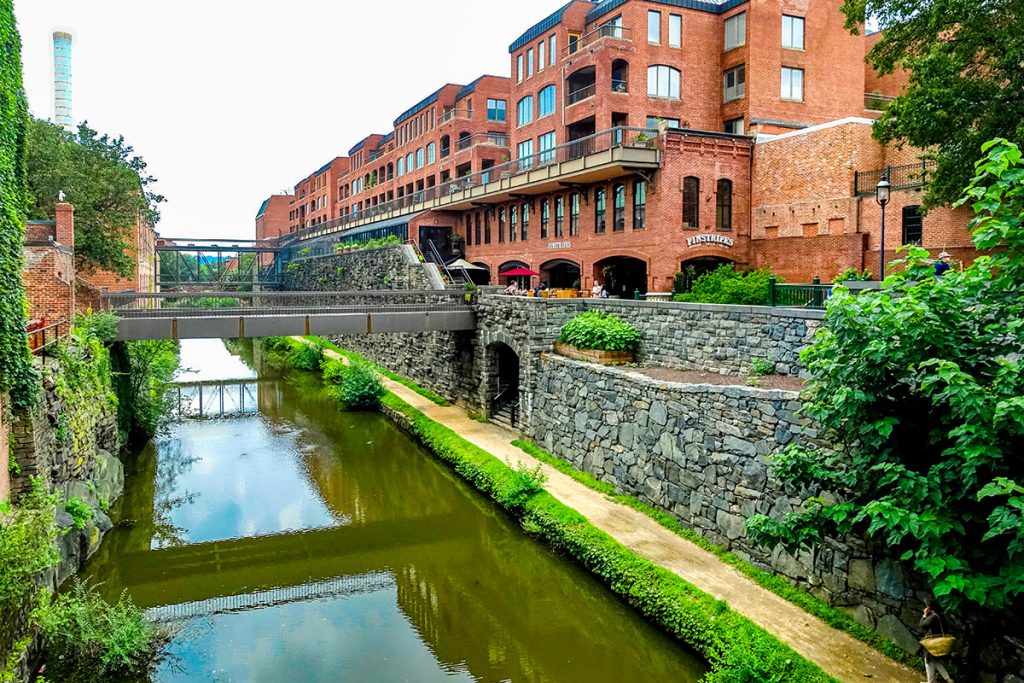
      The historic C&O Canal, once a vital transportation route, now serves as a scenic recreational path. Rent a bike or take a leisurely walk along the towpath while enjoying views of the canal’s lock systems and 19th-century lockhouses.

      For a unique experience, book a boat tour on one of the replica canal boats during spring and summer months, where park rangers in period clothing explain the canal’s historical significance.

      Blues Alley Jazz Club

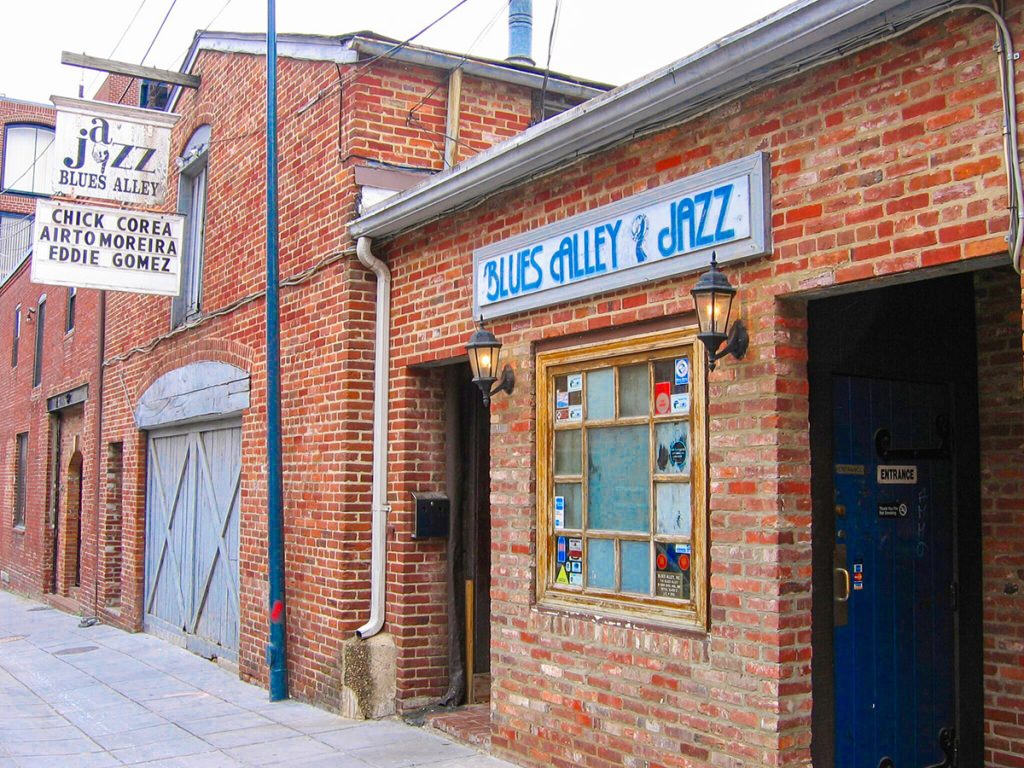
      Enjoy dinner and drinks while experiencing live performances in America’s oldest continuing jazz supper club. Blues Alley Jazz Club brings world-class music to an intimate setting in a historic 18th-century carriage house.

      Old Stone House

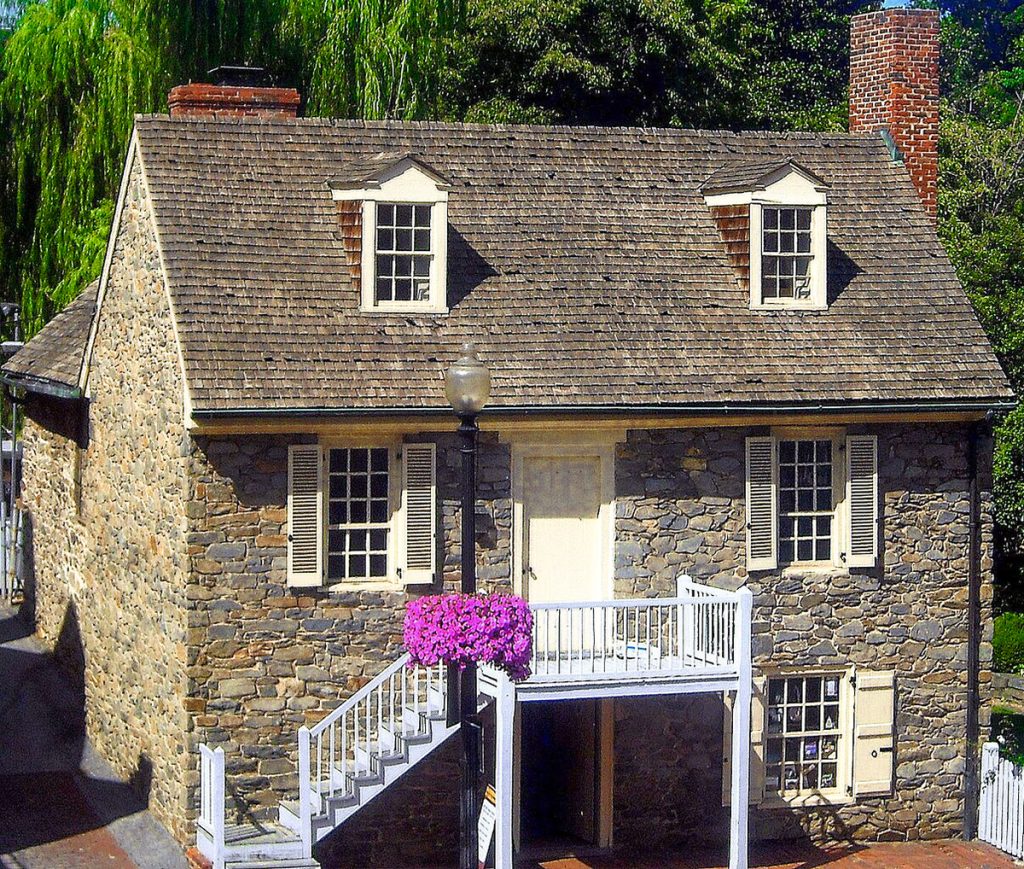
      Built in 1765, The Old Stone House stands as DC’s oldest unchanged building and offers a fascinating glimpse into pre-Revolutionary America. This National Park Service site features period furnishings and a beautiful garden.

      Take a self-guided tour through the house to experience what life was like in colonial Georgetown, and don’t miss the charming garden out back – a peaceful oasis in the bustling neighborhood.

      Paddle on the Potomac River

      For a different perspective of Georgetown, rent a kayak, canoe, or paddleboard from the Thompson Boat Center or Key Bridge Boathouse. Gliding along the Potomac gives you spectacular views of the Kennedy Center, Roosevelt Island, and Georgetown’s historic waterfront.

      La Bohème

      Located at 2622 P St NW, La Boheme offers an authentic French bistro experience with its charming atmosphere and classic dishes. This Washington hidden gem features a cozy interior with exposed brick walls and intimate lighting, perfect for a romantic dinner or special occasion.

      Their menu showcases traditional French classics with modern interpretations, from perfectly executed coq au vin to delicate seafood dishes. The restaurant’s outdoor patio seating is particularly delightful during spring and summer months.

      Georgetown University Campus

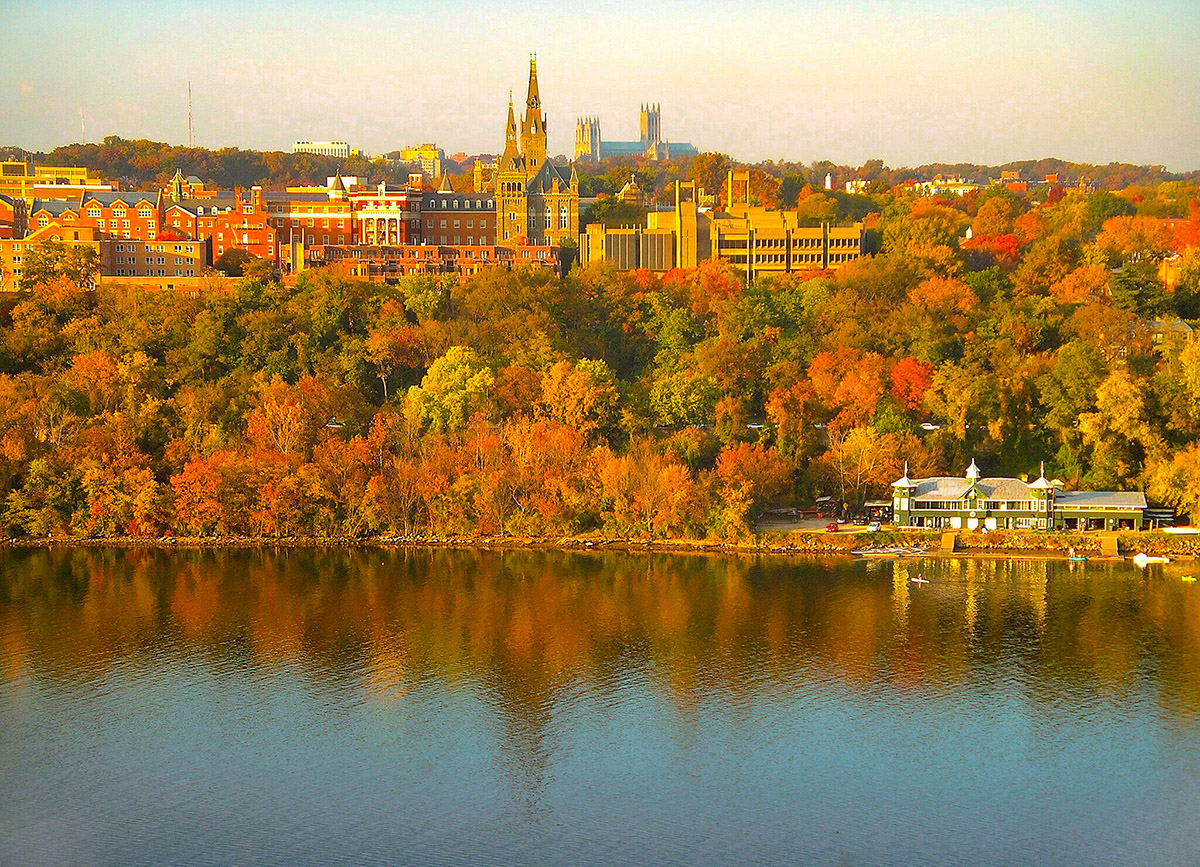
      Founded in 1789, Georgetown University boasts stunning Gothic architecture and beautiful grounds. Take a campus tour or simply wander through the historic buildings, including Healy Hall with its impressive spires.

      The university’s hilltop location offers some excellent views of the Potomac River.

      Tudor Place Historic House and Garden

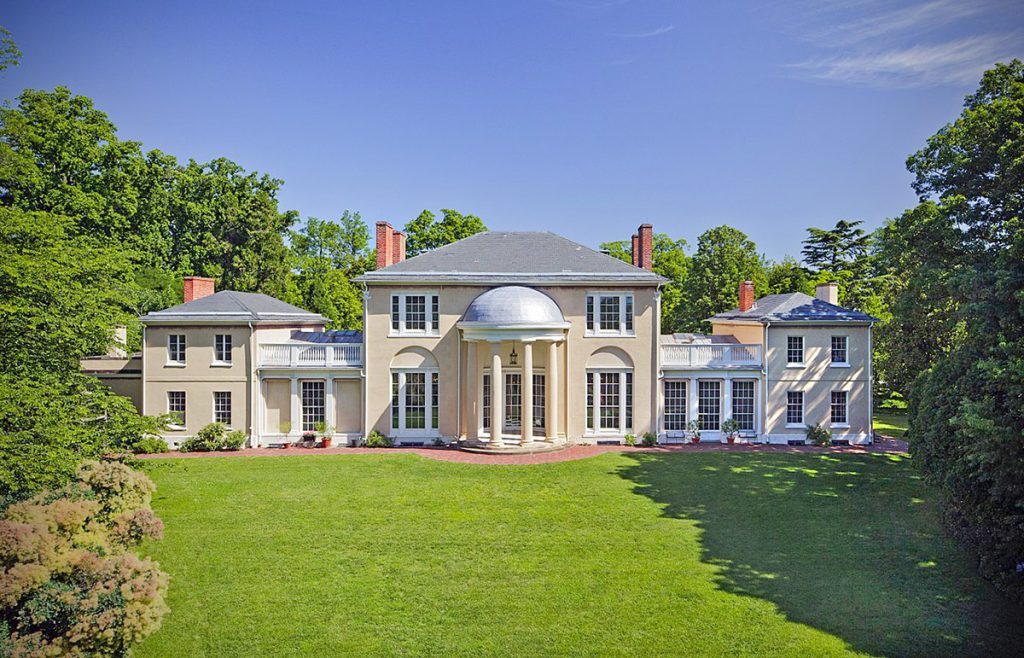
      Built by Martha Washington’s granddaughter, this neoclassical mansion holds one of the largest collections of Washington family heirlooms outside Mount Vernon. The five-acre garden showcases various landscape styles from the 18th to 20th centuries.

      Shopping in Georgetown DC

      Georgetown’s main commercial corridors offer everything from high-end designer boutiques to quirky independent shops. The neighborhood is a haven for vintage enthusiasts with several standout shops offering everything from designer couture to quirky collectibles.

      M Street and Wisconsin Avenue form Georgetown’s main shopping arteries. Browse men’s fashion favorites like Buck Mason, J. Press, Sid Mashburn and Sézane, Reformation and Rag & Bone for women. The restored historic buildings housing these shops add to the charm of your shopping experience.

      Interior design enthusiasts shouldn’t miss Georgetown’s Design District, with high-end home furnishing stores, art galleries, and architecture studios. This area is home to upscale furniture retailers like Design Within Reach and Waterworks.

      Local Tips

      • Visit on weekdays to avoid the heaviest crowds
      • Many historic houses offer free tours on weekends
      • Parking can be challenging; consider using ride-share services
      • Make dinner reservations in advance, especially for weekend dining
      • Check Georgetown BID’s website for seasonal events and festivals
      • The best photo opportunities are during early morning or sunset
      • Georgetown’s cobblestone sidewalks are charming but challenging in heels!

      How to Get To Georgetown DC

      Georgetown isn’t directly accessible by Metro, but don’t let that deter you. Take the Blue, Orange, or Silver line to Foggy Bottom station, then either walk 10 minutes or hop on the free Georgetown Circulator Bus.

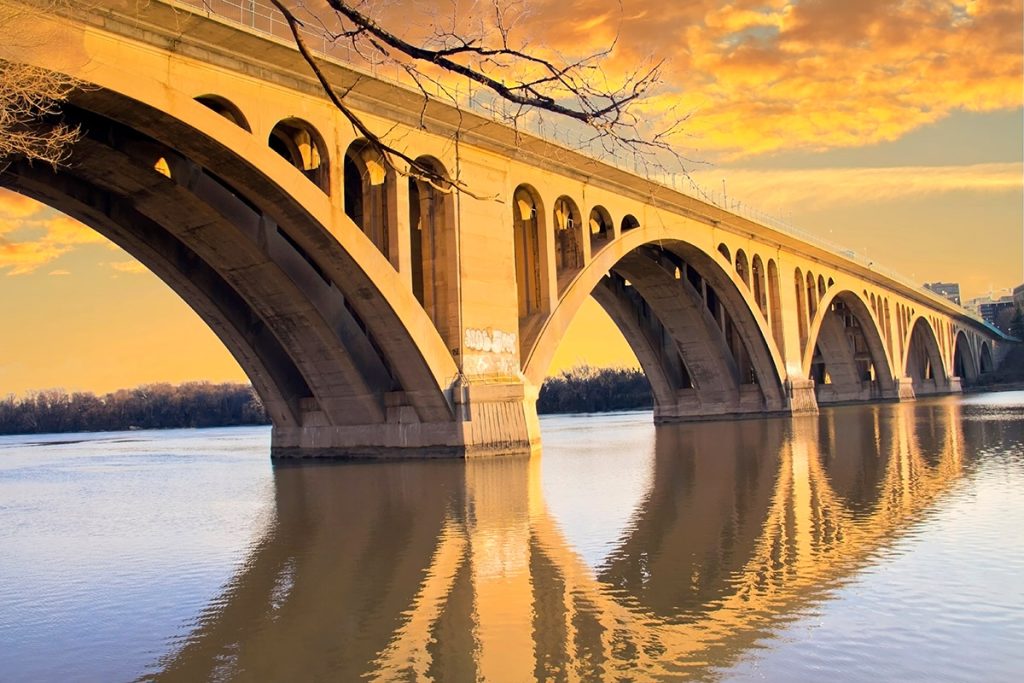
      Alternatively, catch the 30-series Metrobus from downtown DC or walk across Francis Scott Key Memorial Bridge.

      Where to Stay in Georgetown DC

      The Ritz-Carlton Georgetown offers luxury accommodations with prime location access to all attractions. For boutique charm, try The Graham Georgetown with its popular rooftop bar, or Georgetown Inn, a historic property with modern amenities.

      Best Time to Visit Georgetown DC

      Spring (March-May) and Fall (September-November) offer the most pleasant weather and beautiful scenery. December is magical with holiday decorations and shopping, while summer brings outdoor dining and waterfront activities to life.

      Remember to wear comfortable walking shoes – Georgetown is best experienced on foot, allowing you to discover hidden courtyards, historic homes, and secret gardens that make this neighborhood so special.

    4. 3 Day Malta Trip Itinerary For First Time Visitors

      3 Day Malta Trip Itinerary For First Time Visitors

      Malta may be one of Europe’s smallest countries, but this Mediterranean archipelago packs an extraordinary amount of history, culture, and natural beauty into its landmass. This comprehensive 3 day Malta trip itinerary is designed to help you experience the best of the island.

      From the golden-hued capital of Valletta to the rugged landscapes of Gozo and the medieval streets of Mdina, this guide covers the essential destinations that make Malta a unique European destination. Whether you’re a history buff, a foodie, or simply seeking Mediterranean sunshine, this luxury Malta guide will ensure you make the most of your time on this enchanting island.

      Day 1: Valletta and Sliema

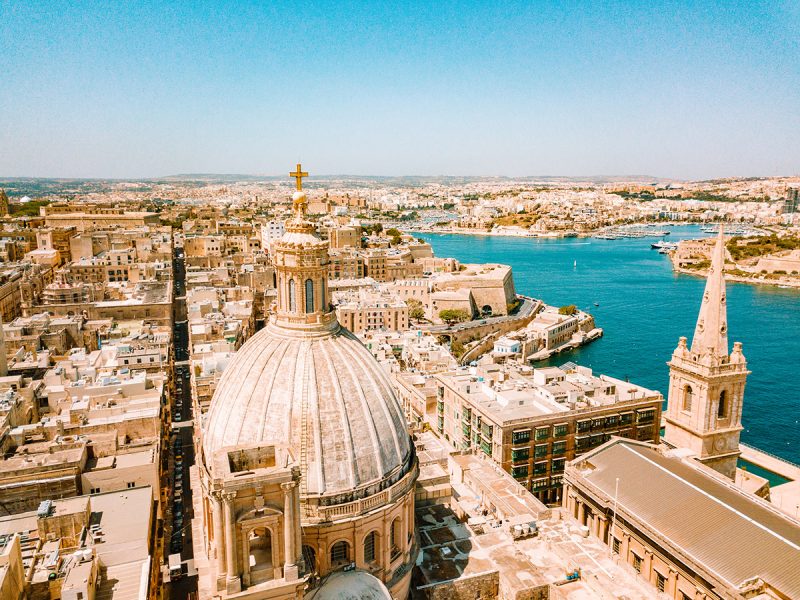
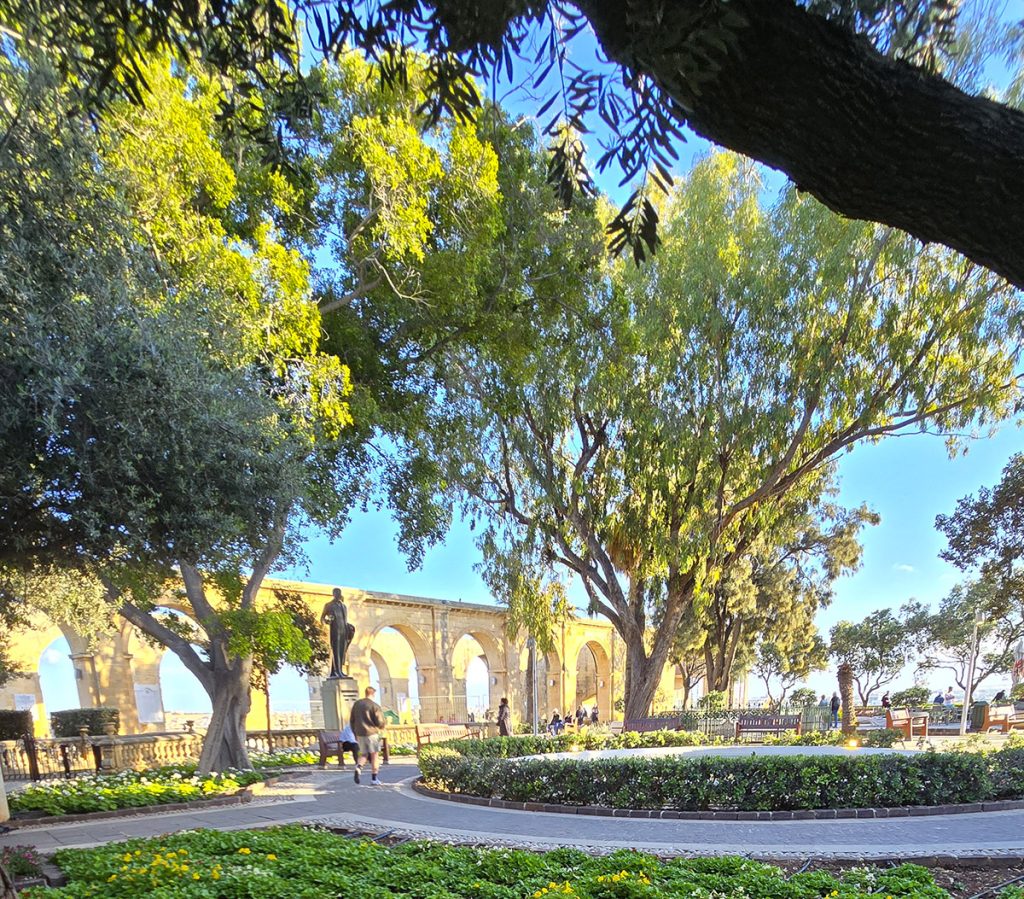
      Morning: Begin your Malta adventure in Valletta, the UNESCO World Heritage-listed capital. Start at Upper Barrakka Gardens for spectacular views of the Grand Harbour. Explore St. John’s Co-Cathedral to admire its ornate Baroque interior and Caravaggio masterpieces.

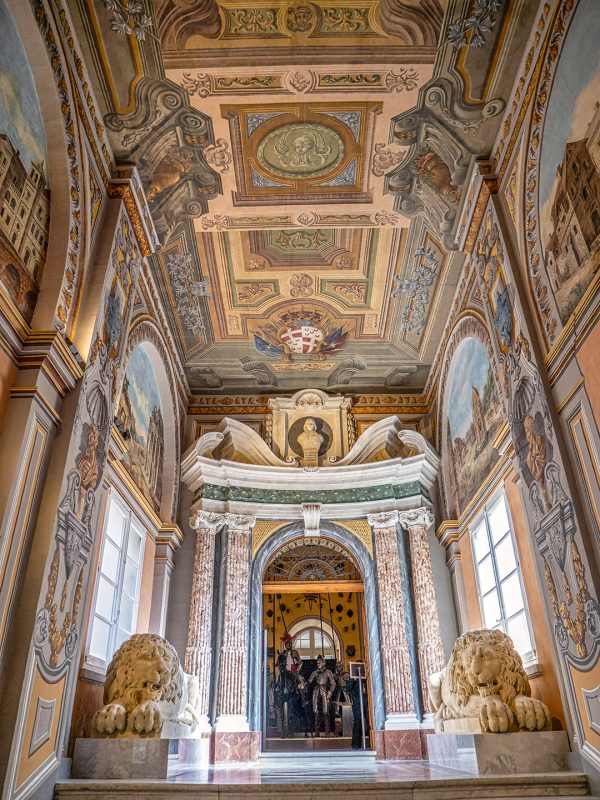
      Afternoon: Walk down Republic Street (recognizable from the film “World War Z”) to discover the Grand Master’s Palace and its impressive armoury collection. Have lunch at Caffe Cordina or one of the charming restaurants along Strait Street. Afterward, visit the National Museum of Archaeology to learn about Malta’s prehistoric past.

      Evening: Take the ferry across Marsamxett Harbor to Sliema (a 10-minute ride). Enjoy a leisurely stroll along the promenade, watching locals fish from the rocky shores.

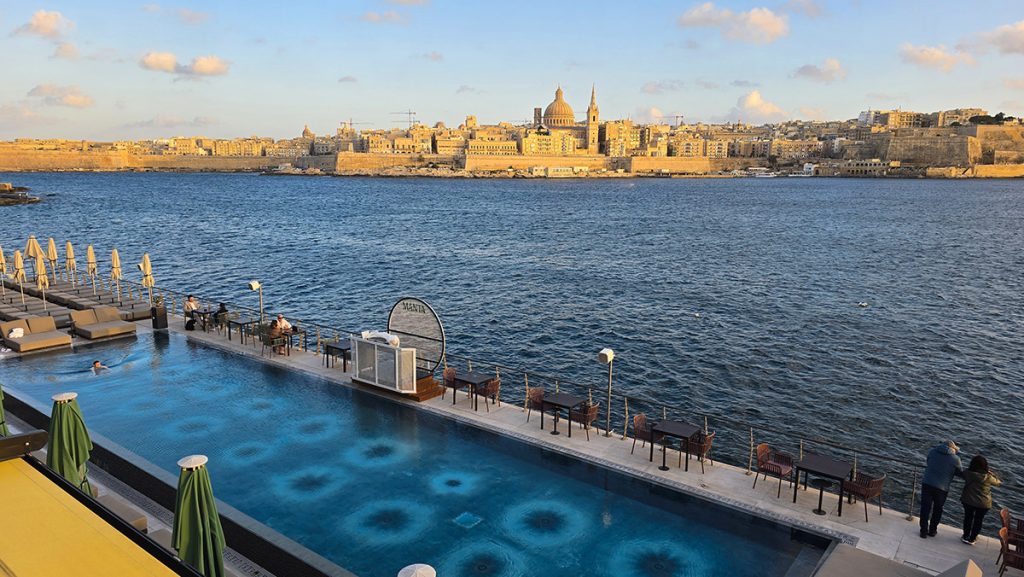
      If you’re interested in shopping, visit The Point Shopping Mall before dinner. Dine at one of the waterfront restaurants such as Manta or Tora, with views of Valletta’s illuminated fortifications.

      Day 2: Mdina and Naxxar

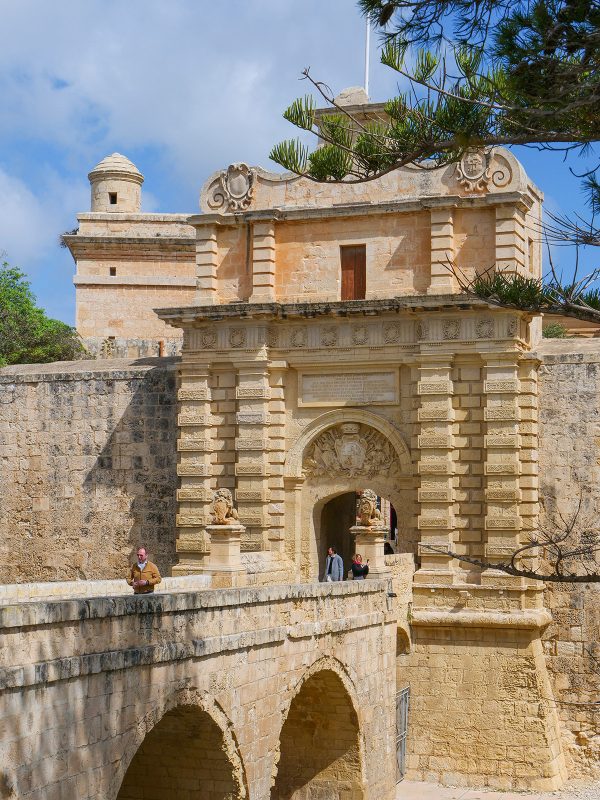
      Morning: Head to Mdina, Malta’s ancient walled capital and a prominent Game of Thrones filming location. Enter through the iconic Mdina Gate (King’s Landing’s gate in the series) and explore the “Silent City’s” narrow, car-free streets. Visit the impressive St. Paul’s Cathedral and look over the city walls for panoramic views of central Malta.

      Afternoon: Just a short drive from Mdina, head to the charming nearby town of Naxxar. Enjoy lunch at The Village Kitchen Restaurant and a relaxing treatment at The Village Spa – make sure to book in advance.

      Evening: Return to your accommodation area for dinner.

      Day 3: Gozo Island

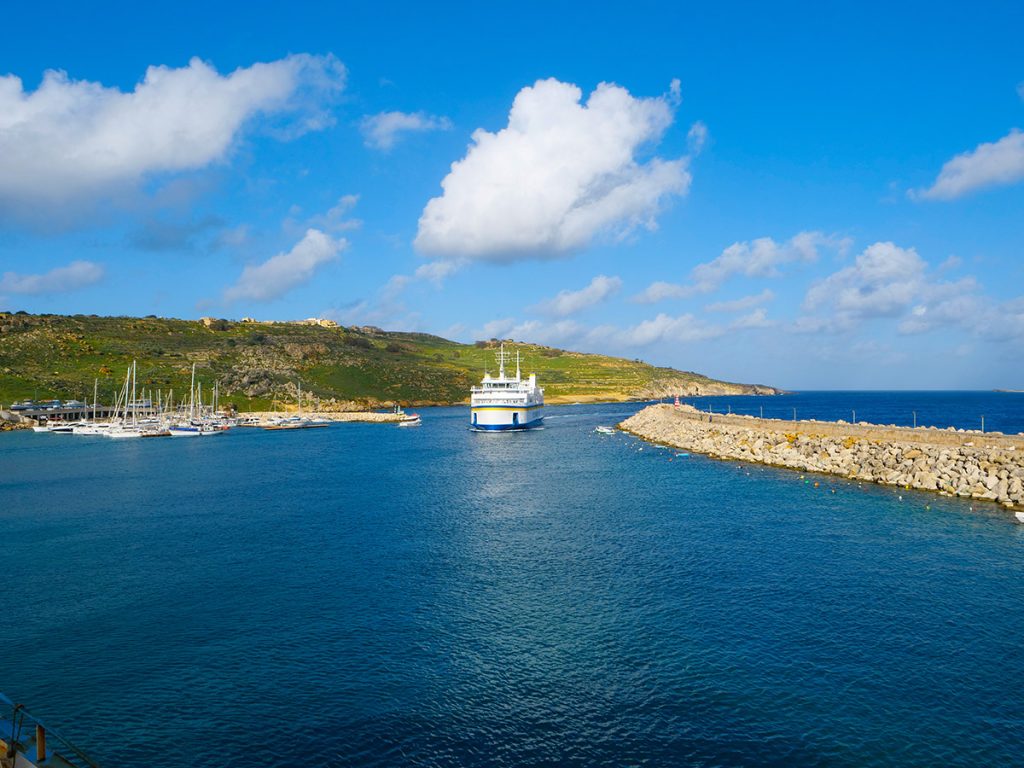
      Morning: Catch an early ferry from Ċirkewwa or Sliema to Gozo Island. Head straight to Victoria (Rabat), Gozo’s capital, to explore the imposing Citadel fortress with its medieval walls and magnificent cathedral.

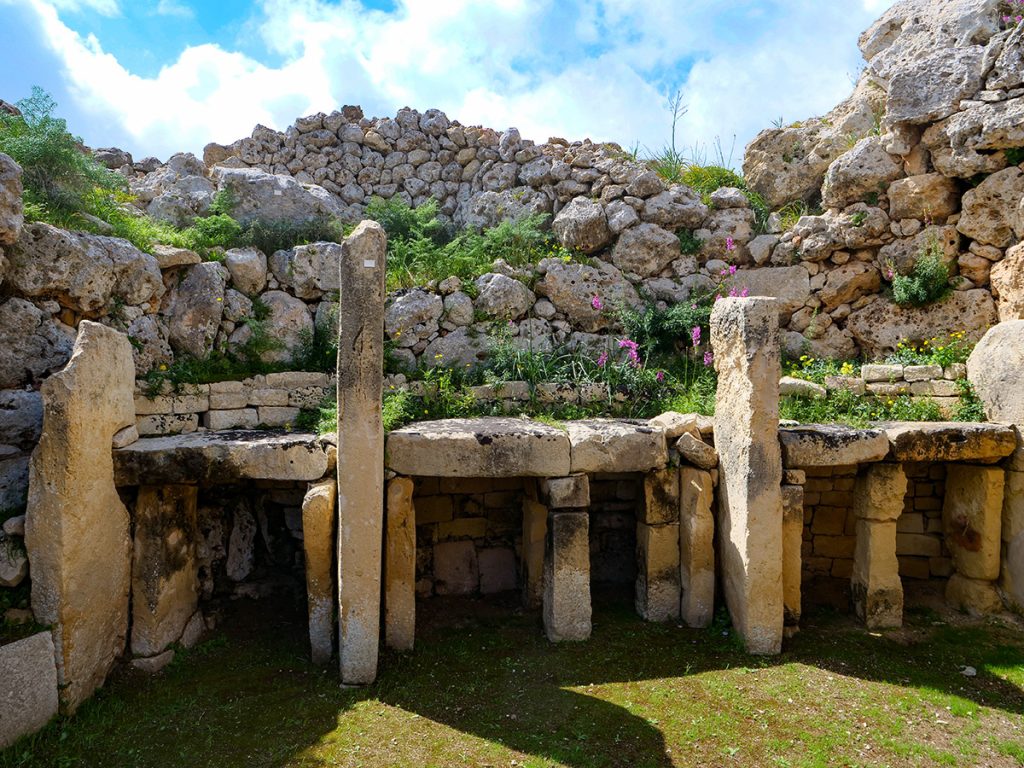
      Afternoon: Visit the prehistoric Ġgantija Temples, some of the world’s oldest freestanding structures dating back to 3600 BC. Afterward, head to Dwejra to see where the famous Azure Window once stood (the backdrop for the Dothraki wedding scene in Game of Thrones) and take a boat ride through the nearby Blue Hole if weather permits.

      Evening: Before catching the return ferry, stop at Marsalforn or Xlendi Bay for a seafood dinner overlooking the Mediterranean. If time allows, visit Ta’ Pinu Basilica, an important pilgrimage site with stunning countryside views.

      Return to your accommodation for your final night in Malta, enjoying a nightcap while reflecting on your whirlwind tour of this historic Mediterranean archipelago.

      Where to Stay in Malta

      Sliema is the ideal base for your 3-day Malta trip. It provides modern amenities and shopping, while being close to Valletta and St. Julian’s.

      Best View: Fortina Luxury Suites

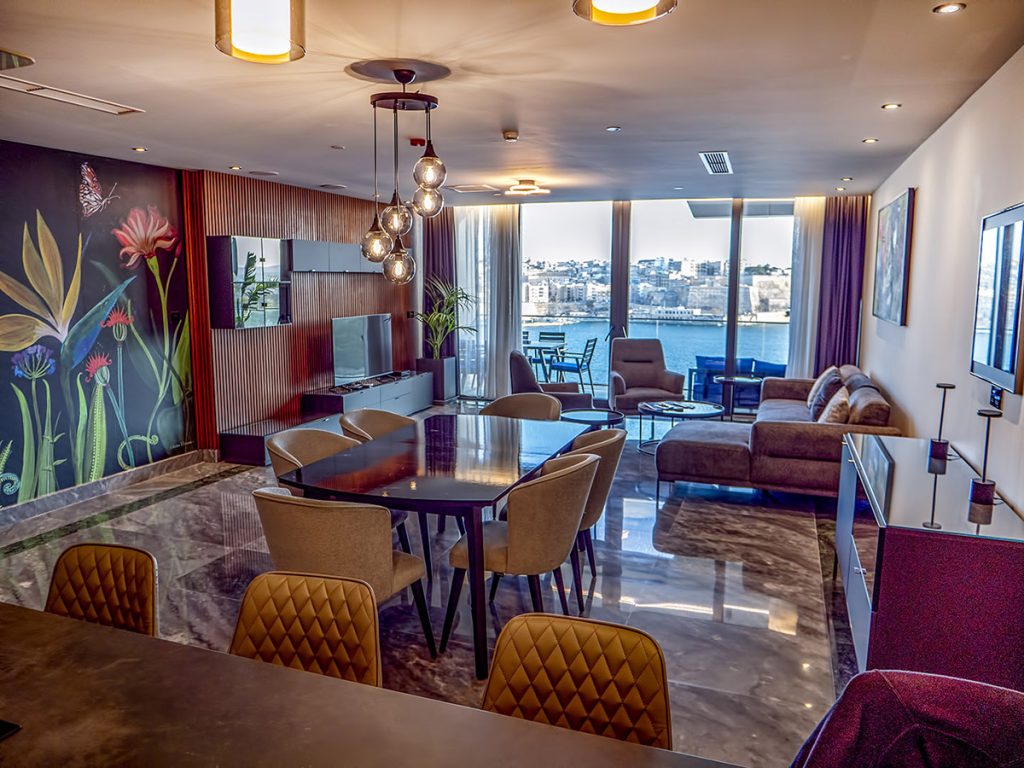
      For breathtaking harbour views and stylish interiors, Best View Fortina Luxury Suites in Sliema stand out as an exceptional choice. These suites offer panoramic vistas of Valletta’s skyline across Marsamxett Harbour, especially magical at sunset and sunrise.

      Choose from one, two and three bedroom apartments, accommodating groups of up to seven. Each bedroom has its own en-suite bathroom.

      Guests benefit from well equipped kitchens with air-fryers and ice makers, laundry rooms and access to a luxurious spa, gym, indoor pool and outdoor lido, as well as dining discounts in nearby restaurants.

      Prices start at £310 per night for a one-bedroom apartment to £505 per night for a three-bedroom suite, with a minimum two-night stay.

      If you prefer a hotel experience, we recommend The Village Boutique and Spa in Naxxar, which offers beautifully appointed rooms and suites in a converted Maltese farmhouse.

      Where to Eat in Malta

      Malta’s cuisine reflects its rich history, blending Mediterranean flavours with influences from Italy, North Africa, and Britain. Here are some standout dining options across the island:

      Manta (Sliema)

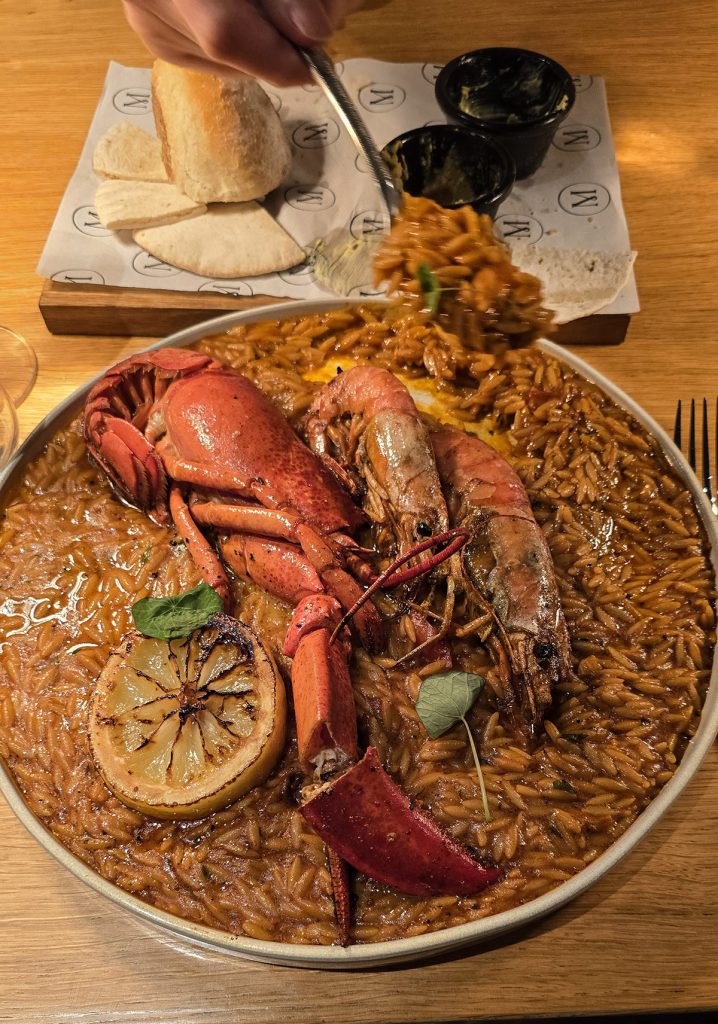
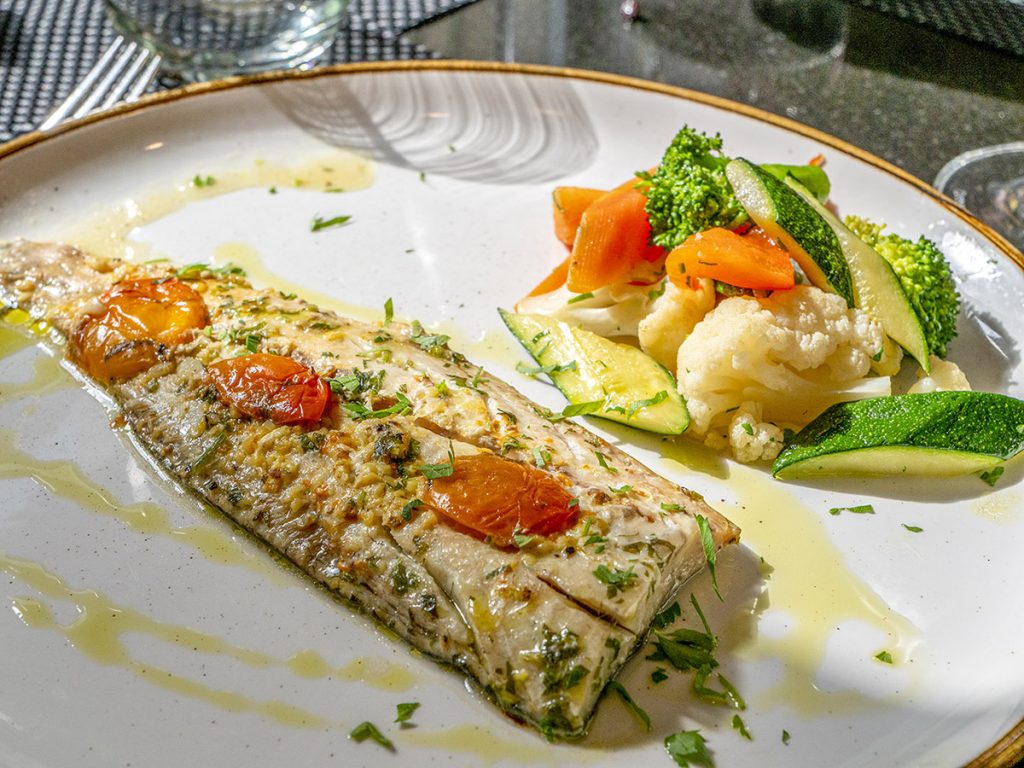
      Located on Sliema’s waterfront with spectacular views of Valletta across the harbour, Manta specializes in fresh seafood and Mediterranean cuisine. The restaurant’s contemporary design complements its innovative menu, featuring dishes like octopus carpaccio, prawn risotto, and locally caught sea bass.

      Manta’s sunset cocktails are particularly popular, best enjoyed on the terrace watching the golden light illuminate Valletta’s bastions.

      Caffe Cordina (Valletta)

      A Valletta institution since 1837, Caffe Cordina is located in a historic palazzo on Republic Street. The ornate interior features beautiful frescoed ceilings, while the outdoor seating offers perfect people-watching opportunities.

      They’re famous for their pastizzi (savory pastries filled with ricotta or mushy peas), traditional Maltese sweets, and excellent coffee. Their ftira (Maltese bread) sandwiches make an ideal quick lunch while exploring the capital.

      The Village Kitchen Restaurant (Naxxar)

      Tucked away in the heart of Naxxar, The Village Kitchen offers authentic Maltese cuisine in a charming setting. Family-run and beloved by locals, this stylish restaurant, hotel and spa serves a great range of dishes.

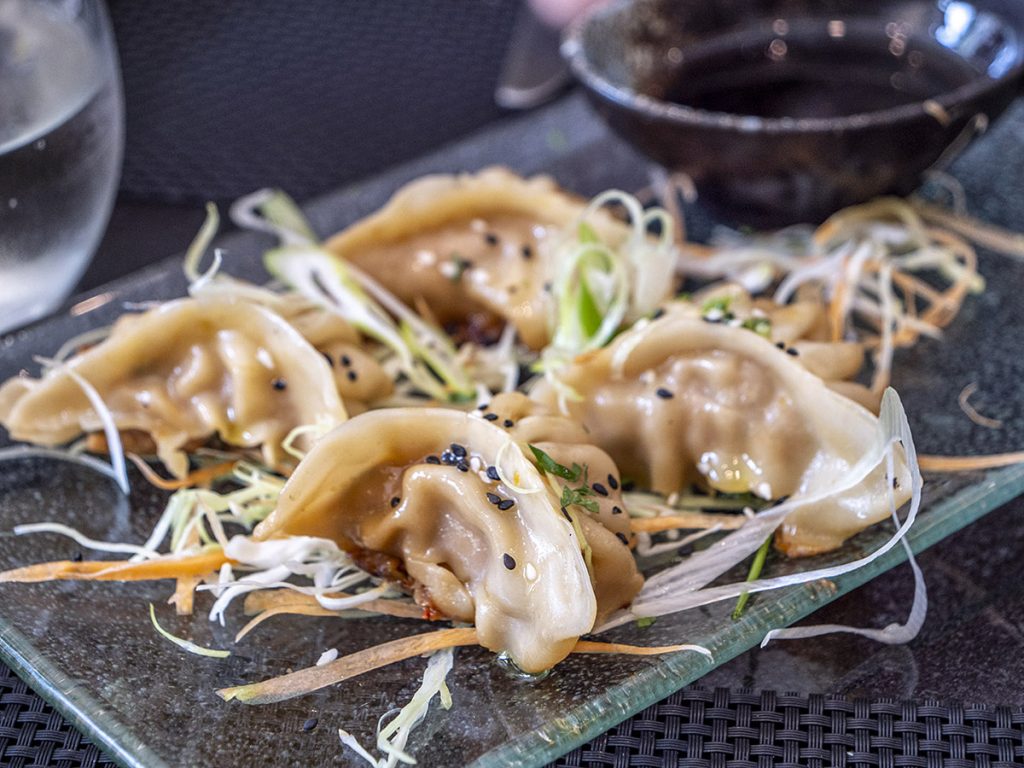
      Enjoy Garganelli Maltese sausage pasta and truffle, chicken and vegan gyozas and fresh fish of the day. Make sure to save room for their homemade desserts.

      La Pira Maltese Kitchen (Valletta)

      In the heart of Valletta on Old Theatre Street, La Pira Maltese Kitchen offers an authentic culinary journey through traditional Maltese cuisine. The restaurant prides itself on using locally-sourced ingredients and time-honored recipes passed down through generations.

      Their menu showcases classic dishes like slow-cooked rabbit stew, bragioli (beef olives), and fresh lampuki (dorado) when in season. La Pira also offers a thoughtfully curated selection of Maltese wines from small local vineyards, providing the perfect opportunity to sample the island’s viticultural heritage.

      TORA (Sliema)

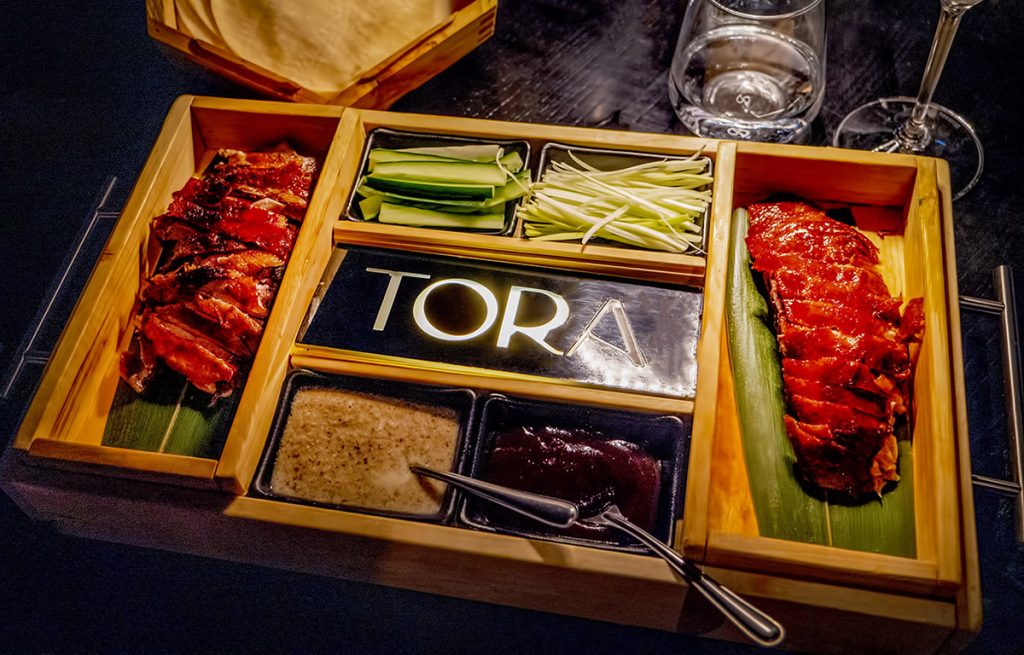
      For those seeking international flavors, TORA delivers exceptional Japanese cuisine in an elegant setting. With a fantastic view of Marsamxett Harbour and Valletta, this restaurant offers meticulously prepared sushi, sashimi, and robatayaki (Japanese barbecue).

      The tasting menu provides an excellent introduction to their culinary philosophy, while the wine and sake selection complements the dining experience perfectly.

      Queen Elizabeth II Pub (Sliema)

      Located along Sliema’s bustling waterfront promenade, the Queen Elizabeth II Pub offers a delightful blend of British pub atmosphere with Maltese hospitality. This establishment pays homage to Malta’s historical British connections while serving hearty pub classics alongside Mediterranean favourites.

      Queen Elizabeth II Pub is popular for its traditional Sunday roasts, fish and chips, and selection of British and local beers on tap. The pub also features live sports screenings, creating a vibrant atmosphere that attracts both tourists and expats.

      How to Get to Malta

      Malta is served by Malta International Airport (MLA), located near the town of Luqa. Major airlines like Air Malta, British Airways, Ryanair, EasyJet, and Lufthansa offer regular flights from various European cities. Flight times from major European hubs range from 2-4 hours, making Malta easily accessible for a weekend getaway.

      For travellers coming from further away, connecting flights through major European airports like London, Frankfurt, or Rome are common options. During Summer months, some cruise lines also include Malta as a port of call, offering another way to visit the island.

      How to Get Around Malta

      Malta’s compact size makes it relatively easy to explore, with several transportation options available:

      Ferry Services: Regular ferries connect Valletta to Sliema and the Three Cities, providing a scenic alternative to road transport. Gozo island can be reached via the Gozo Channel ferry.

      Taxis and Ride-sharing: Traditional taxis and ride-sharing services like Bolt are readily available. They offer convenience for shorter trips or when travelling with luggage.

      Car Rental: Renting a car gives you flexibility, especially for reaching remote beaches and villages. Remember that Maltese drive on the left side of the road, and parking in popular areas can be challenging.

      Public Buses: Malta’s extensive bus network connects most towns and attractions. A single journey ticket costs €2.50 in Summer (€2 in Winter), while a 7-day unlimited travel card costs €25 (€7 for children). Buses can get crowded during peak tourist season.

      3 Days in Malta Trip Itinerary

      While three days in Malta may seem brief, this 3 day Malta trip itinerary allows you to experience the essence of this captivating Mediterranean destination. Malta’s compact size works to the advantage of short-term visitors, making it possible to cover significant ground without feeling rushed.

      The combination of remarkable history spanning 7,000 years, stunning coastal scenery, delicious cuisine, and warm Maltese hospitality creates an unforgettable experience.

    5. 10 Luxurious Art-Focused American Road Trips You Should Take

      10 Luxurious Art-Focused American Road Trips You Should Take

      To celebrate World Art Day on April 15th, we’re featuring the best art focused American road trips connecting the nation’s cultural capitals. Each journey combines breathtaking scenery, exceptional accommodations, and unforgettable art experiences.

      1.The Northeast Art Corridor: New York to Boston

      Begin at The Frick Collection in NYC, followed by a private tour of MoMA. Stay at The Mark Hotel on Manhattan’s Upper East Side.

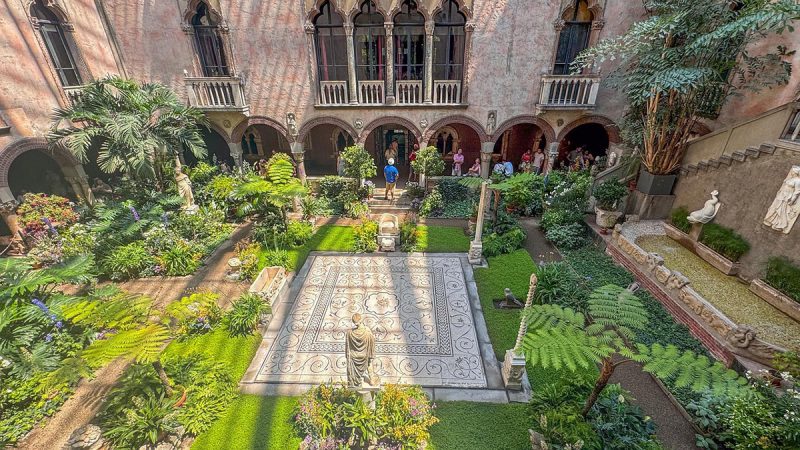
      Drive to New Haven for the Yale University Art Gallery, then continue to the Clark Art Institute in Williamstown, MA. End in Boston with the Isabella Stewart Gardner Museum and stay at the XV Beacon hotel with its own art collection.

      Luxury touch: Book a chauffeured Bentley to navigate the route while you enjoy the scenery.

      2.California Art & Wine Trail: San Francisco to Los Angeles

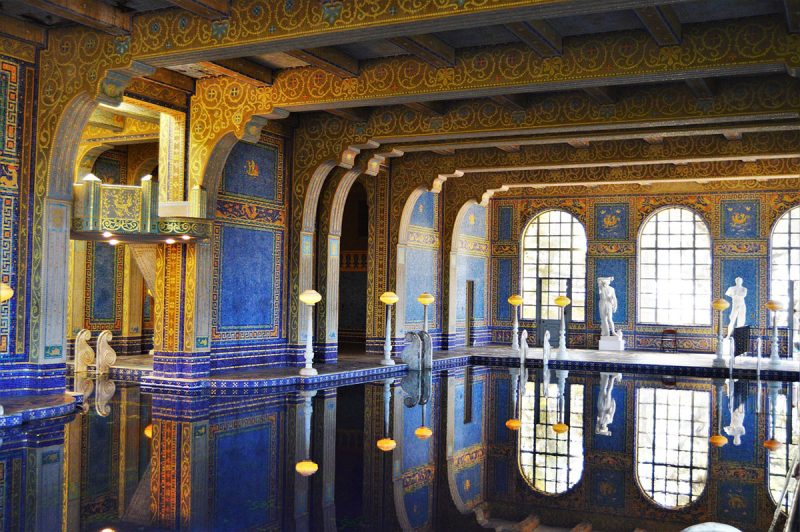
      Start at SFMOMA with a curator-led experience and stay at the St. Regis San Francisco. Visit the renowned art collection at Hearst Castle en route.

      When it reopens, explore the Getty Villa in Malibu with reserved entry. End at The Broad in downtown LA and stay at Hotel Bel-Air or the Waldorf Astoria Beverly Hills.

      Luxury touch: Schedule private wine tastings at exclusive vineyards along the central coast, featuring limited-edition artist-designed labels.

      3.Southern Heritage & Contemporary Art: New Orleans to Miami

      Start with a private collection tour in New Orleans’ Garden District. Book a stay at Maison Métier or The Ritz-Carlton, New Orleans and visit the Ogden Museum of Southern Art.

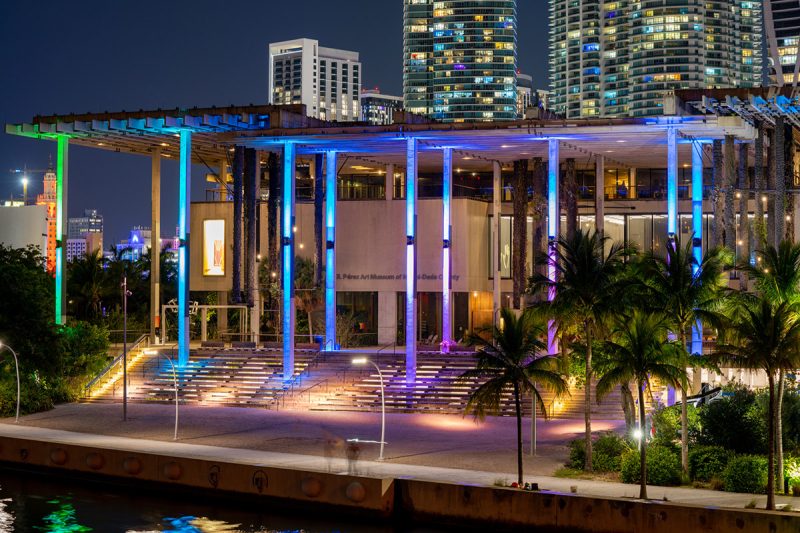
      Continue to the High Museum of Art in Atlanta. Finish your arty American road trip at the Pérez Art Museum Miami and the Rubell Museum. Stay at the stunning Faena Hotel Miami Beach.

      Luxury touch: Arrange helicopter transfers between select cities to maximize time at each artistic destination.

      4.Desert Modernism: Santa Fe to Palm Springs

      Begin at SITE Santa Fe and then the Georgia O’Keeffe Museum. Stay at the Four Seasons Resort Rancho Encantado.

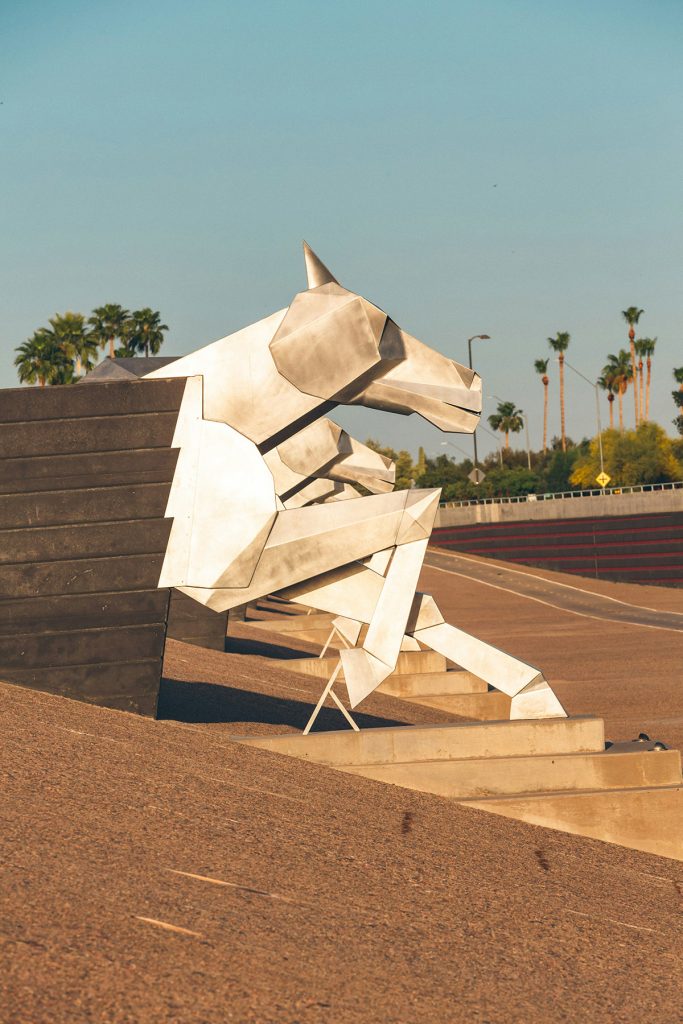
      Visit Scottsdale’s impressive public art installations and tour the extraordinary collections at Phoenix Art Museum. End at the Palm Springs Art Museum and book a stay at the Parker Palm Springs.

      Luxury touch: Coordinate with galleries for private viewings and artist meet-and-greets in each location.

      5.Great Lakes Art Adventure: Chicago to Detroit

      Start at the Art Institute of Chicago with an exclusive skip-the-line guided tour. Check out some of the most photogenic Chicago sights and stay at The Peninsula Chicago or The Blackstone.

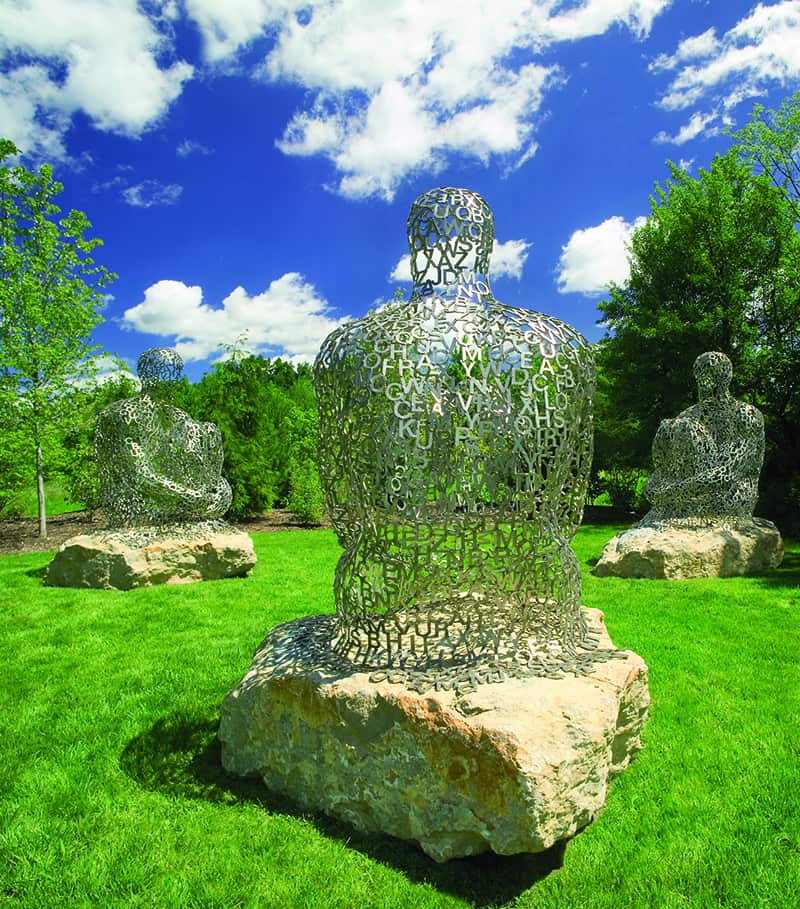
      Next, visit the Milwaukee Art Museum’s architectural marvel. Tour the Frederik Meijer Gardens & Sculpture Park in Grand Rapids. End at the Detroit Institute of Arts and the Museum of Contemporary Art Detroit. Stay at the Book the Detroit Foundation Hotel.

      Luxury touch: Enjoy a private boat tour of Lake Michigan featuring architectural highlights and waterfront sculpture parks.

      6.Pacific Northwest Art Odyssey: Portland to Vancouver

      Begin your journey at the Portland Art Museum with its impressive Native American collection. Stay at The Nines hotel, itself a showcase for local artists.

      Drive north to Seattle’s Olympic Sculpture Park with its stunning Puget Sound backdrop. Visit the Seattle Art Museum for its exemplary Asian art collections.

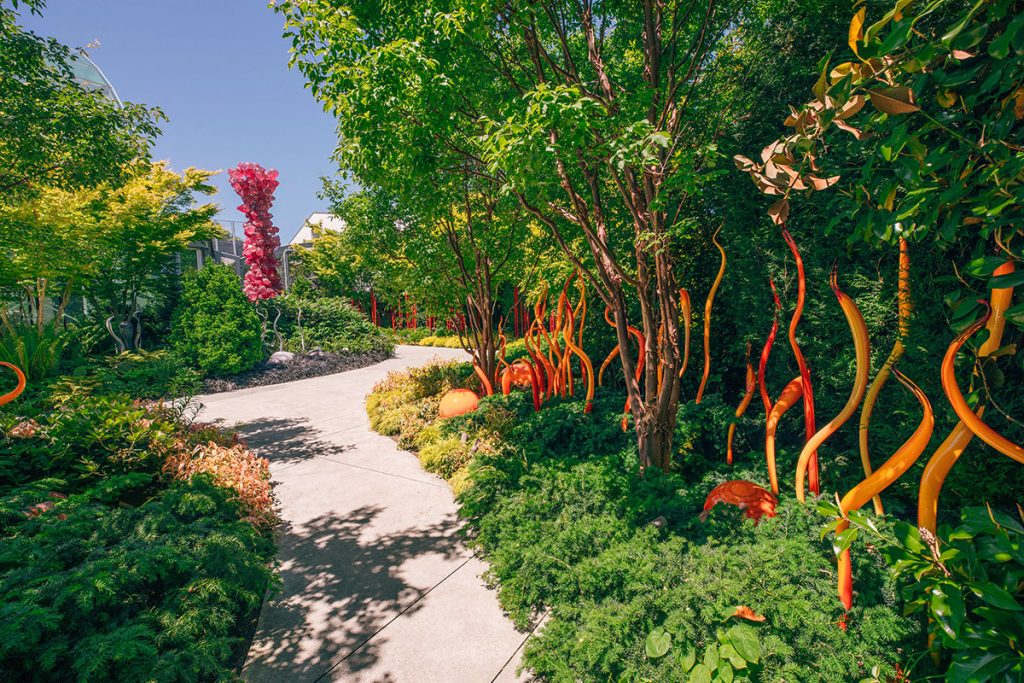
      Continue to the breathtaking Chihuly Garden and Glass in Seattle. Cross the border to Vancouver for the Vancouver Art Gallery and Bill Reid Gallery of Northwest Coast Art. Conclude your stay at the Fairmont Pacific Rim with its own impressive art program.

      Luxury touch: Charter a seaplane between Seattle and Vancouver for magnificent aerial views of the cascading landscapes that inspire regional artists.

      7.Rocky Mountain Art Expedition: Denver to Santa Fe

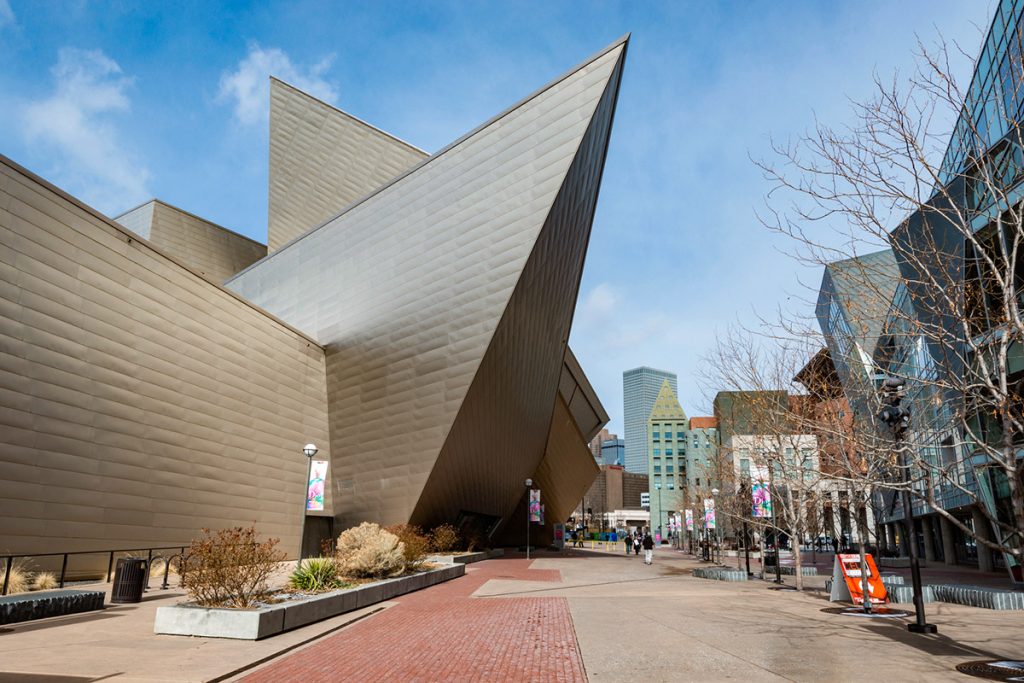
      Start at the Denver Art Museum with its striking Daniel Libeskind architecture and renowned American Indian collection. Stay at The Art Hotel Denver, where each floor is curated as its own gallery.

      Wind through the mountains to Aspen to visit the Aspen Art Museum. Continue to Taos to explore its historic art colony at Taos Historic Museums and Millicent Rogers Museum in El Prado.

      Complete your journey in Santa Fe at Meow Wolf’s House of Eternal Return immersive art installation. Rest at The Inn of the Five Graces with its intricate artisanal decor.

      Luxury touch: Engage a professional photographer to document your journey through these dramatically beautiful landscapes and artistic venues.

      8.Mid-Atlantic Heritage Route: Washington DC to Hudson Valley

      Begin with privileged access to the National Gallery of Art in Washington DC. Stay at the Jefferson Hotel with its collection of original documents and artwork.

      Drive to Baltimore for the American Visionary Art Museum’s unique outsider art collection. Continue to Philadelphia for the Barnes Foundation’s unparalleled Impressionist works.

      Journey to the Brandywine Museum of Art in Chadds Ford to explore the Wyeth family legacy. Conclude in New York’s Hudson Valley at the spectacular Dia Beacon and Storm King Art Center.

      Stay at Glenmere Mansion, a Relais & Châteaux property filled with fine art.

      Luxury touch: Reserve a table at Blue Hill at Stone Barns for an artistic culinary experience that complements your art tour.

      9.Southern Music & Visual Arts Trail: Nashville to Memphis

      Commence your artistic journey in Nashville at the Frist Art Museum housed in a stunning Art Deco building. Stay at the 21c Museum Hotel, where contemporary art gallery meets luxury accommodation.

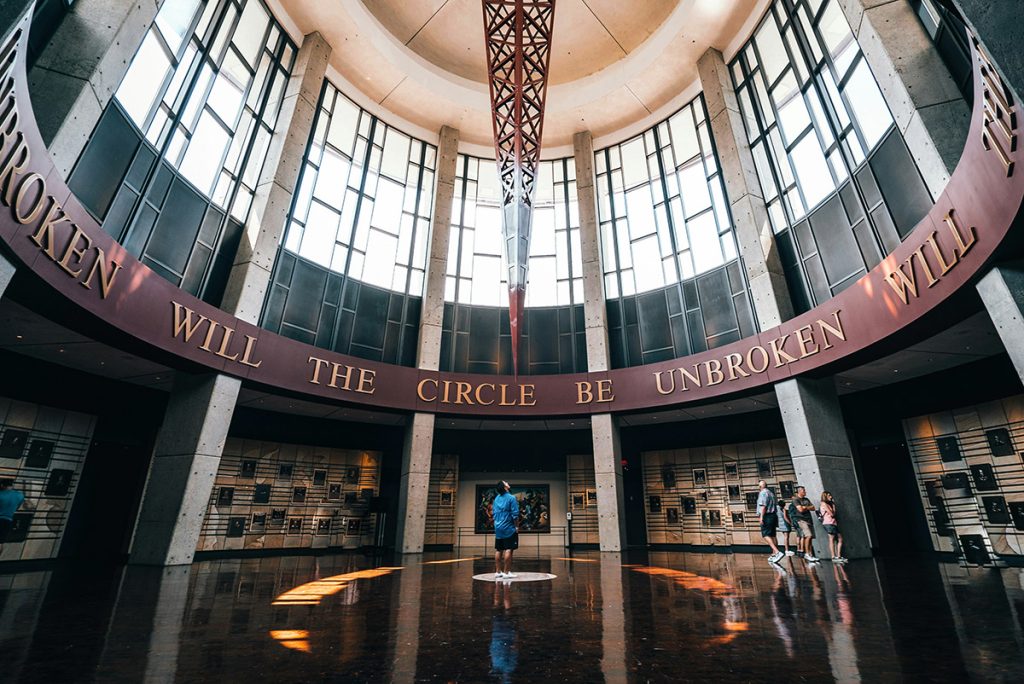
      Visit the Country Music Hall of Fame for its cultural artifacts. Drive to Memphis to explore the Brooks Museum of Art and its impressive collection spanning 5,000 years.

      Experience the National Civil Rights Museum at the Lorraine Motel. Stay at The Memphian, The Peabody or the River Inn of Harbor Town with its classic Mississippi River views.

      Luxury touch: Arrange for a private studio session with renowned Nashville session musicians, creating your own artistic souvenir.

      10.Texas Triangle Art Circuit: Dallas to Austin to Houston

      Begin in Dallas at the Dallas Museum of Art and the adjacent Nasher Sculpture Center. Stay at The Joule hotel with its impressive contemporary art collection.

      Drive to Fort Worth for the Kimbell Art Museum and its Louis Kahn architecture. Continue to Austin for the Blanton Museum of Art at the University of Texas and the modern art scene at The Contemporary Austin.

      Finish in Houston at the Museum of Fine Arts, the remarkable Menil Collection and nearby Rothko Chapel. Stay at The Post Oak Hotel with its multi-million-dollar art collection.

      Luxury touch: Commission a custom piece from a Texas artist encountered along your journey, creating a lasting memory of your art exploration.

      For each road trip, consider engaging a personal art consultant who can arrange behind-the-scenes access, introduce you to gallery owners, and provide expert context as you move between destinations. The most luxurious art road trips are those that offer not just comfort, but connection – to artists, collectors, and the stories behind American masterpieces.

    6. 16 Most Famous American Paintings: A Journey Through History

      16 Most Famous American Paintings: A Journey Through History

      American art has shaped our national identity and cultural narrative through the centuries. From colonial portraits to modern abstracts, these masterpieces capture pivotal moments, cultural shifts, and the ever-evolving American spirit. Here’s a deep dive into some of the most influential and famous American paintings.

      1.American Gothic (1930) – Grant Wood

      Grant Wood’s austere portrayal of a farmer and his daughter (often mistaken for his wife) standing before their Gothic Revival farmhouse has become one of the most recognizable images in American art.

      The painting both celebrates and satirizes rural American values. Its stern-faced subjects and meticulous attention to detail becoming a symbol of Midwestern stoicism and perseverance during the Great Depression.

      You can admire this unique painting at the Art Institute of Chicago.

      2.Washington Crossing the Delaware (1851) – Emanuel Leutze

      This monumental painting captures a pivotal moment in American history, depicting George Washington leading his troops across the Delaware River on Christmas night, 1776. While historically inaccurate in several details, Leutze’s dramatic composition created an enduring symbol of American leadership and determination.

      The painting’s theatrical lighting and heroic poses established it as a cornerstone of American patriotic imagery.

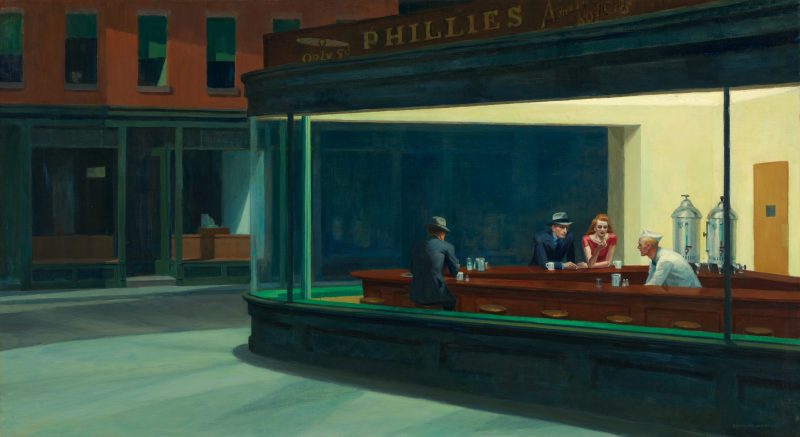
      3.Nighthawks (1942) – Edward Hopper

      Edward Hopper’s masterpiece depicts late-night customers at a downtown diner, capturing the isolation and loneliness of modern urban life. The stark contrast between the brightly lit diner and the dark street outside, combined with the disconnected poses of the customers, creates a haunting meditation on American solitude that resonates even more deeply in our digital age.

      4.Arrangement in Grey and Black No. 1 (1871) – James McNeill Whistler

      Better known as “Whistler’s Mother,” this portrait has become an icon of maternal dignity and American Victorian values. Despite being painted in London, its quiet power and restrained emotion have made it a symbol of American motherhood and familial devotion.

      The painting’s formal composition and limited color palette demonstrate Whistler’s masterful technique.

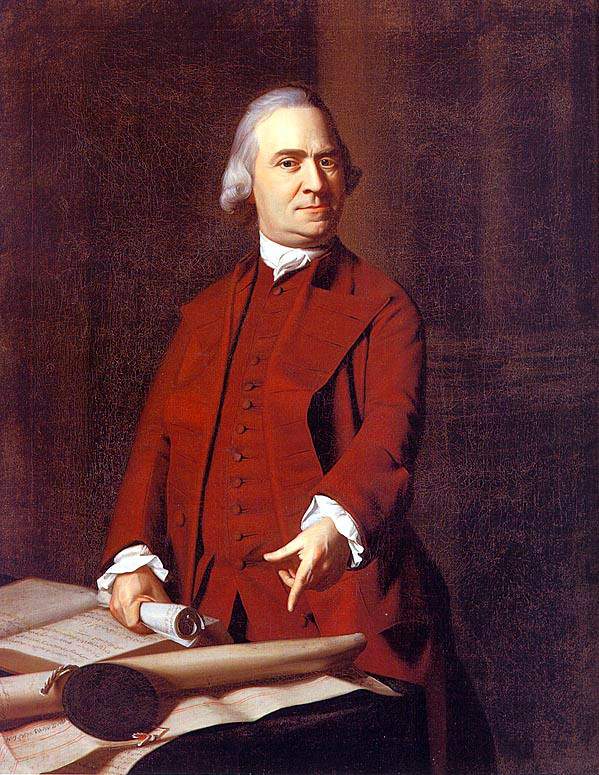
      5.Portrait of Samuel Adams (1772) – John Singleton Copley

      This defining portrait of the American Revolutionary leader captures Adams at the height of his influence. Copley’s realistic style and attention to detail create an intimate portrayal of the patriot, showing both his determination and contemplative nature.

      This impressive artwork serves as both historical document and artistic achievement.

      6.Lake George Reflection (1922) – Georgia O’Keeffe

      Georgia O’Keeffe’s “Lake George Reflection” captures the serene beauty of Lake George in upstate New York through her distinctive modernist style. The painting presents a mirror-like reflection of trees and foliage on the lake’s surface, rendered in deep blues and greens that blend into abstract forms.

      O’Keeffe’s characteristic simplification of natural shapes creates a nearly symmetrical composition, with the water’s surface acting as a horizontal dividing line. The work exemplifies her ability to find abstract patterns within nature while maintaining a strong connection to the physical landscape that inspired her.

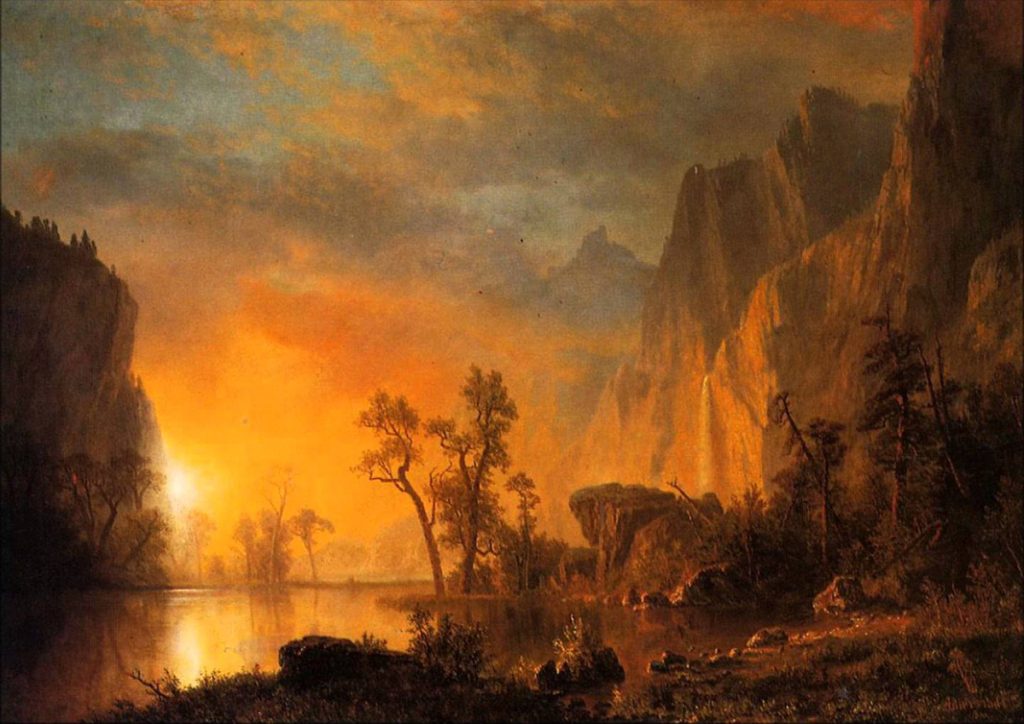
      7.Sunset in the Rockies (1865) – Albert Bierstadt

      Bierstadt’s dramatic landscape captures the sublime grandeur of the American West. His luminous technique and romantic vision helped shape the American understanding of frontier landscapes, while inspiring support for wilderness preservation.

      The imposing landscape painting exemplifies the Hudson River School’s celebration of American natural beauty.

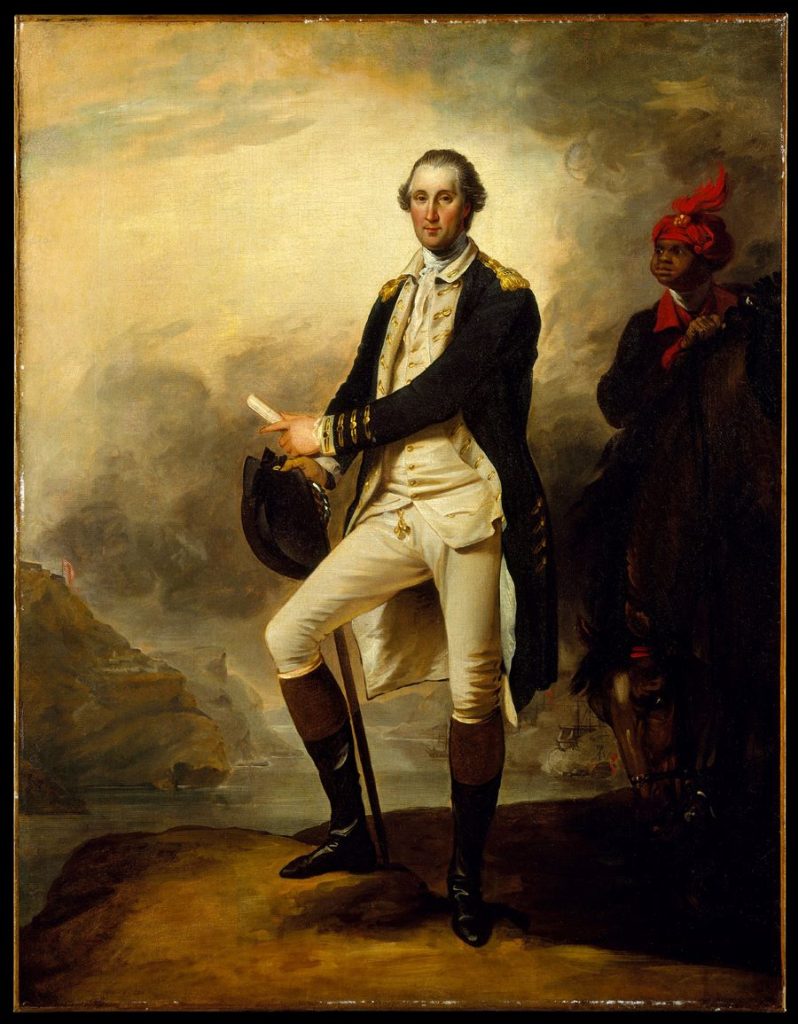
      8.Portrait of George Washington and William Lee (1780) – John Trumbull

      Trumbull’s iconic portrayal of Washington became the basis for the first president’s image on the one-dollar bill. The painting combines military dignity with simplicity, establishing the visual template for presidential portraiture.

      The politician is depicted with his military aide and valet, William Lee. Washington freed him in his will and and left him an annuity.

      9.Snap the Whip (1872) – Winslow Homer

      Homer’s vibrant depiction of boys playing in a rural schoolyard captures the essence of post-Civil War American childhood. The painting’s dynamic composition and attention to light and movement demonstrate Homer’s mastery while documenting a simpler era in American life.

      View this iconic American painting at The Metropolitan Museum of Art in New York City.

      10.Flag (1954) – Jasper Johns

      After dreaming of the American flag, Jasper Johns made this abstract expressionist work when he was just 24 years old. Created using encaustic, oil paint, and newspaper collage on canvas, the piece challenges viewers to see this familiar symbol as both an icon and a pure artistic form.

      Johns’ meticulous layering technique and textural treatment blur the line between representation and abstraction, while his use of newsprint visible beneath the surface adds depth and cultural commentary. The work marked a pivotal shift from abstract expressionism toward pop art and conceptualism.

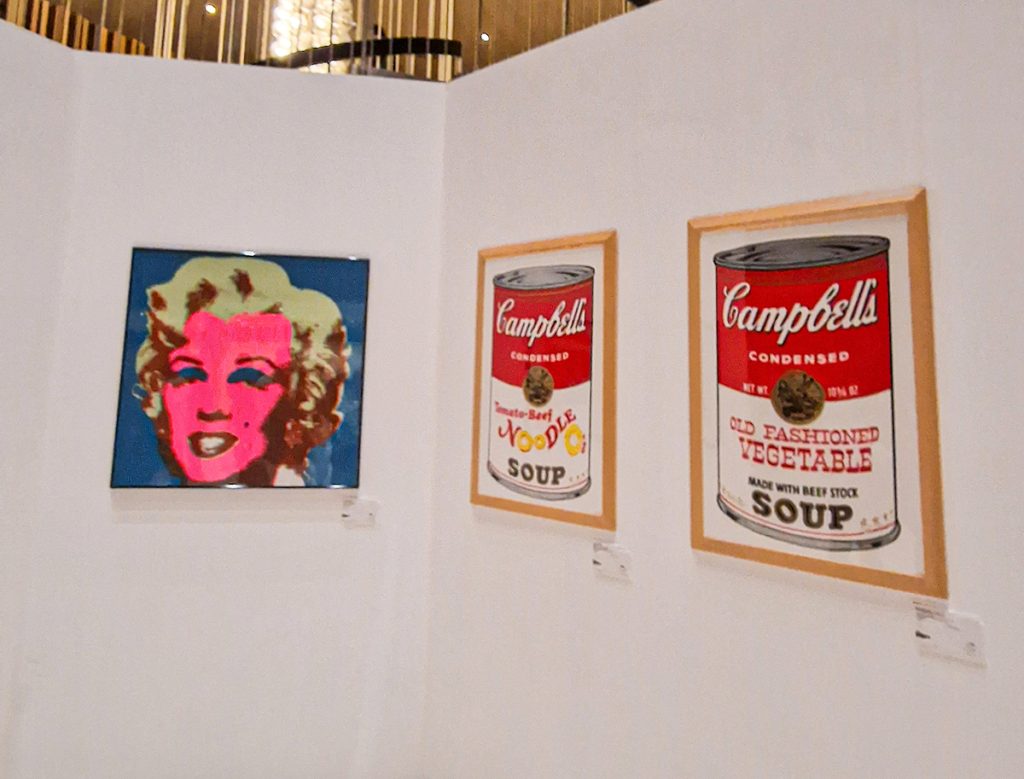
      11.Campbell’s Soup Cans (1962) – Andy Warhol

      Warhol’s series of 32 paintings featuring Campbell’s Soup cans revolutionized American art by elevating commercial products to fine art status. This work became a defining statement of Pop Art, questioning the boundaries between high art and popular culture.

      See this series at The Museum of Modern Art (MoMa) in New York City.

      12.Mother’s Goodnight Kiss (1888) – Mary Cassatt

      Cassatt’s intimate portrayal of maternal care combines American sentiment with French Impressionist technique. The painting’s tender subject matter and sophisticated composition demonstrate her unique ability to elevate domestic scenes to high art.

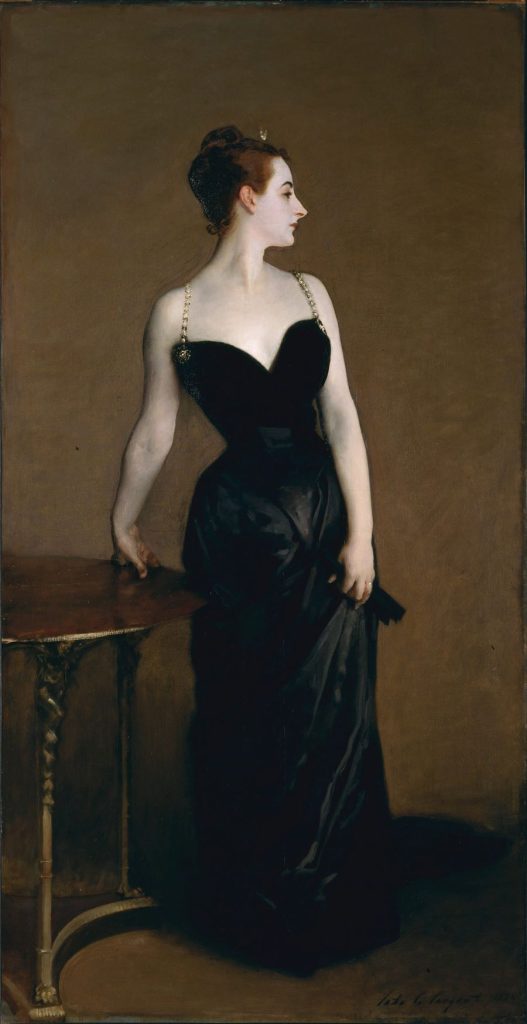
      13.Portrait of Madame X (1884) – John Singer Sargent

      Though painted in Paris, this provocative portrait of American expatriate Virginie Gautreau scandalized society while establishing Sargent’s reputation. Its elegant pose and subtle psychology make it a masterpiece of portraiture.

      14.Whaam! (1963) – Roy Lichtenstein

      Lichtenstein’s massive comic book-inspired painting perfectly captures the drama and energy of 1960s Pop Art. Its bold colors and Ben-Day dots created a new visual language for American art, bridging high art and popular culture.

      This unique artwork is on display at Tate Modern in London, UK.

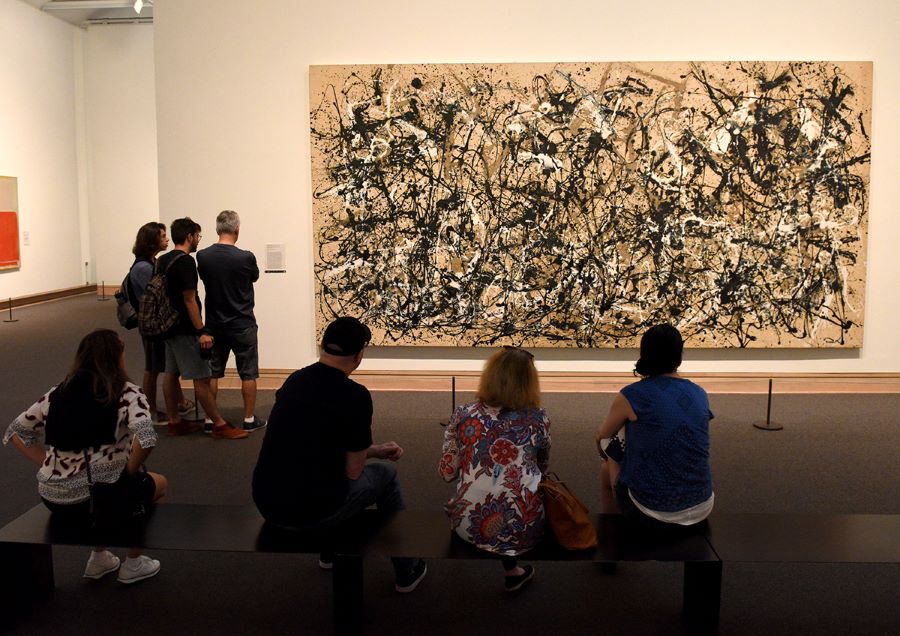
      15.Autumn Rhythm (Number 30) (1950) – Jackson Pollock

      Pollock’s revolutionary drip painting technique created a new form of artistic expression. This massive canvas exemplifies Abstract Expressionism’s emphasis on process and spontaneity, marking a decisive break with traditional painting methods.

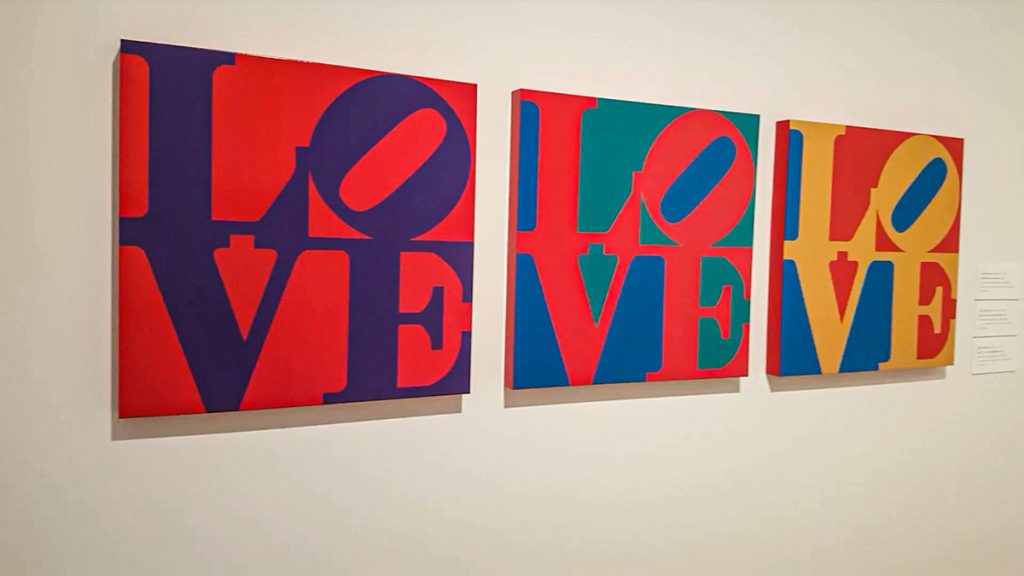
      16.LOVE (1980) – Robert Indiana

      Robert Indiana’s “LOVE” (1970) became one of the most iconic works of pop art through its bold, deceptively simple design. The piece features the letters L, O, V, and E stacked in a square formation, with the O tilted at an angle, rendered in vibrant colors.

      Originally designed as a Christmas card for the Museum of Modern Art, the image proliferated through sculptures, prints, and stamps, becoming both a symbol of 1960s idealism and a pioneering example of text-based art that blurred the lines between fine art and commercial design.

    7. Perfect Washington DC Itinerary for Culture Lovers

      Perfect Washington DC Itinerary for Culture Lovers

      Washington DC isn’t just the seat of American government—it’s a treasure trove of art, history, and culture. This carefully curated Washington DC itinerary will guide you through the city’s most enriching cultural institutions, from world-class museums to historic libraries, paired with exceptional dining experiences.

      While many attractions are free, be sure to check websites for timed-entry passes and special exhibition tickets. Adapt this itinerary by picking the most appealing attractions that you can fit into the number of days you have in Washington.

      Day 1: The National Mall

      Start your cultural journey at the heart of DC—the National Mall. Begin early at the National Gallery of Art, where you can spend your morning exploring both the East and West Buildings.

      The East Building houses modern and contemporary art, while the West Building contains European and American masterpieces from the medieval period through the late 19th century. Don’t miss the underground tunnel connecting the buildings, featuring Leo Villareal’s mesmerizing Multiverse light installation.

      Lunch Option: The Pavilion Café in the National Gallery of Art’s Sculpture Garden offers a serene setting with indoor and seasonal outdoor seating. Their menu features fresh salads, artisanal sandwiches, and house-made soups—perfect for a quick museum lunch.

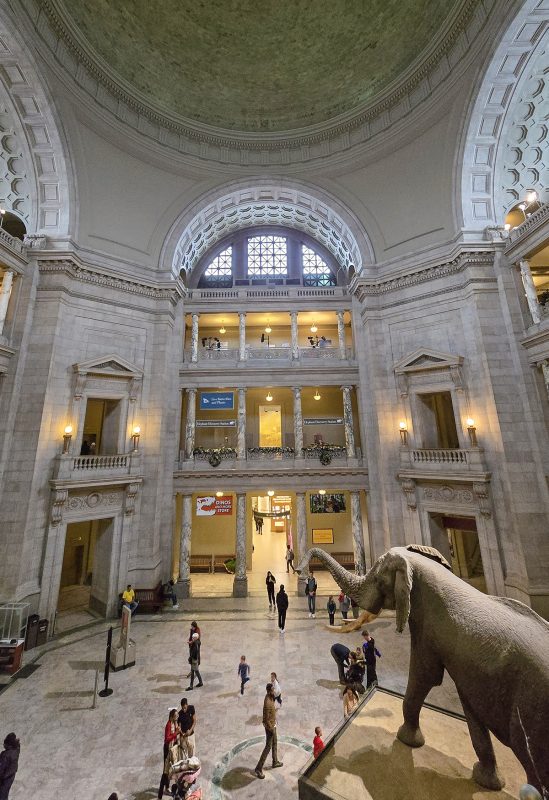
      After lunch, head to the Smithsonian National Museum of Natural History. The Hope Diamond and the Hall of Human Origins are must-sees, but leave time for the stunning Butterfly Pavilion.

      End your day at the National Air and Space Museum, recently renovated to include cutting-edge interactive exhibits. The highlight for us was seeing Neil Armstrong’s spacesuit, and the Apollo 11 Command Module Columbia.

      Dinner Recommendation: Cap off your day at the historic Old Ebbitt Grill, Washington’s oldest restaurant and a favorite among politicians and journalists. Known for its oyster bar and classic American fare, it’s just steps from the White House. Reserve in advance, especially for dinner.

      Day 2: Politics and Power

      Begin with a free self-guided tour of the White House East Wing and Residence. US citizens can request tickets through their congressional representative 3-6 months in advance. It is also possible to book a tour online, as we did. Arm yourself with patience, as tickets are quickly snapped up and start checking the website at least a month in advance of your stay.

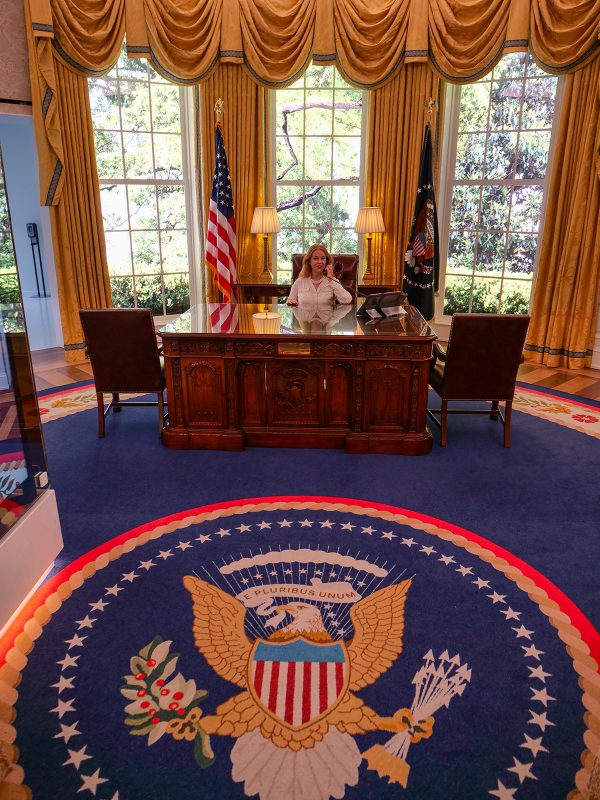
      Even if you can’t get inside the actual building, the White House Visitor Center offers fascinating exhibits about presidential history and White House architecture. Another option if you don’t have tickets is to visit The People’s House nearby. This free attraction features a lifesize replica of the famous Oval Office where you can take your photo.

      In the afternoon, visit the Folger Shakespeare Library, home to the world’s largest Shakespeare collection. Beyond its impressive Tudor-style architecture, the Folger offers rotating exhibits, a recreation of an Elizabethan theater, and rare book displays that will delight any literature enthusiast.

      Lunch Option: Quill & Crumb Café, located in the Folger Shakespeare Library, offers a casual experience in the historic Great Hall. Choose from soups, salads and sandwiches or shareables such as a personal picnic with cheese, honey, baguette, berries, pecans and lavash.

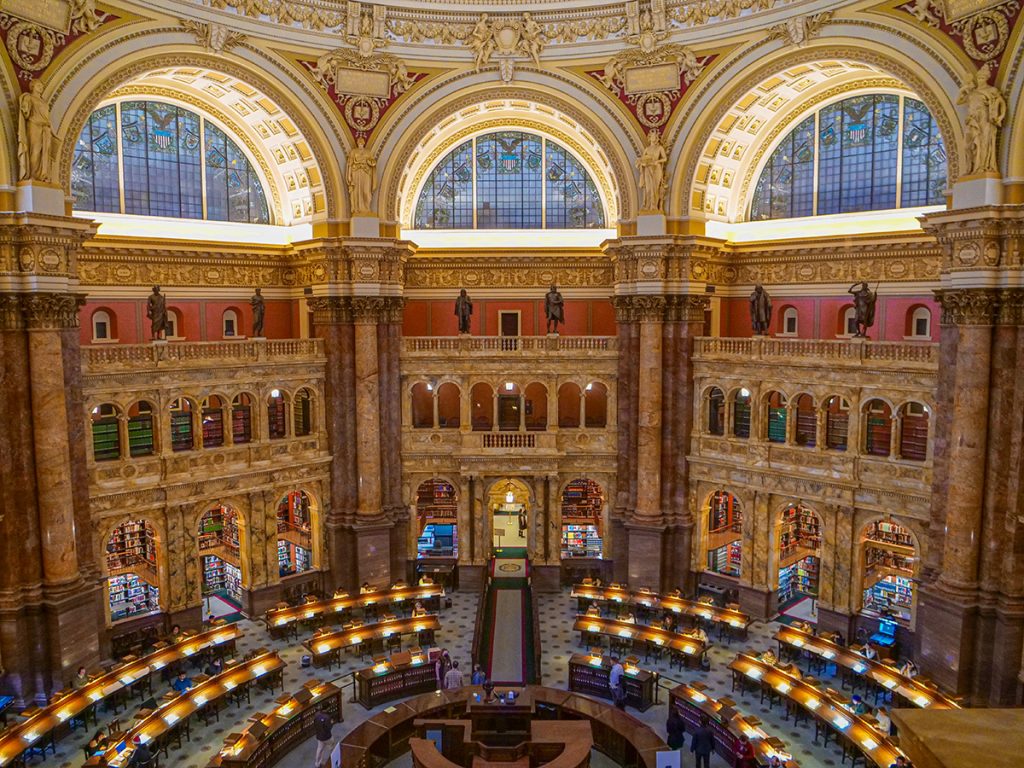
      Next, make your way to Capitol Hill to visit the magnificent Library of Congress. The Thomas Jefferson Building is an architectural masterpiece, with its ornate Great Hall and Reading Room. Don’t skip the Gutenberg Bible display or the special exhibitions.

      Dinner Recommendation: For dinner, try L’Ardente near Capitol Crossing, known for its contemporary Italian cuisine and impressive wine cellar. Their wood-fired pizzas prepared in a gold-plated pizza oven and handmade pasta have earned critical acclaim.

      Day 3: Hidden Gems and Gardens

      Dedicate your morning to the beautiful neighborhood of Georgetown. We recommend starting at the Museum at Dumbarton Oaks in Georgetown.

      This often-overlooked museum houses exceptional Byzantine and Pre-Columbian art collections. The museum’s gardens are particularly spectacular in spring when the famous cherry blossoms bloom, but they’re beautiful year-round.

      Lunch Option: Brasserie Liberté in Georgetown offers classic French cuisine in an elegant setting. Their lunch menu features excellent croque monsieurs, moules-frites, and a notable wine selection. The outdoor terrace is particularly lovely in good weather. For a more casual option, grab a bite at Maman, 1353 Wisconsin Avenue.

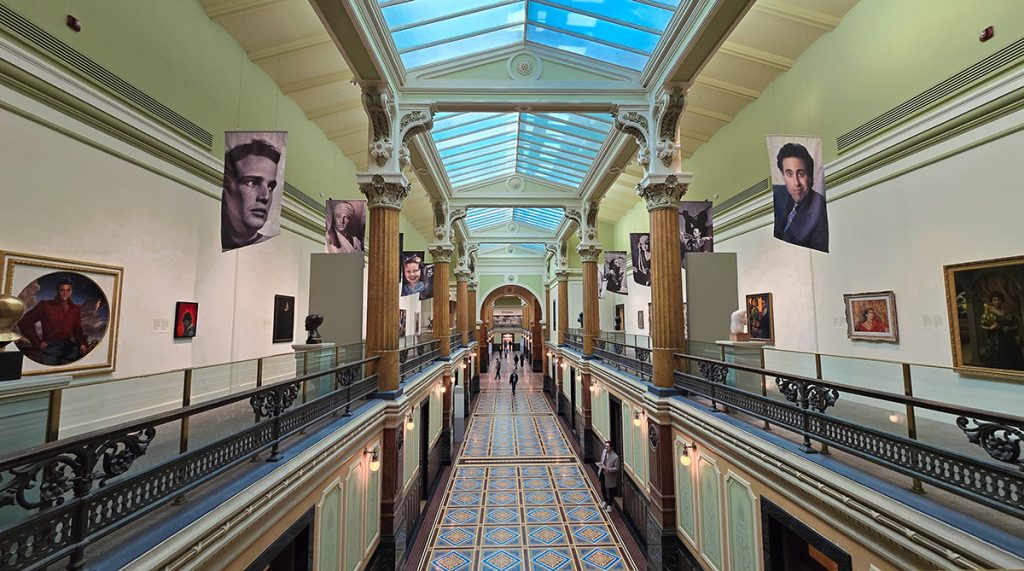
      In the afternoon, visit either the Phillips Collection, America’s first museum of modern art at 1600 21st Street. Alternatively, the National Portrait Gallery and American Art Museum (SAAM), housed in the same historic building on 8th St NW & G St NW are well worth a visit.

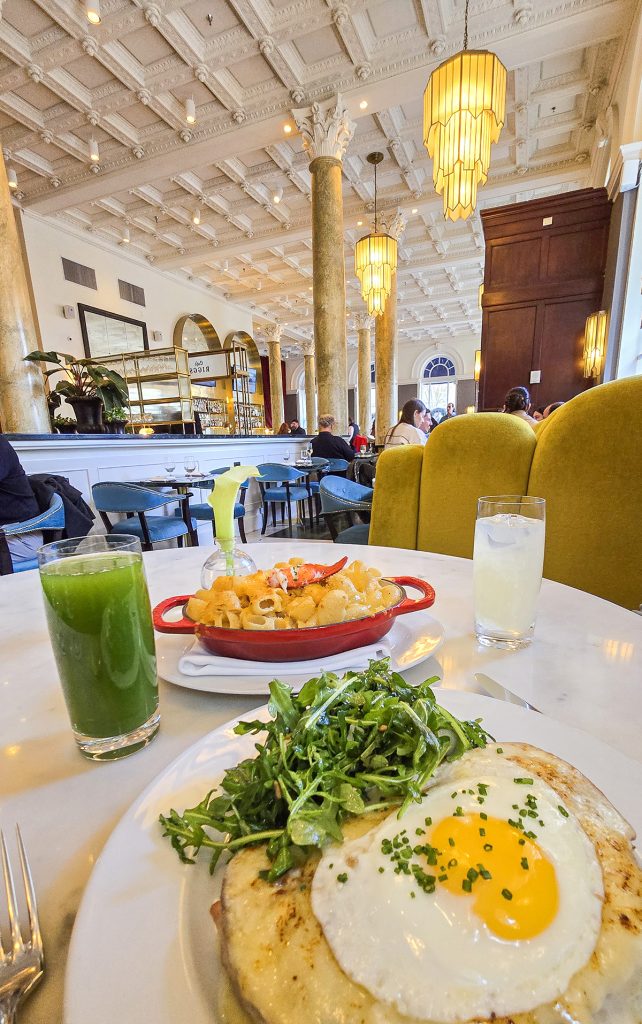
      Dinner Recommendation: Café Riggs, located in the stylish Riggs Hotel, offers an elegant dining experience in a former bank vault. Their modern American menu and sophisticated atmosphere make it perfect for a break from sightseeing.

      Day 4: Modern Art and Native American Heritage

      Start your day at the Hirshhorn Museum and Sculpture Garden, the Smithsonian’s home for contemporary and modern art. Not only is the Gordon Bunshaft designed building impressive, but the collections are thought-provoking and unique.

      Lunch Option: The Mitsitam Native Foods Café at the National Museum of the American Indian is a destination in itself, offering authentic Indigenous cuisines from various regions of the Americas. Try the cedar-planked salmon or buffalo chili.

      In the afternoon, explore the rest of the National Museum of the American Indian. The building itself is an architectural marvel, designed in collaboration with tribes from across the Americas.

      Dinner Recommendation: End your day at Oyamel by José Andrés, offering creative Mexican small plates and excellent margaritas in a vibrant atmosphere near the National Portrait Gallery.

      Day 5: American Democracy and Craft

      Begin at the U.S. Capitol (advance reservations are essential). A typical tour lasts about 45 minutes and includes the Exhibition Hall, the Crypt, the iconic domed Rotunda and the National Statuary Hall.

      Lunch Option: Good Stuff Eatery on Capitol Hill is perfect for a casual lunch, famous for their handcrafted burgers and milkshakes. It’s a favorite among Congressional staffers.

      Visit the Renwick Gallery in the afternoon, followed by the Lincoln Memorial at dusk. Housed in a Second Empire-style building, The Renwick specializes in American contemporary craft and decorative arts from the 19th century to the present. Unlike traditional art museums, the Renwick focuses on works made with materials like wood, fiber, glass, metal, and clay.

      The Lincoln Memorial stands as one of America’s most profound monuments. The majestic presence of this famous sculpture is particularly striking at night, when the white marble columns glow against the darkness.

      Dinner Recommendation: Conclude your trip at The Dabney, a Michelin-starred restaurant celebrating Mid-Atlantic cuisine. Their wood-fired hearth and locally-sourced ingredients showcase the best of regional American cooking.

      Additional Dining Tips for Washington DC

      • Reservations are strongly recommended for all upscale restaurants, especially on weekends
      • Many museums have their own cafés offering quality casual dining – most close by 4:30 PM
      • Georgetown and 14th Street corridors offer numerous additional dining options
      • Consider happy hour specials at upscale restaurants for better value
      • Many high-end restaurants offer prix-fixe lunch menus that are an excellent value

      Where to Stay in Washington DC

      Luxury Options

      • The Hay-Adams: A historic luxury hotel offering unparalleled views of the White House and the National Mall. Dating back to 1928, this prestigious property combines Italian Renaissance-style architecture with modern amenities. Known for its impeccable service, wood-paneled lounges, and the acclaimed Lafayette Restaurant. Perfect for those who want to be in the heart of political Washington.
      • AKA White House: Ideal for extended stays or those who prefer apartment-style accommodations, this property offers sophisticated furnished residences just two blocks from the White House. Each suite includes a full kitchen and living area, while the property features a residents’ lounge, fitness center, and private cinema. The location provides easy access to the National Mall’s museums.
      • The LINE DC: Housed in a converted 110-year-old church in vibrant Adams Morgan, this boutique hotel offers a more eclectic, design-forward experience. Features include three exceptional restaurants, a coffee shop, and a community radio station broadcasting from the lobby. The hotel beautifully balances historic architecture with contemporary art and local culture.

      Other Notable Options

      • Motto by Hilton Washington DC City Center: Perfect for budget-conscious travelers who prioritize location over room size
      • Thompson Washington DC: A sophisticated option in the Navy Yard area, close to the Capitol
      • Eaton DC: A socially conscious hotel with an excellent coworking space and cultural programming

      Getting to Washington DC

      By Air

      • Reagan National Airport (DCA): Closest to downtown (15-20 minutes), directly connected to Metro
      • Dulles International Airport (IAD): Larger international hub, 45 minutes west of DC; connected by Silver Line Metro
      • Baltimore/Washington International (BWI): Budget-friendly option with MARC train service to DC

      By Train

      • Union Station: Major Amtrak hub serving the Northeast Corridor
      • Regular service from Boston, New York, Philadelphia, and other East Coast cities
      • Acela Express offers faster service with fewer stops

      By Bus

      • Multiple operators including Megabus and BoltBus
      • Usually arrive at Union Station or L’Enfant Plaza
      • Budget-friendly option from major East Coast cities

      Getting Around DC

      Metro System

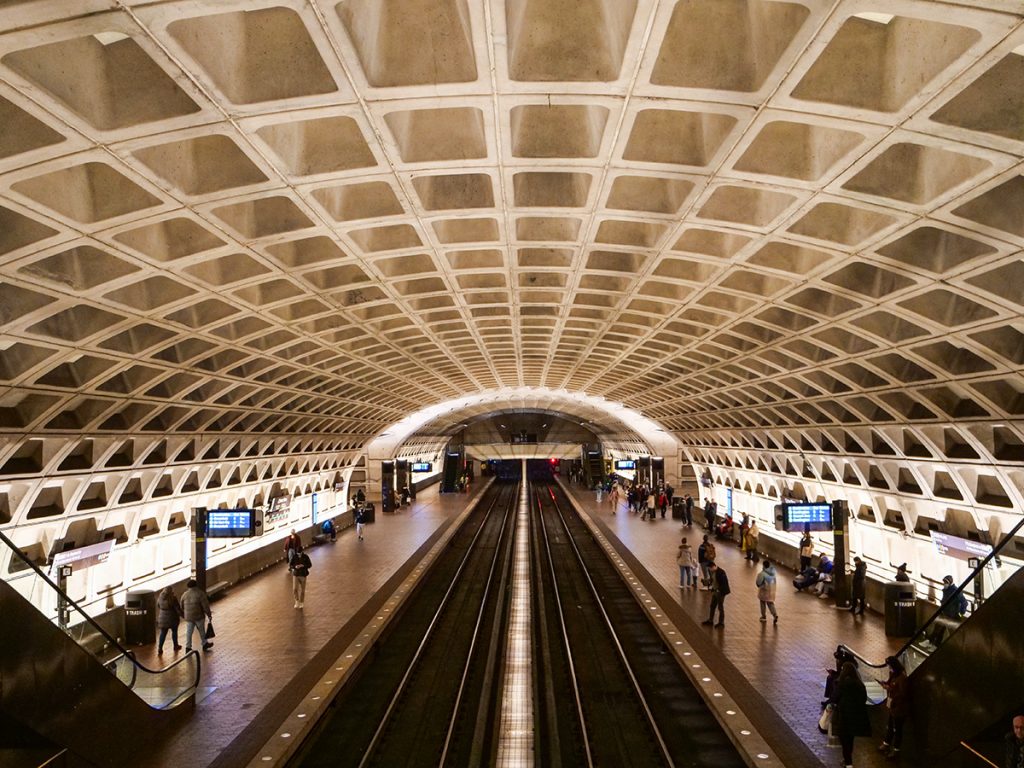
      • Clean, efficient subway system connecting all major areas
      • Purchase a SmarTrip card for best rates
      • Download the Metro app for real-time arrivals
      • Runs from 5am to midnight (2am on weekends)

      Bus Service

      • Extensive Metrobus network complements subway service
      • Circulator buses ($1) run popular tourist routes
      • NextBus app helps track arrival times

      Walking

      • Most attractions on the National Mall are within walking distance
      • Downtown DC is relatively compact and pedestrian-friendly
      • Use the National Mall paths for monument hopping

      Rideshare and Bikes

      • Uber and Lyft widely available
      • Capital Bikeshare stations throughout the city
      • Electric scooters available through various apps

      Parking

      • Limited and expensive in downtown areas
      • Many hotels charge $40-50/day for parking
      • Consider parking at outer Metro stations if driving

      Transportation Tips

      • Purchase a Multi-Day Metro Pass if staying for several days
      • Avoid driving during rush hours (7-9:30am, 4-6:30pm)
      • Metro is typically less crowded on weekends
      • Many museums offer validated parking at reduced rates
      • Consider water taxi service to Georgetown and National Harbor
      • Download DC Metro Transit app for comprehensive transportation info

      Best Times to Visit Washington DC

      Peak Season (March-June)

      • Cherry Blossom Festival (late March-early April)
      • Perfect weather for walking tours
      • Highest hotel rates and crowds

      Summer (July-August)

      • Hot and humid with afternoon thunderstorms
      • Free outdoor concerts and events
      • Lower hotel rates

      Fall (September-November)

      • Comfortable temperatures
      • Beautiful fall foliage
      • Fewer tourists after Labor Day

      Winter (December-February)

      • Lowest hotel rates
      • Holiday decorations and events
      • Potential for snow disruptions
    8. The Sarojin Khao Lak: Lush Lotus Ponds and White Sand Beaches

      The Sarojin Khao Lak: Lush Lotus Ponds and White Sand Beaches

      If you’ve ever seen a photo of pristine, white sand beaches and wondered where it was, the chances are that it was at The Sarojin Khao Lak. This tropical paradise is one of the most unspoiled places in Thailand. The Sarojin is considered by many to be the most luxurious resort in the area.

      The Sarojin Khao Lak

      This luxurious Khao Lak hotel was awarded one of the 50 Best Resorts in the World by Conde Nast Traveller and their Readers’ Travel Awards for Best Hotels in Asia & The Indian Subcontinent.

      It’s a one hour drive from Phuket airport in Phang Nga Province, with the Sarasin Bridge connecting Phuket to the mainland. You could fly first to Bangkok for a few days as we did, then on to Phuket. You’ll be picked up by one of The Sarojin’s private cars, with complimentary WiFi, cold towels and refreshments.

      First Impressions of The Sarojin Hotel

      It’s a scenic drive but we were glad to arrive at The Sarojin and to be welcomed by the charming staff. We’d heard before that they are like one big family and there certainly seems to be a real sense of pride in working here.

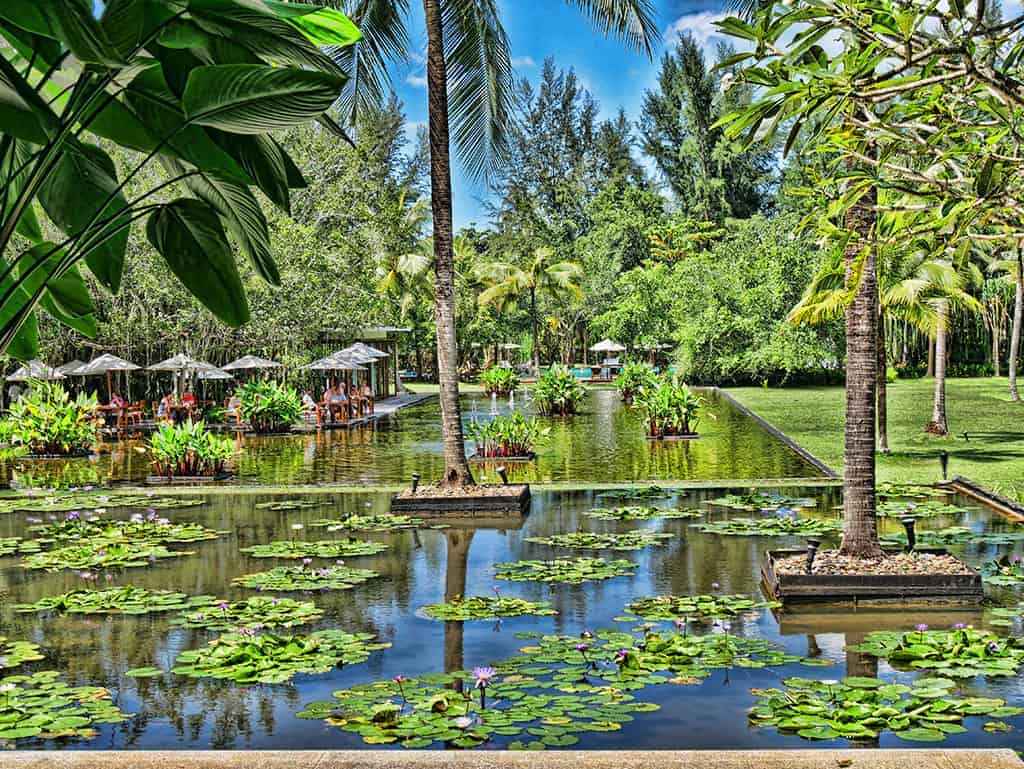
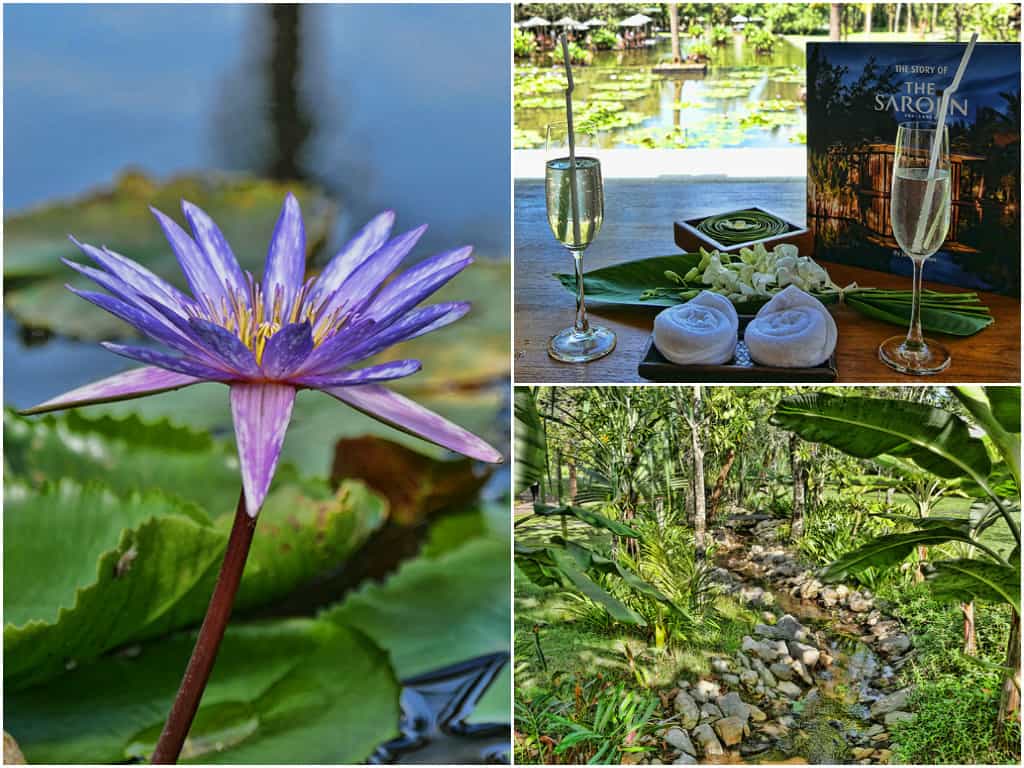
      The Sarojin reception team handed us a pretty orchid bouquet and a refreshing drink. As you enter the resort, you can’t help but be blown away by the lush vegetation and beautiful lotus ponds.

      Our check-in was quick and easy, and soon we were guided through the greenery to our Garden Residence.

      Accommodation at The Sarojin

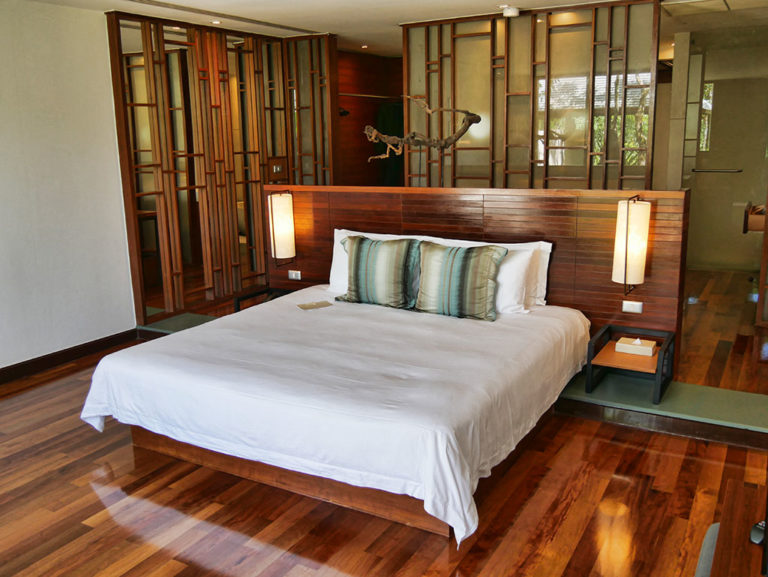
      All of The Sarojin’s residences have their own private door and outdoor sun terrace. Our one bedroom residence was a spacious 95 square metres, with a clever open-plan design.

      The wooden floor was positively gleaming! It was well equipped with complimentary WiFi, air conditioning, a safe and music system.

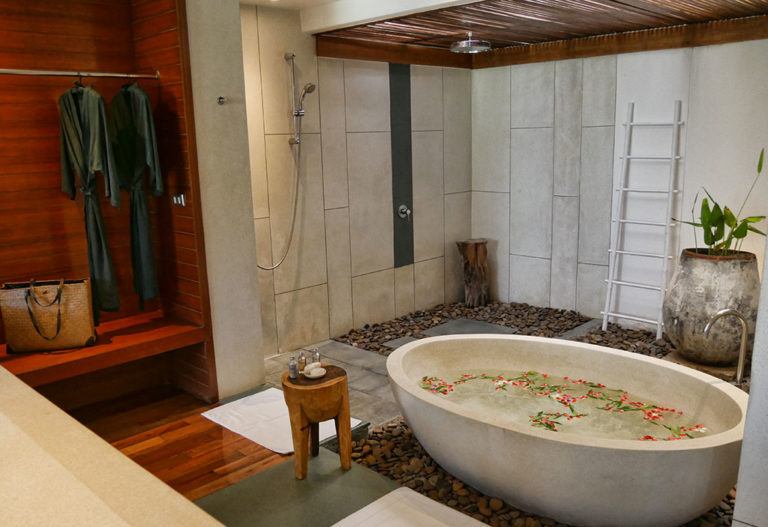
      The highlight of our Garden Residence had to be the indoor/outdoor bathroom. The roof was covered so no bugs could enter but it gave you the pleasing sensation of being outdoors.

      There were two showers – an adjustable one and a rainfall one, plus robes, slippers and a handy beach tote. Our bath had been beautifully adorned with flower petals before we arrived.

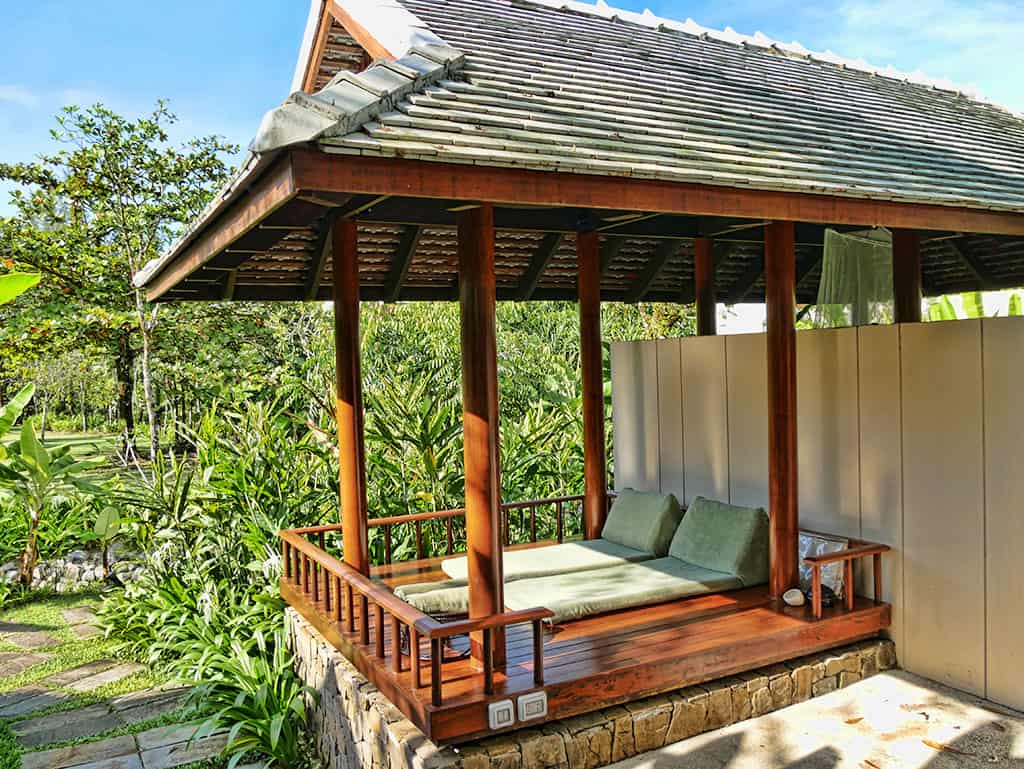
      The terrace had a traditional Thai sala or open pavilion, protecting you from the sun and rain. It was perfect for relaxing after a hard day’s sunbathing 😉

      Amenities at The Sarojin

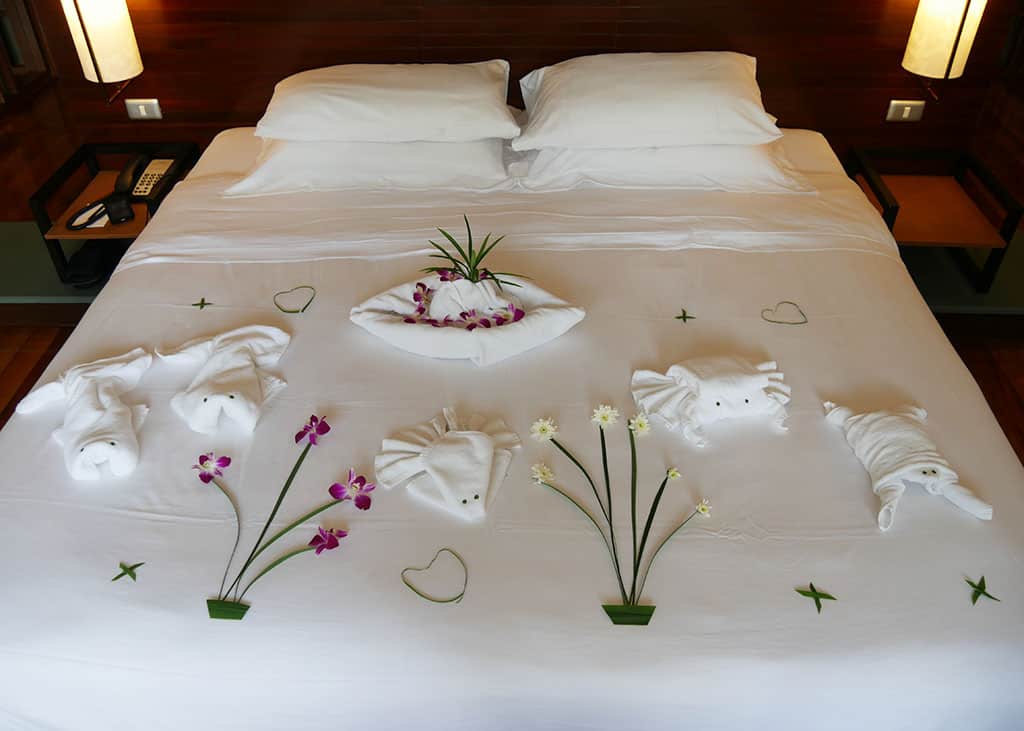
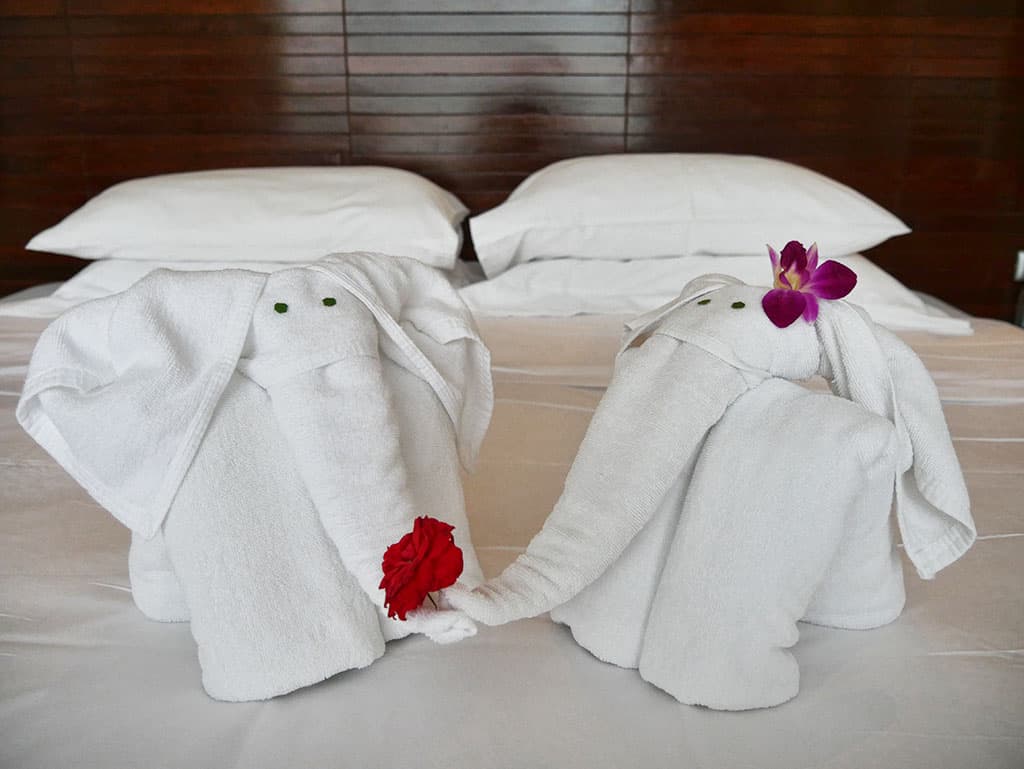
      All rooms have complimentary water, coffee and tea as well as a fruit basket. The turn-down service was a nice surprise – first we were treated to a visit from these cuties…

      …then a whole aquarium showed up after we took a boat trip ;-). Don’t you just love the creativity?

      Facilities at The Sarojin

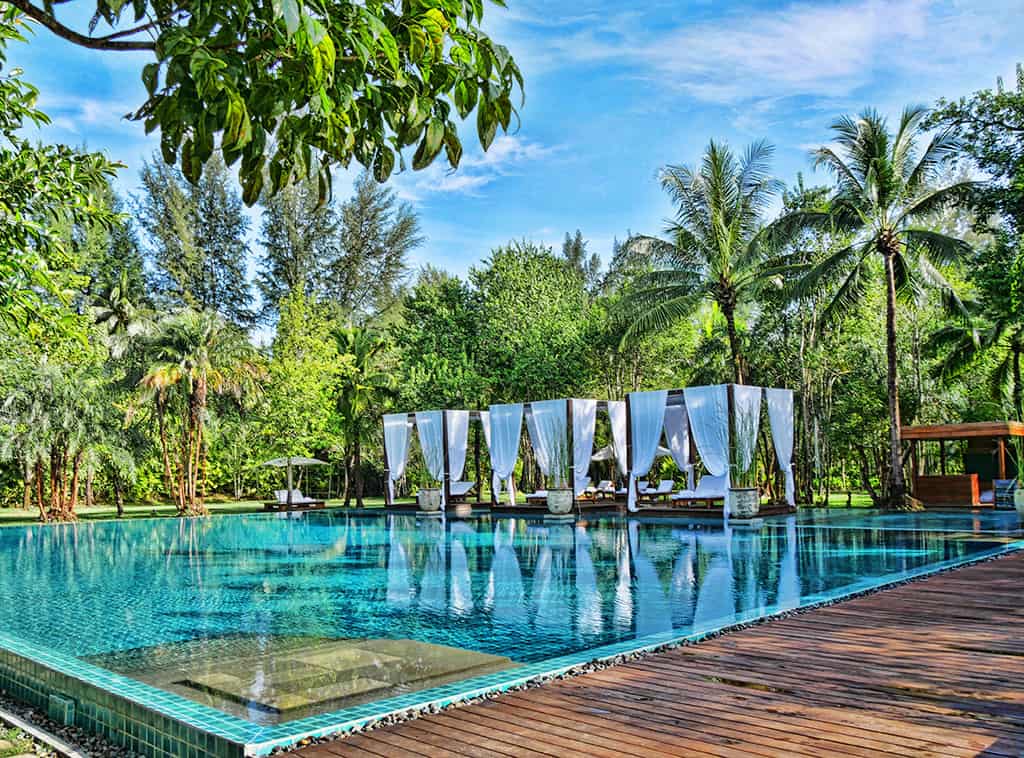
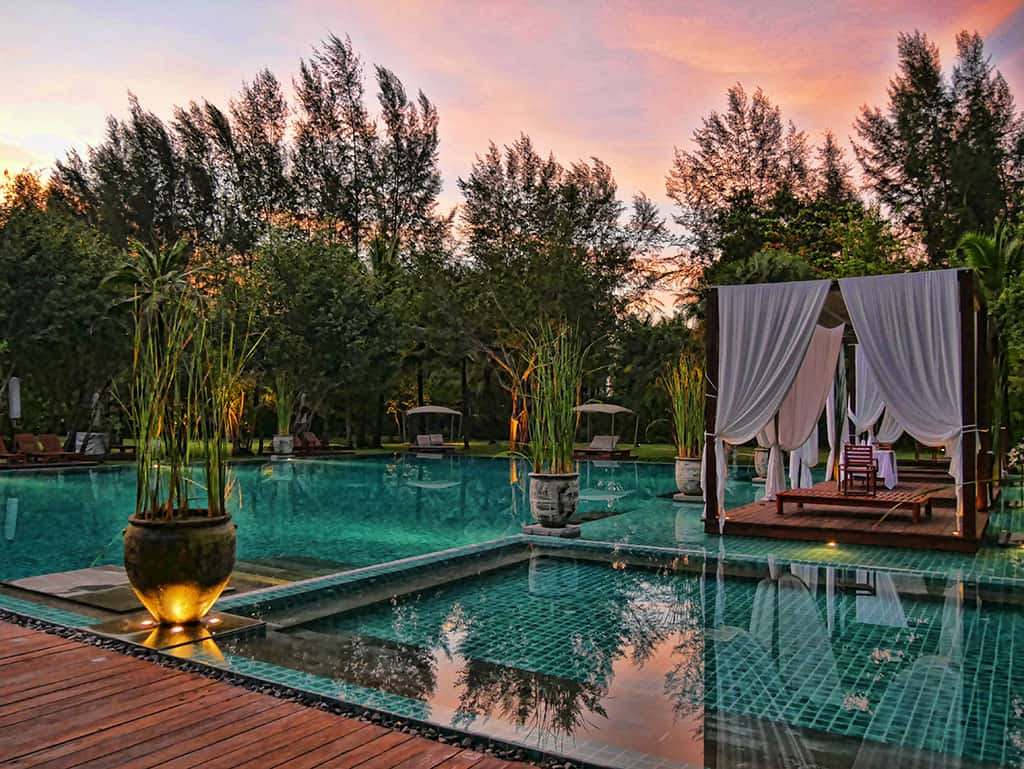
      One of The Sarojin’s most celebrated features is it’s stunning swimming pool. Bordered by floating pavilions, it has a sunken jacuzzi area and looks great by day…

      and equally magnificent by night!

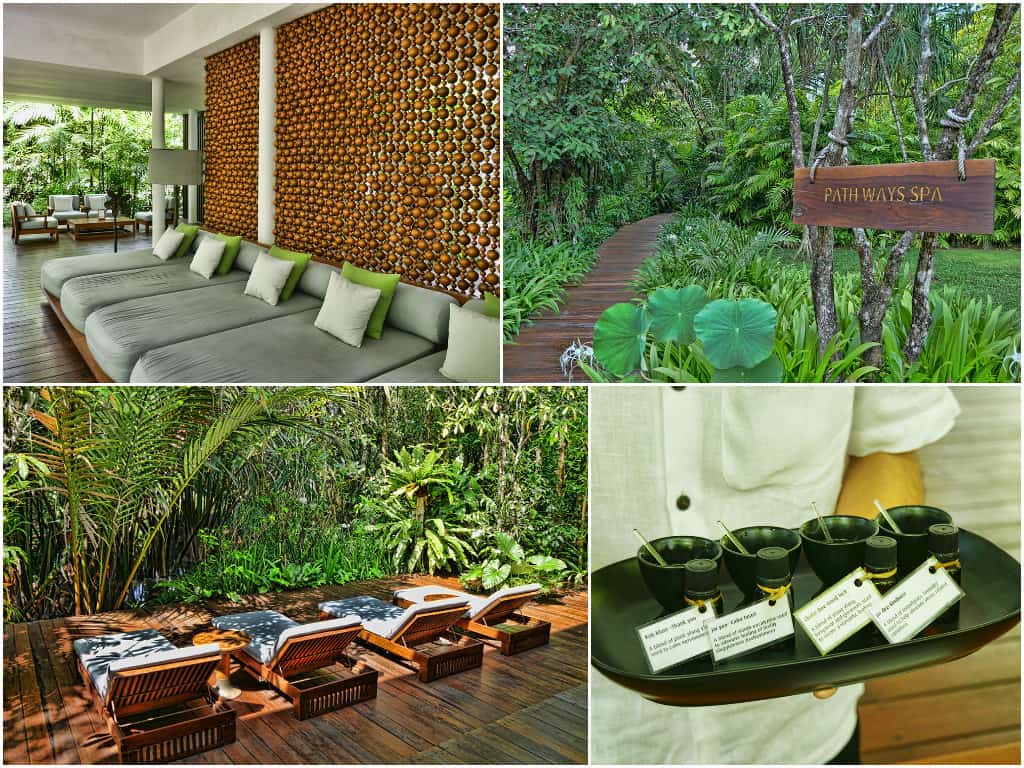
      Pathways Spa is a great place to ease away any tensions from the journey. It’s near the pool but tucked away behind a leafy boardwalk.

      There are four open-air treatment pavilions, equipped with couples’ baths and rain showers as well as an air-conditioned facial treatment room. We enjoyed a couples’ massage and before our treatment, we were welcomed into a shady relaxation area.

      We were asked to select a fragrance for our massage before being led to the comfortable treatment room. Our masseuses were very skilled and used a variety of different techniques to great effect.

      Both of us drifted off to sleep at some point. You wake up feeling completely rejuvenated and the effect lasts for weeks afterwards. Not only that, our skin was silky smooth and prepped for sunbathing.

      If you want to burn off some calories, there’s also a well-equipped gym and an adjacent book library with two computers – handy if you need to check in to your return flight. Complimentary all-terrain bikes are available and many guests borrow them to visit the nearby waterfall.

      It’s roughly 15 minutes by bike and although we didn’t get time to go, many people told us how much they enjoyed the experience. On the last day of our visit, some of the staff and guests headed out on a charity bike ride.

      The Sarojin are actively involved in the local community and established a Community Fund after the 2004 tsunami. It helps local schoolchildren and many other worthy causes.

      Experiences at The Sarojin

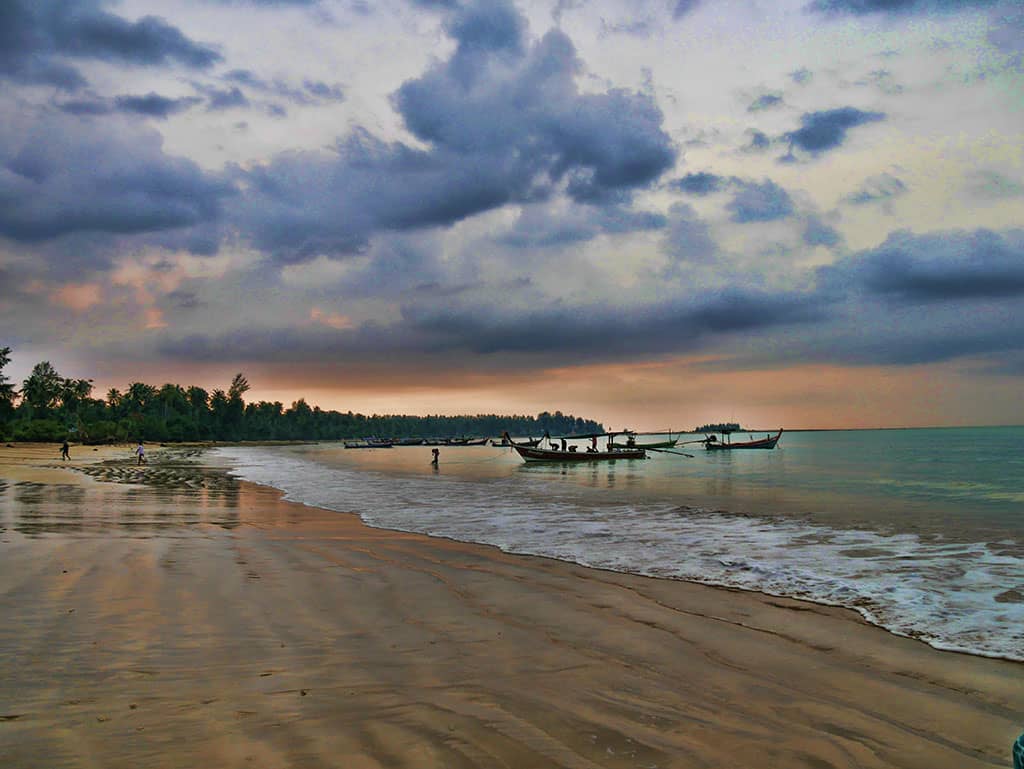
      Talking of experiences, the unmissable one is of course a walk along the beach. White Sand Beach is famous for being one of the most uncrowded and beautiful in Thailand.

      Fishermen still set out from here in their traditional boats and you’ll be able to see them bringing their catches home at the end of the day. Guests at The Sarojin Khao Lak also enjoy complimentary use of paddle boards, sea kayaks, a dinghy boat and a hobie cat.

      Snorkelling Trip from Khao Lak

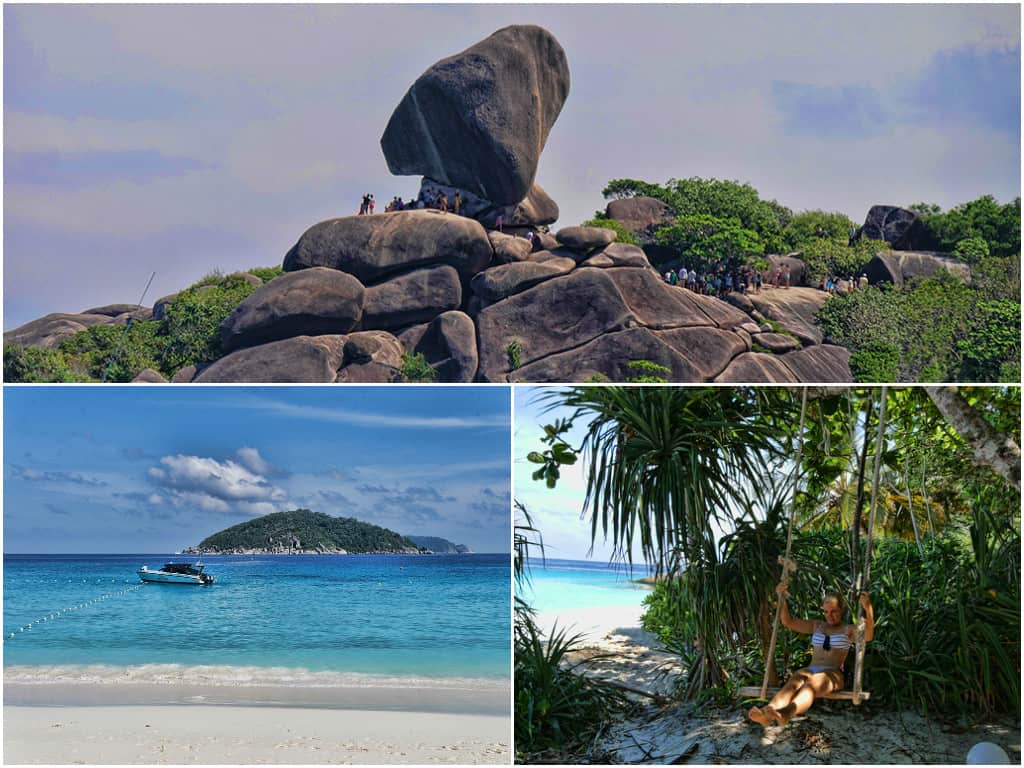
      One experience that we’d highly recommend is a snorkelling or scuba diving trip on board The Lady Sarojin to the Similan and Surin Islands’ Marine National Parks. Located an hour away, they are well-known for their exquisite coral and abundant marine life.

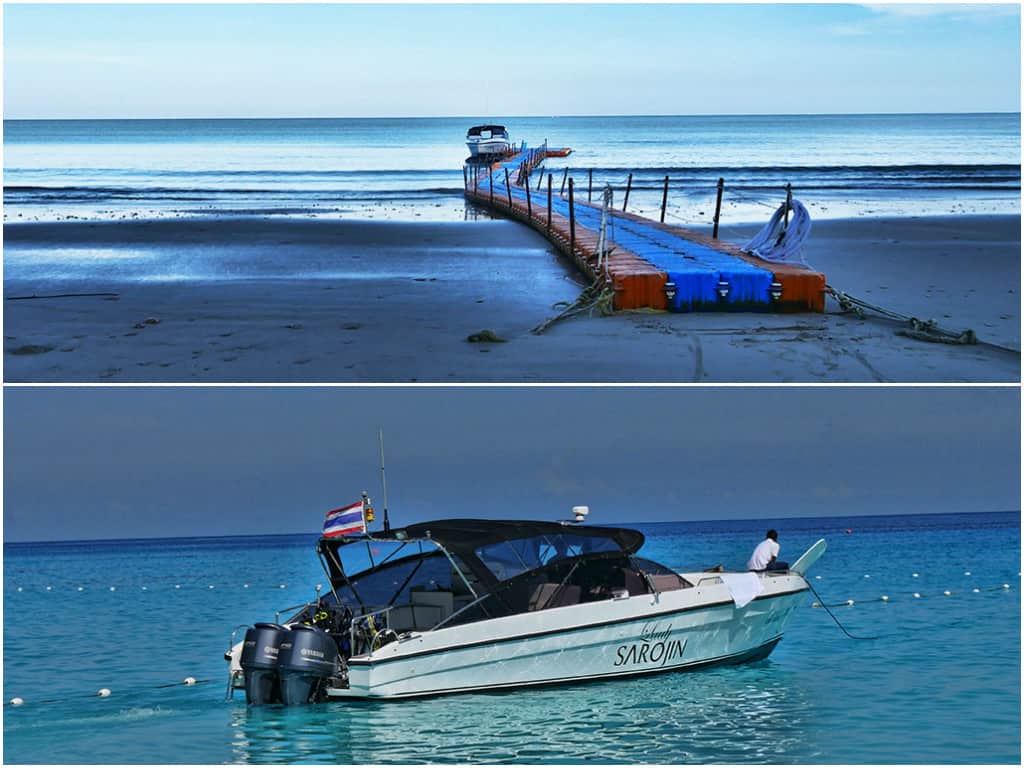
      We chose the snorkelling trip and headed out via The Sarojin’s jetty onto their awaiting boat. The Lady Sarojin is a spacious and comfy vessel with a covered area to protect you from the sun or any showers. You can book her exclusively or join a group trip.

      Soon we arrived at the reefs, and plunged into the water to explore its depths. With up to 30 metres visibility, it was easy to spot many colourful fish as well as sea turtles.

      No wonder it’s considered one of the top 10 diving spots in the world. We were fortunate as the marine parks are only open from November to early May each year, in order to help preserve the area.

      There are actually nine different islands and we sailed past number 8, with its impressive rock formation, nicknamed Donald Duck Rock. We docked to explore the largest island, Koh Similan. The water is lovely and warm for swimming.

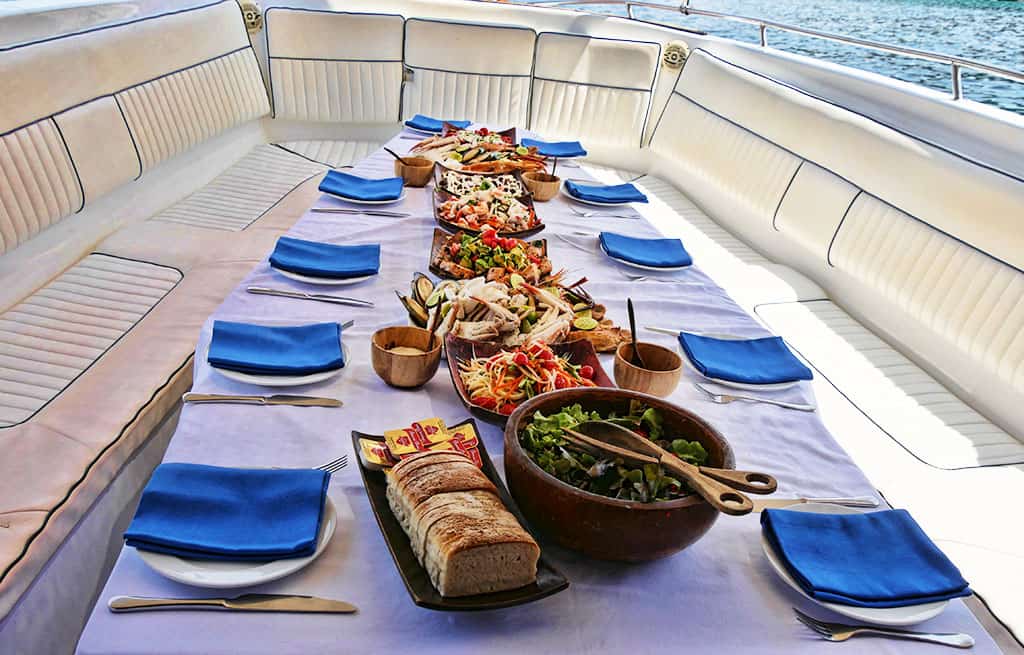
      We enjoyed some more snorkelling at the other islands before tucking into a delicious and healthy lunch on board.

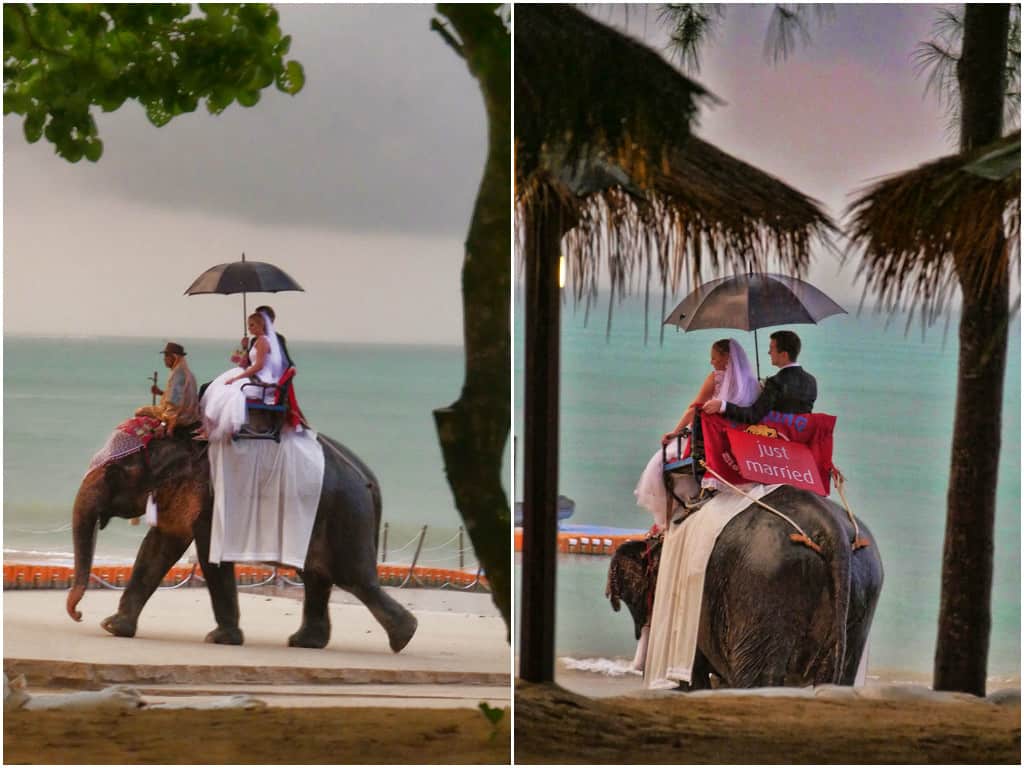
      Another unforgettable experience would be to get married at The Sarojin Khao Lak. This couple look like they are straight out of a Jack Vettriano painting.

      The Sarojin is also a popular Thailand proposal spot, as you can book the whole swimming pool area at night and it’s lit up with candles, making for a very romantic ambiance.

      Where to Eat at The Sarojin

      The Sarojin Khao Lak offers a complimentary innovative all-day breakfast, a great idea if you don’t fancy eating before midday. Served at Ficus restaurant overlooking the lotus pond, there’s a large selection of pastries and a la carte dishes accompanied by sparkling wine, hot or cold drinks.

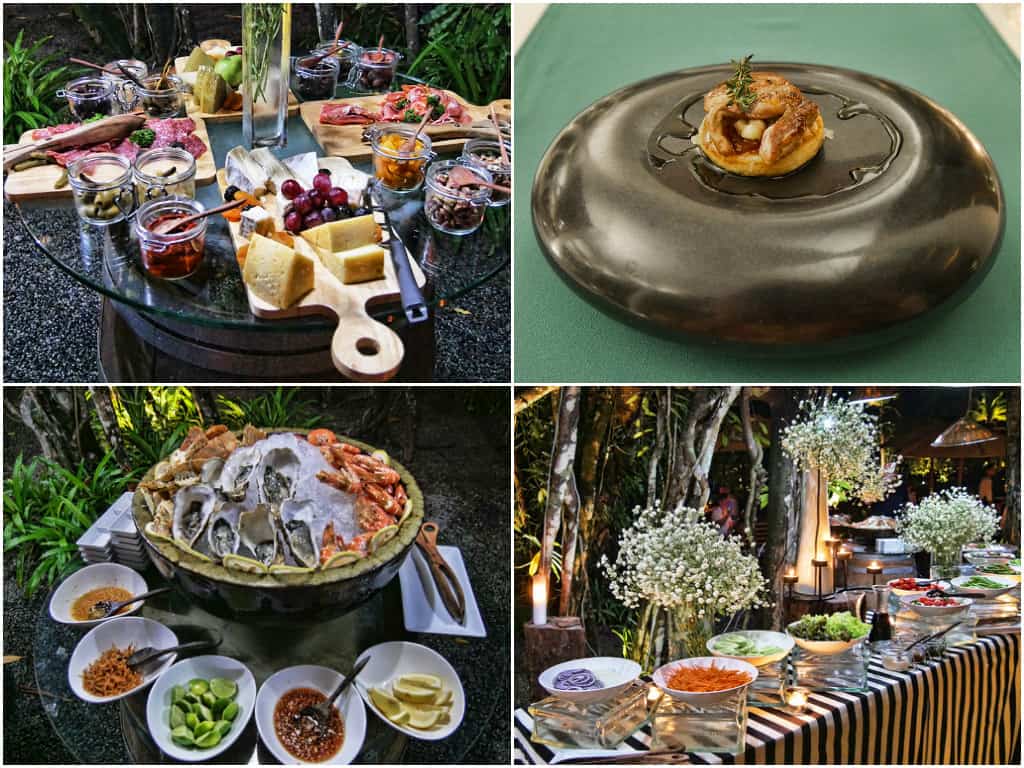
      By night, Ficus is lit by candles and is an intimate place for an evening meal. We sampled a superb tasting menu here, with an impressive buffet laid out amongst the ficus tree.

      They specialize in contemporary Mediterranean cuisine and as you can see, the presentation is second to none. You can choose to sit outside next to the water or inside to benefit from the air-conditioning.

      There was a fantastic selection of desserts – the chocolate ones in particular were very tasty. Adjacent to Ficus is a cosy wine bar and cellar with 200 wines from around the world.

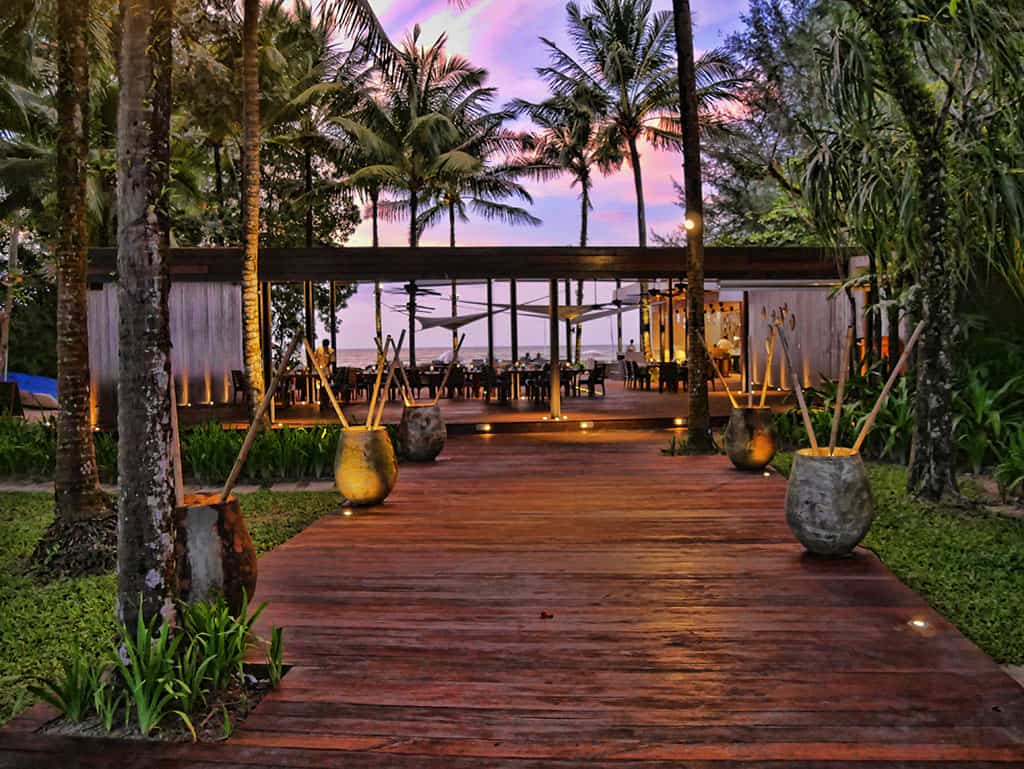
      For beachfront dining, head to The Edge. The open air pavilion lets the breeze come through but protects you from the sun. This is a great place to enjoy Thai cuisine and to watch the sun set over the beach.

      Before or after your meal, savour a cocktail in the Beach Bar. I think they should use this stylish bright blue decor in the hotel bedroom soft furnishings too.

      Final Thoughts about The Sarojin Khao Lak

      The Sarojin Khao Lak will wow you from the moment you arrive. Whether you’re looking for total relaxation or sporting activities and excursions, there’s something for everyone and the beauty of the area will have you coming back for more!