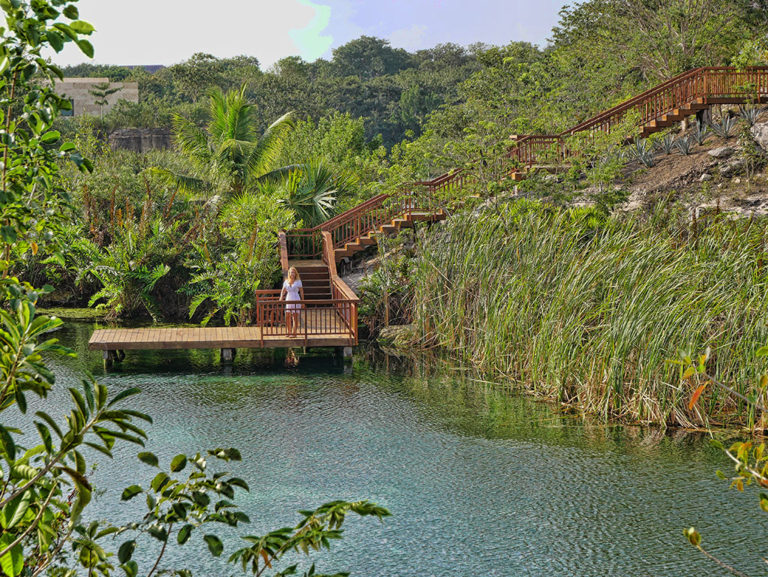
At Mayakoba, an eco-friendly luxury resort on the Riviera Maya in Mexico, the four luxury hotels integrate harmoniously with the landscape. The focus is on preserving wildlife in Mayakoba, with a Reef Restoration Program and a resident naturalist. Spread over 250 hectares, there’s an amazing amount of Mayakoba animals in the 250 hectares.
Wildlife and Animals in Mayakoba
The Riviera Maya, which stretches for 75 miles south of Cancun, is home to a huge variety of flora and fauna as well as the second largest coral reef in the world. Mayakoba, which means “the city over water”, won the coveted Ulysses Prize for “Responsible Tourism Development” by the World Tourism Organization.
This innovative ecotourism destination was the first resort in Latin America supported by the Rainforest Alliance and has a unique habitat of beach, sand dune, mangrove and jungle. All four of the Mayakoba resorts have received Rainforest Alliance Certification.
Architects, biologists and geologists preserved nature and restored the mangrove area so well that wildlife has grown by over 500%.
Mexican Wildlife on an Eco Boat Tour
A lagoon system of artificial canals has been created over 13 kilometers and 25 hectares, connecting the four hotels together.
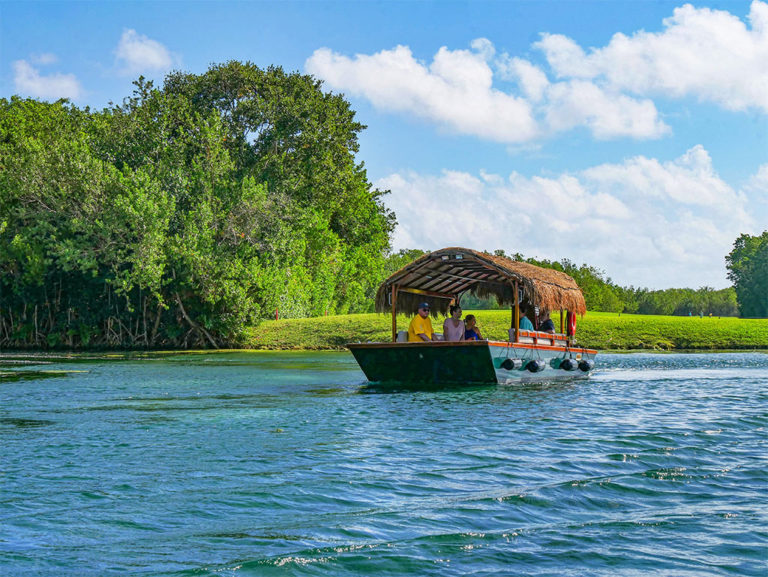
Electric boats, many in a traditional Mexican style, transport you to the Andaz, Banyan Tree, Fairmont and Rosewood hotels in style. The Mayakoba Connection, as the ferry service is known, also connects you with El Pueblito, a traditional village square in the heart of the resort.
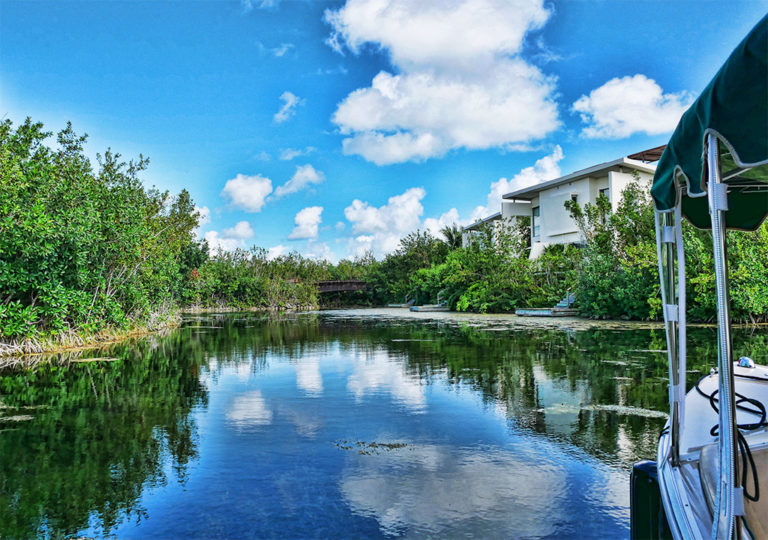
It’s worth taking a private wildlife spotting tour to see the animals at Mayakoba, on board one of the Andaz’s luxurious boats. There are now over 200 species of wildlife in Mayakoba, compared to 70 before the canals were created.
Birds, fish, crustaceans and reptiles all live together in perfect harmony. The first thing you notice is how well the hotels and residences blend into the landscape.
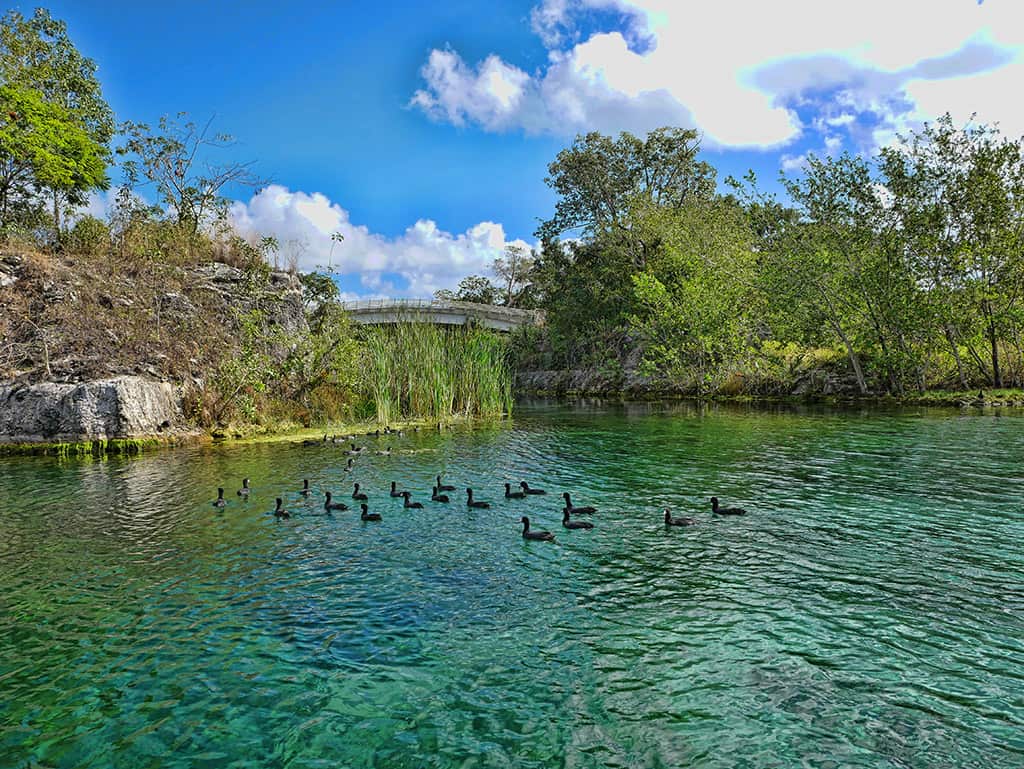
It was only a minute or so before we spotted the first wildlife, a host of American Coots swimming by.
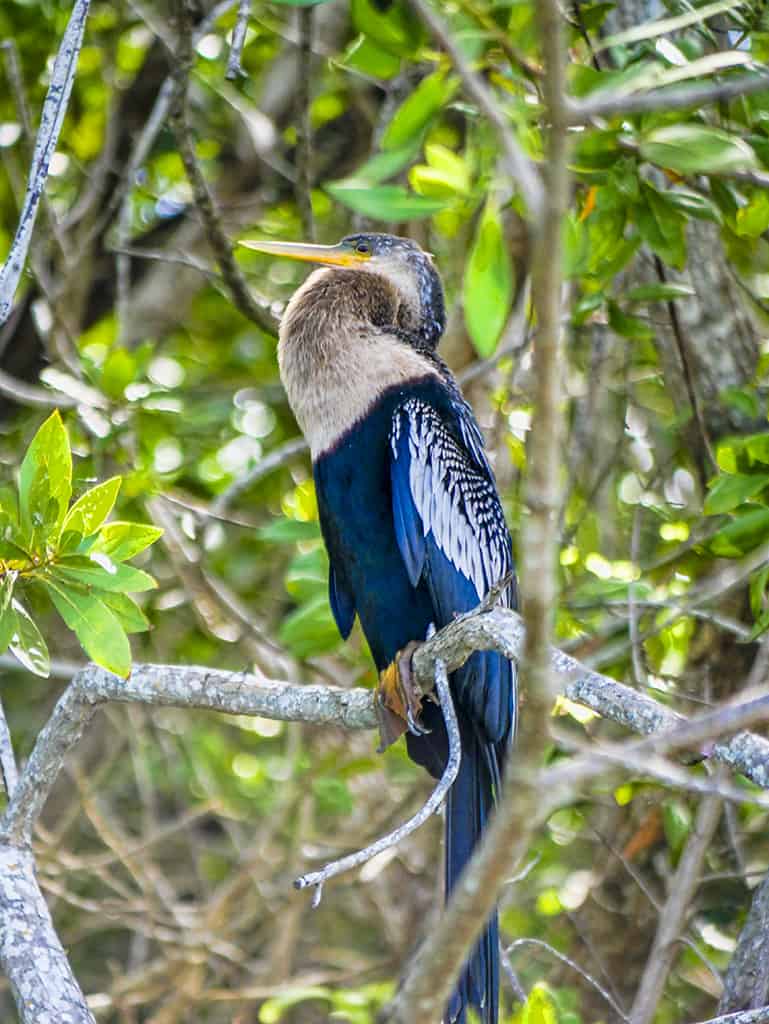
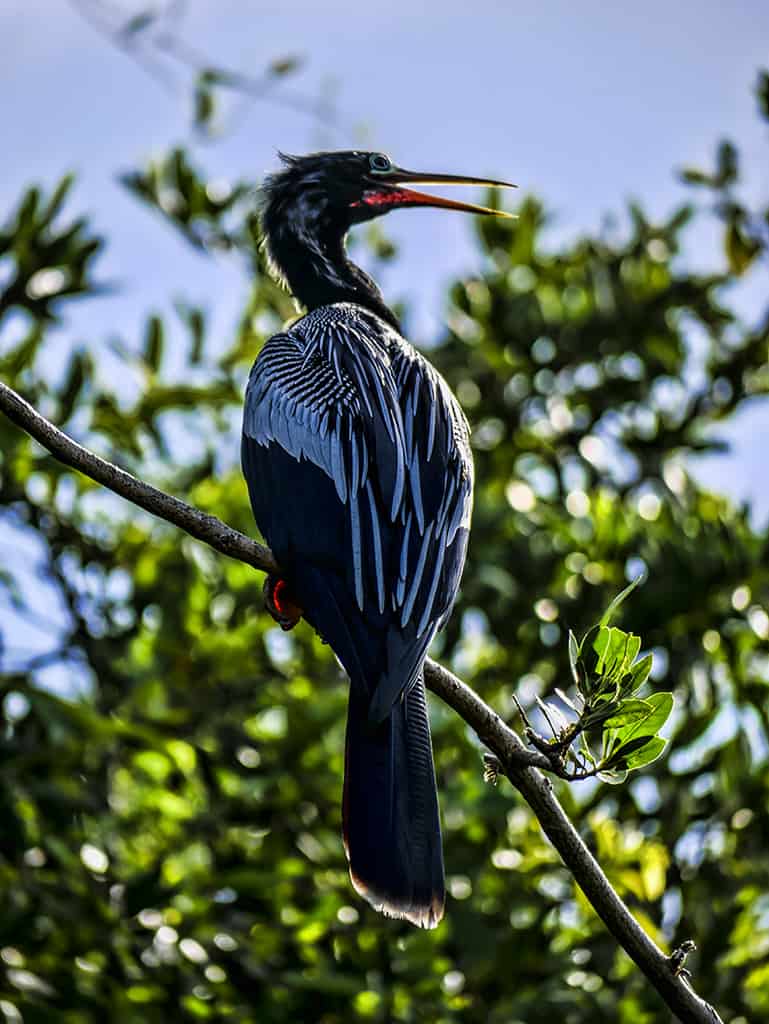
We were struck by this Anhinga’s bright blue eyes and striking feathers. There’s a beautiful book, Birds of Mayakoba with photos by James Batt.
From this, we learned that anhingas have no oil in their feathers so they have to dry their wings after diving for food. James kindly confirmed which type of birds we managed to photograph, as we wouldn’t have identified them all ourselves!
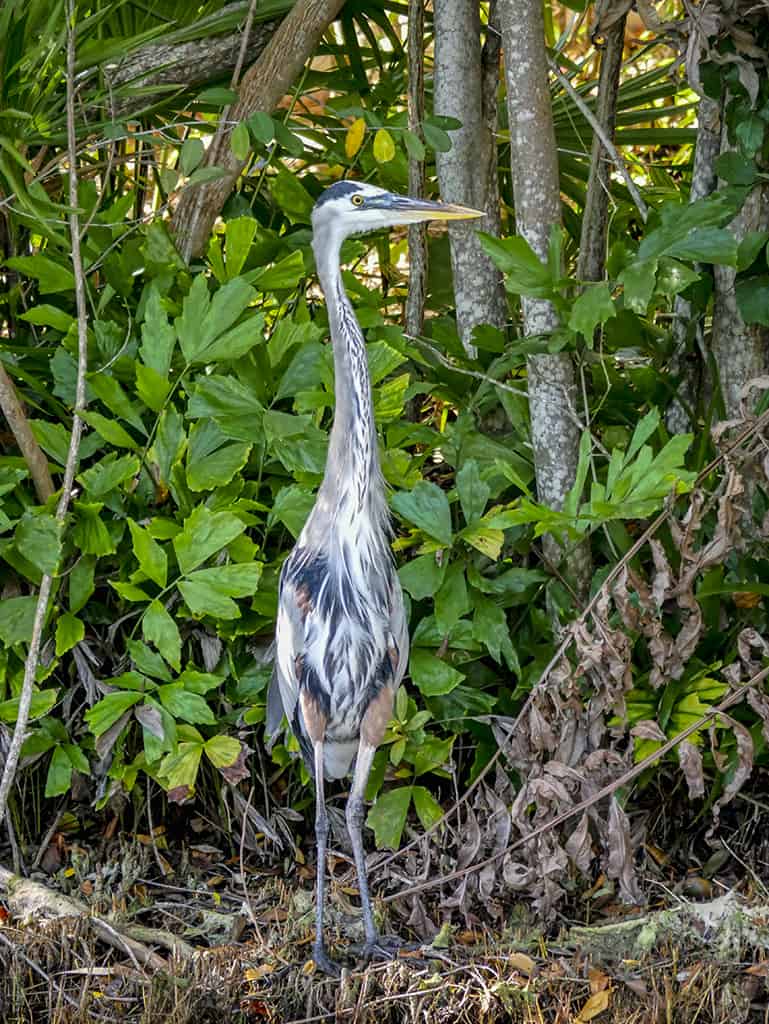
You may also spot a Great Blue Heron. This is a wading bird and expert fisher.
Mayakoba Animals
Around the resort, there are 20 species of fish, 68 types of reptile, 49 species of mammals, 14 kinds of amphibians and 178 species of birds! Luckily, Mayakoba has the assistance of a veterinarian specialized in wildlife care.
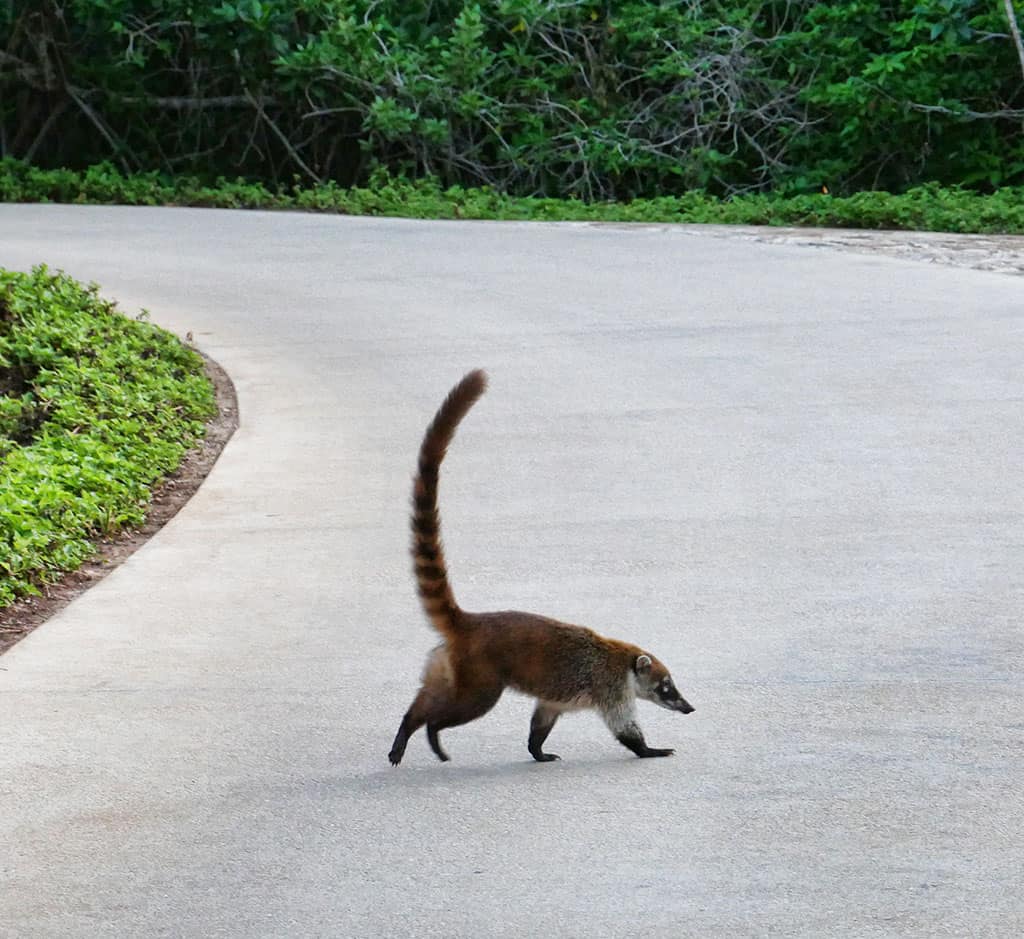
You can get around Mayakoba on foot or be picked up by a golf buggy if you prefer. We also borrowed their complimentary bicycles quite a few times. If you’re lucky, you’ll spot one of these coati on a ride or walk around the resort.
We’d heard about these little creatures before our trip and were keen to see some. A member of the racoon family, they’re also known as Mexican tejón.
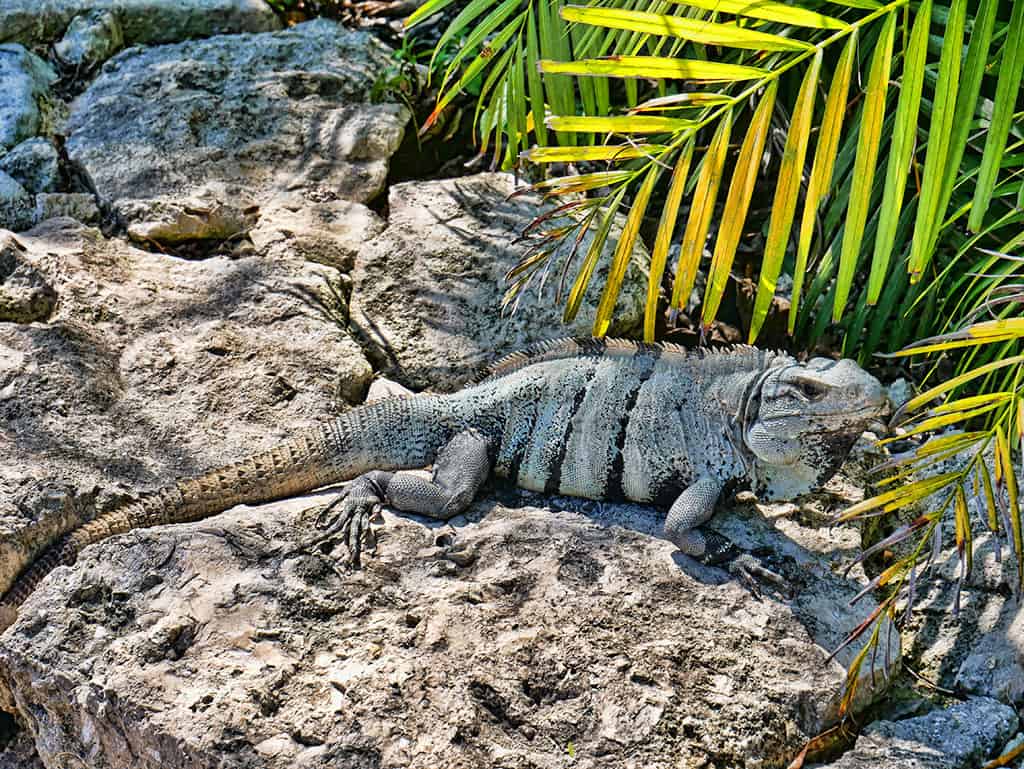
We soon realized that several iguanas had a favourite sunny spot at one of the road intersections and we managed to see them every day. We came across this one close to the golf course – apparently there’s also a family of monkeys that like to hang out there.
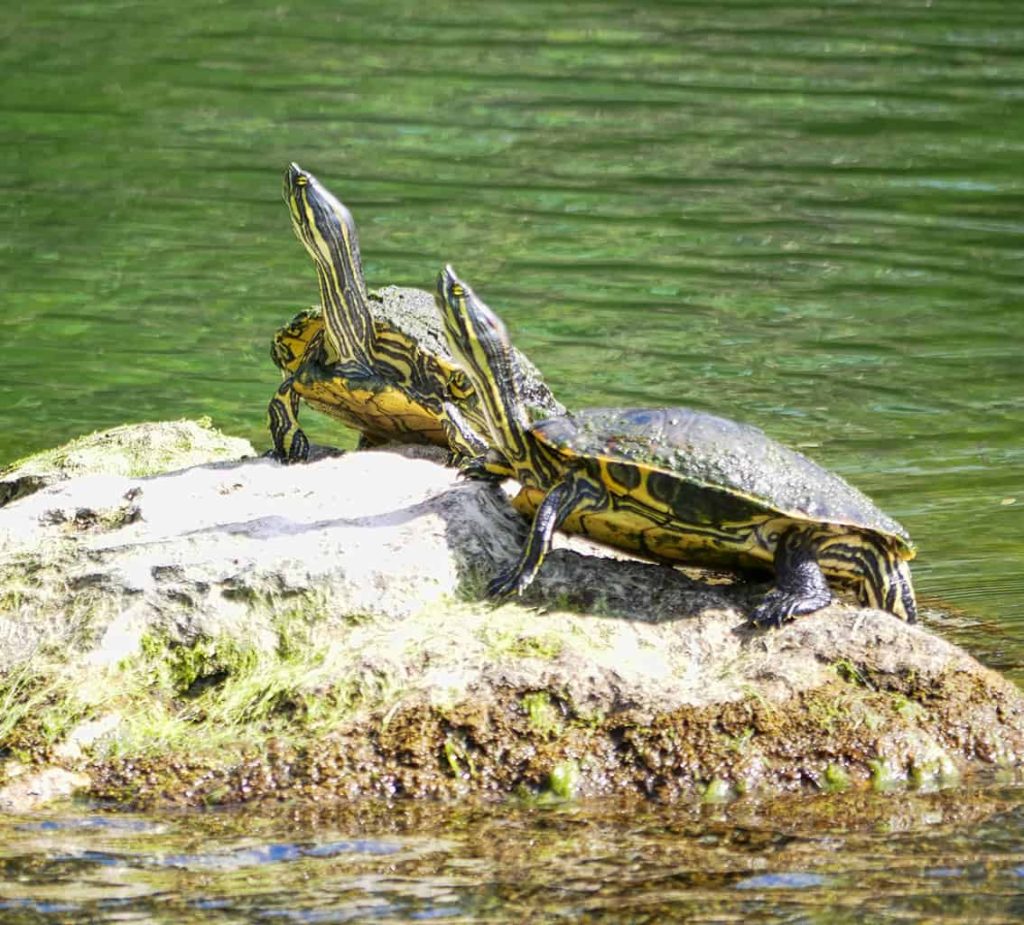
These turtles are basking in the sun. The Mayakoba Turtle Camp works with the local community to conserve turtle numbers.
There’s also an alligator named Sophie whom you might spot on your visit.
Eco-friendly White Sand Beach
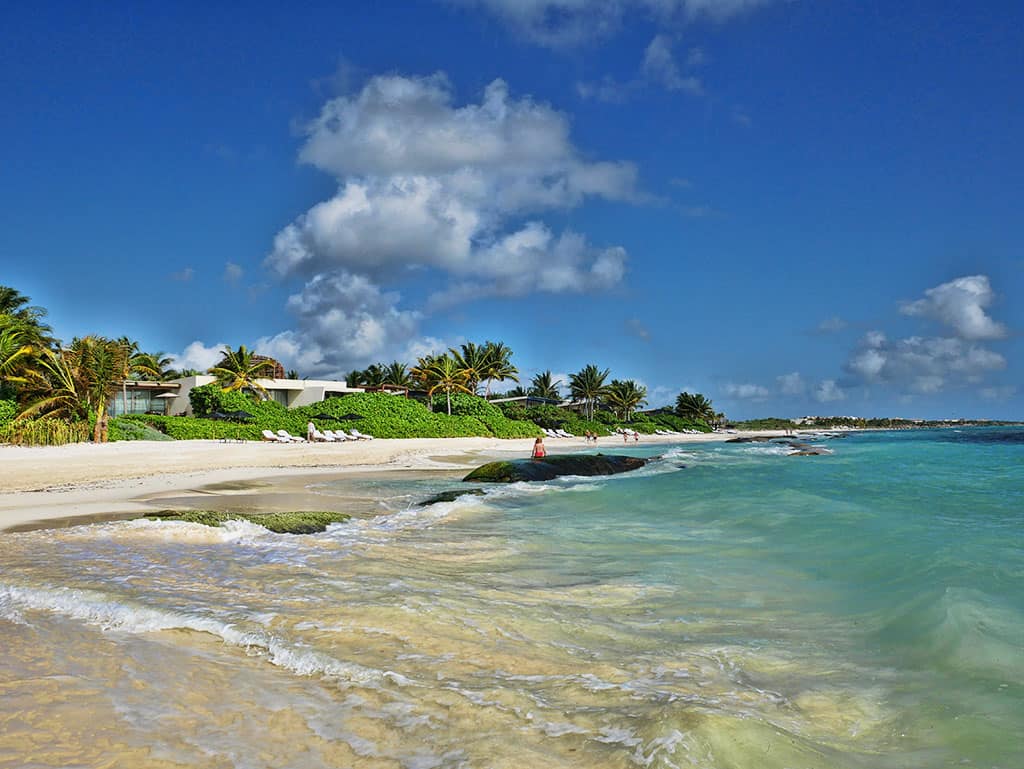
There’s a stunning white sand beach at Mayakoba that has also been preserved by an artificial reef to prevent any erosion. You can walk from one resort to another yet it’s not at all crowded.
A Reef Restoration Program is protecting over 1,000 colonies of elk horn coral.
Mexican Cenote
A four and a half kilometer nature trail winds its way around the resort and has some fantastic surprises in store. The first of these was the cenote.
These natural sinkholes are particular to Mexico and the result of limestone bedrock collapsing and revealing the water underneath. We were shown around by Mayakoba’s resident naturalist.
He pointed out the bats on the ceiling and the eerily still water. It’s perfectly safe to go by yourself but you might want to bring a torch to get a good look at the inside.
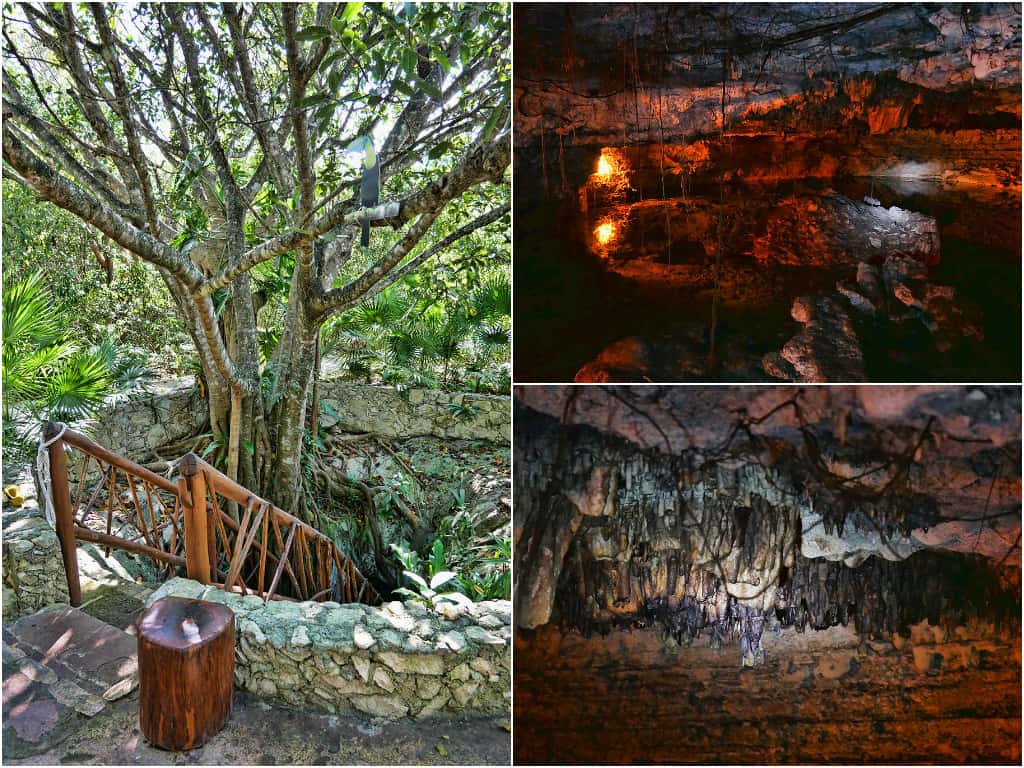
The trail is mainly in the shade so if you’re feeling energetic you can cycle or even jog around it.
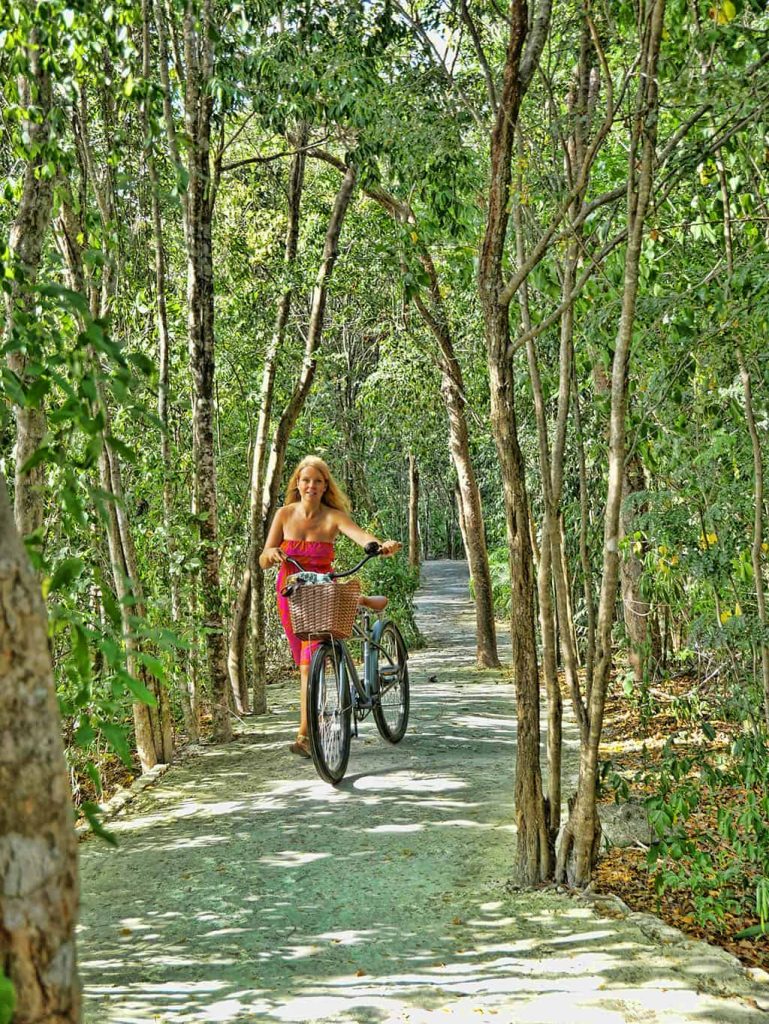
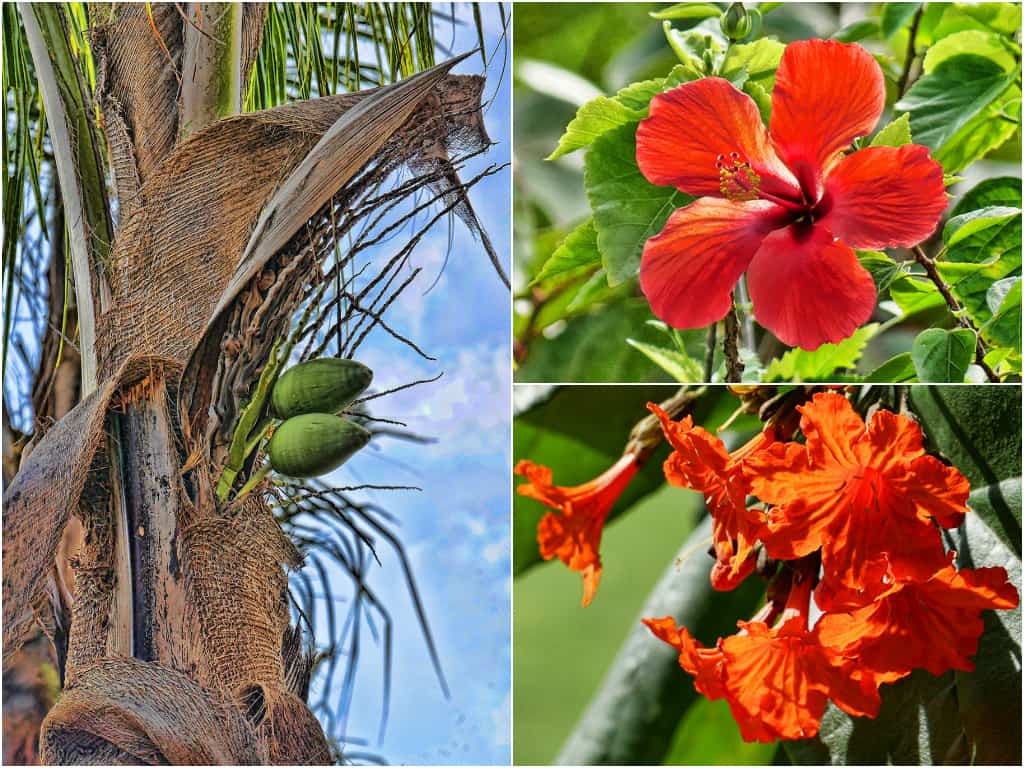
Around the trail and in the resort grounds we also came across some beautiful flowers and coconut palms. It really is like paradise.
Final Thoughts on Wildlife in Mayakoba
You can get a full flavour of the wildlife in Mayakoba here in our video with a splash of swimming pools and gourmet cuisine thrown in. Our eco getaway was an incredible experience and one that we’d recommend to anyone.
By staying here, you’re investing in the local community and wildlife and that’s a great feeling.
