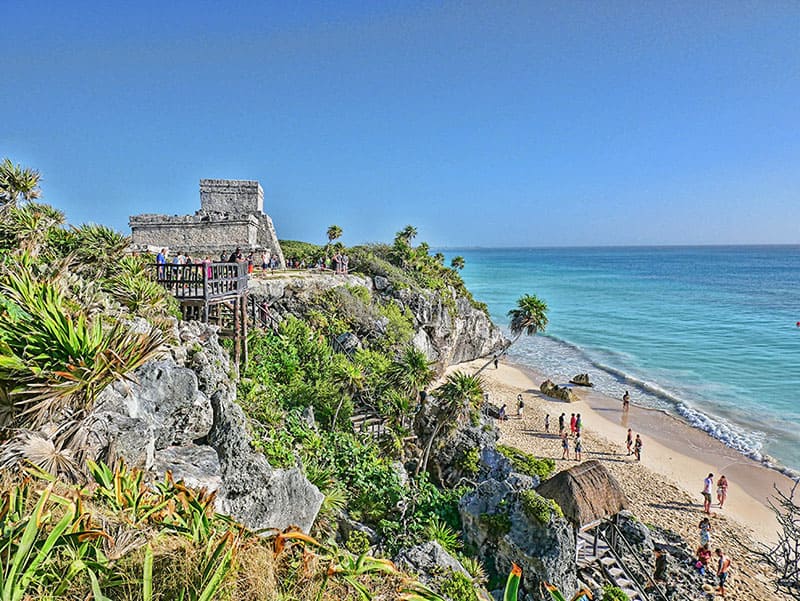
The Mayan ruins of Tulum, Mexico are justifiably famous. Yet there’s also a growing arts scene to uncover and you can easily combine a visit to the ruins with a tour of the colourful Tulum street art. After enjoying the art in Tulum, make sure to leave some time to enjoy the white sand beach and cool beachfront bars.
The Mayan Ruins of Tulum
It’s really worth setting out early to get to the Mayan ruins at Tulum as soon as they open. The third most visited site in Mexico gets incredibly crowded from mid morning onwards and we can only imagine how busy they are late afternoon.
However, it’s possible to visit at sunrise or sunset by paying a premium. Be warned that in theory you have to pay a considerable additional sum to film the ruins.
Nevertheless, we saw lots of people filming on their phones so there seems to be a certain tolerance for personal use. Tripods are apparently a no-no without payment.
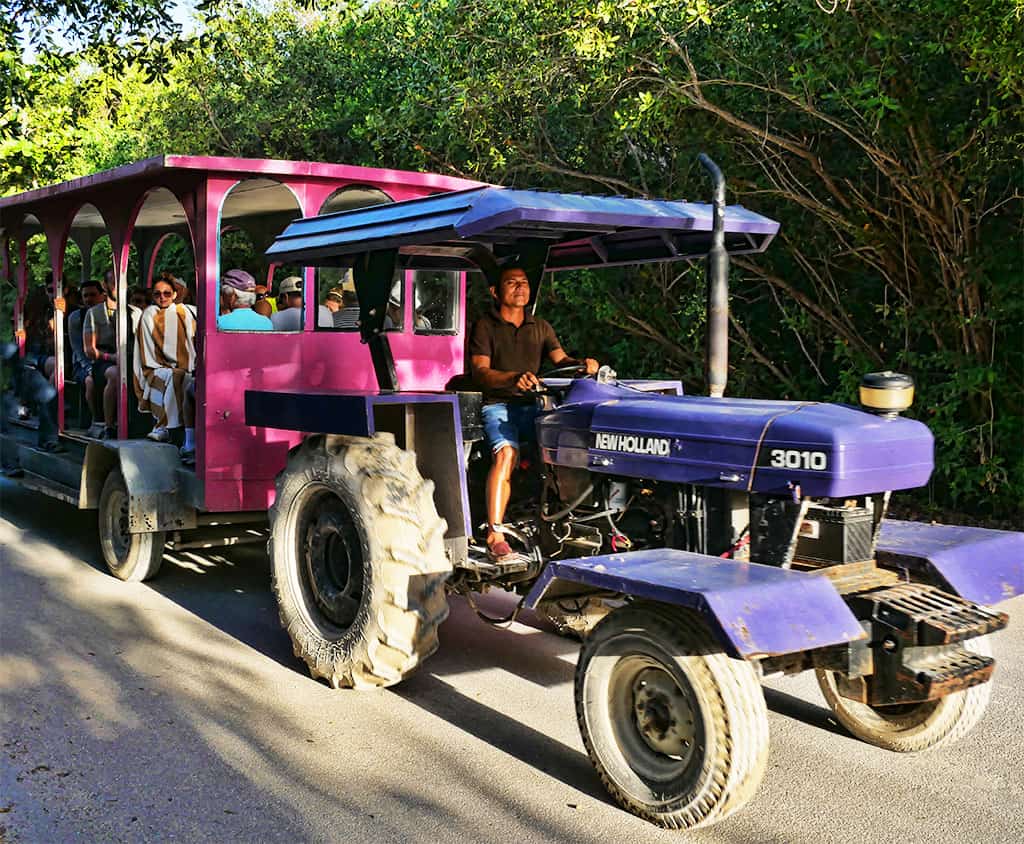
Our friendly driver dropped us off near the entrance and explained that we could either take a Land train or walk the 1 kilometer distance to the site itself. We chose to walk and were glad that we did as the land-train wasn’t much quicker than we were and doesn’t drop you all that close to the entrance. It would be a good option if visiting with small children, the elderly or infirm though.
Tulum History
After purchasing an entrance ticket we headed straight inside. Before arriving on the cliffs themselves, you pass by some interesting ruins such as the House of the Cenote.
The city thrived in the 13th to 15th centuries but was inhabited from the 6th century onwards. It’s thought to have originally been known as Zama or City of Dawn, it’s now known as. Tulúm meaning wall in Mayan.
We did linger here a bit but in hindsight my advice to visitors would be to go directly to the 12 metre high cliffs to get your shots before its besieged by visitors and to double back afterwards to see the other Mayan ruins.
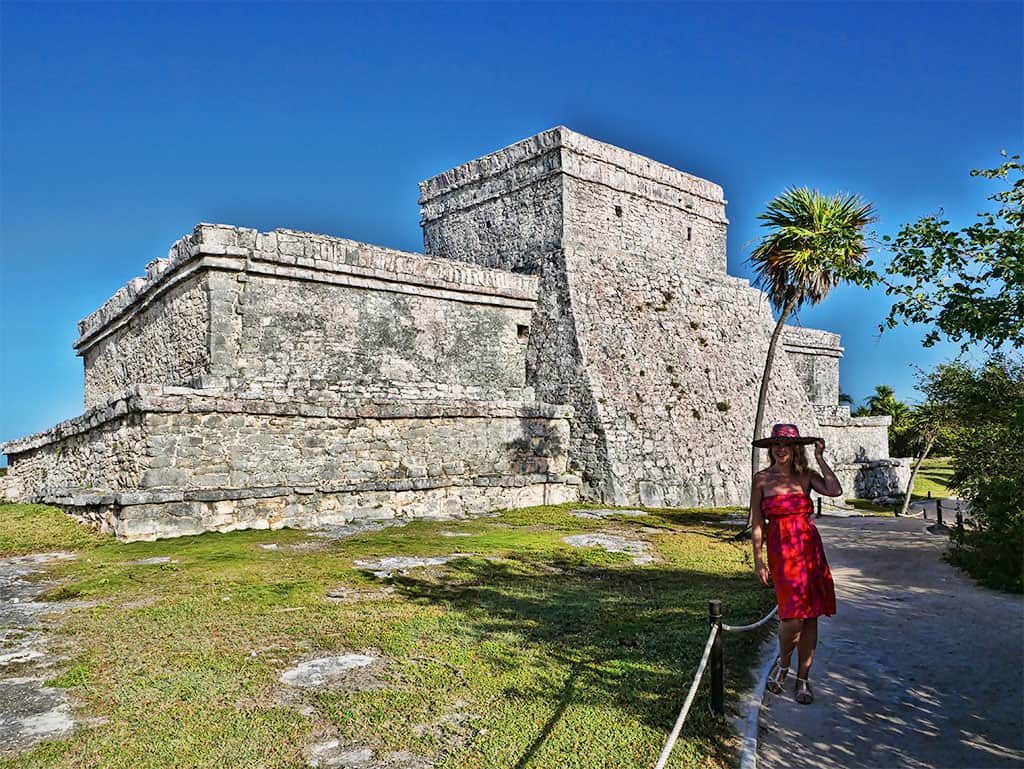
As you can see, the scenery here is stunning.
Tulum Beach
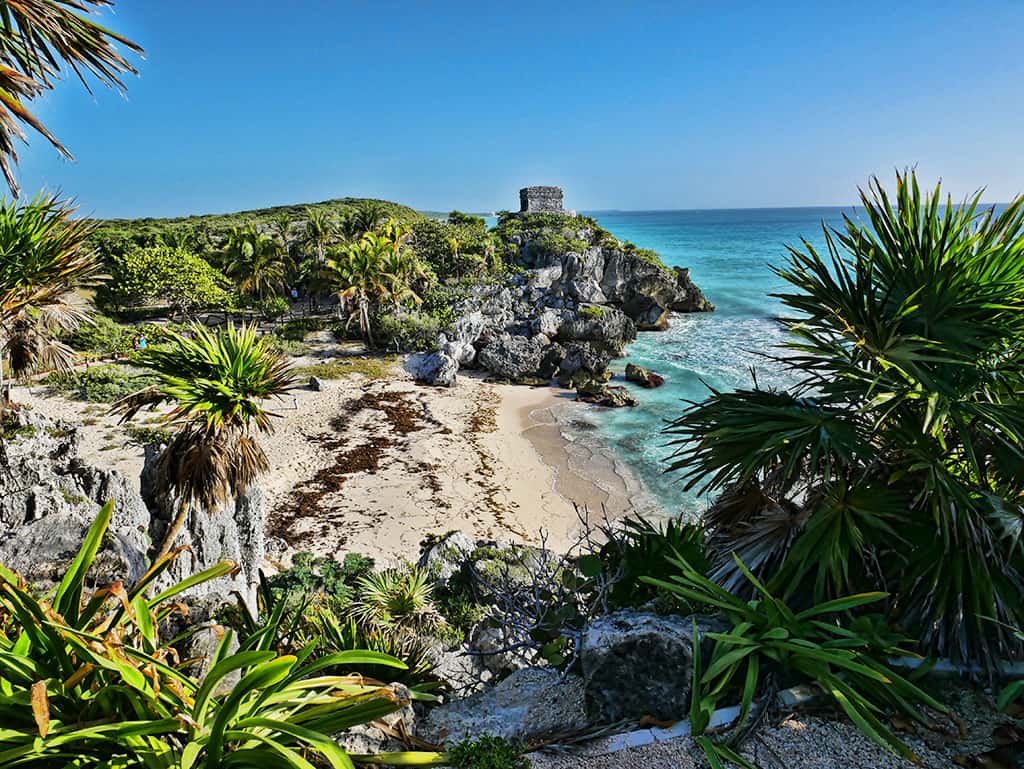
It’s an easy walk down a wooden staircase to the small white sand beach in Tulum.
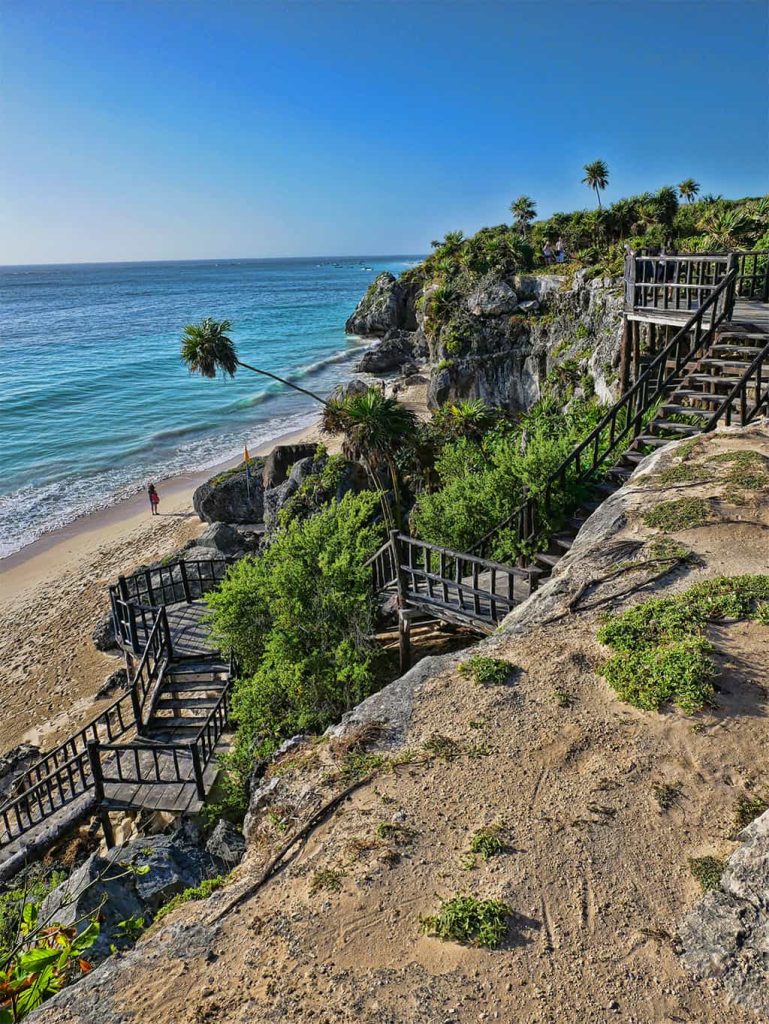
There are some picturesque rock formations here and the views towards the Caribbean Sea are stunning.
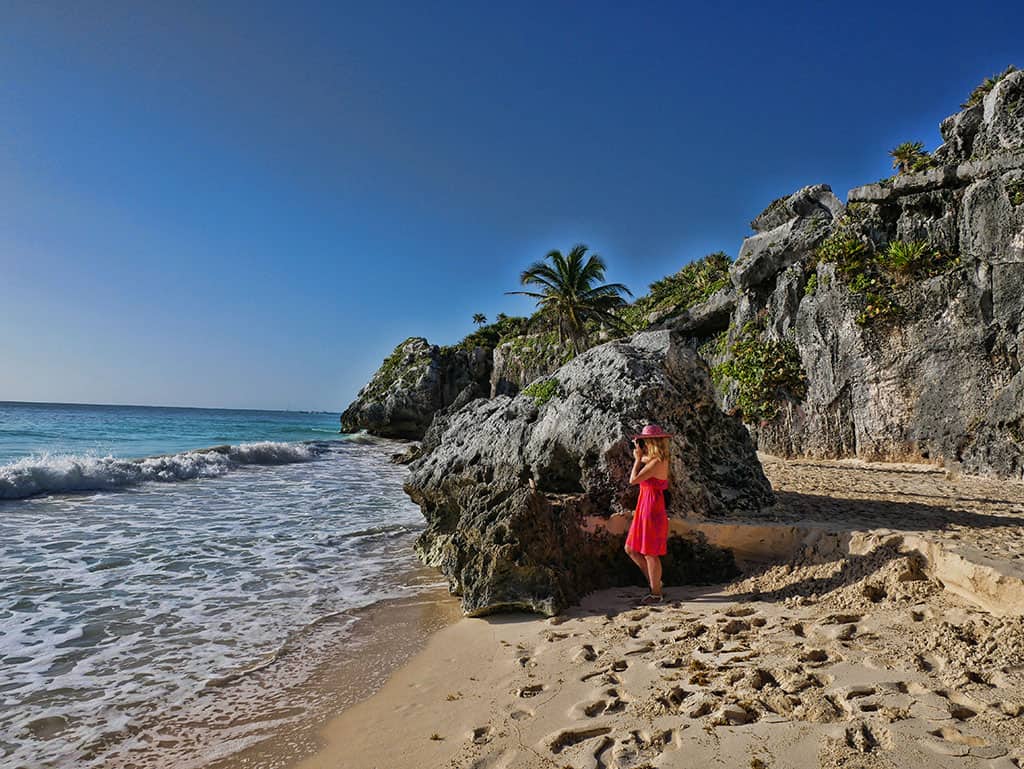
By midday it gets pretty crowded, so we recommend exploring the rest of the site, including the Temple of the Frescos, before heading back to your driver. There are some casual restaurants near the exit.
However, you get more choice and quality at neighbourhood restaurants such as Hartwood or Wild.
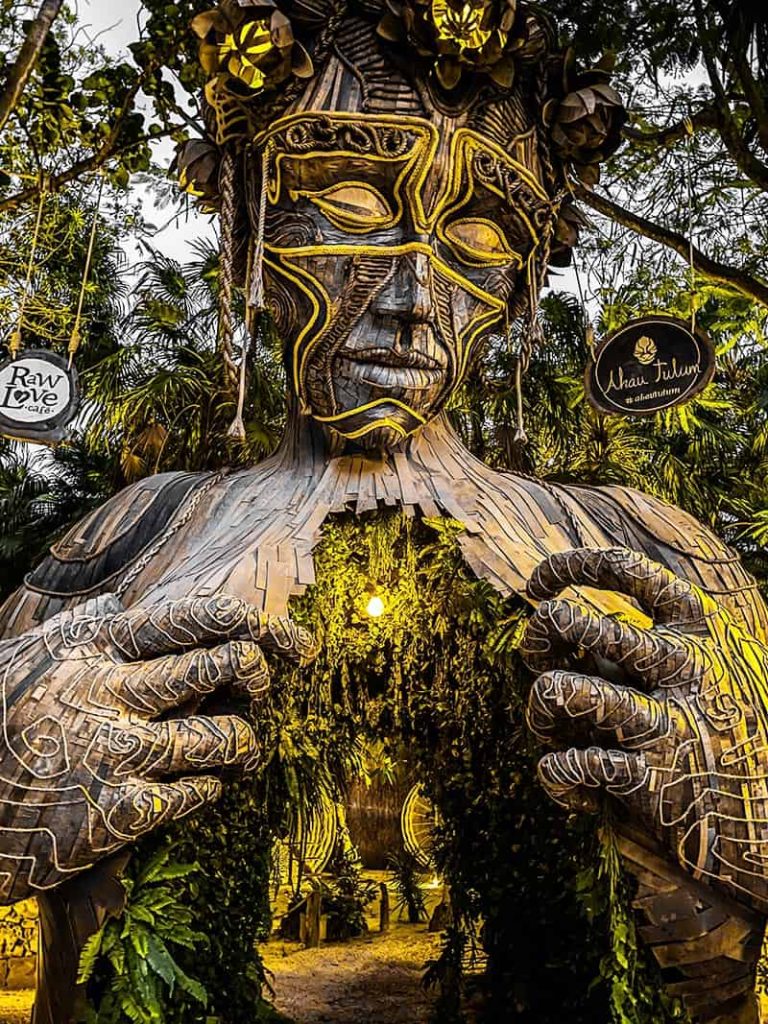
Ahau Tulum is a hotel and beach bar, entered via an impressive giant wooden sculpture. Designed by South African artist Daniel Popper, the Ven a La Luz statue symbolizes entering the light.
After lunch, we recommend that you take a look at the street art in Downtown Tulum, which is quite a distance from Tulum ruins and the beach. Don’t attempt to walk it as it’s a good ten minute cab ride.
The murals, although very striking, are not in particularly picturesque parts of town. They were created thanks to an urban regeneration scheme by locals, under the umbrella of the Tulum Art Project. However, he soon got into the spirit of it and was spotting street art way before we did.
Tulum Street Art
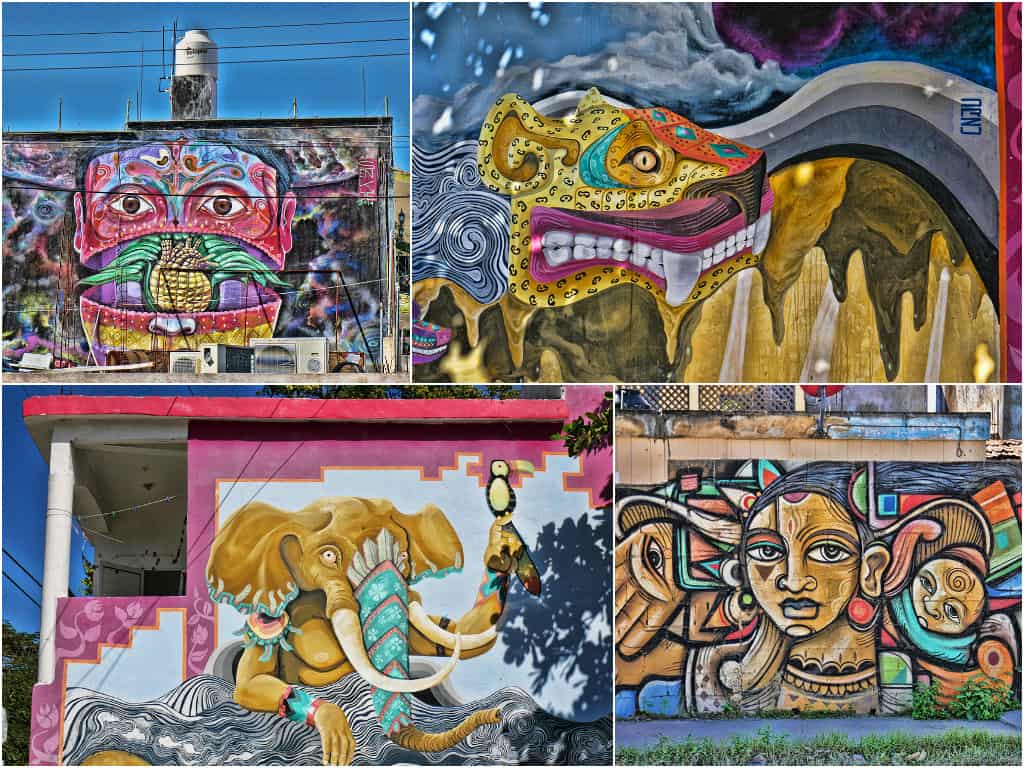
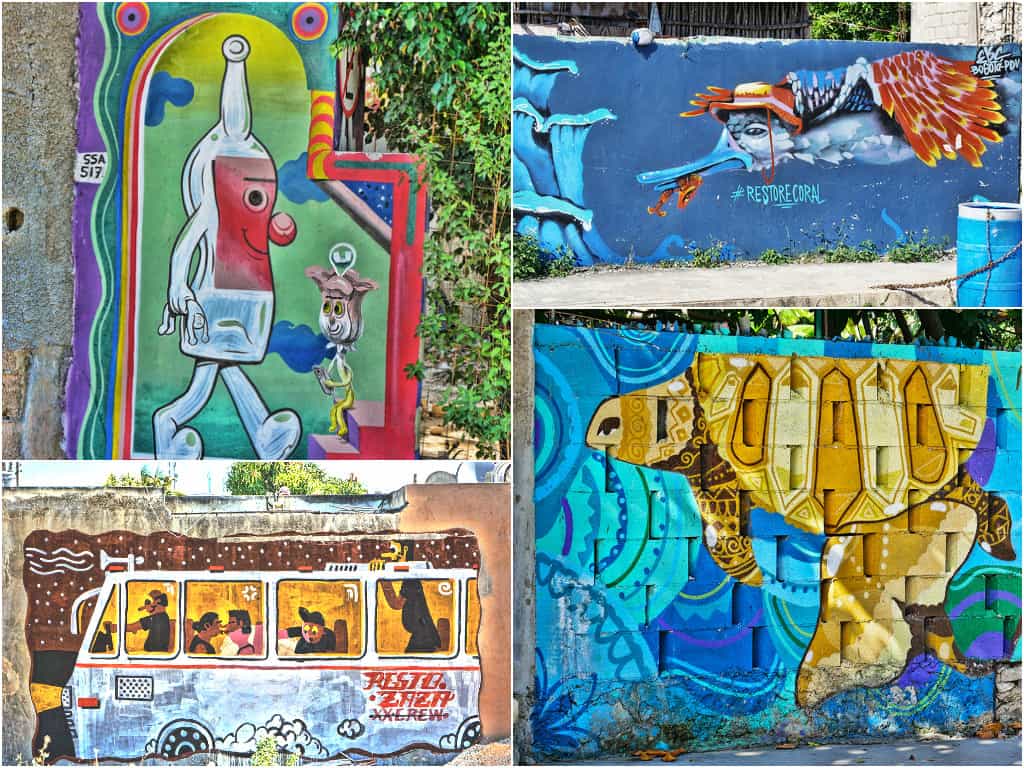
It would actually be great if the tourism authority put a map of the Tulum street art murals online to help people find them. The first mural that we came across was this one top left by Senkoe, a well-known street artist whom we had met in Mayakoba.
He has painted many colorful nature murals at Andaz Mayakoba and was putting the finishing touches to one of them when we came across him. The golden leopard and elephant are part of one mural by CNJU whilst we’d love to know who created the striking female figure bottom right.
We particularly like the street art by Emma Rubens, including this mural encouraging people to recycle plastic.
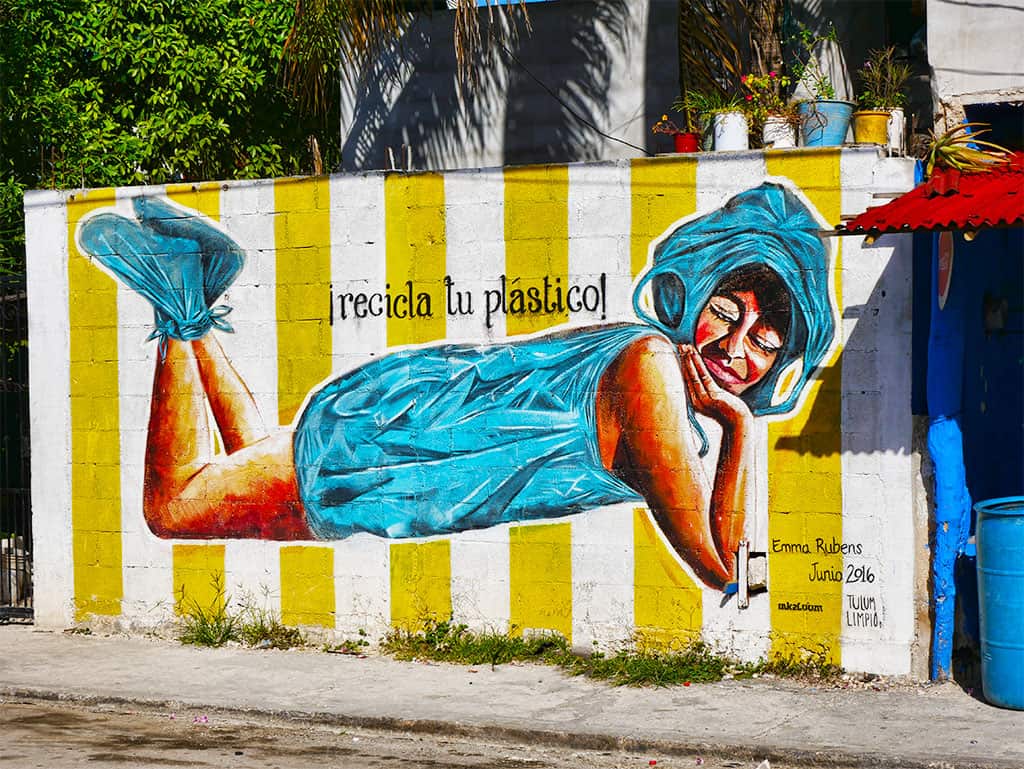
Don’t miss this striking fish themed Tulum street mural.
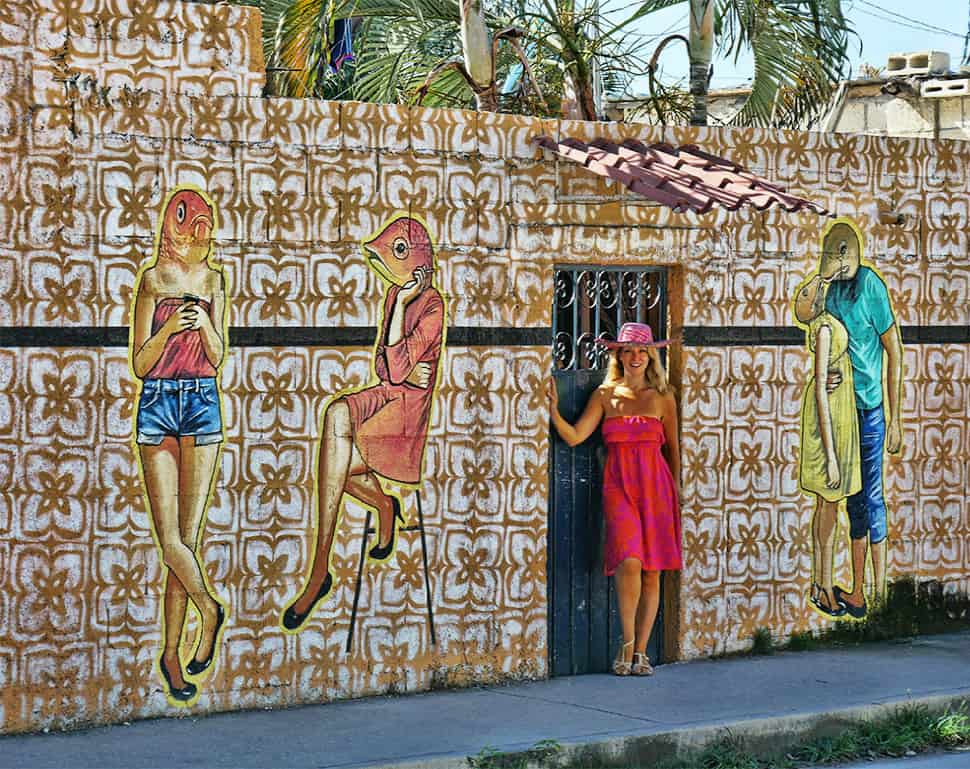
It’s right next to another colorful Tulum mural by Miami based artist, Aquarela Sabol.
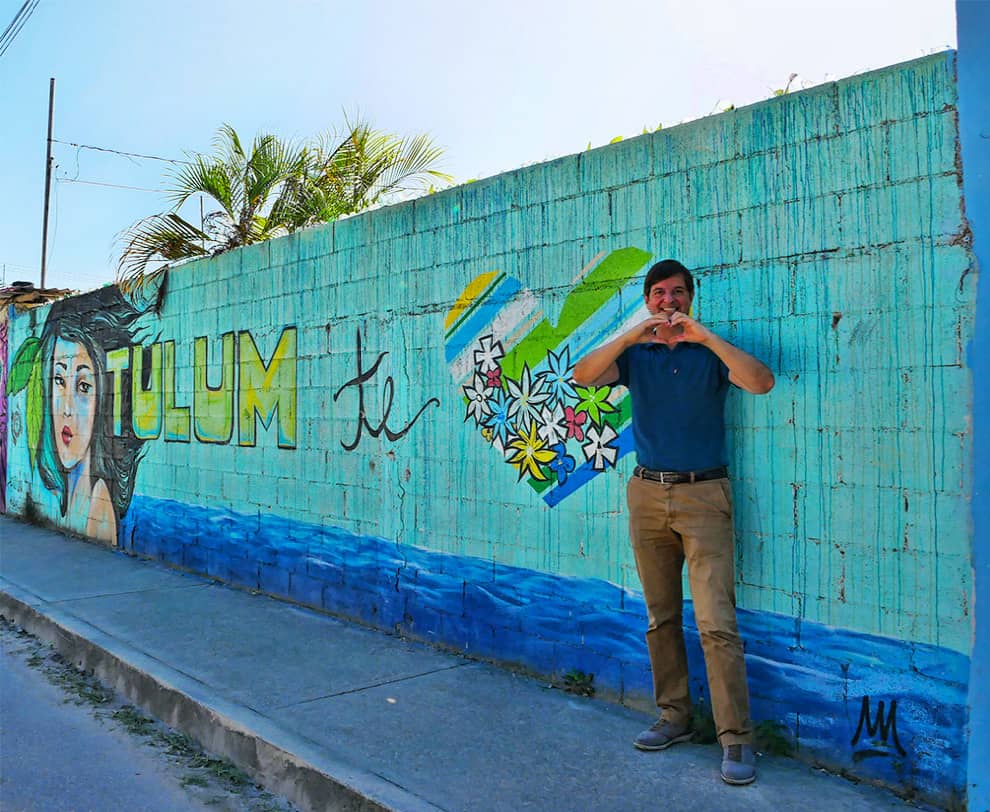
Many of the Tulum artworks focus on caring for the environment.
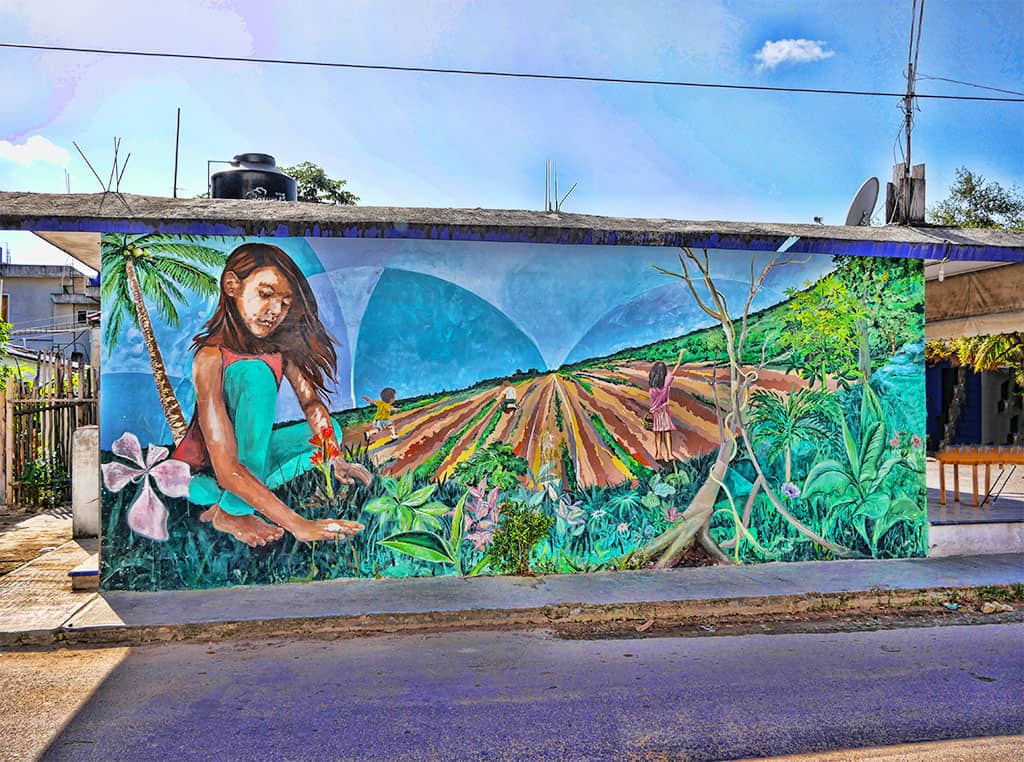
In fact, quite a few Tulum murals use the hashtag #restorecoral, like the blue bird below.
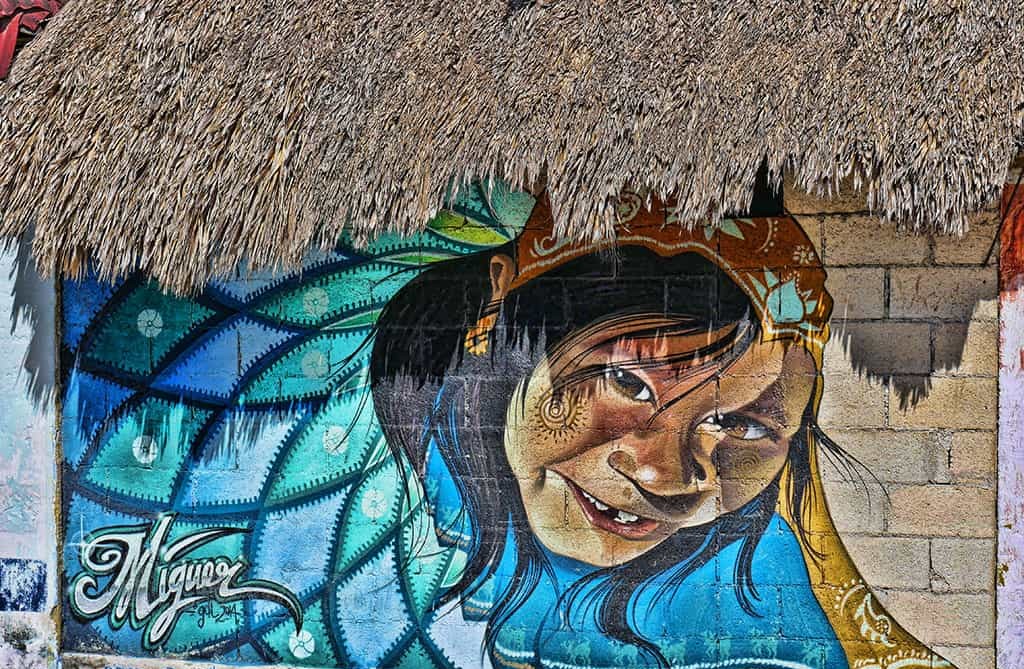
This girl peeking shyly out from under a thatched canopy is by street artist Miguer.
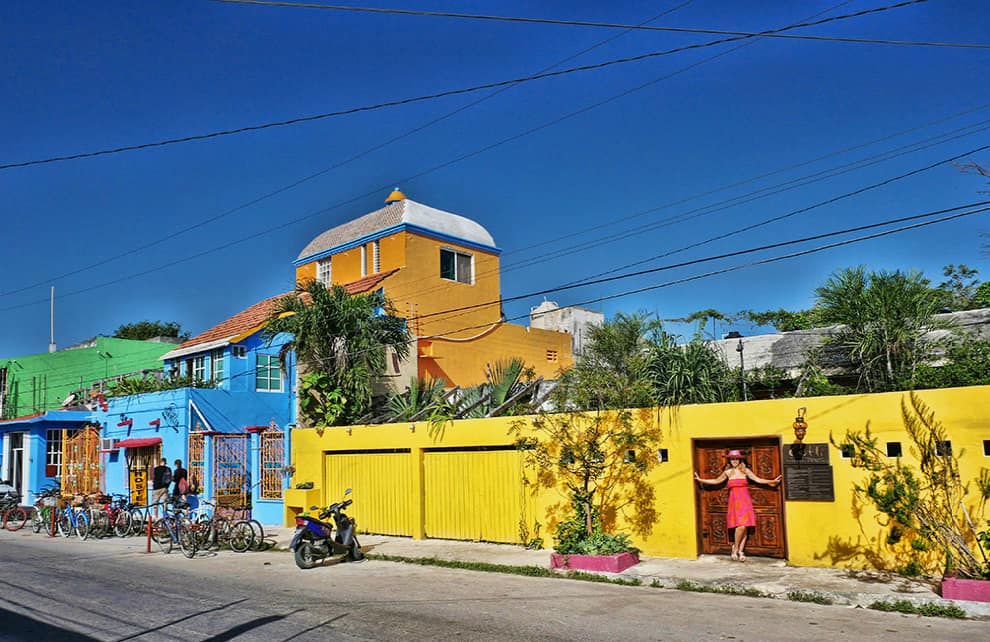
This colorful street scene really sums up the vibrancy of the Mexican culture and art of Tulum.
Tulum Cenotes
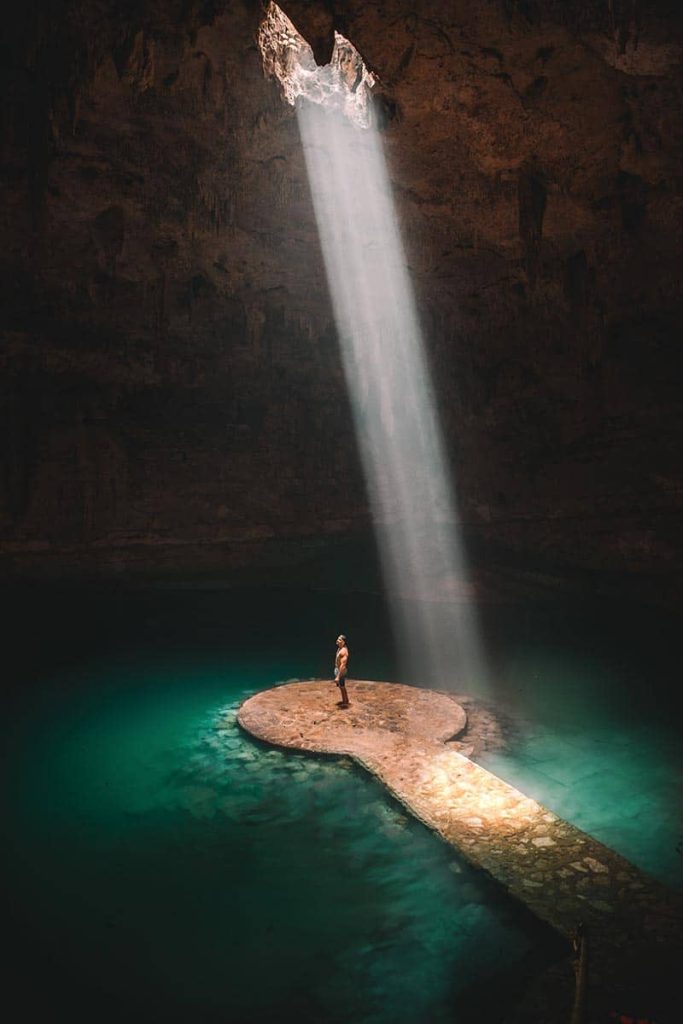
There are several cenotes or natural sinkholes within easy reach of Tulum. Some of the best include:
- Gran Cenote – known for its clear blue water, it’s 3 miles from Tulum center.
- Cenote Dos Ojos – one of the most extensive underwater cave systems on the Riviera Maya.
- Cenote Calavera – popular for cave diving, it has a mix of fresh water and salt water.
Where to Stay in Tulum
There are many charming boutique hotels in Tulum. Some of them can have limited WiFi so make sure to check that if it’s a concern for you.
We recommend staying at nearby Mayakoba, a luxury eco resort that’s halfway between Cancun and Tulum on the Riviera Maya. They can arrange group tours to Tulum but as we were limited in time we opted for a private car.
Visiting Tulum
- Tulum Mayan Ruins opening times: 8 am to 5 pm
- Entrance fee: currently at $64 pesos per person, and an additional $30 pesos for video cameras
- Early morning or late afternoon access: $220 pesos
- Land-train: $10 pesos
- Additional charge for parking
- Bring a hat, sunscreen, swimsuit and bottle of water as there’s very little shade
- For the street art, you can find quite a few murals on the street simply known as Sol
Final Thoughts on Tulum Mayan Ruins and Street Art
In recent years, Tulum has become increasingly popular with travelers from all over the world who are looking for an authentic travel experience. The Tulum Mayan ruins offer a stunning glimpse into the past, while the street art provides a vibrant and contemporary view of Mexican life and culture.
Have you ever visited Tulum? Which of these murals is your favorite?
