
Securing the best hotel deals in Dubai requires a departure from traditional booking habits. Data from the Dubai Department of Economy and Tourism indicates that while the city maintains some of the highest average daily rates (ADR) globally, the volatility between peak and off-peak pricing is more pronounced here than in almost any other major metropolitan market. Travelers who prioritize cost-efficiency must align their visit with the thermal and cultural calendar of the United Arab Emirates. The most significant price drops occur during the summer months—June through August—when temperatures regularly exceed 40°C (104°F). During this window, five-star luxury properties frequently reduce their rates by as much as 60% compared to the December peak. For those seeking the highest return on investment, focusing on business-centric hotels during weekends or luxury beach resorts during the midweek period offers the most consistent path to value.
Seasonal Pricing Trends in the Dubai Hospitality Market
The Dubai hotel market operates on a binary seasonal structure. Understanding the precise dates of these shifts is the primary lever for securing a deal. The peak season, which runs from late October through March, sees demand driven by temperate weather and major global events such as the Dubai Shopping Festival and COP conferences. During this period, even mid-range properties in areas like Al Barsha can command prices upwards of $250 per night. Conversely, the shoulder seasons of April-May and September-October offer a compromise between manageable heat and reduced pricing. Analysis of historical booking data shows that the transition weeks—specifically the first two weeks of May and the last two weeks of September—represent a sweet spot where luxury inventory remains high but demand has begun to taper.
Religious and national holidays also exert a heavy influence on pricing. Ramadan, the holy month of fasting, often results in lower daytime activity and a subsequent dip in hotel rates, particularly for international business hotels. However, the Eid al-Fitr and Eid al-Adha holidays that follow see a massive surge in regional demand from neighboring GCC countries, causing prices to spike instantly. Travelers should consult the lunar calendar before booking, as these dates shift annually. Furthermore, the presence of large-scale trade exhibitions at the Dubai World Trade Centre can cause localized price inflation in the Downtown and Sheikh Zayed Road corridors, even during otherwise quiet periods. Checking the local event calendar for major shows like Gulfood or GITEX is a necessary step in the due diligence process.
Booking lead times in Dubai do not follow a linear path to savings. While the general rule of booking 30 to 60 days in advance holds for the peak winter months, the summer season often rewards last-minute bookings. Hotels facing low occupancy in July will frequently release “flash sale” rates 72 hours before arrival to fill rooms. For those with flexible itineraries, monitoring refundable rates and re-booking when a price drop occurs is a highly effective strategy in this specific market.
High-Value Hotel Recommendations: Data and Specifications
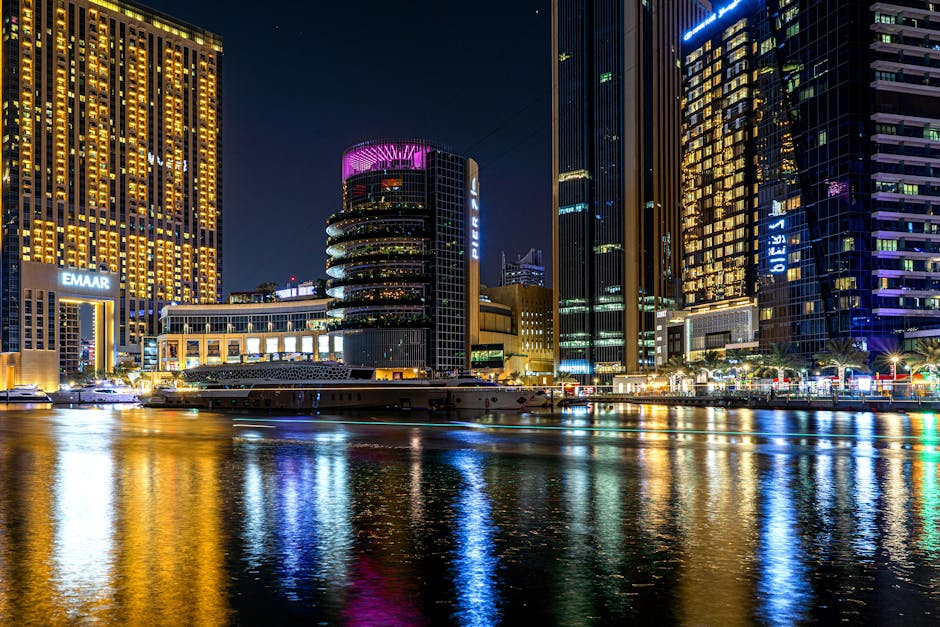
Identifying value in Dubai does not necessarily mean staying in the cheapest possible hostel. Instead, it involves finding properties where the amenity-to-price ratio is skewed in the traveler’s favor. The following table compares four distinct properties that consistently offer high value within their respective tiers based on 2024 market data.
| Property Name | Estimated Low/High Rate | Key Value Advantage | Primary Drawback |
|---|---|---|---|
| Rove Downtown | $75 / $220 | Walking distance to Dubai Mall; free self-parking. | Small, functional room footprints (26 sqm). |
| Jumeirah Emirates Towers | $185 / $480 | Includes unlimited access to Wild Wadi Waterpark. | Business-centric atmosphere; not on the beach. |
| Al Seef Heritage Hotel | $95 / $210 | Authentic architecture in a walkable cultural district. | Requires taxi/metro for beach or Burj Khalifa access. |
| W Dubai – The Palm | $240 / $700 | Significant summer discounts for a high-end resort. | Isolated location on the Palm crescent; high F&B costs. |
Rove Downtown: The Efficiency Leader
The Rove Downtown serves as the benchmark for the “mid-scale” value segment. At an average price of $110 during shoulder seasons, it provides a direct view of the Burj Khalifa at a fraction of the price of the neighboring Address or Armani hotels. The property features a 24-hour gym, a self-service laundromat, and a “The Daily” restaurant that offers reasonably priced meals compared to the inflated prices of the Dubai Mall food courts. The primary trade-off is the lack of traditional luxury services like bellhops or extensive room service, but for the data-conscious traveler, the savings on logistics and location outweigh these omissions.
Jumeirah Emirates Towers: The Luxury Arbitrage Play
For those seeking the prestige of the Jumeirah brand without the $800+ price tag of the Burj Al Arab or Jumeirah Al Naseem, the Emirates Towers is a strategic choice. While located in the financial district, the hotel provides guests with complimentary shuttle services and free entry to the Wild Wadi Waterpark and the private beach at Jumeirah Beach Hotel. This “bundled value” can save a family of four over $300 in entrance fees alone. The rooms are significantly larger than those at Rove, averaging 44 square meters, and feature high-end finishes that reflect its status as a premier business hub. The disadvantage is the weekend lull; the surrounding DIFC area can feel deserted on Saturdays and Sundays, though this often leads to even lower weekend rates.
Geographic Arbitrage: Choosing Neighborhoods for Maximum ROI
The geography of Dubai is elongated, and where you stay determines your secondary costs, such as transportation and dining. Deira and Bur Dubai represent the “Old Dubai” districts. These areas offer the lowest nightly rates in the city, often 40-50% lower than the Marina or Downtown. However, the trade-off is time. A commute from Deira to the Dubai Marina can take 45 to 60 minutes via the Dubai Metro or taxi during rush hour. For travelers on a strict budget, the Al Seef area in Bur Dubai provides a middle ground: it offers modern, stylish accommodations like the Canopy by Hilton at competitive prices while remaining connected to the historical heart of the city.
The Al Barsha neighborhood has emerged as a primary hub for those seeking the best hotel deals in Dubai without sacrificing modern comforts. Situated directly behind the Mall of the Emirates, Al Barsha is home to dozens of four-star hotels such as the Novotel, Hilton Garden Inn, and various independent apartment hotels. The value proposition here is the proximity to the Metro Red Line, which connects to both the airport and the southern districts. Dining in Al Barsha is also significantly cheaper than in the gated communities of the Palm or the Marina, with a high density of high-quality, budget-friendly international eateries.
Proximity to a Metro station is the single most important factor in controlling secondary travel costs in Dubai. Taxis and ride-sharing services like Careem are efficient but can become a major expense during peak traffic hours.
Conversely, the Dubai Marina and Jumeirah Beach Residence (JBR) areas command a premium for their walkability and beach access. If your goal is a beach holiday, booking a hotel in the “second tier” of buildings—those located just across the tram line from the beach—can result in savings of $100 per night while only adding a five-minute walk to the sand. Properties like the Delta Hotels by Marriott Jumeirah Beach offer this specific advantage, providing the same geographic benefits as front-line resorts at a significantly lower entry price.
Maximizing Savings Through Loyalty Programs and Membership Tiers
Dubai is a high-volume market for major international hotel chains, making it one of the best locations to leverage loyalty points. Marriott Bonvoy, Hilton Honors, and Accor Live Limitless (ALL) have massive footprints here. Analysis of point redemption values shows that Dubai often offers a higher-than-average “cent per point” value during the peak winter season. For instance, a room at the St. Regis Downtown might cost $600 cash or 60,000 points. In this scenario, using points yields a value of 1 cent per point, which is well above the standard valuation for Bonvoy points.
Furthermore, many Dubai hotels offer “stay more, pay less” promotions that are exclusively available to loyalty members booking directly through the brand’s app. These often include 15-20% discounts for stays of three nights or more. It is also common for hotels to offer complimentary half-board (breakfast and dinner) upgrades during the summer months to entice bookings. Given that a dinner for two in a high-end Dubai restaurant can easily exceed $150, the half-board inclusion is a substantial value-add that effectively reduces the nightly hotel cost by a significant margin.
Business travelers should also investigate corporate rates. Many of the larger properties in Business Bay and the Dubai International Financial Centre (DIFC) have negotiated rates with major global corporations. Even if your company does not have a specific deal, membership in professional organizations or holding certain premium credit cards (such as the American Express Fine Hotels + Resorts program) can unlock benefits like guaranteed 4:00 PM late checkout and $100 property credits. In a city where late-night flights are the norm, a guaranteed late checkout can save the cost of an entire extra night’s stay.
Decoding the Hidden Costs: Taxes, Fees, and Mandatory Charges

A common error when searching for hotel deals in Dubai is failing to account for the city’s multi-layered tax structure. The price displayed on many third-party booking sites often excludes several mandatory fees that are collected at the property. To find the true cost of a stay, travelers must factor in the following four components:
- VAT: A 5% Value Added Tax is applied to the room rate and all services.
- Municipality Fee: A 7% charge calculated on the base room rate.
- Tourism Dirham: A per-bedroom, per-night fee that varies by hotel rating (typically 20 AED for 5-star, 15 AED for 4-star, and 10 AED for 3-star properties).
When these are compounded, the actual price at checkout can be 22-25% higher than the advertised base rate. When comparing deals, always look for the “total including taxes and fees” figure. Some booking platforms are more transparent than others; Marriott’s direct site, for example, allows you to toggle the view to show the total price for the entire stay, including all taxes. This transparency is vital for accurate budgeting.
Another potential hidden cost is the “New Year’s Eve Gala” surcharge. Almost every major hotel in Dubai, particularly those with a view of the fireworks, mandates a gala dinner purchase for guests staying on December 31st. These charges are non-negotiable and can range from $300 to over $1,500 per person. If you are booking a deal that seems too good to be true over the New Year period, check the fine print for this mandatory dinner fee, as it can often double the total cost of your stay. By understanding these fiscal nuances and timing your visit to coincide with the market’s natural ebbs and flows, you can experience Dubai’s world-class hospitality without the associated premium pricing.
